


2-Day Luxor Tour: Valley of the Kings & Karnak Temples
Four royal tombs, two temple complexes, and the painted chambers beneath the West Bank cliffs.
A 2-day private tour of Luxor's best monuments, including the Valley of the Kings, Temple of Hatshepsut, Karnak Temple, Luxor Temple, and Luxor Museum, with hotel pickup, air-conditioned transport, and a qualified Egyptologist guide in English or Arabic. Day one covers the West Bank necropolis and royal tombs. Day two explores the East Bank temples and museum. Children from age 3 are welcome.
Step-by-step itinerary
Day 1: The best of Luxor West Bank
- Pick up from hotel or harbor
- Visit Valley of the Kings tombs
- See Tomb of Ramses III
- See Tomb of King Ramesses IX
- See Tomb of Merneptah
- Optional visit Tomb of Tutankhamun
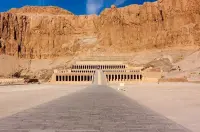
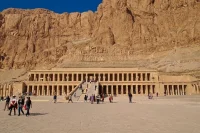
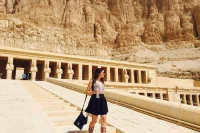
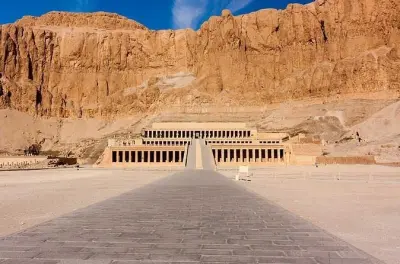
- Visit Temple of Queen Hatshepsut
- See Colossi of Memnon statues
- Visit Mortuary Temple of Ramses III
Day 2: The best of Luxor East Bank
- Visit Karnak Temple complex
- Walk Avenue of Sphinxes
- See Obelisks of Hatshepsut and Tutomosis I
- Visit Luxor Temple
- Guided visit to Luxor Museum
- Transfer back to hotel
What’s included
- Hotel pickup and drop-off in central Luxor.
- transport by air-conditioned vehicle for both days.
- qualified Egyptologist guide in English or Arabic.
- guided tour of Luxor Museum with entrance included.
- free time to explore the museum on your own.
- Every day 08:00
Information
Private 2-day tour of Luxor's ancient monuments with hotel pickup and Egyptologist guide: walk the Valley of the Kings tombs on day one.
Compare the 9 alternatives





Traveler reviews
The experience
Your hotel pickup happens in the morning, and you spend roughly eight hours on day one crossing to the West Bank. The Valley of the Kings opens first. You'll walk into four royal tombs, including the Tomb of Ramses III with its colored sunken reliefs and secular scenes of foreign tributes, the Tomb of Merneptah discovered by Howard Carter in 1903, and the Tomb of Tutankhamun, where you stand face to face with the mummy of the young king who died at nineteen. The Tomb of Ramses III alone holds the "Blind Harpists" chamber, named for the musicians depicted in its side rooms. Your guide explains the painted texts (the Litany of Ra, the Book of Gates), and the architectural shifts each pharaoh made to his burial chamber.
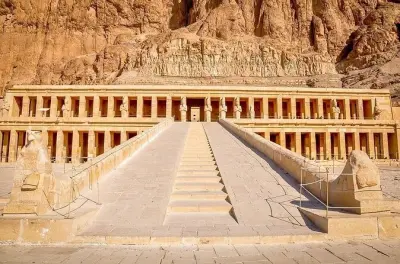
After the tombs, you're driven to the Temple of Hatshepsut at Deir el Bahari, the mortuary temple of Egypt's only female pharaoh and an ancestor of Tutankhamun. The Colossi of Memnon, two colossal statues from the era of King Amenhotep III, stand nearby. Day two moves to the East Bank and Karnak Temple, a complex built across multiple reigns starting with the Avenue of Sphinxes: a stretch once six miles long, now a few hundred meters but still lined with sphinx statues. Inside Karnak you walk past the Hypostyle Hall with its 134 gigantic columns, the Obelisks of Queen Hatshepsut and Tutomosis I, and the Temple of Amon decorated with lotus and papyrus designs. The Granite Scarab of Amenophis III and the Sacred Lake complete the complex.
Luxor Temple comes next, dedicated to the Theben Triad and fronted by the granite statues of Ramses the Great. The Luxor Museum rounds out the day with a guided hour of history. You see objects from Tutankhamun's tomb, the double statue of Sobek the crocodile god with King Amenhotep III, and several mummies. Your guide walks you through the colors and construction tools used to decorate the ancient tombs and temples, and you have free time to explore on your own. The tour ends with drop-off at your hotel.
Top questions
What languages is the tour guided in?
Live guide in English and Arabic.
Can children come?
Yes. Ticket types: Child (3 to 8 years). Children under 3 can't be included in the booking.
What's inside the Valley of the Kings tombs I'll visit?
The Valley of the Kings holds four royal tombs on this tour: the Tomb of Ramses III, famous for its colored painted reliefs and the "Blind Harpists" chamber showing foreign tributes and royal armoury; the Tomb of Merneptah, built on a single axis with wider corridors than earlier tombs; the Tomb of Tutankhamun, where the young pharaoh's mummy is displayed; and the Tomb of Ramses or Horemheb. Each chamber holds painted ritual texts and scenes of the pharaoh before the gods.
How long does each day take?
Day one on the West Bank runs about eight hours from hotel pickup through the Valley of the Kings, Temple of Hatshepsut, and Colossi of Memnon. Day two covers Karnak Temple, the Avenue of Sphinxes, Luxor Temple, and the Luxor Museum, with a guided hour inside the museum and free time to explore, ending with hotel drop-off.
Is the Tomb of Tutankhamun included, or does it cost extra?
The Tomb of Tutankhamun is on the itinerary, but entrance fees to individual sites are not included in the tour price and are paid separately. The Luxor Museum entrance is included and covered by the guide.
What's the difference between Karnak Temple and Luxor Temple?
Karnak Temple on the East Bank is a vast complex built across multiple reigns, featuring the Hypostyle Hall with 134 columns, obelisks, and the Temple of Amon: considered one of the world's greatest architectural masterpieces. Luxor Temple is a separate, smaller temple dedicated to the Theben Triad, fronted by the granite statues of Ramses the Great and located closer to the town center.
Operated by Luxor Travels. Explorevia does not run this tour: we compare it with similar options, and you book it with our booking partner.
Prices and times updated today
2-Day Luxor Tour: Valley of the Kings & Karnak Temples
2d · EN +1 · at your hotel
from US$ 150 per person
Next, you choose your date and number of travelers and see the final price.