
Medellín: Pablo Escobar & Comuna 13 with Private Transport


How Medellín Moved Past Its Darkest Chapter
You visit five locations tied to Escobar's capture and death, walk through Comuna 13's street art and escalators, and taste local food — all with a private guide who frames the history around the victims and the city's recovery, not the criminal. Hotel pickup and transport are included, so you move through the city without arranging your own route or timing.
 5h
5h

Step-by-step itinerary
Pablo Escobar and Comuna 13 tour
- Pass near downtown government buildings
- Drive near Atanasio Girardot coliseums
- Stop for photos at outdoor graffiti
- Try local desserts and native treats
- Visit Pablo's grave and the black widow
- Drive around Pablo's hometown
- Visit Pablo’s private prison cathedral
- Stop at Pablo's hideout where caught

The Experience
The moment your driver picks you up from your hotel, you're already inside the story. Medellín doesn't hide what happened here — it talks about it, teaches it, and uses it to explain who the city became instead. This five-hour tour takes you through the places where Pablo Escobar's empire collapsed and where the city rebuilt itself, and the two things are impossible to separate.
You'll drive past the courthouse and government buildings in downtown Medellín, then stop at the Atanasio Girardot stadium area to see how the architecture sits inside the landscape — the coliseums' roofs echoing the mountains that ring the city. After that comes Comuna 13, one of the largest outdoor graffiti zones in the Americas. You walk around, and the walls tell you what happened: the escalators built into the hillside (the electrical escalators that became a symbol of the city actually working for its poorest neighborhoods), the colors, the way locals have claimed the space back. There's time to try local desserts and street food, which matters more than it sounds — it's the ordinary life that survived.
The tour then moves to the places tied to Escobar directly: his grave, his hometown, the private prison called the Cathedral where he held power even while locked up, and the rooftop in Los Olivos where he was finally caught. Your guide frames all of this around the people who paid the price — police officers, government officials, ordinary citizens — not around the man himself. The point isn't to glorify; it's to understand what the city had to do to get free, and why Medellín's resilience matters.
Hotel pickup and drop-off are included, so you don't navigate the city alone. The guide is private to your group, and the vehicle is yours for the full five hours. It's wheelchair accessible, and the tour suits all fitness levels — most of it is driving and walking at a normal pace. If you're traveling with children, they need to be with an adult. The driver measures temperature at the start of each day and disinfects the vehicle regularly.

What’s included
- Your day includes hotel pickup and drop-off in a private vehicle, a private guide for the full five hours, visits to downtown Medellín, Comuna 13 with its graffiti and escalators, Escobar's grave, his hometown, the Cathedral prison, and the Los Olivos rooftop hideout.
- Local taxes and the booking fee are covered.
- You'll have time to buy local desserts and street food in Comuna 13, though meals are not included.
- The vehicle is disinfected daily and temperature checks happen at the start of each tour.
Operated by Medellin City Services
Is this one for you?Book this if you want to understand Medellín's recent history and how the city rebuilt itself, without arranging your own transport or guide — the private vehicle and included pickup mean you move through sensitive neighborhoods with someone who knows the context and the people.
Traveler reviews
Compare the 13 similar options
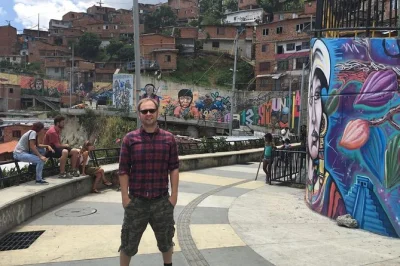 Medellín: Pablo Escobar & Comuna 13 with Private Transport★ 4.77 (47)5hEN · ESUS$ 113
 Medellín: Comuna 13 Street Art & Cable Car TourMedellín's Comuna 13 with cable car ride and street art walk. Includes metro, cable car and bus. Meet local artists. 2–3 hours from Poblado metro.★ 4.75 (712)4h 30mEN · ESUS$ 28View ›
 Medellin: Comuna 13 Graffiti Tour & Metrocable Day TripFeel Medellin’s pulse on a day trip with graffiti art in Comuna 13, Metrocable rides, Barefoot Park, and Plaza Botero—includes lunch and bilingual guide.★ 4.92 (1,935)7h–8hEN · ESUS$ 52View ›
 Medellin: Electric Bike City Tour with Coffee & Local SnackFeel Medellin’s pulse on an electric bike tour—glide through vibrant neighborhoods, taste Colombian coffee, snack with locals, and enjoy city views. Includes guide.★ 4.93 (1,463)4hEN · ESUS$ 40View ›
 Comuna 13 Medellín guided tour: graffiti, escalators, snacksWalk through Comuna 13's transformed streets with a guide who explains the graffiti stories and the escalators that changed the neighborhood★ 4.96 (1,940)3hEN · ESUS$ 15.12View ›
 Commune 13 graffiti tour Medellín: street art and cable carStart at San Javier Metro Station and ride the cable car through Medellín's skyline, then walk Commune 13's electric stairs with a local guide who★ 4.91 (160)4hENUS$ 19.50View ›
 Guatapé Day Tour from Medellín: Rock, Boat & Colorful TownSpend ten hours exploring Guatapé's colorful streets, climbing El Peñol Rock, and cruising the reservoir by boat from Medellín with meals and a guide.★ 4.95 (8,105)10h–11hEN · ESUS$ 43View ›
 Guatapé from Medellín: Piedra del Peñol & Boat Tour Celebrity HomesFull-day Guatapé tour from Medellín with Piedra del Peñol climb, town walk, boat ride past celebrity mansions, and breakfast & lunch included. Small groups, 10-12 hours.★ 4.84 (3,095)10h–11hEN · ESUS$ 45View ›
 Pablo Escobar Tour Medellín: Museum, Cemetery & SitesGuided tour of Pablo Escobar sites in Medellín with museum entry, cemetery visit and private transportation★ 4.89 (1,384)4h–5hEN · ESUS$ 40View ›
 Medellin Pablo Escobar Tour: Museum, Cemetery & RooftopTrace Medellin’s past with a guided Pablo Escobar tour, including the family museum, rooftop site, cemetery visit, and local beer tasting. Entry fees included.★ 4.91 (98)4hEN · ESUS$ 31View ›
 Guatapé tour from Medellín: Peñol Rock, boat ride, llamasEleven-hour guided tour from Medellín with breakfast, 700-step Peñol Rock climb, traditional lunch, luxury boat ride through the reservoir★ 4.89 (1,382)11hEN · ESUS$ 44View ›
 Medellín Coffee Farm Tour with Tastings & Local LunchSmell fresh coffee beans in the hills near Medellín, join a family farm for hands-on harvesting, taste local brews, and enjoy a traditional lunch—includes pickup.★ 4.90 (453)4hEN · ESUS$ 75View ›
 Comuna 13 Graffiti Tour with Street Food in MedellínGuided graffiti tour of Medellín's Comuna 13 with local street food tastings, electric escalators and a city viewpoint★ 4.91 (9,321)3hEN · ESUS$ 21View ›
Top questions
How long is the tour?
Five hours, including hotel pickup and drop-off.
Is this tour glorifying Pablo Escobar?
No. The tour focuses on the victims — police, officials, and civilians — and frames the history as a lesson in what the city had to overcome. It emphasizes Medellín's resilience and innovation after the drug war.
What exactly do you visit?
Downtown Medellín (courthouse and government buildings), the Atanasio Girardot stadium area, Comuna 13 (graffiti and escalators), Escobar's grave, his hometown, the Cathedral (his private prison), and the rooftop in Los Olivos where he was caught.
Is Comuna 13 safe to walk around?
Yes. Comuna 13 is now a vibrant neighborhood with street art, local vendors, and regular foot traffic. Your guide stays with you throughout.
Can children go on this tour?
Yes, but they must be accompanied by an adult. The tour covers serious historical content, so consider whether the child is old enough to understand the context.
Is the tour wheelchair accessible?
Yes, the tour is wheelchair accessible. Most of it involves driving, and walking sections are at a normal pace.
What's included in the price?
Hotel pickup and drop-off, private vehicle, guide, local taxes, and the TripAdvisor Experiences brokerage fee. Food and drinks are not included, though there is time to buy local snacks in Comuna 13.
What should I wear?
Comfortable walking shoes and weather-appropriate clothing. Bring sunscreen and water, especially if you're visiting during Medellín's warm months.
Do I need to speak Spanish?
No. Your guide speaks English and will explain everything. However, learning a few basic Spanish phrases can enhance your interactions with locals in Comuna 13.
Is this tour safe?
Yes. The tour operates in daylight, uses a private vehicle, and is designed for tourists. Your guide is familiar with the neighborhoods and the history. Medellín has transformed significantly and is now a popular tourist destination.
Medellín: Pablo Escobar & Comuna 13 with Private Transport
5h · EN · ES · at your hotel
from US$ 113 per person
★★★★★★★★★★4.7747 reviews
