
Medellín: Beyond Escobar Walking Tour & Colombian History
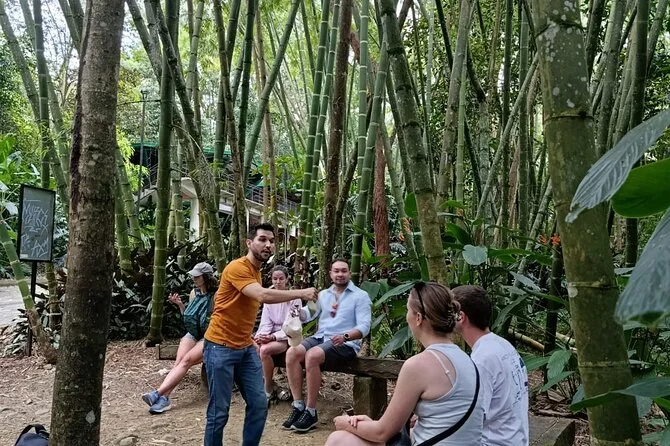


Medellín's Hidden Economics: A Tour That Refuses the Easy Story
You walk four locations across Medellín (from a green corridor to a cartel residence to a chamber of commerce to a victims' memorial) with a professional guide who treats the drug trade as a system, not a story. The tour includes entry to each stop and expert context on coca's history, the cartel's rise, the economics of trafficking, and the human cost. You leave understanding the complexity without the glorification.
Compare the 12 alternatives
 Medellín: Downtown Walking Tour, Botero Plaza & Local StoriesEvery day · 10:00 and 14:00★ 4.96 (625)3hEN · ESUS$ 13View ›
 Comuna 13 Medellín guided tour: Graffiti, escalators, snacksEvery day · 09:30, 13:30 and 16:30★ 4.96 (1,976)3hEN · ESUS$ 21View ›
 El Poblado walking tour: Street art, history & local spotsEvery day · 16:00★ 4.93 (321)2h 30mEN · ESUS$ 15View ›
 Medellin: Historic Center Walking Tour & Botero SculpturesEvery day · 10:00 and 14:30 · From age 11★ 4.97 (562)3hENUS$ 17.50View ›
 Medellin Pablo Escobar Tour: Museum, Cemetery & RooftopEvery day · 09:00 and 14:00 · All ages★ 4.91 (108)4hEN · ESUS$ 37View ›
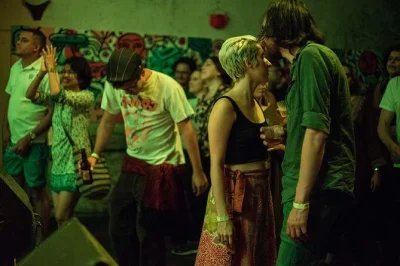 Night walking tour Medellín city center: Local bars, live cultureWed–Sat · 20:00 · Ages 18–90★ 5.00 (19)3hEN · ESUS$ 40View ›
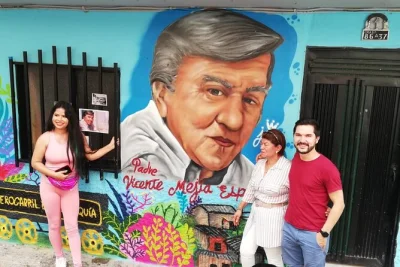 Comuna 4 Medellín: Beyond the tourist trailTue, Thu and Sat · 09:30 · From age 6★ 5.00 (317)3h 30mENUS$ 35View ›
 Medellin: Post-Conflict Shared Tour & Violence History WalkMon–Sat · 14:00 · From age 14★ 4.84 (82)3hENUS$ 15View ›
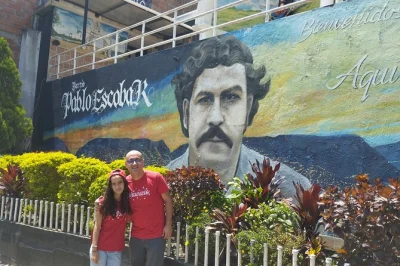 Medellin private history tour with local guideEvery day★ 5.00 (20)3h–5hEN · ESUS$ 75View ›
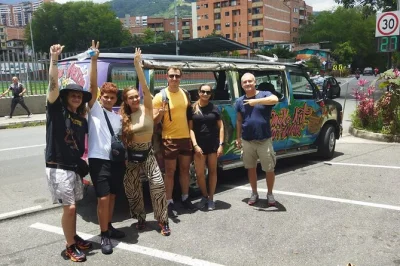 Pablo Escobar tour in Medellin: The neighborhoods and museumEvery day · 09:00 and 14:00★ 4.79 (1,852)3h–4hEN · ESUS$ 45View ›
 Pablo Escobar Tour with Museum and Souvenir: Narrated by those who lived itEvery day · 09:00 and 14:00★ 4.98 (55)4hEN · ESUS$ 34View ›
 Medellín: Pablo Escobar History Private Tour & Monaco BuildingEvery day · 09:00 and 14:00 · Ages 8–60★ 3.00 (2)4hEN · ESUS$ 74View › Compare more experiences like this »
Step-by-step itinerary
Explore Medellín's drug trade history
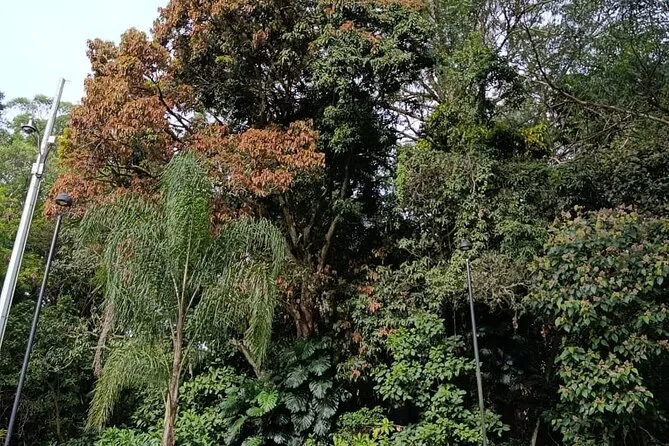
- Visit Parque Lineal La Frontera
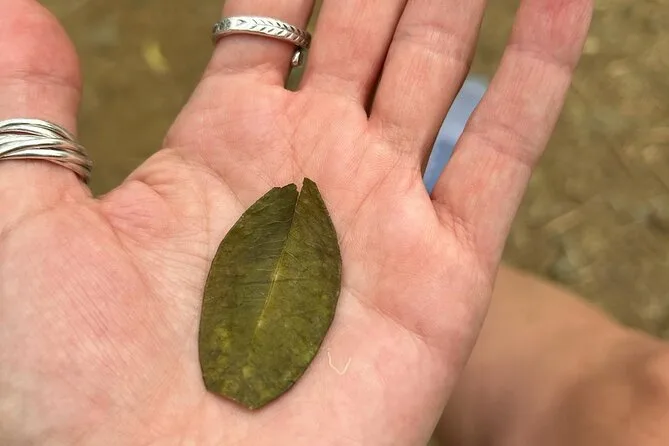
- Learn about coca leaf and cocaine production
- Discuss global history of coca and cocaine
- Stop at Montecasino, former Castaño brothers' residence
- Examine rise and fall of Escobar and cartel
- Visit Medellín Chamber of Commerce
- Analyze economics of drug trade
- Visit Parque de la Inflexión memorial
- Reflect on narco-violence victims and solutions
The experience
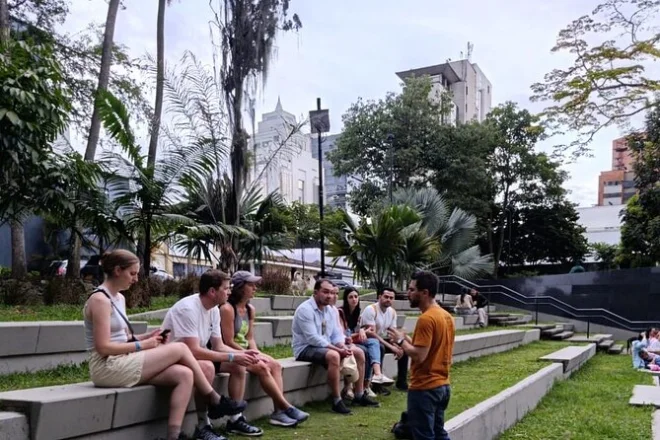
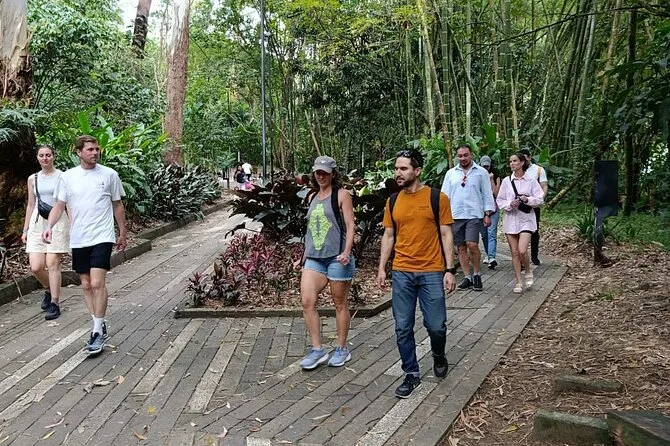
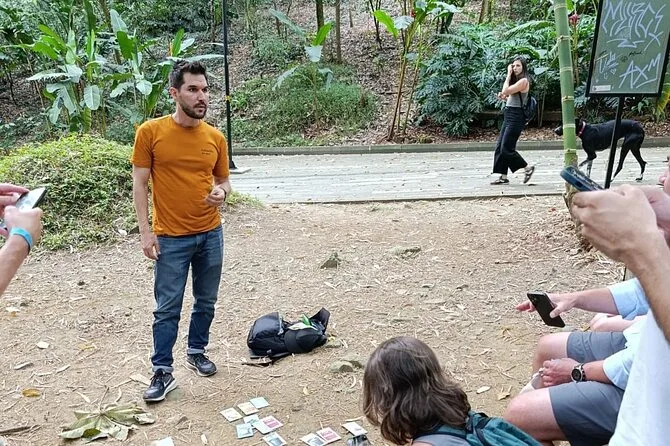
You're probably wondering if this is one of those tours. The kind where you stand outside a cartel boss's old house and take a selfie. It's not. The moment you meet your guide at Parque Lineal La Frontera (a green strip between Medellín and Envigado) the tour makes clear what it's actually about: how coca leaves moved from Indigenous medicine to a global supply chain, and what that shift cost. The guide walks you through the plant itself, its uses among local communities for centuries, then the chemistry and the dumping of chemical waste into the jungle. It's the kind of detail that makes you stop thinking about a person and start thinking about a system.
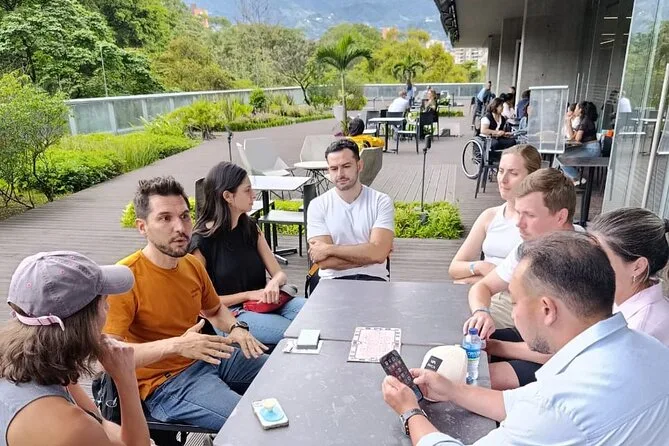
The second stop is in front of Montecasino, the former home of the Castaño brothers, where the conversation shifts to the Medellín cartel itself, but not as a story about one man. Instead, you're looking at the rise of paramilitaries, the U.S. War on Drugs declaration, and how violence rippled through Colombian society. Your guide connects the global history of cocaine (yes, it was in Coca-Cola once) to the specific moment when Medellín became synonymous with narco-terrorism. It's uncomfortable, which is the point. At the Medellín Chamber of Commerce, the third stop, you move into economics: demand, supply chains, money laundering, shadow economies. The numbers make it real in a different way than the locations do.
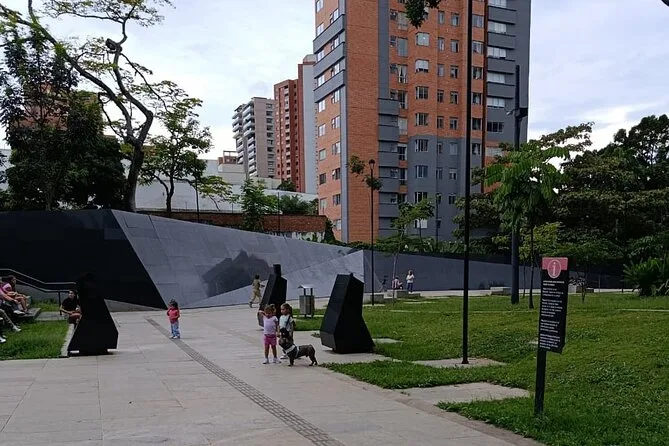
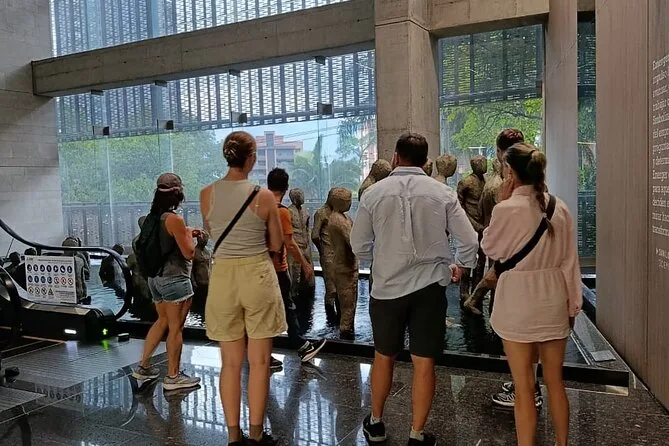
The tour ends at Parque de la Inflexión, built on the site of the former Monaco building: Escobar's property, bombed by the Cali Cartel. There's a memorial here for the victims of narco-violence, and that's where everything you've heard comes together. Not as a climax, but as a weight. The guide doesn't wrap it up neatly. Instead, you're left thinking about global responsibility, about demand, about the people who died in a war that wasn't theirs. The whole walk takes two to three hours, and it's wheelchair accessible, so the physical constraint isn't the barrier it might be elsewhere.
What’s included
Your tour includes professional guidance through four key locations: Parque Lineal La Frontera (where you explore coca's history and Indigenous uses), Montecasino (the former Castaño residence, where you discuss the cartel's rise and the War on Drugs), the Medellín Chamber of Commerce (where economics of the drug trade are examined), and Parque de la Inflexión (the victims' memorial). All areas are wheelchair accessible.
Before you book
Prices and times updated today
Operated by Real City Tours
Is this one for you?This tour is for travelers who want to understand Medellín's recent history without the sensationalism: people who'd rather learn how a global system works than hear crime stories. The expert guide and structured stops are what make the complexity digestible in a single afternoon.
Traveler reviews
Top questions
Is this tour about Pablo Escobar?
It discusses him, but as part of a larger system. The focus is on history, economics, and victims, not on the person.
How long does the tour take?
Two to three hours, with four stops across Medellín.
Is it wheelchair accessible?
Yes. All areas and surfaces are wheelchair accessible, and public transportation is nearby.
Can I bring children?
Infants and small children can ride in a pram or stroller. The content is mature and may not suit very young children.
What's included?
Professional guidance and entry to each location. Lunch and transportation between stops are not included.
Is this a glorification tour?
No. The tour explicitly avoids glorifying crime and keeps victims at the center of the narrative.
Do I need to be fit?
The tour is suitable for all fitness levels, though it's not recommended for travelers with poor cardiovascular health.
Are service animals allowed?
Yes, service animals are welcome.
Medellín: Beyond Escobar Walking Tour & Colombian History
3h 30m · EN
from US$ 30 per person
5.00613 reviewsVerified traveler reviews via our booking provider