
Easter Island tour: Tongariki, Rano Raraku & Anakena Beach


Three stops that hold the story of how Easter Island's ancestors were carved and honored
A full-day guided tour of Easter Island's three most significant archaeological and natural sites: Ahu Tongariki, the island's largest moai complex of 15 statues; Rano Raraku, the volcanic quarry where moai were sculpted; and Anakena Beach, a white sand settlement site. The tour includes hotel pickup, a professional guide in English or Spanish, lunch with a vegetarian option, and transport by air-conditioned van. The Rapa Nui National Park entrance fee (USD 100) is separate and can be purchased at the airport or online before arrival.
 8h
8h

Step-by-step itinerary
Explore Easter Island's iconic sites
- Visit Ahu Tongariki moai complex
- Explore Rano Raraku quarry and learn moai history
- Enjoy traditional lunch near Rano Raraku
- Relax and swim at Anakena Beach
- Return to hotel

The Experience
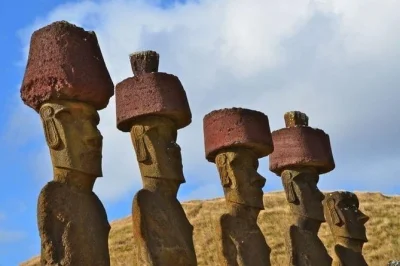
The day starts at Ahu Tongariki, where 15 restored moai stand as the island's largest complex. These statues represent ancestors who protected and guided the Rapa Nui communities, and seeing them together—restored after a 1960 tsunami destroyed them—shows the scale of what the island's people built and what they chose to preserve. From there, the van moves to Rano Raraku, the volcanic quarry where most moai were actually carved. You walk among statues in different stages of completion, some still attached to the rock, others abandoned mid-work, which makes the technical process visible in a way no museum can show.
Lunch happens at a nearby camping area around midday—chicken, fish, salad, rice, fruit and water, with a vegetarian option available if you request it at booking. You spend about 2.5 hours total at Rano Raraku including the meal, which gives time to move through the site without rushing. The guide explains the spiritual significance of the moai and the mastery required to move and carve them, grounded in what you're standing in front of.
The tour ends at Anakena Beach, one of the few white sand beaches on Easter Island and one of the first Polynesian settlements on Rapa Nui. You have about 30 minutes to swim or walk the shoreline before the van takes you back to your hotel. The whole day runs eight hours from pickup to drop-off. Weather can modify the route, and the tour operates as a shared group, not private.

What’s included
- Hotel pickup and drop-off.
- professional guide in English or Spanish.
- lunch with a vegetarian option available.
- transport by air-conditioned van.
Operated by Gray Line Chile
Is this one for you?Book this if you want one guided day hitting all three major archaeological sites with hotel pickup included; skip it if you're arriving by cruise ship, as port pickup isn't available.
Traveler reviews
Compare the 5 similar options
 Easter Island tour: Tongariki, Rano Raraku & Anakena Beach★ 4.64 (70)8hEN · ESUS$ 142
 2-Day Private Tour Easter Island: Ahu Tongariki & Rano Raraku2-day private tour of Easter Island with guide, hotel pickup and air-conditioned transport — visit Ahu Tongariki, Rano Raraku★ 4.90 (115)13hEN · ESUS$ 560View ›
 Private Easter Island tour: iconic moai and archaeological sitesPrivate full-day tour of Easter Island starting with hotel pickup, visiting Anakena Beach where the first king landed, Ahu Tongariki's 15 restored moai★ 5.00 (80)6h 30mEN · ESUS$ 360View ›
 Easter Island: Private Day Tour North & West HighlightsFeel the history at Orongo, Anakena Beach, and Ahu Akivi with a private Easter Island tour. Includes hotel pickup, local guide, and flexible stops for questions.★ 4.97 (86)6h 30mEN · ESUS$ 280View ›
 Hotu Matua Route Tour from Hanga Roa: 15 Moai at Ahu TongarikiFull-day guided tour from Hanga Roa visiting Ahu Tongariki's 15 restored Moai, the Rano Raraku quarry where over 1,000 statues were carved★ 5.00 (1)6h–7hEN · ESUS$ 100View ›
Top questions
What exactly are the moai at Ahu Tongariki, and why are there 15 of them together?
Ahu Tongariki holds 15 restored moai statues representing ancestors who protected and guided Rapa Nui communities. These are the largest moai complex on Easter Island, and they were reconstructed after a 1960 tsunami destroyed them, making this site central to understanding both the island's history and its recovery.
Can I actually see how the moai were made at Rano Raraku?
Yes. Rano Raraku is the volcanic quarry where most moai were sculpted, and you walk among statues in various stages of construction—some still attached to the rock, others abandoned mid-work. Seeing them this way shows the technical process and the spiritual significance the Rapa Nui people attached to carving them.
Is lunch included, and what if I'm vegetarian?
Lunch is included at a camping area near Rano Raraku and consists of chicken, fish, salad, rice, fruit and water. A vegetarian option can be arranged if you request it when booking.
Do I need to pay extra to enter the archaeological sites?
Yes. The Rapa Nui National Park entrance fee is USD 100 and is not included in the tour price. You can purchase it at the CONAF Office inside Mataveri Airport when you arrive, or online in advance. The ticket is valid for 10 consecutive days from purchase and must be presented at each archaeological site.
Can I swim at Anakena Beach, or is it just a quick stop?
You have about 30 minutes at Anakena Beach to swim or stroll along the shore. It's one of the few white sand beaches on Easter Island and historically significant as one of the first Polynesian settlements, so it's both a natural break and a cultural site.
What should I bring for this tour?
Wear a bathing suit and bring a towel, sunglasses and sunscreen. The tour runs eight hours in an air-conditioned van, but you'll spend time outdoors at each stop, so sun protection is essential.
Easter Island tour: Tongariki, Rano Raraku & Anakena Beach
8h · EN · ES · at your hotel
from US$ 142 per person
★★★★★★★★★★4.6470 reviews
