
Angkor National Museum Siem Reap: Khmer Artifacts & History


Stone Inscriptions & Apsara Dancers: Inside Cambodia's Angkor Museum
You get entry to seven galleries of Khmer artifacts, sculptures and architectural history spanning the 9th to 14th centuries, plus a 15-minute orientation in your language and pickup transport from the JTB office to the museum. The visit takes roughly two to three hours depending on how long you linger over the stone inscriptions and Apsara carvings. Just remember: knees covered, or entry is refused.
 2h
2h

Step-by-step itinerary
Visit Angkor National Museum exhibits
- Attend museum orientation briefing
- Explore Buddhism reflection gallery
- Learn origin of Khmer Empire
- Discover Khmer beliefs and culture
- Study stories of four great kings
- View Angkor Wat history and architecture
- Explore Angkor Thom capital gallery
- Examine stone inscriptions exhibits
- See ancient Khmer costumes and Apsara

The Experience
Picture yourself standing in front of a carved stone relief so detailed you can trace the folds in an Apsara dancer's silk—that's the moment the Angkor National Museum hits you. The galleries flow in one direction through seven themed rooms, each one stepping deeper into how the Khmer Empire built one of history's greatest civilizations between the 9th and 14th centuries. Most of what's here was pulled from the ground around the Angkor archaeological sites, so you're looking at the actual objects that survived centuries buried in jungle soil.
You start in the Briefing Hall, where a short orientation runs every 15 minutes in seven languages (Khmer, Korean, Japanese, Chinese, English, French, Thai). After that, the galleries open up—first the Buddhism Reflection space that connects ancient Khmer faith to Cambodia today, then Gallery A on how the empire was founded in the first place. Gallery B shows you the sculptures, architecture and daily objects that reveal what Khmer people actually believed. Gallery C is about the four kings who made it all happen. Then you reach the heavy hitters: Gallery D walks you through Angkor Wat's construction and that famous equinox moment when light floods the temple in a specific way, and Gallery E shows Angkor Thom, the capital city, with its sophisticated water systems and layered artwork. Gallery F displays stone inscriptions—actual carved records of historical events. The last room, Gallery G, is devoted to Apsara: the celestial dancers frozen in sculpture, their costumes and jewelry so intricate they feel alive.
The whole visit takes a couple of hours if you move at a normal pace, longer if you read the placards carefully. Your pickup is arranged from the JTB(Cambodia) office on Street 52, Charles De Gaulle—staff will meet you there and bring you to the museum for ticket redemption. One thing to know: there's a dress code. Knees must be covered for everyone, men and women both. It's enforced, so wear pants or a long skirt or you risk being turned away at the door. The museum is fully wheelchair accessible, and you can bring a stroller if you're traveling with small children.

What’s included
- Angkor National Museum admission.
- one-way pickup transport from JTB(Cambodia) office to the museum.
- orientation briefing available in seven languages.
- access to all seven galleries of Khmer artifacts, sculptures, and historical records.
Operated by Tour East Cambodia
Is this one for you?Book this if you want to understand Angkor's history and architecture before or after visiting the temples themselves—the galleries explain what you're looking at and why it matters, which turns a sightseeing trip into something that sticks with you.
Traveler reviews
Compare the 5 similar options
 Angkor National Museum Siem Reap: Khmer Artifacts & History★ 4.92 (13)2hUS$ 132
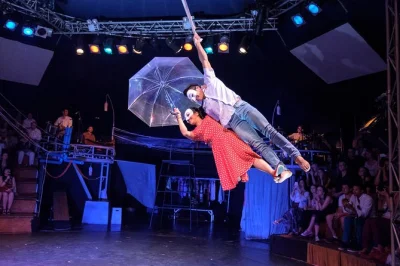 Phare Circus Siem Reap: Acrobatics & Cambodian StoriesPhare Circus in Siem Reap: live acrobatics, theater and Cambodian stories performed by artists from the non-profit school. Phare Insider includes backstage tour. Evening show.★ 4.86 (2,033)1h–3hUS$ 18View ›
 Siem Reap: Angkor Wildlife & Aquarium Day Ticket & PickupFeel the pulse of Cambodia’s wildlife at Angkor Wildlife & Aquarium in Siem Reap. See tigers, otters, and Mekong fish, with entry ticket and AC transport included.★ 4.95 (222)2h–5h 20mENUS$ 18.67View ›
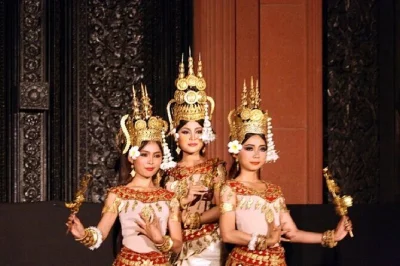 Siem Reap: Apsara Dance Show with Dinner & PickupExperience Siem Reap’s Apsara dance show with buffet dinner and tuk-tuk pickup. Enjoy Khmer cuisine, live performance, and local hospitality in one evening.★ 4.82 (28)1h 30mUS$ 24View ›
 Angkor Wat: 1-Day, 3-Day & 7-Day Park Tickets with Hotel DeliveryAngkor Archaeological Park tickets delivered to your hotel. Skip the ticket office queue, visit sunrise to sunset. 1, 3 or 7-day passes available.★ 4.87 (235)1d–7dUS$ 59View ›
Top questions
What languages is the orientation available in?
Seven: Khmer, Korean, Japanese, Chinese, English, French, and Thai. Orientations run every 15 minutes.
Where do I meet for pickup?
JTB(Cambodia)Co.,Ltd office at #52 Street Charles De Gaulle, Sangkat Svay Dangkum, Siem Reap. Staff will bring you to the museum for ticket redemption.
Is there a dress code?
Yes. Knees must be covered for both men and women. Entry can be refused if the dress code is not met.
Is the museum wheelchair accessible?
Yes. All areas and surfaces are wheelchair accessible, and transportation to the museum is also wheelchair accessible.
Can I bring a stroller or pram?
Yes. Infants and small children can ride in a pram or stroller, and infants can sit on an adult's lap.
How many galleries are there?
Seven main galleries plus the Briefing Hall. They cover Khmer Empire origins, Buddhism, four great kings, Angkor Wat, Angkor Thom, stone inscriptions, and Apsara costumes.
Do children need an adult with them?
Yes. Children must be accompanied by an adult at all times.
What's included in the ticket?
Museum entry fee and one-way pickup transport from the JTB office to the museum.
Angkor National Museum Siem Reap: Khmer Artifacts & History
2h · at your hotel
from US$ 132 per person
★★★★★★★★★★4.9213 reviews
