
Lençóis Maranhenses 3-Day Trek: Dunes, Lagoons & Remote Communities
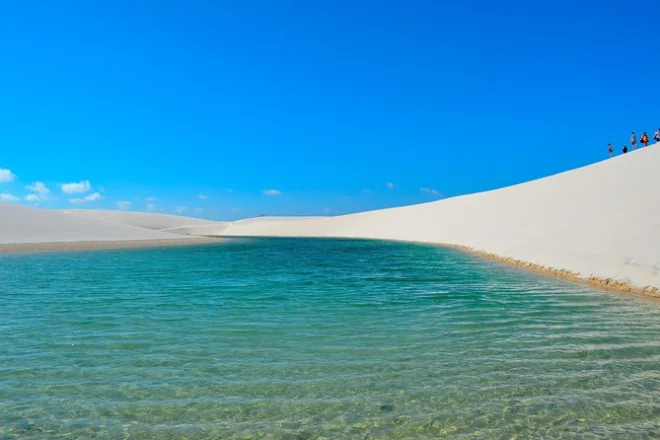
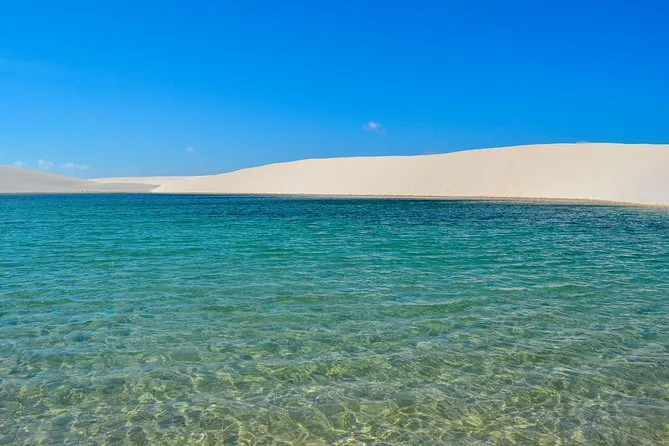

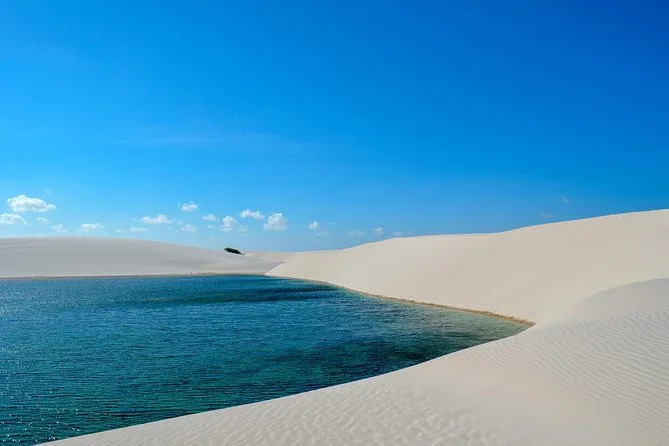




White dunes meet turquoise water in Brazil's strangest landscape—and you walk across it for three days
You trek 33 kilometers across dunes and between lagoons over three days, swimming in crystalline water, staying in a remote oasis, and meeting the people who live there year-round. All transport, meals, and accommodation are included; you bring fitness and an openness to discomfort. The high difficulty rating is not marketing—it's a fact about the terrain and the pace.
 3d
3d

Step-by-step itinerary
Day 1 — Barreirinhas to Baixa Grande
- Depart Barreirinhas by boat
- Stop at Vassouras Island
- Stop at Caburé beach
- Lunch at local restaurant
- Continue to Atins
- Board 4x4 vehicle
- Cross dunes and lagoons
- Arrive at Baixa Grande oasis
- Enjoy sunset
- Overnight at Redario no Oasis
Day 2 — Baixa Grande to Rancharia
- Start walk to Rancharia
- Stop for bathing and photos
- Arrive and accommodate in Rancharia
- Lunch included
- Free afternoon with native culture
- Overnight at Redario
Day 3 — Rancharia to Santo Amaro
- Walk to Lagoa do Cajueiro
- Enjoy lagoon colors and curves
- Transfer from lagoon to Santo Amaro
- End of expedition

The Experience
The boat leaves Barreirinhas early, cutting across the river toward Atins with two stops along the way. First comes Vassouras, where the monkeys are, then Caburé, a thin strip of sand where the river meets the ocean and the light does something odd to the water. Lunch happens at a local restaurant there, nothing fancy, and then you're in a 4x4 headed inland. The driver takes you 9 kilometers across dunes and shallow lagoons—the kind of terrain that doesn't look like it should exist in Brazil—and by evening you're at Baixa Grande, an oasis settlement deep inside Lençóis Maranhenses, watching the sun drop behind white sand that goes on forever.
Day two is the walk itself. Around 14 kilometers on foot, moving between lagoons the color of swimming pool water and sky, stopping to swim when the guide says it's safe, stopping to photograph when you need to catch your breath. The landscape doesn't repeat—each lagoon has its own curve, its own shade, its own temperature. You'll pass through communities where people live without the grid, where the rhythm is still set by water and weather, and the guide will explain how that works, what it costs, what it means. Lunch is included, eaten somewhere between the dunes. The afternoon is yours to sit, to talk to locals, to let the strangeness of the place settle into your bones.
The final day moves you toward Lagoa do Cajueiro, famous for its color and the way it bends through the landscape—another 10 kilometers, another set of stops. After that, the transfer back to Santo Amaro and the end of the trek. The whole thing is high difficulty: you need real fitness, a spine that can handle uneven ground, and a heart that won't complain about the heat and the distance. It's not a tour where you sit in a vehicle and watch. You're walking, swimming, sleeping in a basic redario—a traditional shelter—and eating what the region provides. If that sounds like what you came for, the private transportation, all meals, and the air-conditioned vehicle for the 4x4 sections mean you're not arranging logistics yourself.

What’s included
Your three days include private transportation from Barreirinhas, all meals (lunch on day one at Caburé, meals on days two and three in the oasis), accommodation in a redario for two nights, the 4x4 vehicle for the 9-kilometer dune crossing, and all entry fees and taxes. You arrange nothing except your own fitness and what you pack.
Operated by Receptivo Trilhatour
Is this one for you?Book this if you're fit enough for sustained walking in heat and sand, and you want to see a landscape that looks unreal without a guide telling you what to feel about it. The high difficulty is what makes the remoteness possible—easier routes don't go this deep into Lençóis Maranhenses.
Traveler reviews
More experiences you might like
 Lençóis Maranhenses 3-Day Trek: Dunes, Lagoons & Remote Communities★ 5.00 (13)3dEN · ESUS$ 578
 Lençóis Maranhenses: Lagoa Bonita 4x4 Circuit & River FerryCross the Preguiças River by ferry, ride a 4x4 through Barreirinhas, and climb dunes to swim in Lagoa Bonita, with guide and transport included.★ 4.86 (107)5hUS$ 30View ›
Top questions
How difficult is this trek really?
High difficulty. You're walking 14 kilometers on day two and 10 on day three across sand and uneven ground in heat. It's not technical climbing, but it requires solid cardiovascular fitness and a spine that tolerates impact. Not recommended for pregnant travelers, those with spinal injuries, or poor cardiovascular health.
What's included in the price?
Private transportation from Barreirinhas, all meals, accommodation in a redario (traditional shelter) for two nights, the 4x4 vehicle for the dune crossing, and all entry fees and taxes. You don't arrange anything yourself.
Where do you sleep?
In a redario, a basic traditional shelter at Baixa Grande on night one and Rancharia on night two. It's not a hotel. Bring a good sleep system and expect simple conditions.
What's the water like in the lagoons?
Crystalline and shallow, safe for swimming. The color varies by lagoon—some are turquoise, others have different mineral content. The water is cold.
Can you do this trek if you're not very fit?
No. The high difficulty rating and the warnings about cardiovascular health are not casual. If you're unsure, ask the operator to assess your fitness level before booking.
Lençóis Maranhenses 3-Day Trek: Dunes, Lagoons & Remote Communities
3d · EN · ES · at your hotel
from US$ 578 per person
★★★★★★★★★★5.0013 reviewsVerified traveler reviews via our booking provider
