

 +507 6792-0894


Cochabamba: Bolivian Cooking Class with Local Women & Lunch


Summary
Cook traditional Bolivian food in Cochabamba with women chefs
You’ll join local women in Cochabamba for a hands-on Bolivian cooking class where you’ll learn family recipes, share stories over homemade cocktails, and prepare a three-course meal together. Expect laughter, honest conversation, and food that carries real meaning — plus you’ll be supporting women rebuilding their lives through this experience.

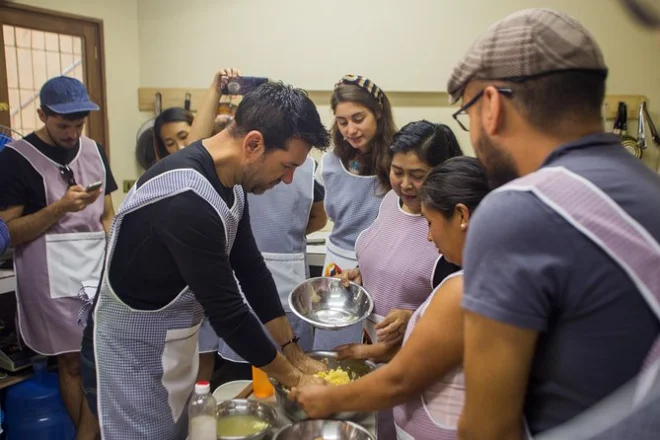
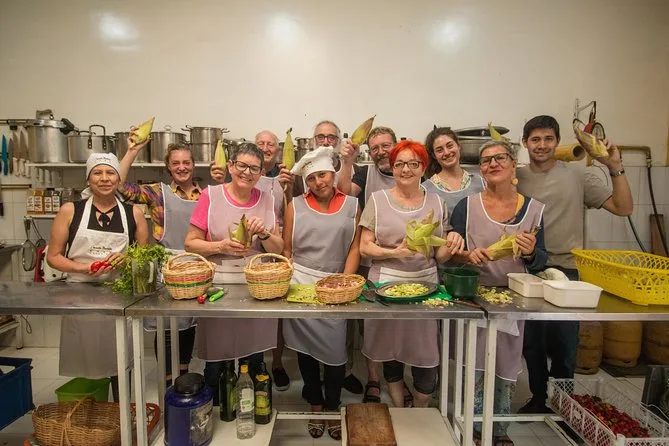
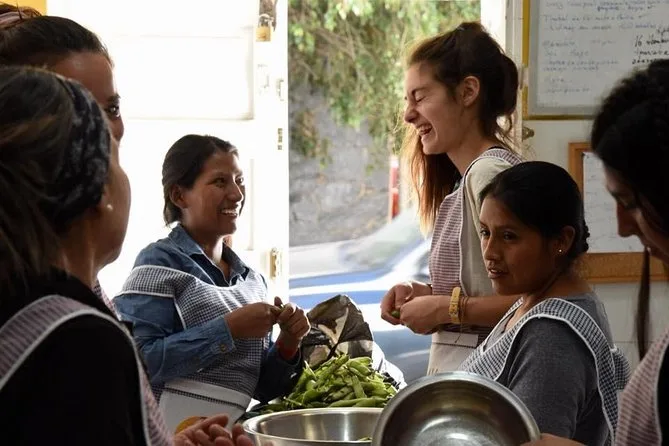
We ducked into the kitchen just as the afternoon rain started tapping on the tin roof — I could smell onions and something earthy, maybe chuño? Our guide, Maribel, handed me a knife and grinned. “You peel like my daughter,” she teased (I’m pretty sure that wasn’t a compliment). We were in Cochabamba for this Bolivian cooking class, and honestly, I didn’t expect to laugh so much. The room was warm with chatter — Spanish and English mixing together — and someone kept topping up our tumblers with a sweet purple drink I still can’t pronounce.
Maribel showed us how to slice potatoes the way her grandmother taught her — just knife, no peeler. My slices looked sad next to hers but she shrugged and said it’s all about practice. There was this moment when she told us why she started guiding these workshops; it got quiet for a second, except for the sizzle from the pan. She said sharing recipes helped her remember her strength. It’s strange how food does that — connects people who’ve never met before. The main keyword here is “Bolivian cooking class,” but really it felt more like being invited into someone’s home than any class I’ve taken.
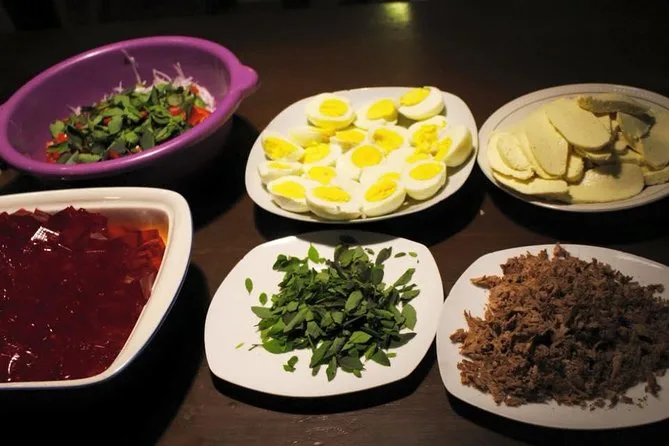
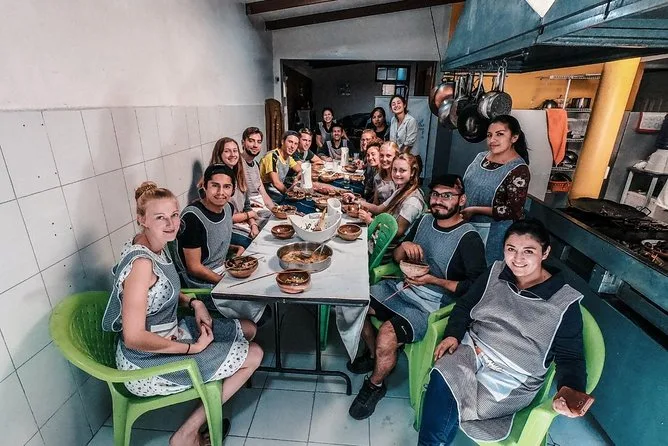
By the time we sat down to eat (three courses — I was full after two), everyone was swapping stories about their own families’ food traditions. The flavors were new to me: peanut soup with cilantro, something spicy with corn, and then this dessert that tasted like cinnamon and orange peel. We toasted with homemade cocktails Maribel whipped up between courses. I still think about that first spoonful of soup — simple but somehow comforting after all the chopping and laughter.
 3h
3h

Step-by-step itinerary
Day 1 — Bolivian cooking workshop experience
- Meet your female guide
- Learn about Bolivian cuisine history
- Prepare traditional 3-course meal
- Peel potatoes using a knife
- Enjoy food and cocktails
- Support women recovering from violence

Top questions

Is this Bolivian cooking class in English?
Yes, English-Spanish translation is provided during the workshop.
Where does the cooking workshop take place?
The class is held in Cochabamba, Bolivia’s gastronomic capital.
Who leads the Bolivian cooking workshop?
The classes are guided by local women trained as chefs who have overcome difficult situations.
What dishes will we cook in this class?
You’ll prepare a traditional three-course Bolivian meal using local ingredients.
Are drinks included in the experience?
Yes, both alcoholic and non-alcoholic cocktails are prepared during the workshop.
Is this activity wheelchair accessible?
Yes, all areas and surfaces are wheelchair accessible.
Can children join the cooking class?
Infants and small children can attend; prams or strollers are welcome.
Does my payment support local women?
Your booking directly supports these women economically and psychologically.

What’s included
Your day includes use of all utensils needed for cooking, guidance from local women chefs throughout every step of your three-course meal preparation, plenty of homemade food to enjoy at the end of the workshop, translation between English and Spanish if needed (sometimes other languages too), plus freshly made alcoholic or non-alcoholic cocktails shared during your time together before heading out into Cochabamba again.
 Super deal
  Free booking, free cancellation.
  Don't lose your place.


 Do you need help planning your next activity?
  +507 6792-0894


