

 +507 6792-0894


Sapa trekking villages homestay tour with local families






Summary
Explore Sapa’s hill tribe villages on a guided trekking adventure
You’ll trek through Sapa’s lush rice terraces with a local guide, share homemade meals in Hmong and Tay family homes, wake up to mountain views (and maybe a rooster), and cross bamboo forests to hidden waterfalls. Expect muddy boots and warm welcomes — this is real village life you’ll remember long after you leave.

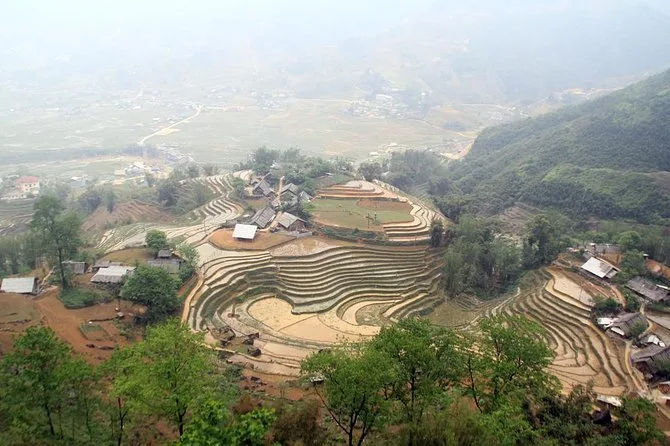
We’d barely finished our first bowl of noodle soup in Sapa when our guide, Minh, waved us over with a grin and a quick “Ready?” I was still tucking my rain jacket into my bag. The air smelled like wet earth and wood smoke — it had rained that morning, so the stone streets were slick underfoot. We set off down a narrow path past kids chasing chickens and old women selling tiny oranges from baskets. Minh pointed out the terraced rice fields tumbling down the hillsides — he said some of them were older than his grandmother. I tried to imagine planting each row by hand. My boots were already muddy before we even reached Y Linh Ho village.
The trekking was harder than I’d pictured (my knees complained more than once), but Minh kept us laughing with stories about his childhood here. At Lao Chai, we stopped for tea at his friend’s house — smoky and sweet, poured into chipped cups. There was this moment when the clouds broke just enough for sunlight to spill across the valley, lighting up the green terraces and water buffalo grazing below. I didn’t expect to feel so far from everything familiar, but also weirdly at home. That night in Ta Van, we cooked dinner with our Giay hosts — sticky rice over an open fire, pork with wild herbs I couldn’t name. I butchered the pronunciation of “cam on” (thank you) and everyone laughed, including me.
Woke up early to a rooster crowing right outside the window (not as charming as it sounds). Pancakes for breakfast — not what I expected in Vietnam but honestly hit the spot after all that walking. The bamboo forest on the way to Giang Ta Chai was damp and quiet except for birds calling somewhere above us. We picnicked by a waterfall; my socks never dried out but it didn’t matter much by then. In Ban Ho village that evening, our Tay hosts welcomed us like old friends — there was rice wine involved, which probably helped.
The last morning we walked along the river toward Nam Toong where Red Dao women in bright headscarves waved as we passed. Some kids tried to teach me a clapping game; I failed spectacularly but they cheered anyway. Before heading back to Sapa town, Minh handed out sandwiches for the bus ride — simple gesture but somehow felt like saying goodbye properly. Even now when I smell wood smoke or hear chickens squabbling somewhere, part of me goes right back there.
 3d
3d

Step-by-step itinerary
Day 1 — Arrival and trek to Ta Van village
- Pick up from Sapa hotels or bus station
- Lunch at Delta Sapa Hotel
- Walk to Y Linh Ho village
- Visit Lao Chai village and rest
- Trek to Ta Van village
- Dinner and overnight at local homestay
Day 2 — Trek Giang Ta Chai and Ban Ho villages
- Breakfast with views at homestay
- Trek through bamboo forest to Giang Ta Chai
- Picnic lunch with scenic views
- Trek to Ban Ho village
- Dinner and overnight at Ban Ho homestay
Day 3 — Visit Nam Toong village and return
- Breakfast at Ban Ho homestay
- Walk to Nam Toong village
- Walk back and dip near Lavie waterfall
- Lunch at homestay
- Drive back to Sapa and shower
- Shuttle to bus office and check-in
- Receive sandwiches for journey

Top questions

How difficult is the Sapa trekking villages homestay tour?
The trekking is moderately challenging with uneven paths and some steep sections; suitable for most fitness levels but not recommended for travelers with spinal injuries.
Are meals included during the Sapa trekking tour?
Yes, all meals are included: lunch on arrival day, breakfast/lunch/dinner on day two, breakfast/lunch on day three.
What kind of accommodation is provided?
You’ll stay in local family homestays with basic shared bathrooms; one night each in Ta Van and Ban Ho villages.
Is hotel pickup included from Sapa town?
Yes, pickup from your hotel or bus station in Sapa is included at midday on day one.
Will there be an English-speaking guide?
Yes, an English-speaking local guide leads the group throughout the trek.
Can I join as a solo traveler?
Yes, solo travelers can join group tours; you’ll meet other travelers along the way.
What villages will we visit during this tour?
You’ll visit Y Linh Ho, Lao Chai, Ta Van, Giang Ta Chai, Ban Ho, and Nam Toong villages.

What’s included
Your trip includes pickup from your hotel or bus station in Sapa town around noon on day one; all entrance fees; an English-speaking local guide throughout; two nights’ accommodation at family-run homestays (with shared bathrooms); all meals from lunch on arrival through lunch before departure; plus transfers back to Sapa town after trekking ends — sandwiches for your journey home are included too.
 Super deal
  Free booking, free cancellation.
  Don't lose your place.


 Do you need help planning your next activity?
  +507 6792-0894


