
Bukhara to Samarkand: Yurt Camp, Lake Aidarkul & Camel Ride
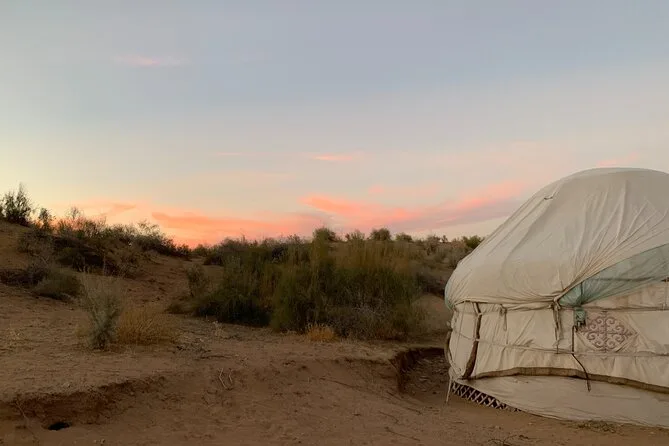

Nomadic nights, camel rides and lake swims between Bukhara & Samarkand
You’ll cross wild landscapes between Bukhara and Samarkand: wander Nurata’s holy springs with locals, swim or watch birds at Lake Aidarkul, then sleep beneath desert stars in a real yurt camp—with camel rides and music by firelight included. It’s not always comfortable but it stays with you long after you leave.
 2d
2d

Step-by-step itinerary
Day 1 — Bukhara to Yurt Camp via Nurata and Lake Aydarkul
- Visit Nurata town
- See Alexander’s Fort
- Visit Chashma Spring
- Drive to Lake Aydarkul
- Drive to yurt camp in Yangiganzan
- Check in to yurt
- Camel ride and bird watching
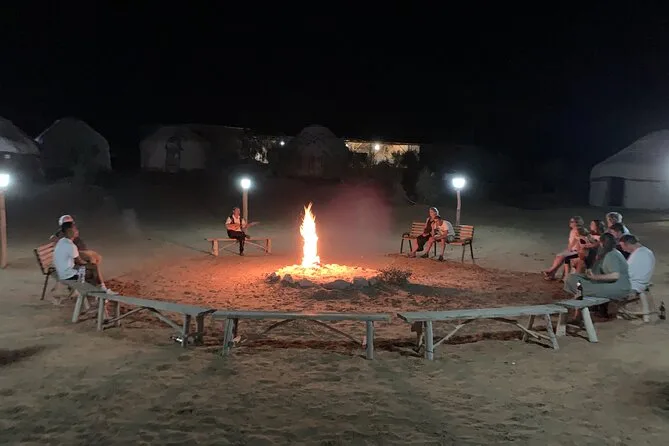
- Dinner and live music by campfire
Day 2 — Yurt Camp to Samarkand
- Have camp-style breakfast
- Drive to Samarkand

The Experience
The plan was simple—leave Bukhara early and make it to Samarkand by the next day, but our driver’s old radio kept cutting out, so we rode mostly in silence, just the rattle of wheels on that bumpy road. I didn’t expect to feel so far from everything so quickly. When we stopped in Nurata, our guide Bekzod pointed out Alexander’s Fort up on the hill. He told us how even Alexander’s own men couldn’t break into it—“Strong walls,” he said, thumping his fist against an imaginary gate. I tried to picture ancient soldiers here but got distracted by the smell of bread drifting from a nearby bakery. We walked over to Chashma Spring, where women in bright scarves filled bottles with water—I hesitated before stepping inside the mosque because I’d forgotten my scarf, but an older lady handed me hers with a soft smile. It was cooler near the spring; you could hear prayers mixing with birdsong.
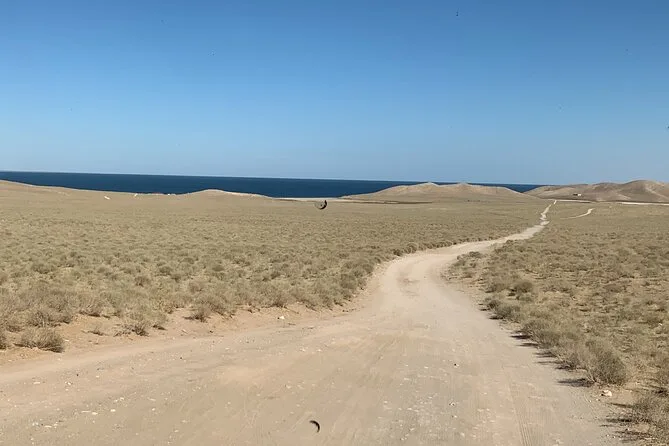
After another hour or two (honestly lost track), we reached Lake Aidarkul. The wind off the water was sharp and carried this mineral tang—almost metallic? Some local boys were splashing around even though it wasn’t exactly warm. I waded in up to my knees; colder than expected but kind of exhilarating. We ate hard-boiled eggs and tomatoes on a rock, watching herons stalk through the reeds. Then came the drive to Yangiganzan for our yurt camp—forty minutes of desert scrub and blue sky that never seemed to end.
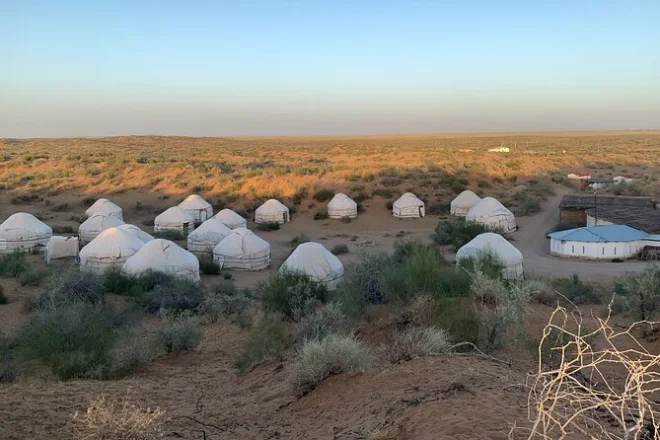
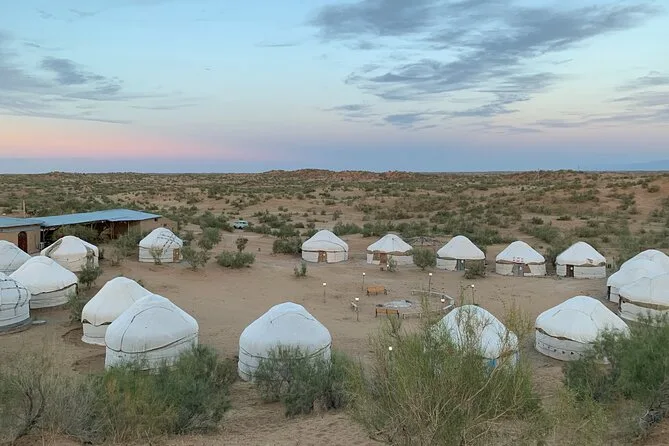
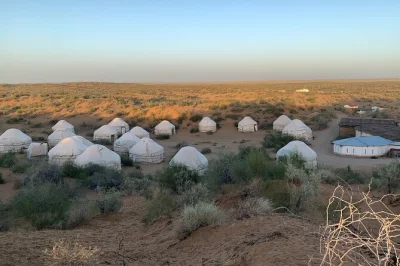
The yurts looked soft from a distance but inside you notice the mattresses are firm (not complaining—they’re warmer than they look). There’s an electric lamp if you need it, though honestly after sunset everyone drifted outside anyway. Dinner was plov cooked over open flame; I tried saying thank you in Uzbek (“rahmat”), which made one of the musicians laugh until he coughed. Later they played Kazakh songs around the fire while someone passed around tea that tasted faintly of smoke. I remember lying awake under thick blankets listening for jackals or maybe just stray dogs—hard to tell out here.
Woke up stiff but happy, sand still stuck between my toes from yesterday’s camel ride (those animals are grumpier than they look). Breakfast was simple—flatbread and jam—but tasted better than any hotel buffet I’ve had. The sun came up fast over the dunes as we piled back into the car for Samarkand, feeling like we’d been gone longer than just one night. There’s something about sleeping in a yurt that makes regular walls seem overrated now.

What’s included
Your journey includes all transfers between Bukhara and Samarkand with hotel pickup and drop-off, overnight accommodation in a traditional yurt (shared facilities), dinner by open fire with live nomadic music, breakfast in camp style, a camel ride across desert sands, plus stops at Nurata’s historical sites and time by Lake Aidarkul for swimming or birdwatching if weather allows.
Operated by Samaria Travel
More experiences you might like
 Bukhara to Samarkand: Yurt Camp, Lake Aidarkul & Camel Ride2dUS$ 199
 Private Walking Tour of Bukhara Old Town: All-Day Historic CityWalk Bukhara's Old Town with a private guide for five to seven hours, visiting the Ark citadel, Kalyan Minaret, trading domes and madrasahs★ 4.94 (72)5h–7hEN · DE +2US$ 68View ›
Top questions
Is pickup included for this Bukhara to Samarkand yurt camp tour?
Yes, all transfers including hotel pickup and drop-off are included.
Can I swim at Lake Aidarkul during this tour?
If weather permits, swimming at Lake Aidarkul is possible during your stop there.
Are meals provided at the yurt camp?
Dinner and breakfast are included at the yurt camp.
How long is the drive from Bukhara to Yangiganzan yurt camp?
The drive from Lake Aidarkul to Yangiganzan yurt camp takes about 40 minutes; overall travel time varies due to road conditions.
What are sleeping arrangements like at the yurt camp?
You’ll stay two people per yurt with proper beds (firm mattresses) and shared bathroom facilities including flushing toilets.
Is there live music at night during this tour?
Yes, local Kazakh musicians play traditional music around the campfire after dinner at the yurt camp.
When does this tour operate?
The yurt camp is open from late March through late October each year.
Are there any clothing requirements for visiting religious sites?
Yes—both men and women should wear clothing covering shoulders and knees; women should cover their hair when entering holy places like Chashma Spring mosque.
Bukhara to Samarkand: Yurt Camp, Lake Aidarkul & Camel Ride
2d · at your hotel
from US$ 199 per person

