
Salem Witch Trials Walking Tour with Local Guide


Walk Salem's 1692 with someone who grew up there
You walk downtown Salem with a licensed local guide who untangles the 1692 witch trials from the mythology. You see the memorial, the old jail, the first church, and the Bewitched statue while learning the actual history and colonial context. The tour includes a guide who knows Salem and can point you toward places locals actually go—so you leave with both the facts and the lay of the land.
 1h 15m

Step-by-step itinerary
Explore Salem Witch Trials history
- Visit Salem Witch Trials Memorial
- Tour the old town hall museum
- Learn history at Salem's first church
- See the Bewitched statue
- Visit the old witch jail

The Experience
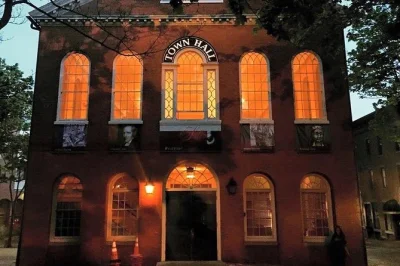
Jobian Day stops mid-sentence outside the old town hall and points to a window on the second floor. He's a Salem native, and he knows which stories get told wrong—the ones tourists hear everywhere, and the ones locals have been correcting for years. This walking tour isn't the sensationalized version. It's the one that puts the witch trials in the actual context of 1692 colonial Massachusetts, religious conflict, and the people who lived through it. You'll see the Salem Witch Trials Memorial, the old jail where the accused were held, and the Bewitched statue—but you'll understand what happened there, not just that something happened.
The tour moves through downtown Salem at a pace that lets you stop and look. You'll stand at the locations where events actually occurred, not just read about them from a distance. The old witch jail is where Giles Cory's story comes into focus—the one that doesn't fit the popular version. The first church of Salem gets its own moment because the religious tensions of the time are what made 1692 possible. And then there's the Bewitched statue, where Jobian will tell you the real history behind it, not the TV show version. It's the kind of detail that changes how you see the whole tour.
The whole thing takes a few hours through downtown, and it's designed so you actually retain something. You're not rushing between ten stops. You're getting the story straight from someone who's lived here, who knows which questions visitors actually ask, and who can point you toward the local coffee shop or the restaurant that doesn't make the tourist lists. By the end, you'll have the information to navigate Salem on your own—which is what makes the difference between a tour and a real visit.

What’s included
- Your tour includes a licensed, experienced local guide who leads you through downtown Salem.
- You visit the Salem Witch Trials Memorial, the old town hall, the first church of Salem, the Bewitched statue, and the old witch jail.
- The guide provides historical context for the 1692 events and can recommend local spots and navigation tips for the rest of your visit.
Operated by Wicked Awesome Tours
Is this one for you?Book this if you want the actual history of the 1692 witch trials rather than the sensationalized version, and you'd rather have a local guide untangle the colonial context than read a plaque on your own.
Traveler reviews
Compare the 7 similar options
 Salem Witch Trials Walking Tour with Local Guide★ 4.95 (95)1h 15mENUS$ 29
 Salem: Witch Trials & Hauntings Walking Tour with HistorianJoin a local historian for a 2-hour Salem tour covering 400 years of history, the 1692 Witch Trials, and haunting stories. Rain or shine, dogs welcome, groups up to 40.★ 4.89 (15,709)2h–2h 15mEN · ESUS$ 36View ›
 Salem: Witch Trials Walking Tour & Haunted History SitesStep into Salem’s witch trial past with a local guide, see the Witch Trials Memorial, haunted inns, and Hocus Pocus spots. Includes history and city stroll.★ 4.82 (1,355)1hENUS$ 29View ›
 Salem Night Ghost Tour: Witch Trials & Haunted Sites75-minute walking ghost tour through Salem's documented hauntings—Bridget Bishop's homestead, Old Burying Point cemetery, and Giles Corey's pressing site with local guide.★ 4.64 (4,450)1h 20mENUS$ 24View ›
 Salem Night Walking Tour: True Crime & Murder StoriesTwo-hour Salem walking tour covering real murders, the Boston Strangler connection, and haunted sites. Adults 13+, professional guide, rain or shine. Groups up to 40.★ 4.82 (1,550)1h 40m–2hENUS$ 36View ›
 Salem: Witch Trials Walking Tour with Storyteller GuideStep through Salem’s haunted past on a 90-minute walking tour. Visit witch trial sites, hear local stories, and end at the Memorial. Includes licensed guide.★ 4.70 (482)1h 30mENUS$ 31View ›
 Salem: Witch Trials, Revolution & Maritime History Walking Tour90-minute Salem walking tour covering 1692 witch trials, American Revolution sites, and Age of Sail history. Local guide with amplifier, 1 mile. Departs 12pm daily.★ 4.54 (110)1h 30mENUS$ 30View ›
Top questions
How long is the Salem Witch Trials walking tour?
The tour covers downtown Salem at a conversational pace. Plan for a few hours, though the exact duration isn't fixed—it depends on questions and how long you spend at each location.
Who is the guide?
Jobian Day, a Salem native and licensed tour guide, leads the tour. He's been doing this for multiple seasons and focuses on the actual history rather than the sensationalized version.
What locations do you visit?
The tour includes the Salem Witch Trials Memorial, the old town hall, the first church of Salem, the Bewitched statue, and the old witch jail where the accused were held.
Is the tour wheelchair accessible?
Yes, the tour is wheelchair accessible. Downtown Salem has public transportation options nearby, and transportation options are wheelchair accessible.
Can I bring children?
Yes. Infants and small children can ride in a pram or stroller. The tour is suitable for all physical fitness levels, though it's not recommended for travelers with poor cardiovascular health.
Are service animals allowed?
Yes, service animals are allowed on the tour.
What's included in the tour?
The tour includes a licensed, experienced local guide who leads you through downtown Salem and covers the 1692 witch trials in historical context.
Will I learn about the Bewitched TV show?
The tour covers the Bewitched statue and its actual history, but the focus is on the real 1692 events and colonial Salem, not the television series.
Salem Witch Trials Walking Tour with Local Guide
1h 15m · EN
from US$ 29 per person
★★★★★★★★★★4.9595 reviewsVerified traveler reviews via our booking provider
