

 +507 6792-0894


Stone Town: Private Walking Tour with History & Markets




Summary
Stone Town’s winding streets reveal history, culture and daily life with every step
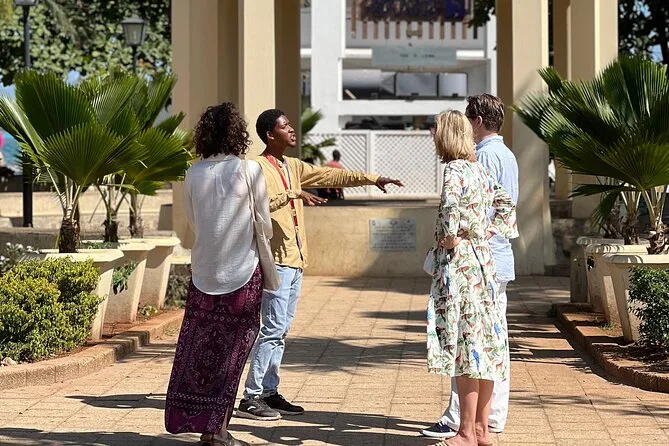
You’ll wind through Stone Town’s maze-like streets with a local guide who knows every shortcut and story. Taste spices at Darajani Market, hear moving tales at the old slave market site, admire Zanzibar’s famous carved doors and vibrant textiles, and share spontaneous moments with locals along the way. The city’s history feels alive here—sometimes heavy, sometimes joyful—always real.

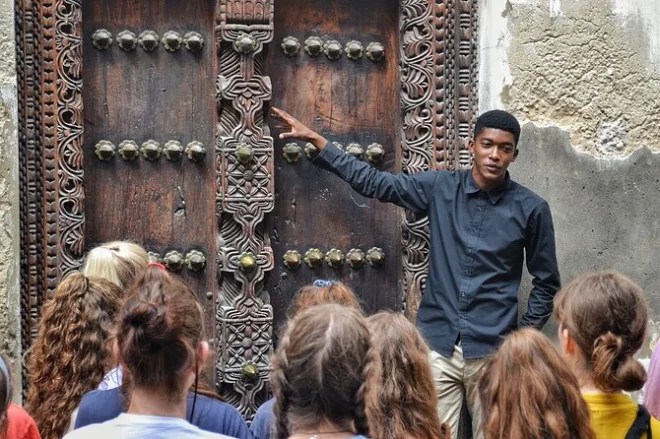
“You see that door?” our guide Hassan asked, pointing at a heavy wooden frame with brass studs. I’d just tripped over my own feet (again — those cobbles are no joke) and was still catching my breath from the thick, spicy air of Zanzibar’s Stone Town. The doors here really do tell stories, he said — about old sultans, traders, even rival families. I tried to repeat the Swahili name for one carving style; Hassan grinned and corrected me gently. I’m still not sure I got it right.
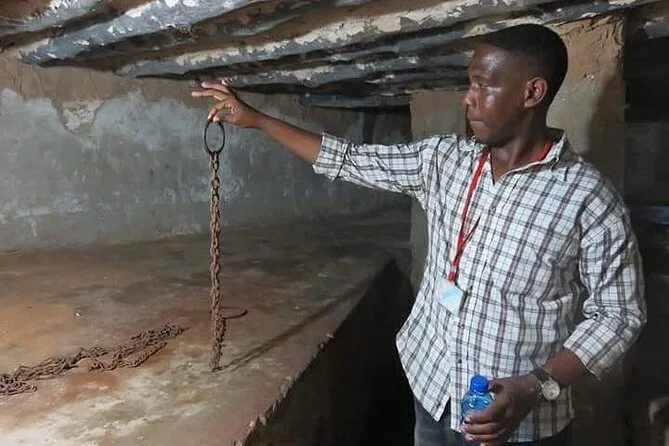
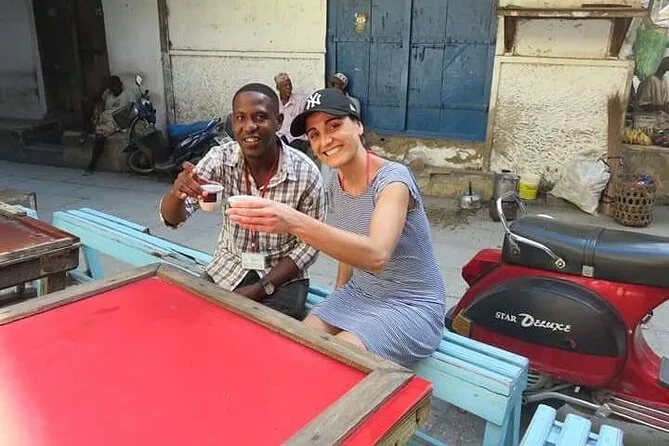
The morning light bounced off limestone walls as we ducked into narrow lanes that felt like secret passageways. Every turn brought something new — kids darting past us with schoolbooks, the smell of cardamom drifting from Darajani Market, old men sipping coffee on mismatched chairs. We stopped at the Anglican Cathedral where Hassan talked quietly about the slave market that used to stand there; his voice dropped lower and I felt a knot in my stomach. It’s strange how history can feel so close you almost trip over it.
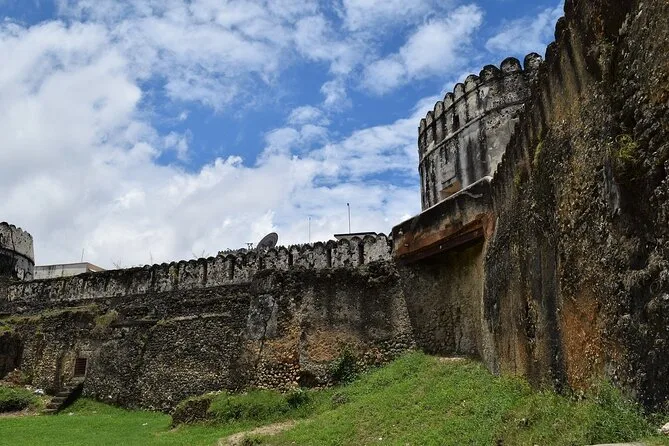
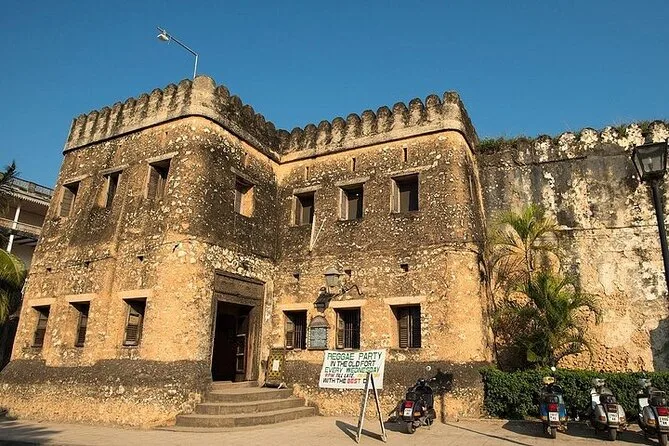
I’d seen photos of Stone Town’s House of Wonders and the Old Fort before, but standing there — hearing the echo of our footsteps in cool stone corridors — was different. There was this moment outside Freddie Mercury’s childhood home when a group of local kids burst out laughing at something on someone’s phone, and for a second all the centuries blurred together. We wandered through textile stalls where colors seemed brighter than anywhere else I’ve traveled; Li laughed when I tried bargaining in Swahili (I definitely overpaid). By the time we reached Hamamni Baths, my head was spinning with stories and smells and sunlight bouncing off whitewashed walls.
I still think about those doors sometimes — how each one hides a story you can’t see from a photo or guidebook. If you let yourself get lost (but not too lost — those alleys go on forever), Stone Town kind of gets under your skin.
 2h
2h

Step-by-step itinerary
Day 1 — Explore Stone Town's history and culture
- Meet your private guide
- Walk through narrow streets
- Visit Anglican Cathedral
- See House of Wonders museum
- Tour Palace museum
- Explore Old Fort
- Shop at Darajani market
- Visit Hamamni Baths
- See Catholic Cathedral
- View Freddy Mercury house
- Experience busy bazaar and streets
- Explore market street with textiles
- Hear stories about Stone Town's past
- Return to tour starting point

Top questions

How long does the Stone Town walking tour last?
The exact duration isn’t specified but covers key sites within central Stone Town on foot.
Is hotel pickup included for this private tour?
Pickup is included from hotels located in Stone Town if requested in advance.
Which attractions are visited during the tour?
You’ll see places like the Anglican Cathedral (former slave market), House of Wonders, Palace Museum, Old Fort, Darajani Market, Hamamni Baths, Catholic Cathedral, Freddie Mercury house, and textile markets.
Can the tour be customized to personal interests?
Yes—the private guide adapts each tour based on your interests such as history, shopping or architecture.
Is this tour suitable for all fitness levels?
Yes—it’s suitable for all physical fitness levels since it involves walking at an easy pace.

What’s included
Your day includes a private walking tour led by a professional guide who’ll meet you at your hotel in Stone Town if you request it ahead of time. All main sights are covered on foot—no entry fees or meals are mentioned—so bring comfortable shoes and curiosity for Zanzibar’s layered stories.
 Super deal
  Free booking, free cancellation.
  Don't lose your place.


 Do you need help planning your next activity?
  +507 6792-0894


