
7-Day Lemosho Route Kilimanjaro Hike from Arusha
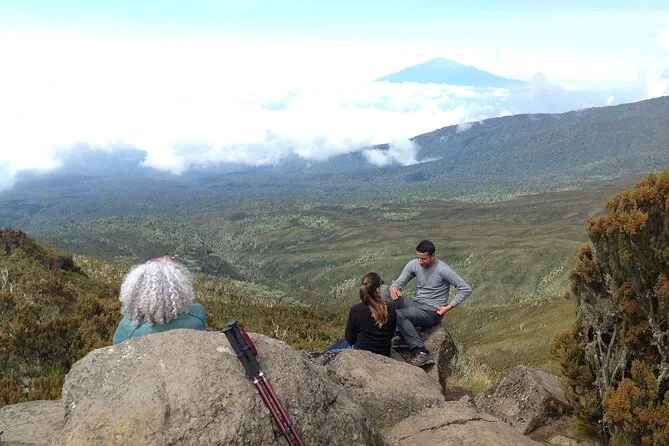
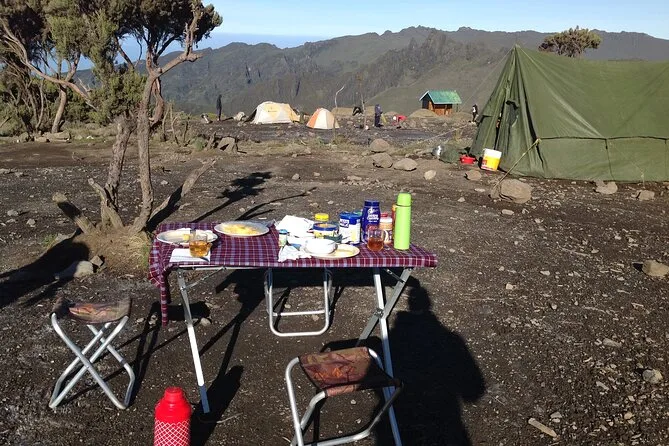
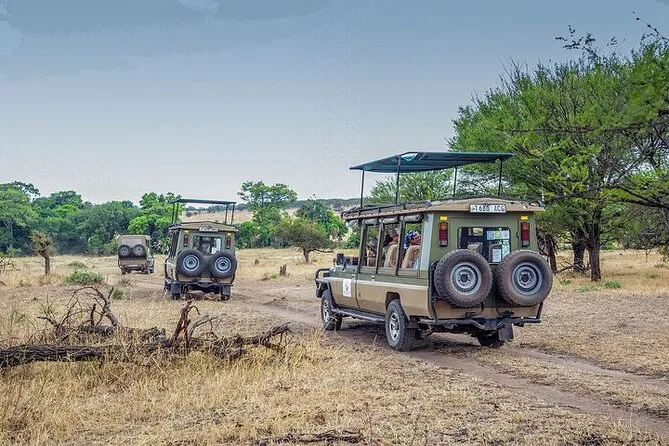

Climb Kilimanjaro on the route built for acclimatization, not crowds
The Lemosho route is a seven-day hike up Mount Kilimanjaro starting from Arusha, ascending the western side and descending the north, with a professional guide, all meals and park fees included. The route is newer and less trafficked than alternatives, which is why it carries a higher summit success rate. Pickup from your Arusha lodge is included; the guide speaks English, Spanish, Italian, French or one additional language.
 7d
7d

Step-by-step itinerary
Day 1 — Arusha to Big Tree Camp
- Breakfast at lodge in Arusha
- Drive to Boma N’gombe
- 15-minute break and optional shopping
- Drive to Londorossi Gate
- Complete paperwork at gate
- Start trek through rainforest
- Arrive at Big Tree Camp
Day 2 — Big Tree Camp to Shira Camp 2
- Breakfast at Big Tree Camp
- Trek through heather and moorland
- Cross streams and plateau
- Arrive at Shira Camp 2
- Overnight at Shira Camp 2
Day 3 — Shira Camp to Barranco Camp
- Breakfast at Shira Camp
- Trek south over lava desert
- Ascend to Lava Tower
- Lunch at Lava Tower
- Descend to Barranco Camp
Day 4 — Barranco Camp to Karanga Camp
- Breakfast at Barranco Camp
- Climb Great Barranco Wall
- Trek through rocky moors and streams
- Arrive at Karanga Camp
- Lunch and rest at camp
Day 5 — Karanga Camp to Barafu Camp
- Breakfast at Karanga Camp
- Ascend to Barafu Camp
- Familiarize with camp surroundings
- Dinner and summit briefing
- Early bedtime
Day 6 — Summit Day to Mweka Camp
- Short night at Barafu Camp
- Wake up before midnight
- Tea and biscuits
- Final push to Stella Point
- Reach Uhuru Peak at sunrise
- Descend to Mweka Camp
Day 7 — Descent to Mweka Gate
- Breakfast at Mweka Camp
- Take team photos
- Trek through moorland and rainforest
- Arrive at Mweka Gate
- Celebration, tipping, and farewell
- Receive certificates

The Experience
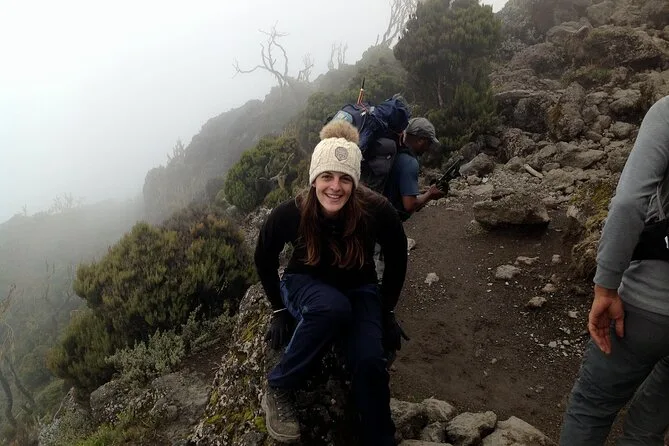
The trek begins with a drive from Arusha through Boma N'gombe and Sanya Juu to the Londorosi Gate at 2,100 meters, where you sign in at the KINAPA office before your first day of walking. The opening stretch crosses rainforest thick with tree roots and understory, a landscape that can bring rain and fog — you'll reach Big Tree Camp by late afternoon after roughly three hours on foot. This first day is short by design: it sets the pace and lets your body start adjusting to altitude before the real climb begins.
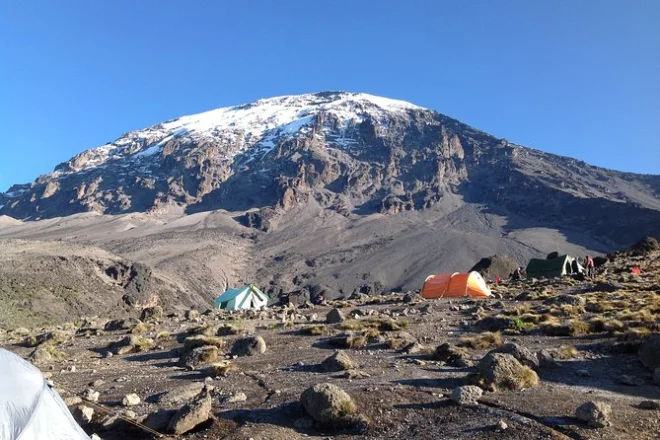
Days two through five take you up and across the mountain's western flank. You'll trek through heather and moorland into a black lava desert of heavy rocks, pass the Lava Tower at 4,630 meters where the air is thin enough to hear your own heartbeat, then descend into Barranco Valley before climbing the Great Barranco Wall — a steep rocky scramble that takes one to one and a half hours and is best tackled early to avoid the queue of other trekkers. By day five you're at Barafu Camp, the staging point for the summit push, sitting on an exposed ridge at 4,600 meters where the wind cuts hard and temperatures drop below freezing. The guide briefs you that night on what to expect in the hours ahead.
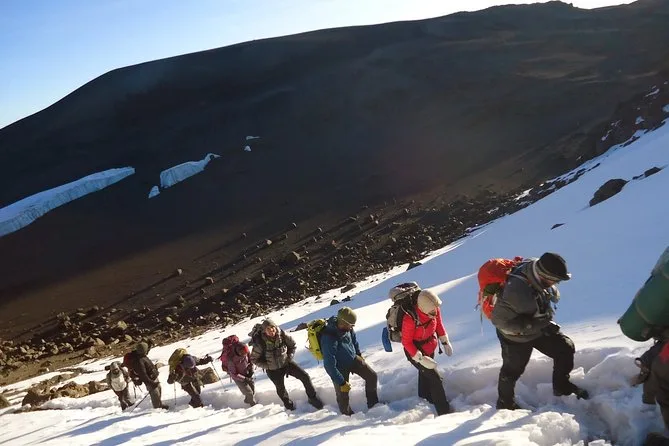
Summit day starts before midnight. You'll leave Barafu around 23:00 or 23:30 with tea and biscuits, climbing steeply over stone scree in darkness for five to six hours until you reach Stella Point on the crater rim at 5,740 meters. The final 150 meters to Uhuru Peak at 5,895 meters comes as dawn breaks — you'll pass the Rebmann Glacier and see Hans Mayer Point before the summit sign appears. After photos and a rest, you descend the same day to Mweka Camp at 3,080 meters. The final morning is a three to four hour walk down through moorland and rainforest to Mweka Gate, where the guide presents you with a certificate — green if you reached Stella Point, gold if you summited.

What’s included
- All meals throughout the seven days.
- all Mount Kilimanjaro park fees.
- a professional guide who speaks English, Spanish, Italian, French or one additional language.
- pickup from your Arusha lodge.
- overnight camping at Big Tree Camp, Shira 2 Camp, Barranco Camp, Karanga Camp, Barafu Camp, Mweka Camp and a final night in Moshi or Arusha.
Operated by Karagwe Tours & Safaris
Is this one for you?Choose the Lemosho route if you want to reach Uhuru Peak without fighting crowds on the trail — the western approach and longer acclimatization schedule are what make the higher summit success rate possible.
Traveler reviews
Compare the 11 similar options
 7-Day Lemosho Route Kilimanjaro Hike from Arusha★ 5.00 (1)7dEN · DE +3US$ 2,200
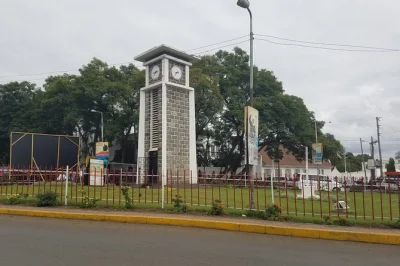 Arusha City Tour with Market & Museum: Local Guide PickupGuided walking tour of Arusha with hotel pickup, hitting the German BOMA museum, Tanzanite museum, Maasai Market and Central Food Market★ 4.98 (347)4hENUS$ 21View ›
 Arusha: Central Market Food Tour & Hands-On Cooking ClassStep into Arusha’s lively market, pick fresh ingredients, and cook Tanzanian dishes with a local host. Includes hotel pickup, lunch, and guided experience.★ 4.98 (117)5hENUS$ 43View ›
 Arusha cultural tour with markets and Tanzanite MuseumStart at the Clock Tower, walk through the Central Market and Maasai Market, tour the Tanzanite Museum and Natural History Museum★ 4.94 (105)4h–5hEN · DEUS$ 17View ›
 Tanzania Safari: Serengeti, Crater & Game DrivesSeven-day wildlife safari from Arusha covering Tarangire, Lake Manyara, Serengeti and Ngorongoro Crater with private guide★ 4.99 (706)7dEN · DE +3US$ 4,840View ›
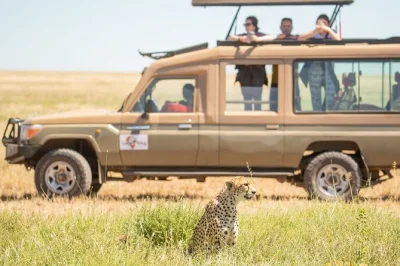 5-day Tanzania safari: Serengeti, Ngorongoro, Lake ManyaraFive-day wildlife safari through Tanzania's Northern Circuit visiting Tarangire, Ngorongoro Crater★ 4.99 (298)5dEN · DE +3US$ 3,744View ›
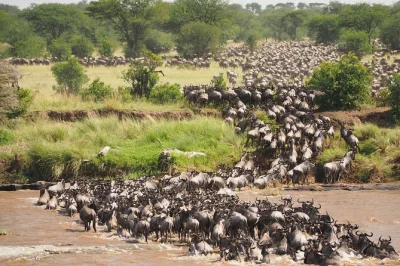 8-Day Serengeti Safari from Arusha: Wildebeest MigrationEight-day wildlife safari through Tanzania's Northern Circuit with game drives in Tarangire, Ngorongoro Crater and Serengeti National Park★ 4.99 (307)8dEN · DE +3US$ 4,257View ›
 5-day Tanzania safari: Tarangire, Serengeti, NgorongoroFive-day safari from Arusha through Tarangire, Serengeti and Ngorongoro Crater with expert guide, daily game drives★ 4.98 (81)5dEN · DE +4US$ 3,300View ›
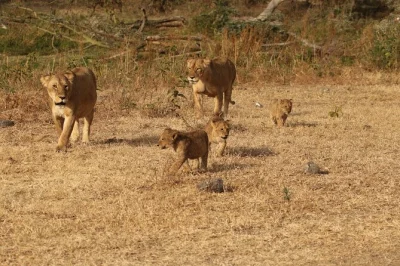 Serengeti & Ngorongoro Safari: 3-Day Game Drives & Crater3-day camping safari from Arusha into Serengeti and Ngorongoro crater with driver-guide, game drives and meals; pickup included and you sleep in the parks instead of town.★ 4.97 (786)3dENUS$ 850View ›
 3-Day Safari from Arusha: Tarangire, Ngorongoro & Lake ManyaraThree-day group camping safari from Arusha through Tarangire, Ngorongoro crater and Lake Manyara with game drives, park entry and meals included★ 4.97 (108)3dENUS$ 850View ›
 Arusha: Private Waterfall, Village Walk & Coffee Day TripWander mountain villages near Arusha, taste home-roasted coffee, swim at a hidden waterfall, and enjoy a farm lunch. All-inclusive with private guide & pickup.★ 4.93 (104)3h–8hENUS$ 97View ›
Top questions
What's the Lemosho route and why is it considered the best way up Kilimanjaro?
The Lemosho route starts on the western side of Mount Kilimanjaro and descends the northern side, making it newer and less trafficked than other routes. It's preferred for its remoteness, scenery and acclimatization profile, which is why it carries a higher summit success rate than busier alternatives.
How much walking do I do each day on this seven-day trek?
Day one is roughly three hours of walking through rainforest to Big Tree Camp. Days two and three involve longer stretches across moorland and lava desert, with day three including the climb to Lava Tower and descent to Barranco. Days four and five are moderate to challenging as you gain altitude toward Barafu Camp. Summit day involves five to six hours of steep climbing in darkness, followed by descent the same day. The final day is three to four hours downhill to the gate.
What happens on summit night and how cold does it get?
You'll be woken before midnight at Barafu Camp, have tea and biscuits, then begin climbing in darkness over stone scree toward the crater rim. The night is freezing cold and the route is steep and mentally demanding — most trekkers find this the hardest part of the trek. You'll reach Stella Point after five to six hours, then walk the final 150 meters to Uhuru Peak as sunrise breaks over the ice formations.
What's included in the price and what do I need to arrange myself?
All meals, all park fees and a professional guide are included. Pickup from your Arusha lodge is included. Tips, personal items and souvenirs are not covered. The guide is available in English, Spanish, Italian, French or one additional language.
What kind of physical fitness do I need for this hike?
The operator states that trekkers should have a high level of physical fitness. The Lemosho route is designed for acclimatization, which helps with altitude adjustment, but the summit push involves five to six hours of steep climbing at very high altitude in the middle of the night, and the overall trek demands sustained effort over seven days.
When do I get my summit certificate and what does it say?
At Mweka Gate on the final morning, your guide presents you with a certificate. If you reached Stella Point on the crater rim, you receive a green certificate. If you summited at Uhuru Peak, you receive a gold certificate.
7-Day Lemosho Route Kilimanjaro Hike from Arusha
7d · EN · DE +3 · at your hotel
from US$ 2,200 per person
★★★★★★★★★★5.001 reviewVerified traveler reviews via our booking provider
