

 +507 6792-0894


6-Day Rongai Route Kilimanjaro Trek: Northern Approach Climb


Summary
Kilimanjaro Northern Route Trekking: Day-by-Day Journey
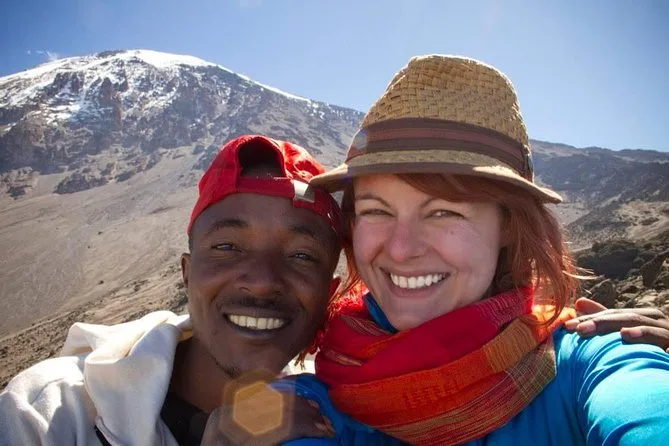
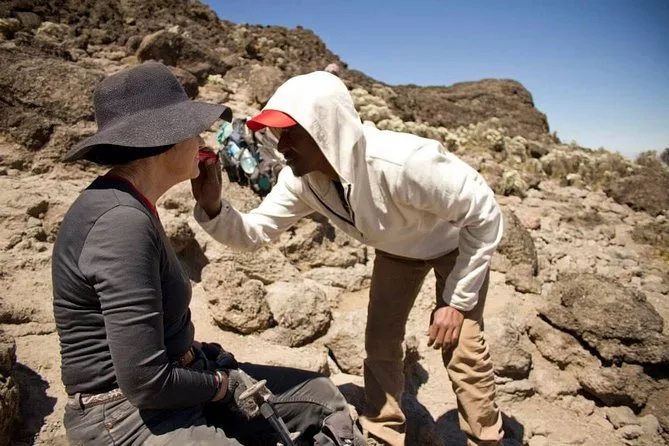
If you want to climb Kilimanjaro without crowds and see its wild northern side, this route gives you real variety—from farmland to rainforest to rocky moonscapes—and a true sense of achievement when you reach Uhuru Peak. Local guides know every twist of the trail and make sure you’re safe all the way up and down.

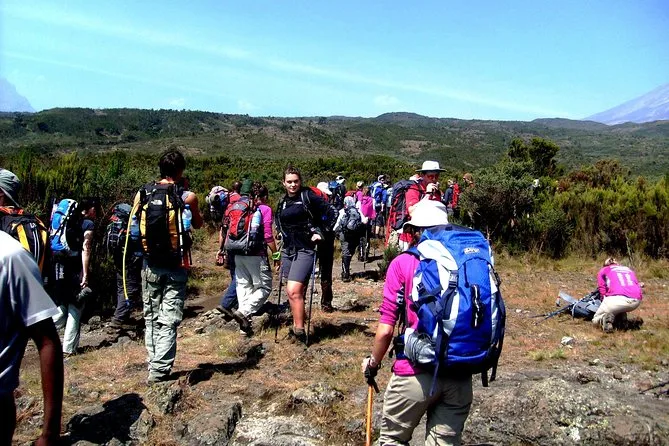
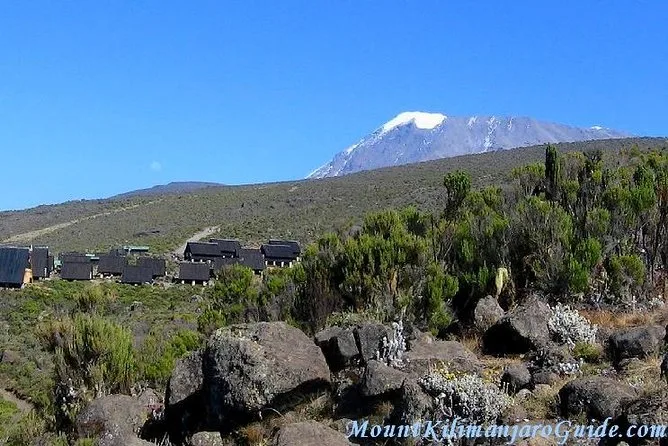
We kicked off our Kilimanjaro adventure early, grabbing a quick breakfast before meeting our head guide in Moshi. The drive to the park gate was bumpy—windows down, you could smell damp earth and hear the odd rooster in Nale Moru village. Registration took a bit, but soon we were weaving through maize and potato fields, kids waving as we passed. The path narrowed into pine forest, where everything felt cool and a little misty. I kept my rain jacket handy; the rainforest can surprise you with sudden showers. By late afternoon, Simba Camp came into view at 2,650 meters—simple but welcoming after a steady climb. The Kenyan plains stretched out behind us, hazy in the distance.
The next morning at Simba Camp was chilly—my breath fogged up as I packed up my sleeping bag. We set out for Kikelelwa Caves, moving steadily uphill for about six hours. Second Cave was our first real break; if clouds cleared, you could spot Kibo’s snowy cap and those wild Eastern ice fields way up high. Our guide, Joseph, pointed out some rare plants along the way—giant groundsels that only grow here. Dinner near Kikelelwa Caves tasted better than it should’ve after a long day on your feet.
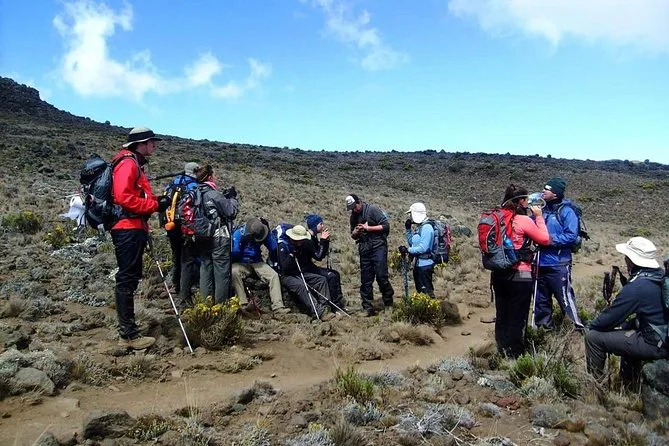
Day three felt different—shorter trek but steeper slopes leading up to Mawenzi Tarn Hut at 4,330 meters. The air got thinner and colder fast; I noticed my water bottle icing over during our acclimatization walk later that afternoon (we pushed up to about 4,500 meters just to get used to it). No trees up here—just rocks and wind whistling past the tents.
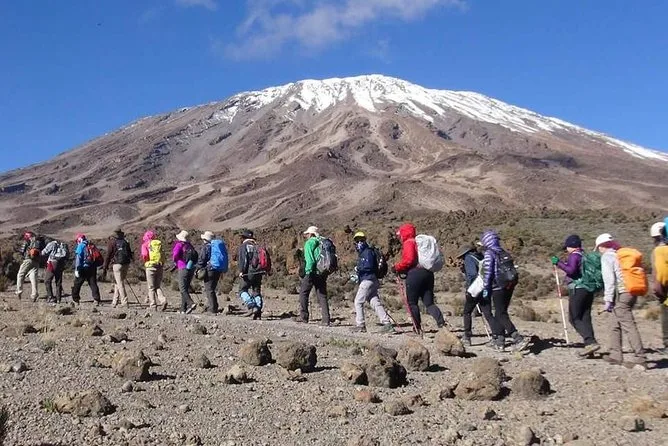
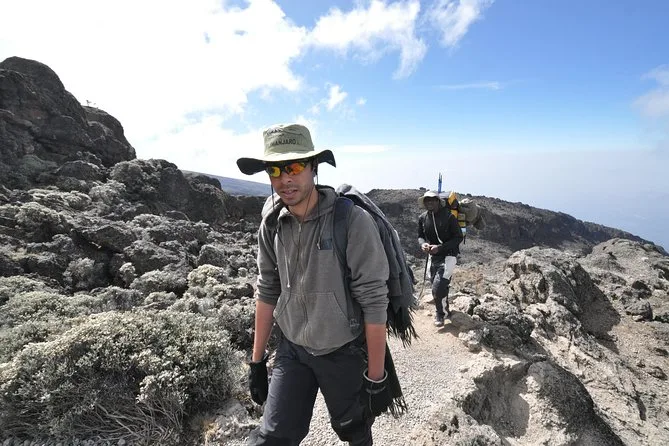
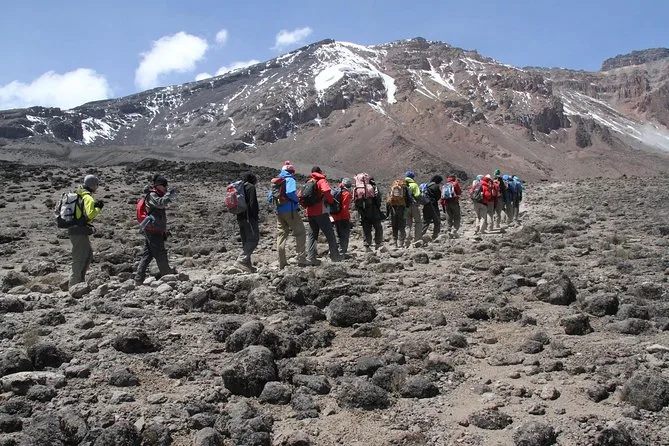
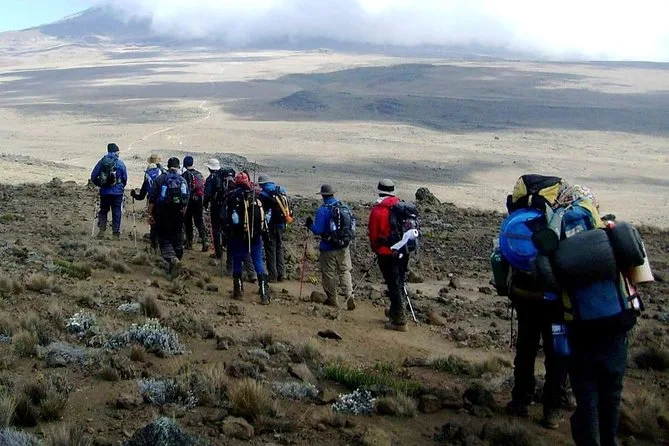
The crossing from Mawenzi to Kibo Hut is something else: wide open “lunar” landscape between two massive peaks. It’s quiet except for boots crunching on gravel and the occasional gust of wind whipping dust around your ankles. We reached Kibo Hut by mid-afternoon for an early dinner—everyone was nervous about summit night.
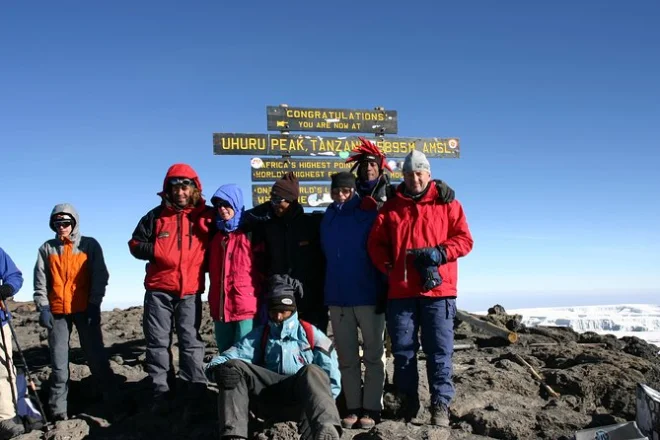
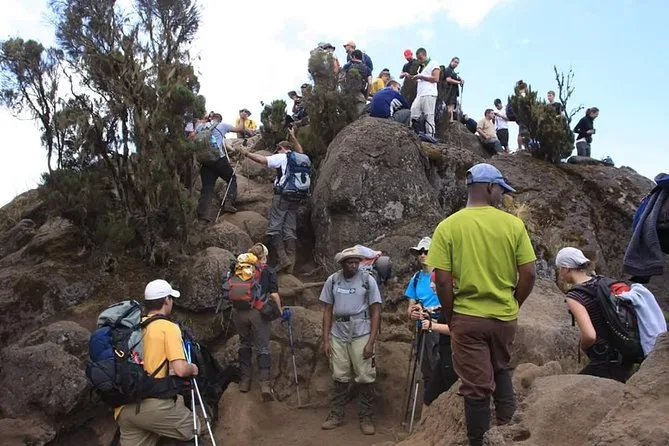
Summit day started before sunrise—a quick cup of tea at 1am before we set off by torchlight. It’s slow going in the dark; you just focus on each step until Gilman’s Point appears at 5,685 meters. Sunrise over Mawenzi Peak is worth every freezing minute—orange light spilling across endless clouds below us. After catching our breath (and a few tears), we pushed on to Uhuru Peak—the highest point in Africa at 5,895 meters! Coming down is tough on tired legs; we stopped back at Kibo for brunch before heading all the way down to Horombo Hut at 3,720 meters.
The last stretch winds through thick forest again—birdsong everywhere and the air getting warmer with every step toward Marangu Gate (1,700 meters). Signing out felt surreal; six days ago this all seemed impossible. Our driver met us with cold drinks and stories of other climbers who’d made it—or not.
 6d
6d

Step-by-step itinerary
Day 1 — Rogai Gate to Simba Camp
- Drive to Kilimanjaro National Park and start climb
- Walk through maize fields and pine forest to Simba campsite
Day 2 — Simba Camp to Kikelelwa Caves
- Trek to Kikelelwa Caves with ascent to Second Cave
Day 3 — Kikelelwa to Mawenzi Tarn Hut
- Climb steep grassy slopes to Mawenzi Tarn Hut
- Afternoon acclimatization walk to 4500m
Day 4 — Mawenzi to Kibo Hut
- Cross lunar desert saddle to Kibo Hut
Day 5 — Summit Attempt and Descent
- Summit climb to Gilman’s Point and Uhuru Peak
- Descend to Kibo Hut and then to Horombo Hut
Day 6 — Descent to Marangu Gate and Moshi
- Descend through forest to Marangu Gate
- Transfer to hotel in Moshi or Arusha

Top questions

Is this Kilimanjaro trek suitable for beginners?
This route needs moderate fitness—you’ll be walking several hours daily at altitude. If you’re new to trekking but active and healthy, it’s doable with preparation.
What kind of weather should I expect?
You’ll get everything from warm sun in the lowlands to cold nights above 4,000m—and possible rain in the forest zone. Layers and waterproofs are essential.
Are meals provided during the trek?
Yes—all meals are included while on the mountain. The crew cooks hearty food at camp each day (think rice dishes, soups, veggies).
Can children join this climb?
Kids can join if accompanied by an adult—but they need good fitness and must handle altitude well.

What’s included
Your park fees are covered along with camping equipment (tents, mats), crew salaries (guides/porters/cooks), airport transfers, and accommodation before/after your climb—all sorted so you can focus on reaching that summit.
 Super deal
  Free booking, free cancellation.
  Don't lose your place.


 Do you need help planning your next activity?
  +507 6792-0894


