
Cape Agulhas Day Tour: Two Oceans & Whale Watching

Explore Cape Agulhas and the Overberg Coast
You’ll travel from Cape Town to Cape Agulhas, passing lively townships, mountain passes, and coastal villages. Stand at Africa’s southern tip where two oceans meet, taste local flavors, and—if you’re lucky—spot whales in Hermanus. This tour blends local stories, real sights, and a bit of adventure off the usual path.
 8h–9h
8h–9h

Step-by-step itinerary
Cape Agulhas and Surroundings Tour
- Pickup from Cape Town accommodation
- Drive east on National Highway passing Khayelitsha township
- Pass Somerset West via Sir Lowry's Pass
- Pass Steenbras dam
- Drive through Elgin Valley
- Pass Hermanus, known as South Africa's bread basket
- Pass Caledon agricultural town
- Pass Bredasdorp in Overberg region
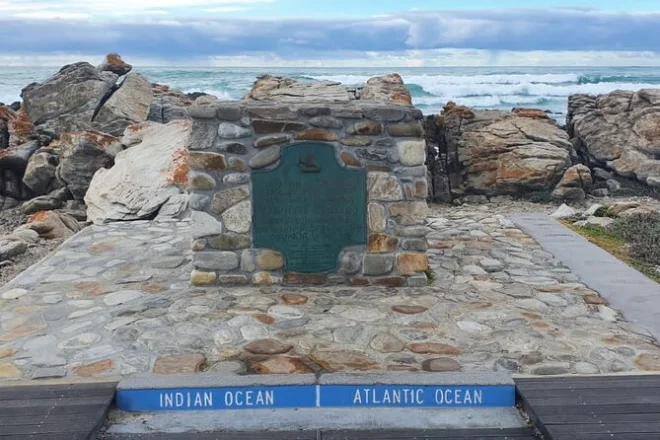
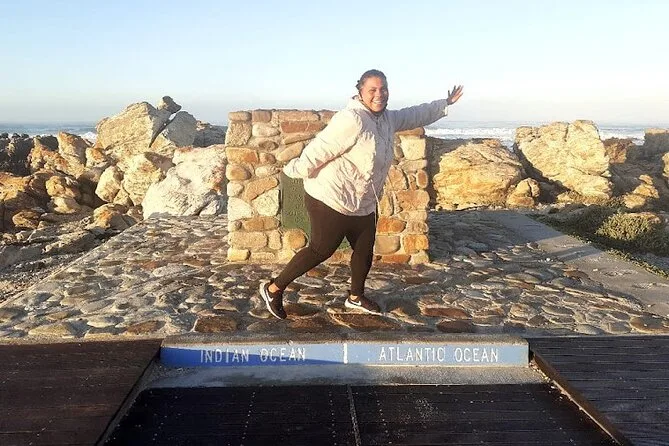
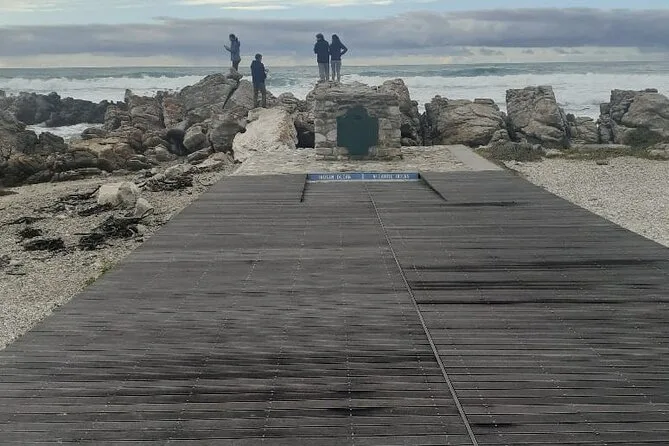
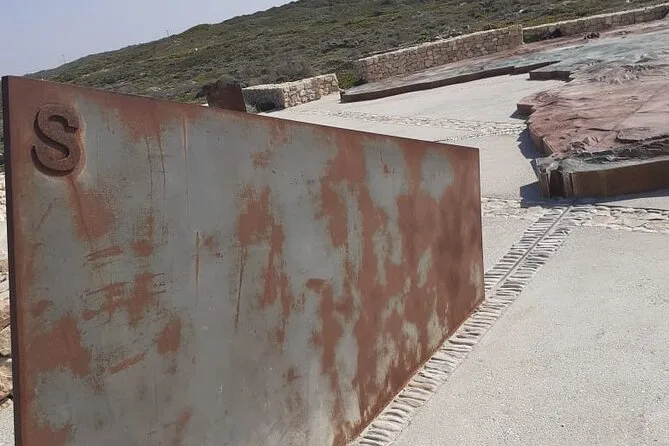
- Visit Cape Agulhas, meeting point of Indian and Atlantic Oceans
- Return drive through Elim, a Moravian Mission town
- Pass Gansbaai, home to Great White Sharks
- Optional stop for whale watching in Hermanus (seasonal)

The Experience
We left Cape Town just after sunrise, the city still waking up as we joined the N2 highway. The traffic was already picking up—locals heading into town, taxis weaving in and out, and the odd minibus packed with workers. Our guide, Sipho, pointed out Khayelitsha as we passed. You can’t miss it: rows of colorful shacks stretching out, laundry flapping in the wind, and a few street vendors already selling vetkoek and coffee from makeshift stalls. Sipho shared how Khayelitsha means “our new home” in Xhosa, and you get a sense of the community’s energy even from the window.
Once we cleared the city, the road opened up. We wound our way through Sir Lowry’s Pass—fog clinging to the mountain early on, then clearing to reveal the valley below. There’s this sharp, fresh smell in the air from all the fynbos after a bit of rain. We caught a glimpse of Steenbras Dam, which our guide said is one of Cape Town’s main water sources. Not far from there, we rolled into Elgin Valley. I didn’t know this before, but it’s where Appletiser was first made—Sipho joked that you haven’t really tasted apple juice until you’ve had it here.
Driving further east, we passed through Hermanus and Caledon. Hermanus is famous for whale watching, especially between July and November. Even out of season, you’ll see signs everywhere—whale murals, little shops selling whale-themed trinkets. Caledon felt quieter, mostly farmland and grain silos, with a faint smell of earth and hay when we stopped for a quick stretch.
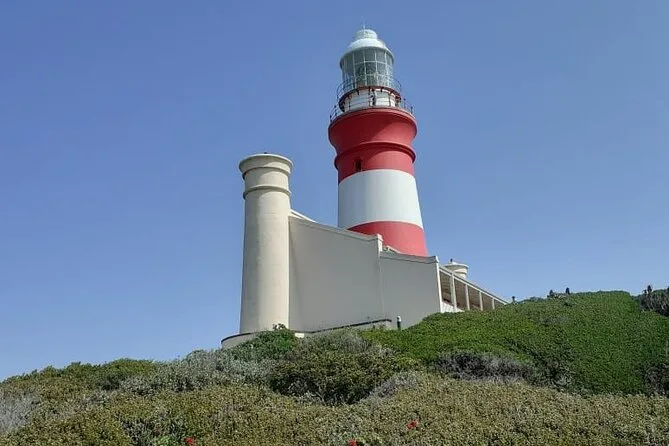
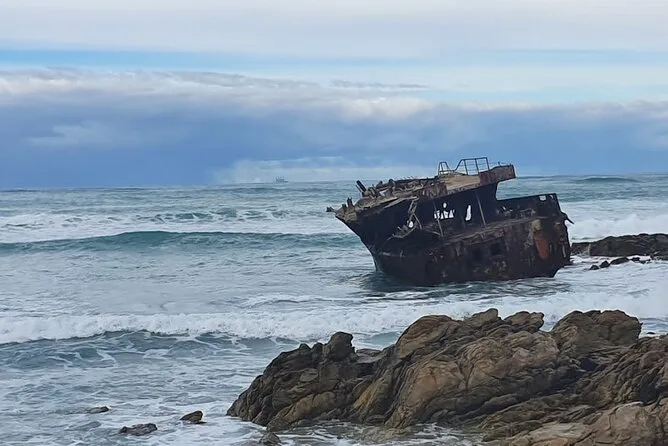
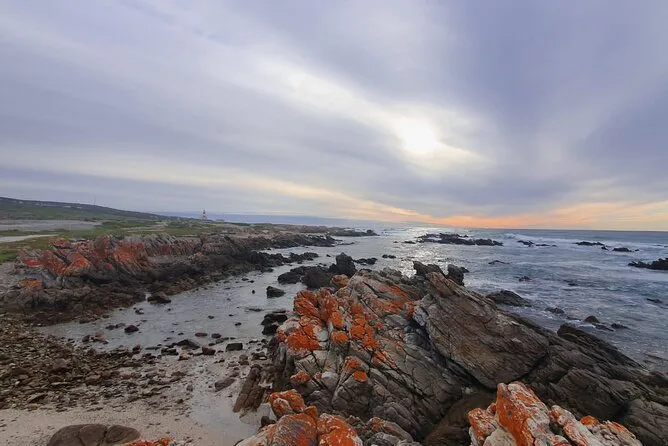
Bredasdorp came next—a busy little town, lots of bakkies parked outside the Spar, and folks chatting on street corners. Finally, after a few more twists and turns, we reached Cape Agulhas. There’s something wild about this place—the wind never really stops, and you can hear the waves crashing before you even see them. We walked down to the marker where the Indian and Atlantic Oceans meet. It’s not just a line on a map; you can actually see the water swirling and clashing. The old lighthouse stands watch nearby, and if you look closely, you’ll spot pieces of old shipwrecks poking out at low tide.
On the way back, we stopped in Elim—a tiny village with whitewashed cottages and neat gardens. It was so quiet you could hear birds calling from the church steeple. Gansbaai came next, known for its shark diving (though we just grabbed a coffee at a local café). Our last big stop was Hermanus again. If it’s whale season, you’ll want to linger here; locals gather along the cliffs, scanning the water for a spout or a tail flick. Even if you miss the whales, there’s fresh seafood to try and a salty breeze that sticks with you all the way home.

What’s included
- Your tour includes hotel pick-up and drop-off in Cape Town, a knowledgeable driver-guide, bottled water for the road, and a comfy air-conditioned vehicle.
- We’ll make stops for photos and snacks along the way.
- If you need an infant seat, just let us know in advance.
Operated by Glorious Cape Tours
Traveler reviews
Compare the 13 similar options
 Cape Agulhas Day Tour: Two Oceans & Whale Watching★ 4.96 (24)8h–9hENUS$ 284
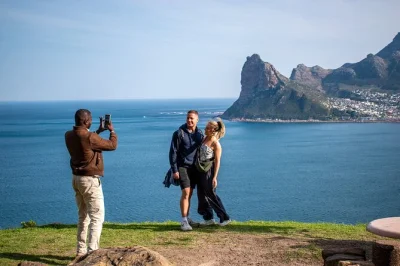 Cape of Good Hope and Boulders Penguins Day Tour from Cape TownHotel pickup and all-day guided tour along Chapman's Peak Drive to Cape Point and Boulders Beach, where you walk among African penguins★ 4.92 (3,715)9h–10hENUS$ 57View ›
 Cape Town Day Tour: Table Mountain, Cape Point & PenguinsNine to ten hours covering Table Mountain, Cape Point and Boulders Beach penguin colony with a guide, vehicle and entry tickets included★ 4.92 (1,158)9h–10hENUS$ 167View ›
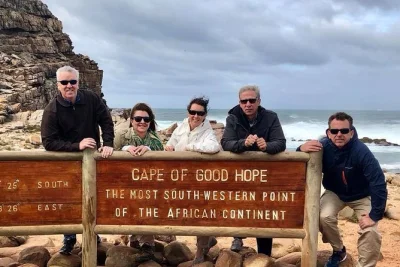 Cape Town Cape of Good Hope & Boulders Penguin tourHalf-day guided tour from Cape Town through Chapman's Peak Drive to Cape of Good Hope Nature Reserve and Boulders Beach penguin colony★ 4.81 (190)5hENUS$ 47View ›
 Cape Town: Two Oceans Aquarium & Mandela Balcony Heritage TourTwo Oceans Aquarium, Nobel Square statues, and Mandela's balcony speech site in Cape Town. Includes aquarium entry, guide, and Signal Hill views.4hEN · DE +1US$ 189View ›
 Cape Town: African Dinner & Drumming Experience with PickupFourteen-course African dinner in Cape Town with Djembe drumming. Hotel pickup included, dietary needs accommodated, wheelchair accessible.★ 4.70 (278)3h 30mENUS$ 62View ›
 Cape Town Walking Tour: Bo-Kaap & City HighlightsTwo-hour walking tour of Cape Town with certified guide through District Six, City Hall, Greenmarket Square, Slave Lodge and Bo-Kaap, with complimentary snack.★ 4.85 (62)2hENUS$ 41View ›
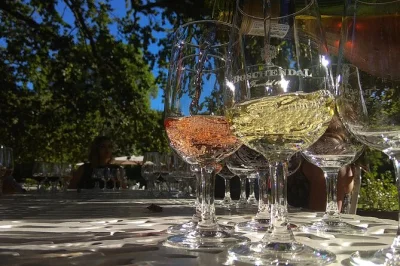 Cape Town Wine Tour: Stellenbosch & Franschhoek, 8 HoursVisit Stellenbosch and Franschhoek wineries on this eight-hour tour with six wine pairings, lunch, chocolate and champagne tasting, plus hotel pickup.★ 4.87 (1,161)8h 30mENUS$ 123View ›
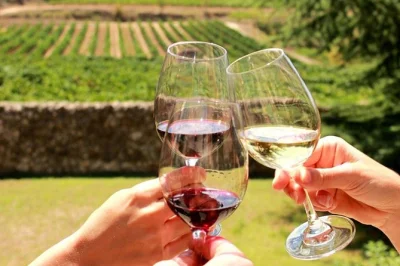 Stellenbosch Wine Tour from Cape Town: Tastings & Cellar VisitHalf-day wine tour from Cape Town to Stellenbosch with tastings at two estates, cheese and biltong pairings, and cellar visit. Hotel pickup included.★ 4.65 (368)5hENUS$ 59View ›
 Bo-Kaap & Cape Wheel: Cape Town History and ViewsBo-Kaap's colorful streets lead to District Six Museum's apartheid history, then 360-degree views from the Cape Wheel. Includes hotel pickup and multilingual guide.4hEN · DE +1US$ 189View ›
 Cape Town Wine Tour: Paarl, Franschhoek & Stellenbosch 3 WineriesFull-day wine tour through Paarl, Franschhoek & Stellenbosch. Visit 3 estates, taste 15 wines, tour cellars, enjoy cheese pairing & luxury coach pickup. 8 hours.★ 4.86 (6,080)8hENUS$ 56View ›
 Cape Town: Hop-On Hop-Off Bus & Optional CruiseOpen-top double-decker bus with 20 stops across 3 routes, 15-language commentary, and optional V&A Waterfront cruise. All-day pass includes free walking tours.★ 4.75 (1,987)30m–2h 20mUS$ 25View ›
 ATV Riding at Atlantis Dunes: 30-Minute Guided AdventureRide quad bikes through 50-metre white sand dunes at Atlantis Dunes on a 30-minute guided tour with helmet and photos included★ 4.28 (118)30m–35mENUS$ 35View ›
Top questions
How long is the drive from Cape Town to Cape Agulhas?
It takes about 3 hours each way, depending on traffic and stops along the route.
Is whale watching guaranteed in Hermanus?
Whale sightings are most likely from July to November, but nature can’t be guaranteed. Out of season, Hermanus is still worth a visit for its scenery and seafood.
Are there rest stops or places to buy snacks along the way?
Yes, we stop in small towns like Caledon or Bredasdorp where you can grab a snack or coffee. Bottled water is also provided in the vehicle.
Is this tour suitable for children or seniors?
Yes, it’s suitable for most ages and fitness levels. Specialized infant seats are available if needed.
Cape Agulhas Day Tour: Two Oceans & Whale Watching
8h–9h · EN · at your hotel
from US$ 284 per person
★★★★★★★★★★4.9624 reviewsVerified traveler reviews via our booking provider
