
Dakar, Casamance & Saloum Delta Private 8-Day Tour

Senegal Cultural Journey with Local Guides & Island Excursions
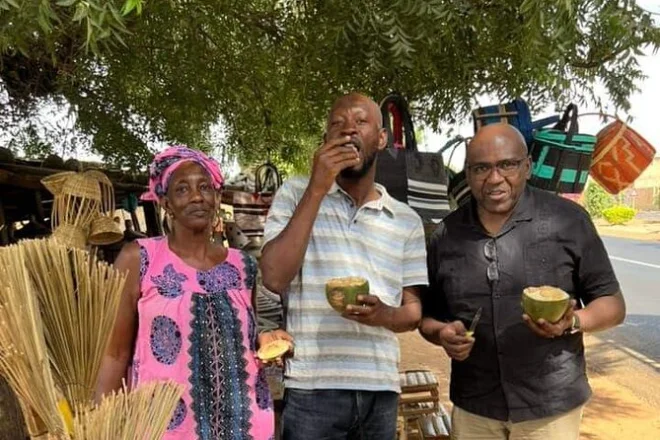
This is your chance to wander Dakar’s lively markets, reflect at Gorée Island’s House of Slaves, float in Pink Lake’s salty waters, meet villagers in Casamance impluvium huts, and spot wildlife on safari—all guided by locals who know every shortcut and story. Expect real encounters and moments you’ll carry home long after you leave Senegal.
 8d
8d

Step-by-step itinerary
Day 1 — Dakar City Tour & Museums
- Visit Place de l'Independence
- Explore Kermel Market
- See Presidential Palace
- Visit Cathedral of Notre-Dame-des-Victoires
- Climb African Renaissance Monument
- View Dakar Train Station
- Tour Museum of Black Civilizations
Day 2 — Goree Island & Pink Lake
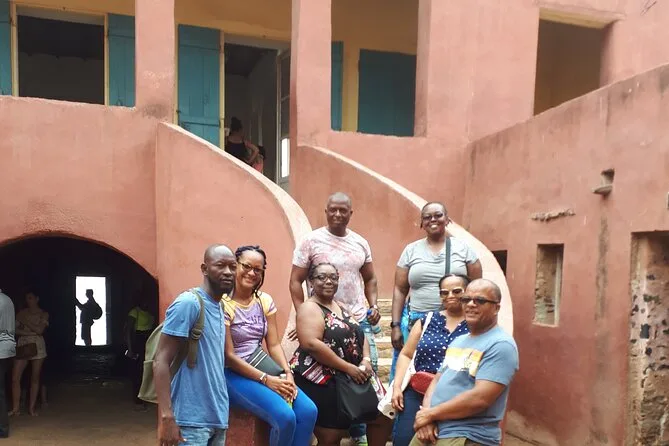
- Visit Goree Island and House of Slaves
- Explore Pink Lake (Lake Retba)
Day 3 — Flight to Ziguinchor & City Tour
- Flight from Dakar to Ziguinchor
- Tour Escale district
- Visit Ziguinchor Market
- Explore Enampore village and culture
Day 4 — Eloubaline Island & Villages
- Visit Eloubaline Island village
- Explore Edioungou pottery village
- Tour Oussouye village and royal house
Day 5 — Carabane & Mlomp Village
- Visit Carabane village and history
- Explore Mlomp multi-storey huts
- Visit Pointe St Georges and wildlife observation
- Tour Djimbering village and rice fields
Day 6 — Cap Skiring Beach Relaxation
- Relax at Cap Skiring beach
- Transfer to Ziguinchor airport and flight to Diass
Day 7 — Bandia Safari & Touba Mosque
- Safari at Bandia Reserve
- Visit Great Mosque of Touba
Day 8 — Marlodj & Joal-Fadiouth Tour
- Explore Marlodj village and savannah
- Visit Joal and Fadiouth twin villages

The Experience
“Look at those peacocks,” our guide said as we paused outside the Presidential Palace in Dakar—white walls gleaming under the sun, red carpet stretching out like a promise. The city buzzed around us: vendors calling out at Kermel Market, the scent of fresh fish mixing with ripe mangoes and spices. Inside the Black Civilizations Museum, I lingered over intricate masks and textiles while schoolkids darted past, their laughter echoing through the round halls. Dakar felt both grand and lived-in, its colonial buildings standing shoulder to shoulder with street art and music spilling from open windows.
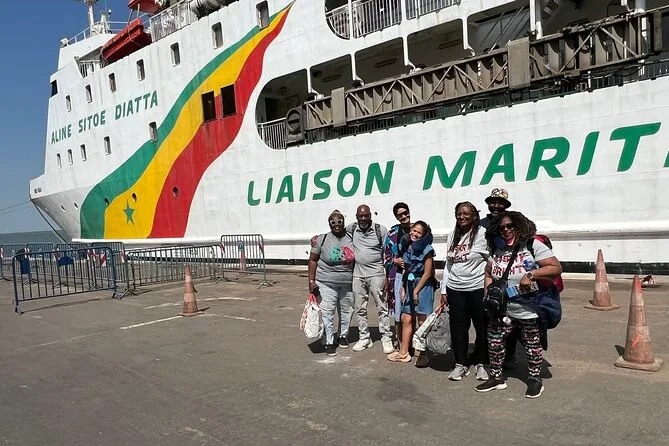
The boat ride to Gorée Island was short but left me quiet; the ochre houses and narrow lanes held a heavy history. Our guide didn’t rush us through the House of Slaves—he let us stand by that Door of No Return until we were ready to move on. Later at Pink Lake, women in bright wraps heaved salt onto piles that sparkled against the sky. I tried floating in the lake myself—oddly effortless, almost like being weightless for a moment.
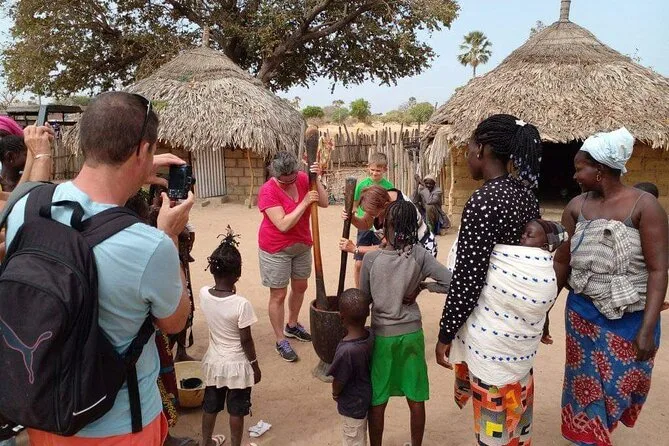
Flying south to Ziguinchor brought a change in pace. The air felt softer here, thick with green after a quick rain shower. In Enampore village, we ducked into impluvium huts where rainwater dripped into clay basins and elders shared stories about rice fields and sacred woods. On Eloubaline Island, kids waved from dugout canoes as we arrived; one woman showed me how she pounded rice with a steady rhythm that seemed older than memory itself.
By the time we reached Cap Skirring’s beaches—sand so fine it squeaked underfoot—I’d lost track of days. There were manatees at Pointe St Georges if you timed it right (we did), baobab trees wide enough for three people to link arms around near Joal-Fadiouth, and always someone ready to explain why three trees grow together in Mar Lodj: “It’s about living together,” an elder told us quietly as dusk settled over the delta.

What’s included
- Your journey covers all accommodation in comfortable hotels or village camps plus domestic flights between regions.
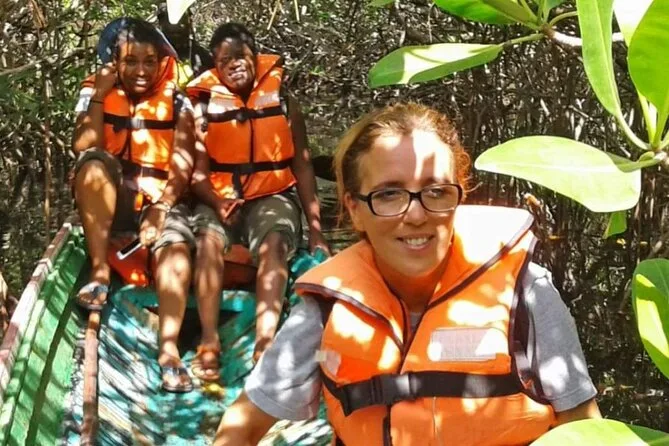
- Guided tours are led by knowledgeable locals who handle entry fees for museums and monuments along with all ground transportation—including boat rides to islands and safari vehicles at Bandia Reserve.
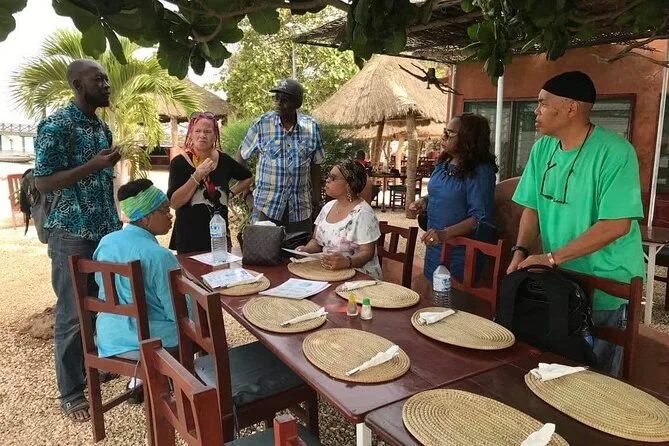
- Meals are available throughout (with some lunches included), so you can focus on exploring without worrying about logistics or missing out on real Senegalese hospitality.
Operated by Agsil Senegal Travel Tour
Traveler reviews
Compare the 13 similar options
 Dakar, Casamance & Saloum Delta Private 8-Day Tour★ 4.88 (8)8dEN · FR +1US$ 2,233
 Dakar and Gorée Island full-day tour with licensed guideFull-day guided tour of Dakar and Gorée Island with an experienced local guide, air-conditioned transport and lunch included★ 4.96 (274)8h 30mEN · FRUS$ 155View ›
 Dakar & Goree Island Full-Day Tour: Slave House & Colonial SitesFull-day Dakar and Goree Island tour with ferry, House of Slaves entry, lunch and air-conditioned transport★ 4.67 (174)8hENUS$ 160View ›
 Senegal: 7-Day Private Tour with Locals, Desert & WildlifeExperience Senegal’s vibrant cities, Lac Rose, Gorée Island, and the Lompoul desert on a private 7-day tour with local guides, hotels, and all fees included.★ 5.00 (21)7dEN · FR +1US$ 1,550View ›
 Dakar safari and lagoon tour: Bandia Park and SomoneSafari and boat tour from Dakar through Bandia Park wildlife reserve and Somone lagoon mangroves, with guide and lunch, to spot African wildlife.★ 4.48 (63)7hEN · DE +3US$ 244View ›
 Bandia Park Safari from Dakar: African wildlife conservation tourBandia Park safari from Dakar with 4x4 game drive, giraffes, rhinos and antelopes. Private transport and park fees included. Half-day excursion.★ 4.63 (24)4h–5hEN · FRUS$ 230View ›
 2-Day Pink Lake & Lompoul Desert Tour from DakarDiscover Senegal’s Pink Lake and Lompoul Desert on a 2-day tour from Dakar. Includes salt harvest, camel ride, local meals, and desert camp stay.★ 4.76 (17)2dEN · FRUS$ 445View ›
 Bandia Reserve Safari: African Wildlife in Private ReserveSafari in the Bandia reserve near Dakar with a guide and air-conditioned 4x4 vehicle — meet reintroduced African mammals across 3,500 hectares★ 4.35 (17)3h–4hEN · DE +3US$ 187View ›
 Senegal & Gambia: 8-Day Dakar, Pink Lake & Desert Tour8-day Senegal and Gambia tour from Dakar visiting Gorée Island, Lake Retba, Saint Louis, Touba Mosque, Fathala wildlife and Saloum Delta. Includes hotels, meals and guides.★ 5.00 (6)8dEN · IT +2US$ 2,100View ›
 Dakar Street Food Tour: Thiéboudienne & Local SpecialtiesSenegalese street food walking tour in Ngor, Dakar. Taste thiéboudienne, fataya, yassa with local guide. Includes water, coffee, 5 courses. 1.5km walk.★ 4.82 (11)2hEN · FRUS$ 115View ›
 Lac Rose private tour from Dakar: Boat ride and ATV or jeepPrivate day trip from Dakar to Lac Rose with boat ride through salt harvesting areas and ATV or jeep tour across sand dunes with pickup and guide.★ 4.33 (3)6hEN · FR +1US$ 195View ›
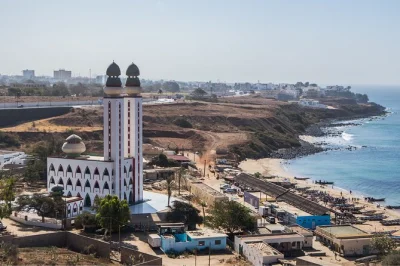 Private Walking Tour Dakar: Customized with Local GuidePrivate walking tour in Dakar with a local guide. Hotel pickup included; exterior views of key monuments, museums by request. Half or full day.★ 3.00 (4)2h–8hEN · IT +2US$ 41View ›
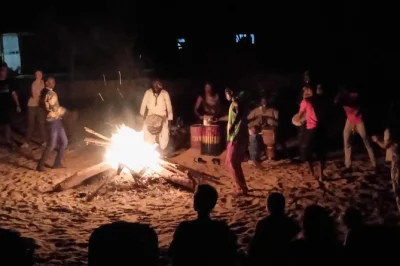 Lompoul Desert & Pink Lake: Camel Ride, Salt Lake Swim, African BalletFeel the orange dunes of Lompoul Desert, float in the Pink Lake, ride camels at sunset, and share stories under the stars with dinner and African Ballet. Includes pickup.★ 5.00 (3)2dEN · FR +1US$ 700per groupView ›
Top questions
How physically demanding is this private 8-day tour?
The tour is suitable for most fitness levels; there are some walks through markets and villages but plenty of breaks. Infants or small children can use strollers or prams throughout.
Are domestic flights included between Dakar and Ziguinchor?
Yes, your flight from Dakar to Ziguinchor is included as part of the itinerary for convenience and comfort.
Can I swim or float in Pink Lake during the visit?
You’ll have time to try floating in Pink Lake—its high salt content makes it easy to stay afloat—and you can join other visitors enjoying this unique experience.
Will I get to interact with local communities during this trip?
Absolutely; you’ll visit several villages where guides introduce you to residents who share their traditions—from pottery making to rice pounding—in authentic settings.
Dakar, Casamance & Saloum Delta Private 8-Day Tour
8d · EN · FR +1 · at your hotel
from US$ 2,233 per person
★★★★★★★★★★4.888 reviewsVerified traveler reviews via our booking provider
