
Glasgow Bike Tour: City Landmarks, Clyde Bridges & West End


Cycle Glasgow’s bridges, parks & quirky corners with stories at every turn
You’ll roll through Glasgow’s parks and riverside paths on vintage bikes with a small group led by a local guide. Expect laughs over city slang, quiet moments at the Cathedral, quirky stops like Clydeside Distillery—and plenty of stories you won’t find in any guidebook. You’ll finish feeling more connected to Glasgow than you expected.
 3h
3h

Step-by-step itinerary
Glasgow bike tour highlights
- Meet guide and get bike
- Visit People's Palace & Winter Gardens
- See unique building design
- Explore Gilmore Hill campus
- Visit Kelvingrove Art Gallery and Museum
- Tour Glasgow Cathedral
- View three-masted ship
- Stop at Clydeside Distillery
- Experience lively venue with 50,000 capacity
- See skateboards and aeroplanes exhibit
- Cycle Kelvin river leafy path
- Cross the Squinty Bridge
- Optional stop at canal built in 1790
- Learn about Squiggly and Squinty Bridges

The Experience
I didn’t expect to start my day in Glasgow wobbling on a bright red postie bike, but there I was—helmet slightly askew, trying not to look too obviously like a tourist. Our guide, Jamie, had this way of making everyone relax right away. He handed out the bikes (all these sturdy old Pashleys), cracked a joke about “skint-flints” and museum entry fees, and off we went through quiet lanes toward the river. The air smelled faintly of rain on pavement—classic Glasgow—and someone behind me rang their bell just because it sounded cheerful.
The route twisted along the Kelvin river first—lush and green even though it was barely spring. We passed people walking dogs, a guy playing tin whistle under a bridge (not sure if he was any good but it made me smile). Jamie pointed out the Kelvingrove Art Gallery and Museum (“cost £257,000 to build—bargain!”), then we rolled past skateparks and old stone bridges with names like “Squinty” and “Squiggly.” I tried to keep up with all the local slang but mostly just nodded along. At one point we stopped by Clydeside Distillery; I could smell whisky in the air, or maybe that was wishful thinking.
There was this moment near Glasgow Cathedral where everything felt still for a second—the bells echoed over us and you could almost forget you were in a city at all. Jamie told us about 1189 (the year, not the time) and I definitely butchered my attempt at saying “Necropolis.” He laughed; no judgment. The group felt like friends by then—someone shared tablet from their pocket (so sweet it made my teeth ache) and we coasted down toward People’s Palace & Winter Gardens where apparently someone once tried to stop Glaswegians drinking by building a palace. Didn’t work.
I still think about that view from the bridge over the Clyde—grey water moving fast beneath us, gulls circling overhead, city stretching out on both sides. We finished up back where we started, legs pleasantly tired but not wrecked. Three hours went fast; I saw more of Glasgow than I ever would’ve managed alone. If you’re even half-curious about cycling here, honestly just go for it—it’s nothing like being stuck on a bus.

What’s included
Your ride includes use of a standard bicycle (or e-bike upgrade), helmet if desired, guidance from an English-speaking local guide who keeps things lively throughout, free secure parking for direct bookings—and yes—a classic Glasgow treat partway through to keep your energy up before finishing back at your starting point.
Operated by Glasgow Bike Tours
Traveler reviews
Compare the 13 similar options
 Glasgow Bike Tour: City Landmarks, Clyde Bridges & West End★ 4.88 (101)3hEN£ 59
 Glasgow: Gin Tea Bus Tour with Scones & City LandmarksStep onto a vintage bus in Glasgow for a gin tea experience, homemade scones, and city views. Includes pickup at George Street and classic afternoon tea.★ 4.67 (87)1h 30mEN£ 53View ›
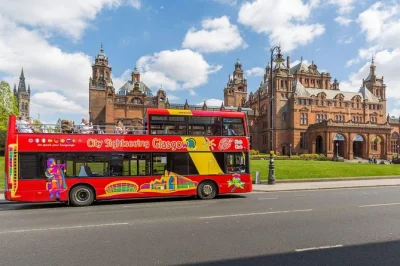 Glasgow Hop-On Hop-Off Bus Tour: Red Route & Live GuideRed Route bus tour in Glasgow with 24 stops including George Square, Kelvingrove Museum, and Riverside Museum. 1 or 2-day pass, audio in 7 languages, live guide.★ 4.32 (2,045)1h 40mEN£ 20View ›
 Glasgow City Bike Tour and Craft Beer Tasting: Beer at a local micro-breweryBike Glasgow's cycle-friendly lanes past Kelvingrove and Glasgow Cathedral with a local guide, then taste craft beer at a microbrewery★ 5.00 (6)4hEN£ 85View ›
 Glasgow Bike Tour: West End, Kelvingrove & RiversSmall-group Glasgow bike tour covering West End, Kelvingrove Museum and both rivers. Refurbished Royal Mail bikes, helmet included, sweet snack. Around 3 hours.★ 4.98 (171)3hEN£ 60View ›
 Glasgow Small Group E Bike Tour: Highlights & Hidden CornersRide a 12-mile loop through Glasgow on an e-bike or standard bike with a live guide, visiting Kelvingrove Museum, Glasgow Cathedral and the Necropolis★ 5.00 (24)3hEN£ 57View ›
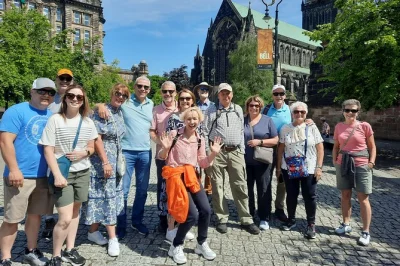 Glasgow City Centre Walking Tour: Local Guide, Real StoriesWalk Glasgow's main squares and medieval landmarks with a local guide who knows the city's history, architecture and humour—1.5 hours★ 4.82 (1,567)1h 30mEN£ 14View ›
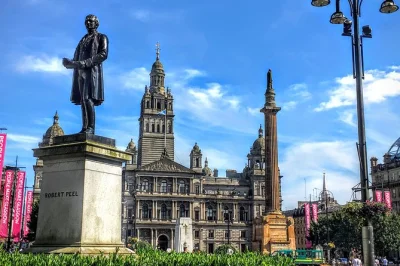 Glasgow: Private Walking Tour of Must-See Sights & StoriesStart your Glasgow day with a private walking tour—see George Square, Buchanan Street, the Cathedral, and hear local stories with a guide. Includes hotel meet & greet.★ 4.94 (182)4hEN£ 254per groupView ›
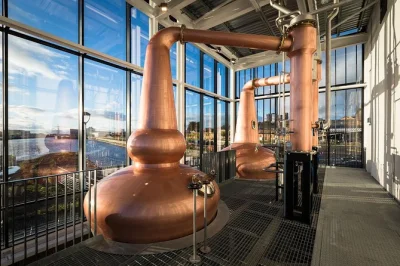 Clydeside Distillery tour Glasgow: Three drams tastingTour Glasgow's first single malt whisky distillery in over 100 years with a live guide, distillery walk and three-dram tasting in the Still House overlooking the River Clyde.★ 4.85 (972)1hEN£ 19.50View ›
 Glasgow eBike and Whisky Tour: Clydeside DistilleryFour hours on an eBike through Glasgow's street art, parks and riverside, ending with whisky tasting and a distillery tour at the award-winning Clydeside.★ 5.00 (15)4hEN£ 130View ›
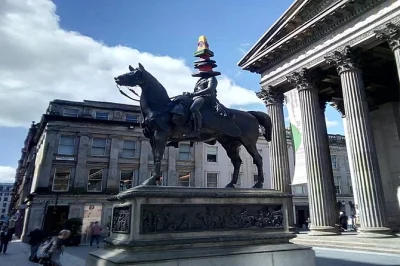 Glasgow Walking Tour: Victorian Architecture and LandmarksWalk Glasgow's city centre from Royal Exchange Square to Glasgow Cathedral with a local guide who covers the city's Victorian architecture★ 4.99 (599)3hEN£ 15View ›
 Glasgow: Ghosts & Gruesome Tales Night Walking TourStep into Glasgow’s haunted past with a night walking tour of ghost stories, graveyards, and eerie secrets—includes local guide and pub finish.★ 4.99 (150)2hEN£ 18View ›
 Glasgow Ghost Tour Self-Guided: Dark Tales from George SquareSelf-guided walking tour through Glasgow with audio guide covering grave robberies, haunted hotels and Victorian architecture—start in George Square★ 3.00 (1)1h–1h 15m£ 6.83View ›
Top questions
How long is the Glasgow bike tour?
The tour lasts around 3 hours from start to finish.
Is this bike tour suitable for beginners?
Yes, it’s designed for all fitness levels—even if you’re not an experienced cyclist.
What kind of bikes are used on this tour?
You’ll ride refurbished vintage postie bikes (Pashley Pronto Mailstar models).
Are helmets provided?
Yes, helmets are included if you want one.
Which landmarks do we visit during the tour?
You’ll see Kelvingrove Art Gallery and Museum, Glasgow Cathedral, People’s Palace & Winter Gardens, Clydeside Distillery, plus several bridges along the Clyde.
Is lunch or food included?
A classic Glasgow treat is included during the ride.
Can I book an e-bike instead?
E-bikes are available for an extra £20 supplement.
Where does the tour start?
You meet your guide at the starting point in central Glasgow where bikes are provided.
Glasgow Bike Tour: City Landmarks, Clyde Bridges & West End
3h · EN
from £ 59 per person
★★★★★★★★★★4.88101 reviewsVerified traveler reviews via our booking provider
