
Warsaw WWII tour: Private minibus with Ghetto sites


Three hours tracing Warsaw's wartime story: occupation, resistance, uprising, and the scale of destruction
A private guided tour of Warsaw's World War II history, traveling by vintage Żuk minibus with a local English-speaking guide and hotel pickup included. You'll visit preserved Ghetto wall fragments, the Muranów district built atop former ghetto ground, the Monument to the Ghetto Heroes, and sites of the 1944 Warsaw Uprising, following the war's chronological arc from the 1939 German invasion through the city's near-total destruction. The minibus holds up to eight passengers and covers multiple locations while your guide compares archival photographs to the present-day cityscape, showing how bullet holes, rubble mounds and hidden walls still mark the urban landscape.
 3h
3h

Step-by-step itinerary
Explore Warsaw's WWII history by minibus
- Begin private tour in central Warsaw
- Learn about 1930s political climate and invasions
- Visit preserved Warsaw Ghetto wall fragment
- See wooden bridge dividing the Ghetto
- View Waliców street tenement house ruins
- Explore Muranów district with guide
- Visit Monument to Ghetto Heroes and POLIN Museum
- See Monument to the Fallen and Murdered in the East
- Learn about Warsaw Uprising of 1944

The Experience
The tour begins in central Warsaw with your guide establishing the political climate of the late 1930s, the German invasion of September 1939, and the Soviet occupation of eastern Poland that same month. From there the narrative moves into the Warsaw Ghetto—the Nazi-built enclosure that confined nearly half a million people, including around 300,000 of Warsaw's prewar Jewish population of three million. You'll visit preserved fragments of the Ghetto wall, hidden between buildings along what were once property lines, and see the Waliców street tenement house, the last standing ruin from the ghetto era, with another wall section preserved at the same location. The wooden bridge that once crossed Chłodna street to link the ghetto's two halves—allowing "Aryan" trams and German military vehicles to pass beneath while Jewish residents crossed above—is explained through archival photographs so you can picture how it functioned.
The Muranów district, now a neighborhood of squared apartment blocks, sits directly atop former ghetto ground. Walking here with a guide reveals what the ordinary streetscape conceals: the scale of what was erased and rebuilt. You'll reach the Monument to the Ghetto Heroes and the POLIN Museum of the History of Polish Jews, both located near where the first armed clashes of the 1943 Ghetto Uprising took place. A separate stop honors the Monument to the Fallen and Murdered in the East, erected after the Soviet Union's collapse to commemorate Poles deported to Siberia, executed in the Katyń massacres, and killed in the Gulag system.
The final chapter covers the Warsaw Uprising of August 1944, the city's last armed attempt at independence before the Red Army arrived. After the uprising's defeat, Nazi forces systematically destroyed most of Warsaw; the Soviet army entered empty ruins in January 1945. Throughout the tour, your guide uses archival photographs to show how the city once looked, letting you compare the past directly with the present-day buildings marked by bullet holes and ricochets, and the silent mounds of rubble that testify to the destruction's scale.

What’s included
- Professional English-speaking local guide.
- transport by retro Żuk minibus.
- hotel or apartment pickup and drop-off within 3 km of the city center.
Operated by Warsaw Behind the Scenes
Is this one for you?The minibus has no air conditioning and some vehicles lack seat belts (permitted for historic vehicles), so book this tour if you're comfortable with authentic vintage travel conditions in exchange for the historical atmosphere and the ability to cover multiple distant sites in one morning. The three-hour pace with walking segments at each stop suits anyone with standard fitness, but the vintage vehicle itself is the trade-off that makes the experience distinctive.
Traveler reviews
Compare the 13 similar options
 Warsaw WWII tour: Private minibus with Ghetto sites★ 5.00 (216)3hENUS$ 164
 Warsaw: Retro Fiat Private City Tour & Old Town HighlightsStep into Warsaw’s history on a private city tour in a retro Fiat 125p, explore Old Town, Soviet-era sites, Praga district, and end with a classic milk bar stop. Includes hotel pickup.★ 4.91 (636)4hEN · PLUS$ 105View ›
 Warsaw: Bike Tour Old Town, Royal Route & Palace of CultureHalf-day Warsaw bike tour covering Old Town, Royal Route, Palace of Culture & Vistula River. Small groups, bike rental & local guide included. All fitness levels.★ 4.83 (248)3hENUS$ 40View ›
 Warsaw: Traditional Food Tour with Pierogi, Vodka & SweetsHungry in Warsaw? Taste pierogi, sip craft vodka, and wander local spots with a Warsaw food tour led by a true local. Includes 10 tastings and sweet finish.★ 4.99 (204)3h 30mENUS$ 88View ›
 Warsaw Old Town UNESCO tour: Medieval history and reconstructionWalk the UNESCO Old Town with a Warsaw native guide who traces the city from medieval foundations through World War 2 destruction to its post-war★ 4.84 (121)2hENUS$ 21View ›
 Warsaw: Retro Minibus Private Tour Old Town & Praga PickupStep into Warsaw’s stories on a private tour by vintage minibus, from Old Town legends to Praga’s raw charm. Includes hotel pickup and local guide.★ 4.98 (151)3hENUS$ 164View ›
 Warsaw: Communist History Tour by Retro Fiat & Local GuideStep into Warsaw’s communist past in a classic Fiat 125p, guided by a local. See the Palace of Culture, Praga, and more, with hotel pickup included.★ 4.95 (130)4hEN · PLUS$ 105View ›
 Warsaw Ghetto walking tour: Sites and stories from 1943Walk the streets of the Warsaw Ghetto with a guide who shares the history of the 1943 uprising, visiting the surviving synagogue and wall fragments from your hotel.★ 4.99 (149)3hEN · DEUS$ 100View ›
 Warsaw: World War 2 Walking Tour & Jewish GhettoWarsaw WW2 walking tour covers the Ghetto and Uprising sites in six hours with eight stops. Local guide shares family history. Free city map included.★ 4.88 (152)2h 30mENUS$ 18.73View ›
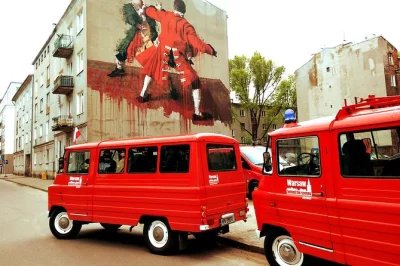 Warsaw: Retro Minibus Tour, Jewish Ghetto & Praga SightsStep into Warsaw’s past in a retro Żuk minibus—explore the Jewish Ghetto, cross to Praga, and hear stories from a local guide. Includes hotel pickup.★ 4.95 (244)3hENUS$ 129View ›
 Warsaw Food Tour: 12 Tastings of Polish ClassicsTaste 12 Polish dishes across three hours in Warsaw with a live English-speaking guide — pierogi, vodka, pączki and the story behind each one★ 4.98 (245)3hENUS$ 65View ›
 Warsaw Jewish Ghetto Walking Tour & Surviving SynagogueWalk Warsaw’s Jewish Ghetto with a guide, see the only surviving synagogue, and hear stories that linger. Includes info pack, visual aids, and local tips.★ 4.90 (83)3hENUS$ 27View ›
 Warsaw Food Tour: Traditional Polish Dishes at Local RestaurantsTaste traditional Polish dishes across five local restaurants in Warsaw with a guide—herring and vodka, żurek soup in a bread bowl, bigos stew★ 4.96 (83)2h–4hENUS$ 81View ›
Top questions
What exactly is the Żuk minibus and why does traveling in one matter for this tour?
The Żuk is a retro communist-era minibus that adds a historical dimension to the experience—it is not air-conditioned and some vehicles lack seat belts (permitted for historic vehicles), but it allows you to cover a wide range of locations comfortably while maintaining the tour's chronological narrative. The minibus holds up to eight passengers.
Will I be walking a lot, or does the minibus do most of the moving?
The minibus is used primarily for transfers between locations; you'll have walking segments at each stop. Wear comfortable clothing and suitable footwear. The tour lasts three hours total and is suitable for all physical fitness levels.
What is the Warsaw Ghetto and why are the preserved wall fragments significant?
The Warsaw Ghetto was a Nazi-built enclosure established in 1940 that confined nearly half a million people, including around 300,000 of Warsaw's three million prewar Jews. Several fragments of the original Ghetto wall remain today, hidden between buildings and along prewar property lines; your guide will take you to one of these preserved sections to show how the ghetto's boundaries once divided the city and shaped everyday life during the occupation.
How does hotel pickup work, and what if I'm staying outside the city center?
Hotel or apartment pickup and drop-off are included within a 3 km radius of Warsaw's city center. If you're staying outside this radius, contact the tour operator to arrange an alternative meeting point; public transportation options are available nearby.
Can children join this tour, or is it only for adults?
The tour can be booked instantly online for adults and children over 150 cm (4 ft 9 in) in height. If you wish to book for a child under 150 cm, contact the tour operator in advance to check the availability of seat boosters, which are mandatory under Polish law.
Warsaw WWII tour: Private minibus with Ghetto sites
3h · EN · at your hotel
from US$ 164 per person
★★★★★★★★★★5.00216 reviewsVerified traveler reviews via our booking provider
