

 +507 6792-0894


Papua New Guinea Village Tour: Local Life & Alotau Highlights



Summary
Authentic Alotau Village Experience & Cultural Activities
You’ll get to see what daily life is really like in Papua New Guinea—shopping at local markets, learning about history at the museum, and sharing food with villagers who welcome you like family. If you want more than just sightseeing, this tour gives you genuine moments you won’t forget.

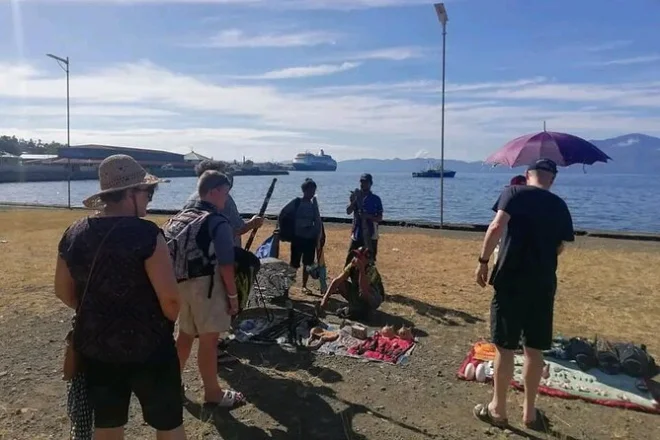
The first thing that hit me was the smell of ripe pineapples at the Alotau town market—sweet and sharp, mixing with the earthy scent of damp ground after last night’s rain. Our guide, Michael, waved us over to a stall where women in bright meri blouses were selling hand-woven baskets and betel nuts. He explained how these crafts are made by families from nearby villages, each pattern telling its own story. I tried bargaining for a small bilum bag, but honestly, I just wanted to hear the vendor laugh at my attempt at Tok Pisin.
We wandered through the Massim Museum next—tiny but packed with old war photos and carved wooden masks that looked like they’d seen more than a few rainy seasons. Michael pointed out a faded black-and-white photo of his grandfather in WWII uniform. Outside, the war memorial stood quiet except for the sound of distant church bells and kids playing marbles on the steps. The town lookout gave us a hazy view over Milne Bay, fishing boats bobbing below like little toys.
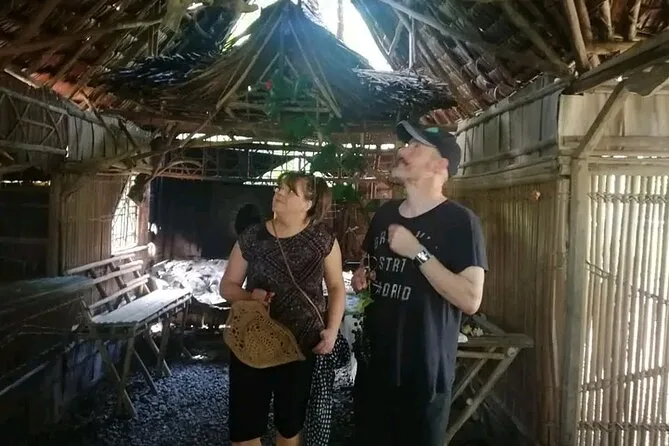
The real heart of the day was out in the village. We bumped along a red dirt road, passing kids waving from under mango trees. At the village, locals greeted us with shy smiles and offered fresh coconut water—ice-cold and sweet, perfect after the sticky heat. I watched an elder show us how to husk coconuts with nothing but a sharpened stick jammed into the ground. Someone else was weaving baskets from palm fronds; her hands moved so fast I could barely follow. Lunch was simple: smoky fish cooked over an open fire, taro root, and slices of juicy pawpaw. Sitting on woven mats under a thatched roof, it felt like time slowed down for just a bit.
 4h
4h

Step-by-step itinerary
Day 1 — Local Life and Village Experience
- Local life experience tour including market visits
- Visit Massim museum and war memorial
- Town lookout visit
- Drive to local village and meet locals
- Participate in traditional cooking and activities
- Enjoy fresh coconut juice, fruits, and traditional meal
- Return to ship

Top questions

Is this tour suitable for children or infants?
Yes! Infants can ride in strollers or sit on your lap during transport. The pace is relaxed and there’s plenty for kids to see.
Do I need to be very fit for this tour?
No special fitness needed—activities are gentle and you can join in as much or as little as you like.
What kind of food is served for lunch?
You’ll enjoy traditional dishes like grilled fish, taro root, fresh fruit, and coconut juice—all prepared by locals in the village.
Is it okay for pregnant travelers?
It’s not recommended if you’re pregnant due to bumpy roads and some uneven ground in the village.

What’s included
Your day includes guided visits to Alotau’s market, craft stalls, museum, war memorial, scenic lookout, plus hands-on experiences in a local village—traditional cooking demos, basket weaving lessons, fresh coconut juice and fruit snacks, and a homemade lunch before heading back.
 Super deal
  Free booking, free cancellation.
  Don't lose your place.


 Do you need help planning your next activity?
  +507 6792-0894


