
Kathmandu & Mohare Danda Trek: 12 Days Annapurna
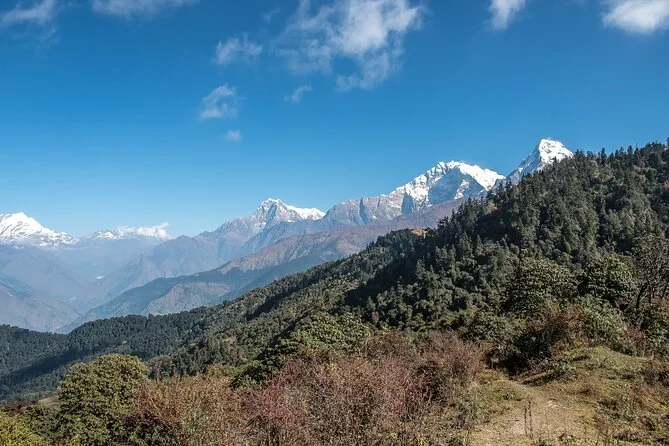
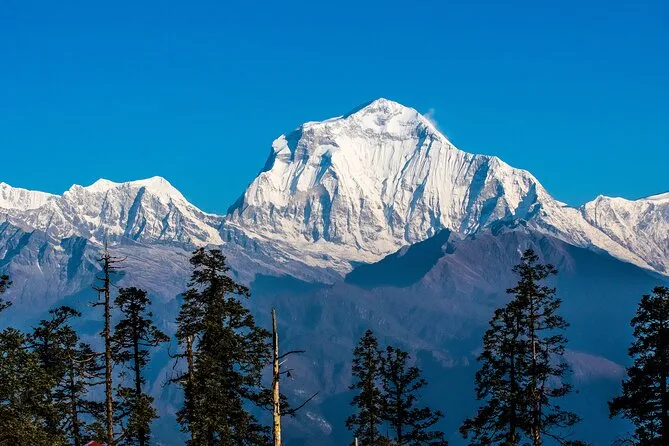
Kathmandu to Mohare Danda: 12 Days Walking the Annapurna Route
You arrive in Kathmandu, spend two days visiting Pashupatinath Temple and Boudhanath Stupa, then drive to Pokhara and trek six days through Mohare Danda with views of Annapurna, Machapuchre, and Dhaulagiri. Your guide, porter, and assistant handle the route. You carry a day pack. All meals, lodging in eco-community lodges, permits, and gear are included. You finish at Ghandruk village, drive back to Pokhara, fly to Kathmandu, and depart on day 12.
Compare the 12 alternatives
 Mardi Himal Base Camp Trek: 9 Days Kathmandu & AnnapurnaEvery day · 07:00 · From age 8★ 5.00 (19)9dEN · CMUS$ 1,000View ›
 Langtang Valley Trek: Beginner-friendly Himalayan TrekEvery day · 06:45★ 4.99 (191)7dENUS$ 555View ›
 Everest Base Camp Trek from Kathmandu: 12 DaysEvery day · first departure 00:15, last 23:45 · From age 10★ 4.97 (575)14dENUS$ 1,700View ›
 Chitwan: 3-Day Jungle Safari, Tharu Village & Jeep TourEvery day · From age 5★ 4.86 (191)3dENUS$ 200View ›
 Annapurna Base Camp Trek from Pokhara: 13 DaysEvery day · 07:00 · From age 8★ 5.00 (33)13dENUS$ 1,350View ›
 Everest Base Camp Trek from Kathmandu: 14 days to the mountainEvery day · 06:15 and 06:45 · From age 5★ 4.99 (372)13dENUS$ 1,420View ›
 Annapurna Base Camp Trek: Local Guides, Permits & MealsEvery day · 06:15 · From age 9★ 4.99 (107)12dENUS$ 800View ›
 Annapurna Base Camp Trek from Kathmandu or Pokhara: 5 DaysEvery day · 06:45 and 07:45 · From age 7★ 5.00 (176)5dEN · HIUS$ 200View ›
 Annapurna Circuit Trek with Local Guide & Family TeamEvery day · 10:15 · All ages★ 4.90 (20)15dENUS$ 995View ›
 14-Day Everest Base Camp Trek from KathmanduEvery day · 06:15 and 08:00 · From age 8★ 4.98 (1,657)14dENUS$ 1,800View ›
 Everest Base Camp Trek: 14 Days Kathmandu & Mount EverestEvery day · first departure 00:45, last 23:45 · From age 8★ 4.93 (101)14dENUS$ 999View ›
 Annapurna Circuit Trek Kathmandu: 12-Day Mountain LoopEvery day · first departure 00:45, last 17:45 · 15–80 years★ 5.00 (46)12dEN · DE +4US$ 1,450View › Compare more experiences like this »
Step-by-step itinerary
Day 1: Arrival and Thamel introduction
- Arrive in Kathmandu
- Meet representative and transfer to hotel
- Check-in and rest
- Visit Thamel market for supper and shopping
- Trip briefing at office
Day 2: Kathmandu sightseeing tour
- Breakfast at hotel
- Visit Pashupatinath Temple
- Visit Boudhanath Stupa
- Return to hotel and prepare for trek
Day 3: Drive to Pokhara and explore
- Breakfast at hotel
- Drive to Pokhara (7 hours)
- Explore lakeside and surroundings
Day 4: Drive to Galeshwor and trek Bas Kharaka
- Breakfast at hotel
- Drive to Galeshwor (4 hours)
- Trek to Bas Kharaka (3 hours)
- Dinner and overnight at community lodge
Day 5: Trek to Nangi village
- Breakfast at community lodge
- Trek to Nangi (6 hours)
- Explore organic farms and school
- Overnight at eco community lodge
Day 6: Trek to Mohare Danda
- Breakfast at lodge
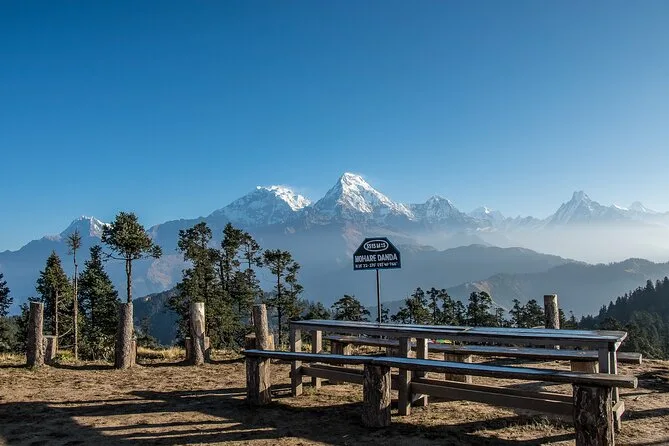
- Trek to Mohare Danda (7 hours)
- Enjoy Himalayan peak views
- Overnight at community lodge
Day 7: Trek to Deurali village
- Watch sunrise over Himalayas
- Breakfast at lodge
- Trek to Deurali (5 hours)
- Overnight at lodge
Day 8: Trek to Ghandruk village
- Breakfast at lodge
- Trek to Ghandruk (5 hours)
- Visit Gurung museum and culture
- Overnight at lodge in Ghandruk
Day 9: Descend and drive to Pokhara
- Breakfast and view Annapurna peaks
- Descend to Syauli Bazar (2 hours walk)
- Drive to Pokhara (2.5 hours)
- Overnight at hotel in Pokhara
Day 10: Pokhara sightseeing and fly Kathmandu
- Breakfast at hotel
- Visit Devi's Fall and Gupteshwar cave
- Visit International Mountain Museum
- Return to hotel for lunch
- Transfer to airport and fly to Kathmandu
- Transfer to hotel in Kathmandu
Day 11: Kathmandu cultural city tour
- Breakfast at hotel
- Walk through ancient Kathmandu lanes
- Visit Kathmandu Durbar Square and Kumari temple
- Return to hotel
- Optional shopping in Thamel
Day 12: Departure from Kathmandu
- Transfer to international airport
- End of tour
The experience
The man at the Thamel market counter didn't speak much English, but when we mentioned Mohare Danda, his face changed. He nodded slowly, said something in Nepali to the woman next to him, and handed us a thermos of tea without asking. That's how you know a place matters to locals. They don't need to sell it to you. The trek starts in Kathmandu after two days of sightseeing: Pashupatinath Temple with its stone steps and the sound of the Bagmati River below, then Boudhanath Stupa where the prayer wheels turn and the light hits the whitewashed dome in a way that makes you stop walking. You'll spend a night in Pokhara after a seven-hour drive through the mountains, then another night there after the trek ends, before flying back to Kathmandu. The actual walking happens over six days, starting from Galeshwor and climbing toward Mohare Danda at 3,300 meters.
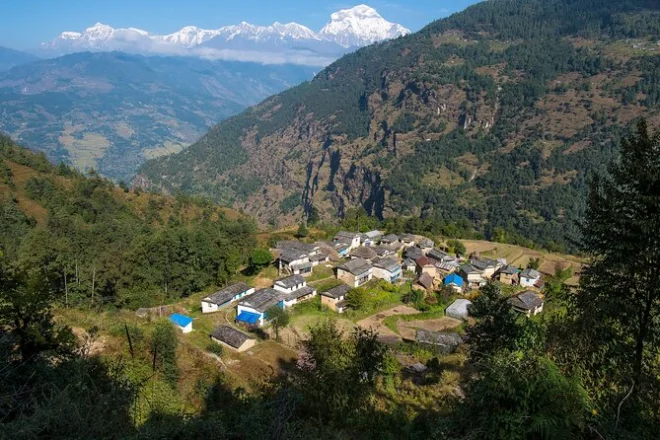
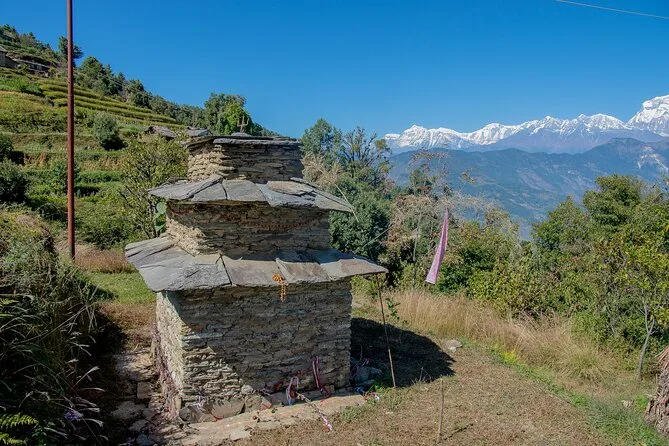
What makes this trek different from the crowded routes is that it doesn't feel like a highway. You pass through villages where the Magar people still farm the slopes (Nangi, Ghandruk), and stay in community-run lodges instead of commercial trekking hotels. The hardest day is the push to Mohare Danda itself, seven hours of walking that gains almost a thousand meters, but the payoff is the view: Machapuchre, Annapurna, Dhaulagiri all visible from the same ridge, and the sunrise the next morning that people actually do remember for years. You descend through forest and past Gorepani (the busier town in the region, but you're moving through it, not stopping) and finish at Ghandruk, a Gurung village where you can visit the museum before the final walk down to Syauli Bazar and the drive back to Pokhara.
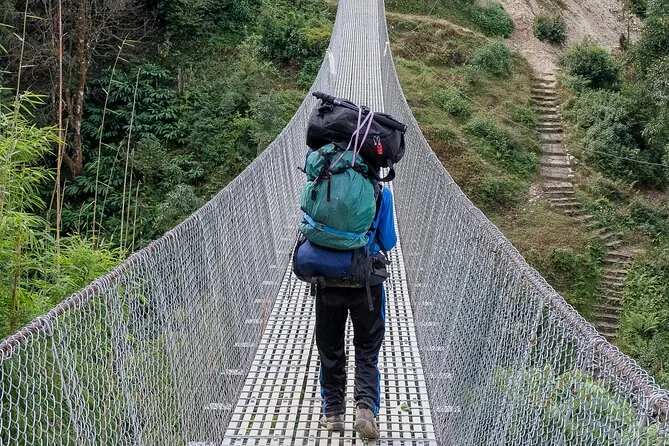
The trek includes a professional guide, a porter to carry the heavy bag, and an assistant guide: three people who know the route and the villages and can handle anything that goes wrong. You get a down jacket, sleeping bag, and fleece liner before you leave, plus the permits (ACAP and TIMS) that let you walk legally through the Annapurna Conservation Area. Every meal is included, every night's lodging is arranged, and the private transfers between cities mean you're not waiting for a minibus or negotiating with a taxi driver at the end of a long day. The 3-star hotels in Kathmandu and Pokhara are basic by international standards but clean, with breakfast, and they're the kind of place where the staff remembers your name by the second morning.
Book this if you want to walk the Annapurna region without the logistics (permits, gear, food, transport between trailheads) becoming a separate project. The 12 days includes two days in Kathmandu for temples and markets, the trek itself, recovery time in Pokhara, and the flights that connect the cities, which is what makes it possible to see both the culture and the mountains without spending half the trip in a vehicle.
What’s included
All government taxes, private transfers between Kathmandu, Pokhara, and the trailhead at Galeshwor, all meals and lodging during the trek and in the 3-star hotels in Kathmandu and Pokhara, permits for the Annapurna Conservation Area and trekking, a professional guide, porter, and assistant guide, down jacket, sleeping bag, fleece liner, and duffel bag, and the domestic flight between Pokhara and Kathmandu on the return.
Before you book
Prices and times updated 2 days ago
Operated by Mountain Delights Treks & Expeditions
Is this one for you?Choose this trek if you want to walk the Annapurna region without arranging permits, hiring guides, booking lodges, or figuring out transport between cities: the fixed itinerary and included staff handle all of that, which is what makes it possible to focus on the walk itself.
Traveler reviews
Top questions
What languages is the guide in?
Live guide in English, French, German, Hindi, Chinese and Japanese.
Can children come?
Yes. Ticket types: Youth (13 to 15 years); Child (10 to 12 years). Under 10: they can't be included in the booking.
What happens if it rains?
It may be canceled due to bad weather. If that happens, you're offered another date or a refund. Free cancellation up to 24 h before the start.
How many days is the actual trekking?
Six days of walking, spread across the 12-day tour. The rest includes two days in Kathmandu for sightseeing, two nights in Pokhara (before and after the trek), and travel days between cities.
What's the highest altitude on this trek?
Mohare Danda at 3,300 meters (10,826 feet). The climb to reach it is the hardest day, gaining nearly 1,000 meters.
Do I need to carry my own backpack?
No. A porter carries the main duffel bag. You carry a day pack with water, snacks, and layers during the walk.
What's included in the gear provided?
Down jacket, sleeping bag, fleece liner, and a duffel bag. You bring your own trekking boots, clothes, and toiletries.
Are the lodges on the trek comfortable?
They're community-run eco-lodges, not luxury hotels. Rooms are simple, with basic heating and shared bathrooms. The trade-off is that you're staying in the villages themselves, not in commercial trekking towns.
How do I get between Kathmandu and Pokhara?
Private vehicle transfer on the drive to Pokhara (7 hours), and a 25-minute domestic flight on the return. Both are included.
Is this trek crowded?
Mohare Danda is less crowded than popular routes like Annapurna Base Camp or the Poon Hill circuit, though you may meet other trekkers on the trail.
What happens if I get sick during the trek?
Your guide carries medical equipment and can arrange evacuation if needed. The trek passes through villages with basic health posts, and you're never more than a few hours' walk from a road.
Do I need trekking experience?
No, but you need moderate fitness. The trek involves daily walks of 3 to 7 hours with elevation gain, and the altitude (up to 3,300 meters) affects some people. The itinerary notes it's not recommended for travelers with poor cardiovascular health.
Kathmandu & Mohare Danda Trek: 12 Days Annapurna
12d · EN · FR · DE +3
from US$ 1,500 per person
5.0056 reviewsVerified traveler reviews via our booking provider