
3-Day Marrakech to Erg Chigaga Desert Tour: Camel Trek & 4x4
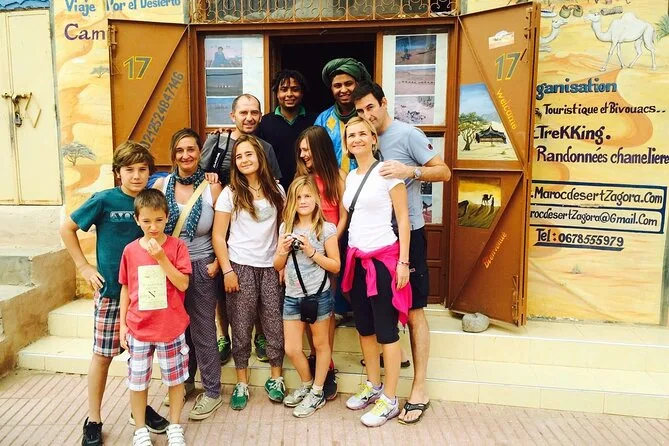
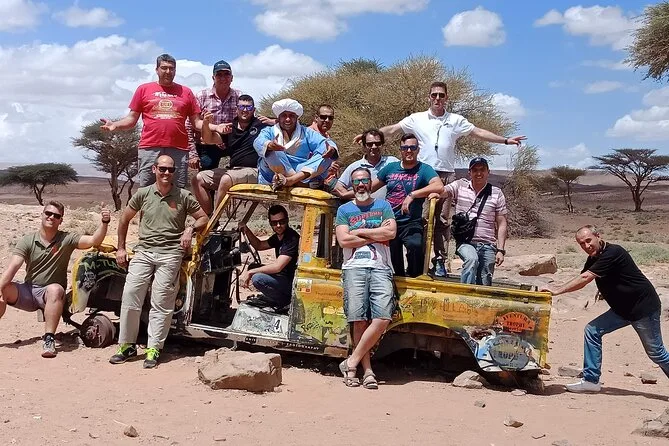
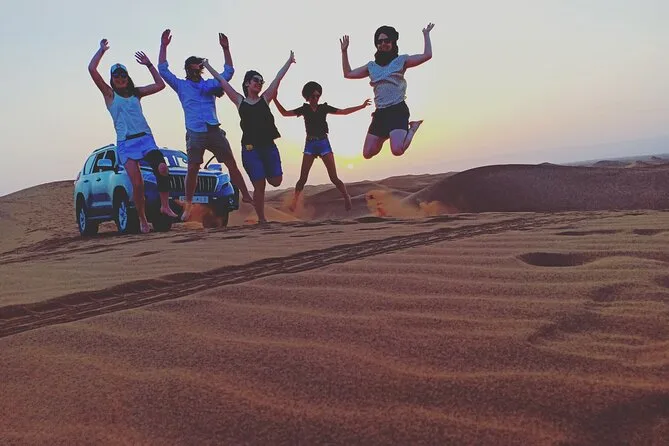
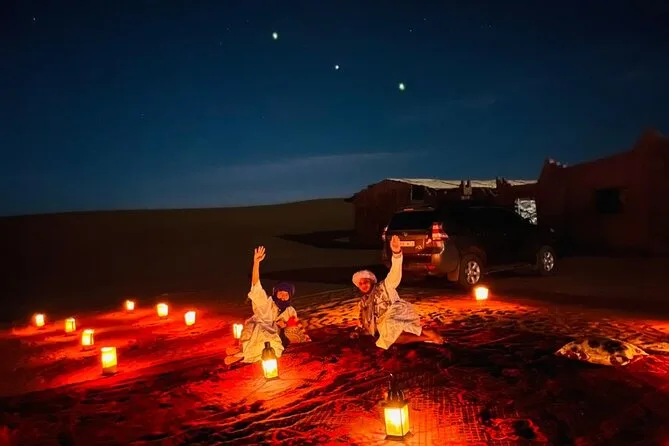
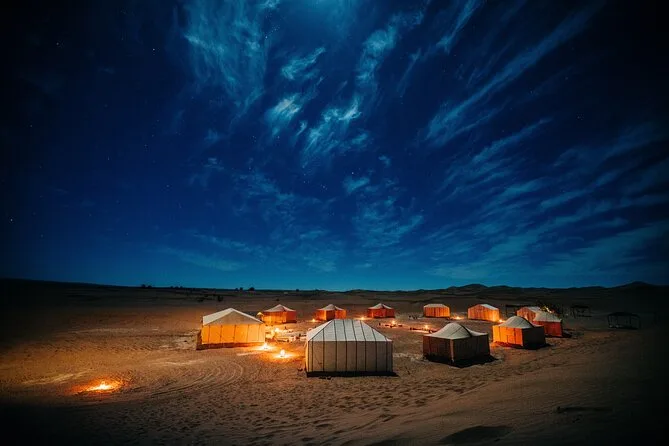
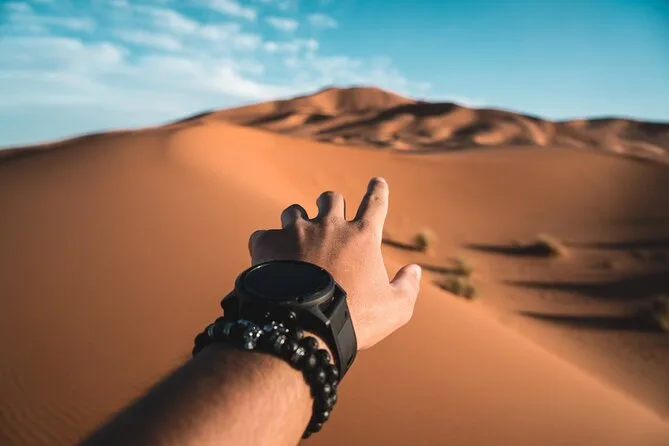

Trade the 4x4 for camels at sunset and trek the largest dunes in the region.
A private 3-day tour from Marrakech that crosses the High Atlas Mountains, stops at the UNESCO mud-brick Kasbah of Ait Benhaddou, and ends with a camel trek through Erg Chigaga's sand dunes at sunset. You spend one night in Zagora's palm grove and one in a desert camp, with a private 4x4 and driver for the entire route. The tour includes pickup from your Marrakech hotel and a live guide in English, Spanish, Italian or French.
 3d
3d

Step-by-step itinerary
Day 1 — Marrakech to Zagora via Atlas Mountains
- Start tour from Marrakech accommodation
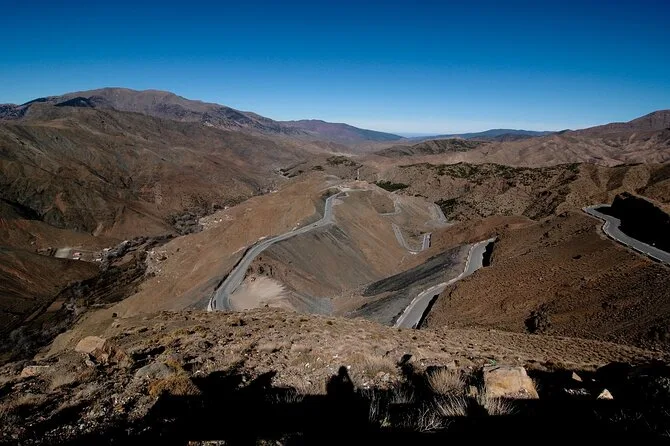
- Cross High Atlas Mountains via Tizi-N-Tichka pass
- Drive through Ounila Valley
- Visit Kasbah of Telouet
- Stop for lunch at Ait Benhaddou
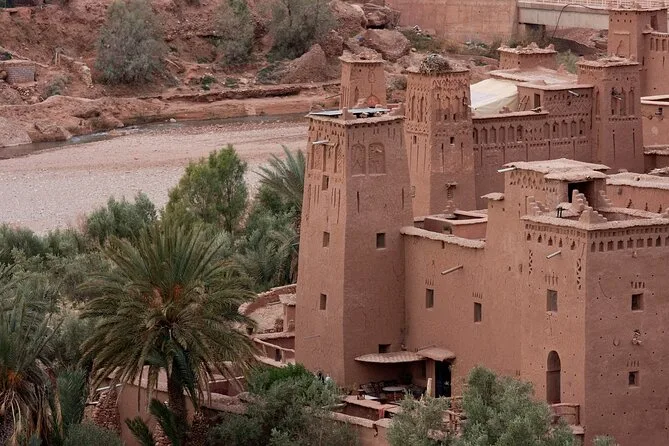
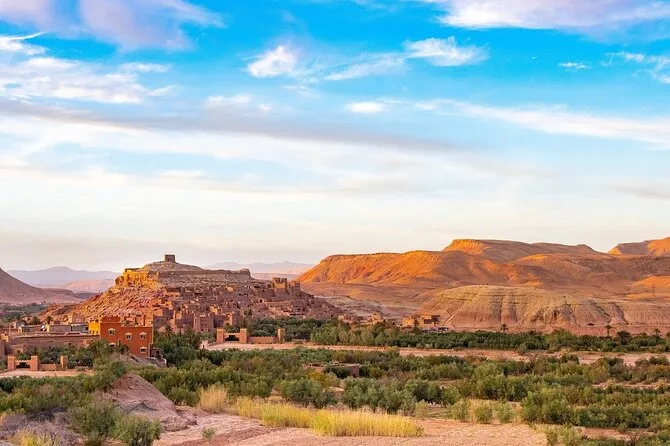
- Visit UNESCO Mud-brick Castel at Ait Benhaddou
- Pass by Ouarzazate city
- Drive through Low Atlas Mountains and Draa Valley
- Arrive in Zagora and overnight at guesthouse
Day 2 — Zagora to Erg Chigaga Desert Dunes
- Walk through Palm grove and Jewish quarter
- Visit Kasbah of Amzerou
- Drive to Tamegroute village
- Visit Koranic school, library, and pottery makers
- Lunch in Mhamid or picnic in desert
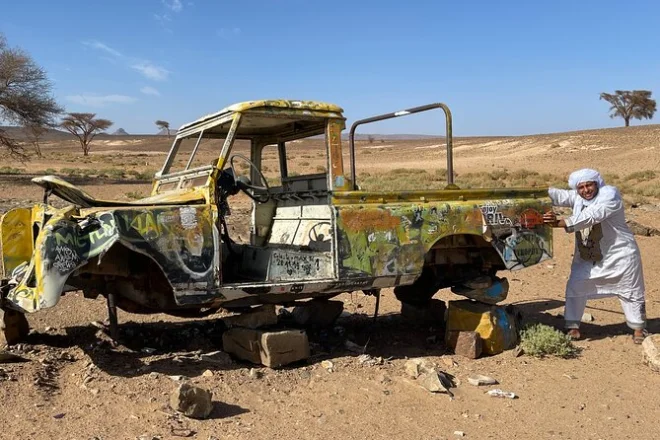
- Drive off-road through stones and sand dunes
- Stop at desert oases
- Arrive at Erg Chigaga dunes before sunset
- One hour camel trek on sand dunes at sunset
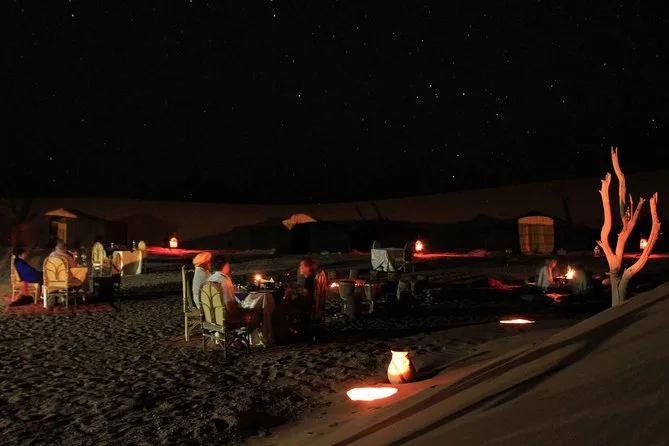
- Check in desert camp and enjoy dinner with music
Day 3 — Erg Chigaga to Marrakech via Off-road
- Watch sunrise from top of dunes
- Breakfast at desert camp
- Drive off-road to Foum-Zguid
- Stop at Iriqui Lake
- Visit fossil beds and hunt fossils
- Drive along Jebel Bani mountain ridges
- Break at Foum-Zguid village
- Lunch at Taznakht village
- Optional visit to women's carpet cooperative
- Drive through Atlas Mountains back to Marrakech
- End tour at Marrakech accommodation

The Experience
The tour starts at 8 am from your Marrakech riad or hotel and climbs into the High Atlas via the Tizi-N-Tichka pass—the highest road pass in Africa at 2,260 meters. From there the route drops through the Ounila Valley to the Kasbah of Telouet, then continues to Ait Benhaddou, a UNESCO-listed mud-brick settlement where you stop for lunch and a walk through the village. You pass through Ouarzazate (the Moroccan Hollywood) and descend into the Draa Valley's palm groves and ancient kasbahs before reaching Zagora, the desert's edge, where you spend the first night in a guesthouse on the palm grove.
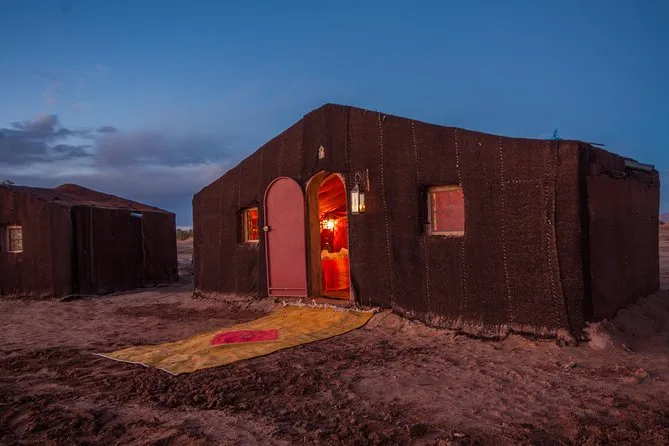
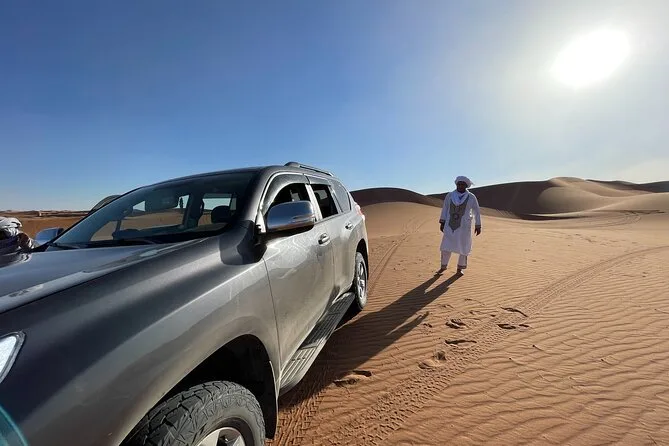
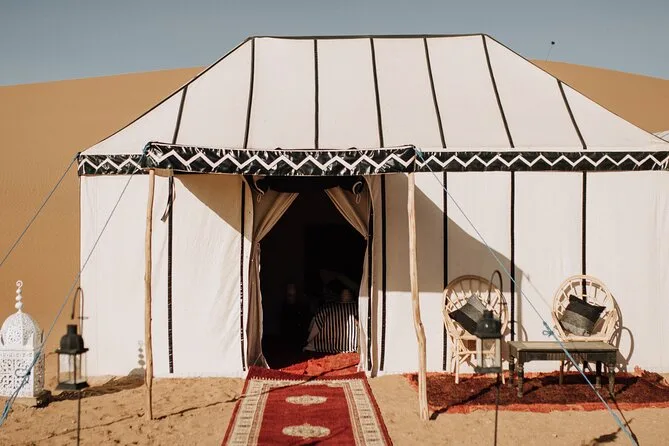
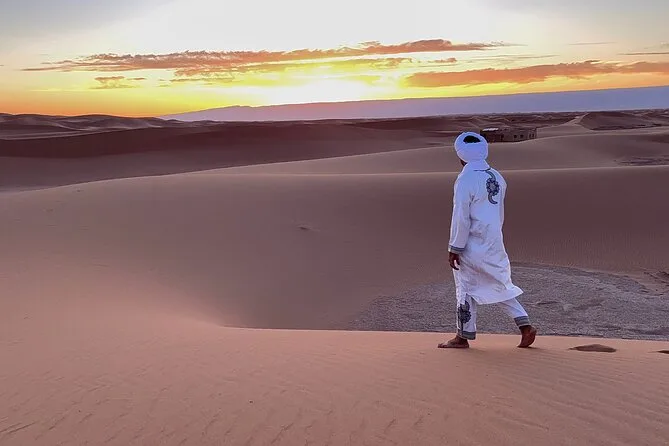
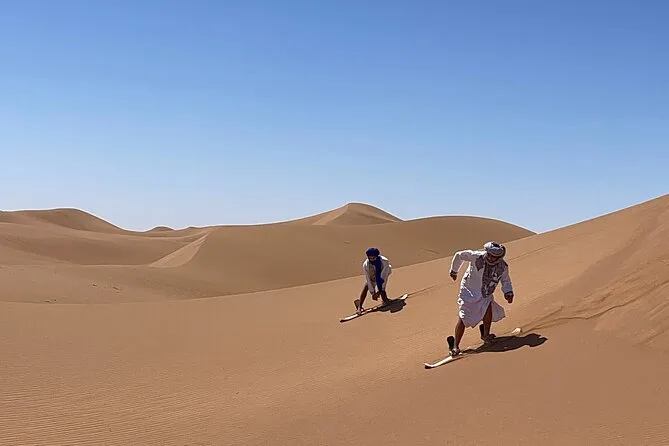
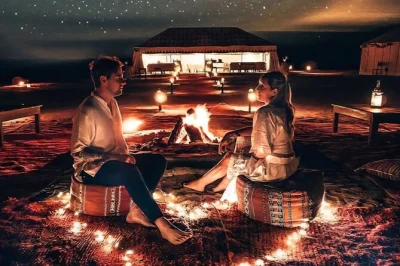
Day two takes you deeper. You walk through Zagora's oases to visit the Kasbah of Amzerou, then drive to the 16th-century village of Tamegroute to see the Koranic school, its library, and the underground kasbah. After lunch in Mhamid, the 4x4 leaves the tarmac road for two hours of off-road driving through stones and sand dunes toward Erg Chigaga—the region's largest dunes. An hour before sunset, you trade the vehicle for camels and trek across the dunes as the sand turns red against the sky. Dinner and a campfire with Berber musicians happen at your desert camp, where you sleep in a private tent.
The final morning starts with sunrise from the dune tops, then breakfast. You drive northwest on off-road for three hours toward Foum-Zguid, stopping at Iriqui Lake (a dry water lake in the middle of nowhere) and the fossil beds. The route follows the mountain ridges of Jebel Bani and acacia groves before returning to tarmac. A break in Foum-Zguid village, lunch in Taznakht (where you can optionally visit the women's carpet cooperative), and a drive back through the Atlas Mountains brings you to Marrakech around 6 pm. The private 4x4 with air conditioning and fuel is yours for all three days.

What’s included
- Private 4x4 SUV with air conditioning and fuel for all three days.
- hotel pickup in Marrakech.
- a live guide in your chosen language.
- one night in a guesthouse on the palm grove in Zagora.
- one night in a private tent at the desert camp in Erg Chigaga.
- breakfast and dinner on days two and three.
- the one-hour camel trek at sunset on day two.
- visits to the Kasbah of Telouet, Ait Benhaddou, Tamegroute's Koranic school and library, the Kasbah of Amzerou, and the fossil beds.
Operated by Caravane Du Grand Erg
Is this one for you?Choose this if you're leaving Marrakech for three days and want to reach Erg Chigaga's largest dunes by 4x4—you'll follow a set route with fixed overnight stops rather than customizing each day's pace and location.
Traveler reviews
Compare the 13 similar options
 3-Day Marrakech to Erg Chigaga Desert Tour: Camel Trek & 4x4★ 4.75 (24)3dEN · IT +2US$ 539
 Marrakech Agafay Desert: Quad Bike, Camel Ride & Dinner ShowFeel the Agafay Desert at sunset with quad biking, a camel ride, and Moroccan dinner show. Includes Marrakech pickup, guide, and Berber tea in a nomad tent.★ 4.72 (105)5hEN · FR +1US$ 23View ›
 Quad bike & camel ride Marrakech: Omnas Desert dinner with sunsetQuad bike across Omnas and Agafay Desert, ride camels through Berber villages at sunset, then enjoy traditional Moroccan dinner and live music at a desert camp from Marrakech.★ 4.77 (189)5h 30mEN · AR +2US$ 23View ›
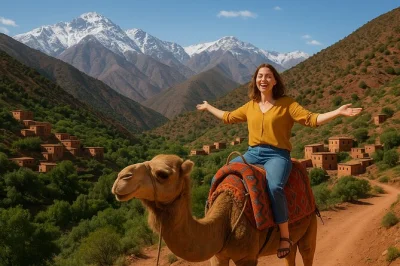 Marrakech: Atlas Mountains 4 Valleys & Camel RideHotel pickup at 9am for full-day Atlas Mountains tour: Imlil Valley, waterfalls, Berber villages, camel ride & traditional lunch. Returns by 4pm.★ 4.85 (1,572)8hEN · AR +1US$ 11.77View ›
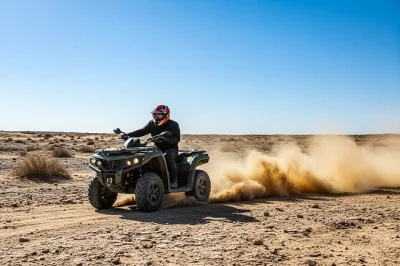 Marrakech: Agafay Desert Quad Bike & Camel Ride with Dinner & Fire ShowQuad bike and camel ride in Agafay Desert near Marrakech with 3-course Moroccan dinner, live music and fire show. Includes pickup, sunset tea and evening experience.★ 4.88 (272)5h–6hEN · AR +2US$ 15.22View ›
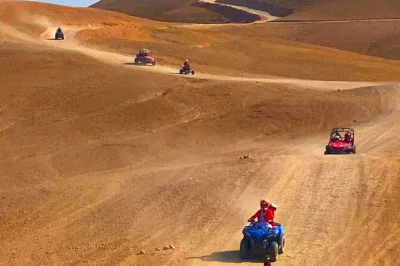 Marrakech Agafay Desert: Quad Biking, Camel Ride & Dinner ShowFeel the Agafay Desert’s wild side near Marrakech—quad biking, camel ride at sunset, and a Moroccan dinner show under the stars. Includes hotel pickup.★ 4.82 (211)5hEN · AR +3US$ 15.22View ›
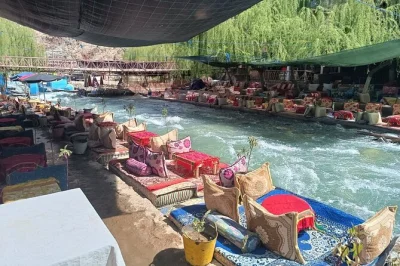 Marrakech Atlas Mountains tour: Waterfalls, argan oil, lunchSeven hours from Marrakech into the Atlas Mountains with a local guide—you hike to Setti Fatma's waterfalls, watch Berber women make argan oil, and eat lunch beside the river.★ 4.83 (351)7hEN · AR +1US$ 17.56View ›
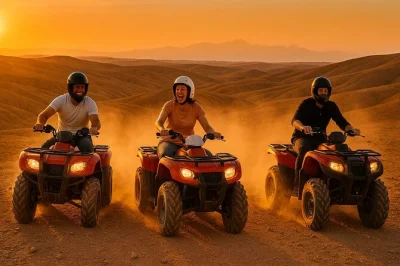 Agafay Desert Dinner, Camel Ride & Quad Biking from MarrakechRide a camel or quad bike through the Agafay Desert at sunset, then enjoy traditional Moroccan dinner with live music and dance performances under the stars.★ 4.96 (320)6hEN · DE +14US$ 47View ›
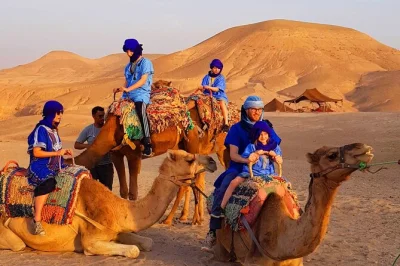 Agafay Desert ATV Riding: Quad Bike, Camel & DinnerRide quad bikes across Agafay Desert dunes at sunset, enjoy a three-course Moroccan dinner and live show under the stars, plus camel ride and hotel pickup.★ 4.59 (306)5hEN · AR +11US$ 29View ›
 Marrakech: Ourika Valley Waterfalls Hike & Berber LunchFull-day Ourika Valley hike from Marrakech with Setti Fatma waterfalls, Berber breakfast at a women's cooperative, and riverside lunch. Local guide, hotel pickup.★ 4.88 (254)7hEN · FRUS$ 15.22View ›
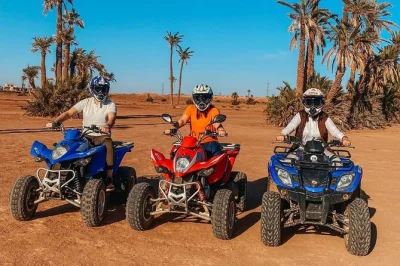 Marrakech Palmeraie: Quad Bike Desert Ride & Tea Break PickupFeel the grit of Marrakech’s Palmeraie desert on a quad bike ride, sip tea with locals, and enjoy hotel pickup for a relaxed, hands-on adventure outside the city.★ 4.73 (169)3hUS$ 24View ›
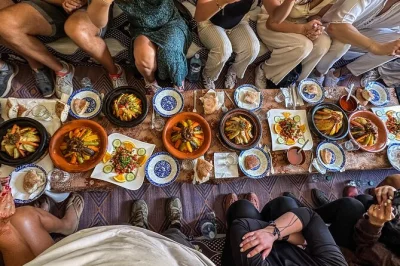 Marrakech: Atlas Mountains & Ourika Valley Day Trip with Camel RideAtlas Mountains tour from Marrakech with camel ride, three valleys, Berber family lunch, and hotel pickup. Departs 9am, returns 5:30pm. Professional guide.★ 4.95 (2,837)8h–9hEN · AR +1US$ 17.55View ›
 Agafay Desert camel ride and dinner with fireshowRide camels through the Agafay Desert outside Marrakech, then enjoy a three-course Moroccan dinner at a Berber camp with fire show and live music under the stars.★ 4.92 (480)5hEN · AR +1US$ 33View ›
Top questions
What is the Kasbah of Ait Benhaddou and why do we stop there?
Ait Benhaddou is a UNESCO-listed mud-brick settlement in the Ounila Valley, built centuries ago as a fortified village. The tour stops there on day one for lunch and a walk through the village to see the architecture and layout of this preserved Berber kasbah.
How long is the camel trek at Erg Chigaga, and when does it happen?
The camel trek lasts one hour and happens in the late afternoon before sunset on day two, when you arrive at Erg Chigaga's dunes. This timing lets you ride as the sand turns red against the sky, which is the best light for photographs.
What happens on the second night—where do we sleep?
You sleep in a private tent at a desert camp at Erg Chigaga. The camp includes dinner, a campfire, and Berber musicians playing traditional music in the evening.
Do we visit any villages or markets on the way back to Marrakech?
Yes. On day three you stop at Iriqui Lake (a dry water lake in the desert), the fossil beds where you can hunt for fossils, and Taznakht village, which is known for carpet weaving. You can optionally visit the women's cooperative there before the final drive back to Marrakech.
Is lunch included in the tour price?
Lunch is not included in the tour price. On day two in Mhamid you can choose between eating at a restaurant or having a picnic in the desert that your driver will organize.
What languages does the guide speak?
The live guide speaks English, Spanish, Italian, and French, so you can choose the language when you book.
3-Day Marrakech to Erg Chigaga Desert Tour: Camel Trek & 4x4
3d · EN · IT +2 · at your hotel
from US$ 539 per person
★★★★★★★★★★4.7524 reviewsVerified traveler reviews via our booking provider
