
Merzouga & Erg Chabbi 3 Days Sahara Tour from Marrakech




Three days from mountain pass to desert dunes: Ait Benhaddou, two gorges, camel rides at both ends of the day
A 3-day guided tour from Marrakech to Merzouga crosses the High Atlas Mountains, stops at the UNESCO-listed Ait Benhaddou Ksar and the Dades and Todra gorges, then reaches Erg Chabbi where you ride camels at sunset and sunrise and spend a night under stars in a Berber tent. The tour includes an air-conditioned vehicle, two nights of accommodation (standard, comfort or VIP depending on your option), and pickup from central Marrakech; your guide speaks English, Spanish or French. Lunch and drinks are not included, nor are the local guides at Ait Benhaddou and Todra Gorge.
 3d
3d

Step-by-step itinerary
Day 1 — Marrakech to Dades Valley
- Meet driver at hotel
- Drive through local villages and markets
- Pass Tizi-n'Tichka mountain pass
- Visit Ait Benhaddou Ksar and lunch
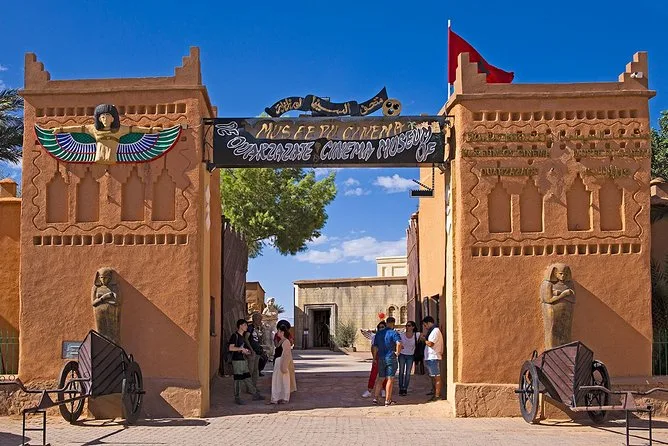
- Visit Ouarzazate and cinema museum
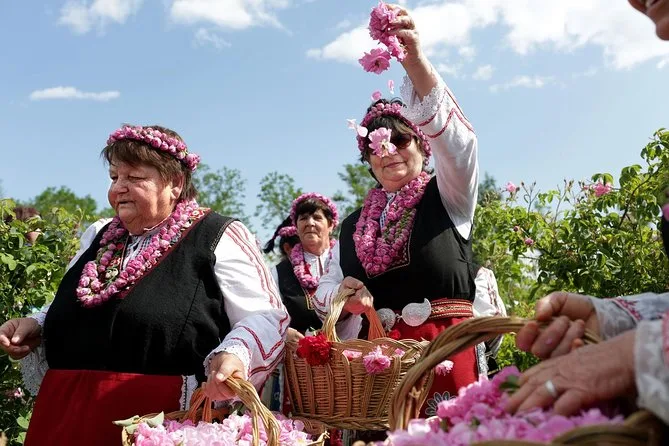
- Stop at Valley of Roses
- See "toes of monkeys" rock formations
- Arrive at hotel in Dades Gorge
- Dinner and overnight stay
Day 2 — Dades Gorges to Merzouga Sahara
- Morning in Dades Gorge
- Guided visit to Tinghir Oasis
- Visit Todra Gorges and lunch
- Drive through Tin-Jdad, Erfoud, and Rissani
- Arrive in Merzouga
- 45-minute camel ride at sunset
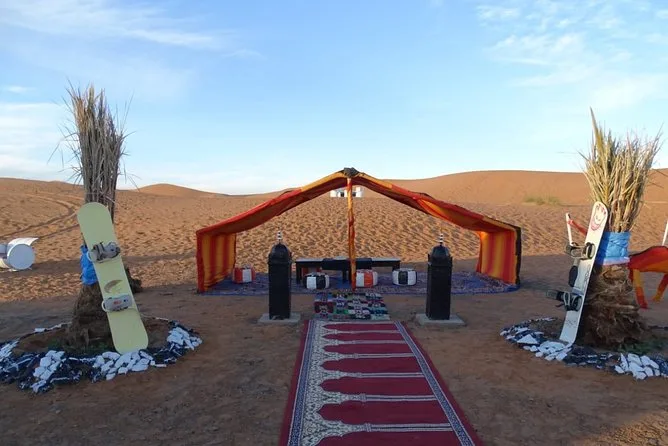
- Overnight in Berber tents under stars
Day 3 — Merzouga to Marrakech
- Early morning walk in sand after breakfast
- Meet driver for return trip
- Stop for photos at interesting places
- Enjoy Berber meal with mountain views
- Rest stop at Ait Barka village
- Driver drops off travelers at hotels

The Experience
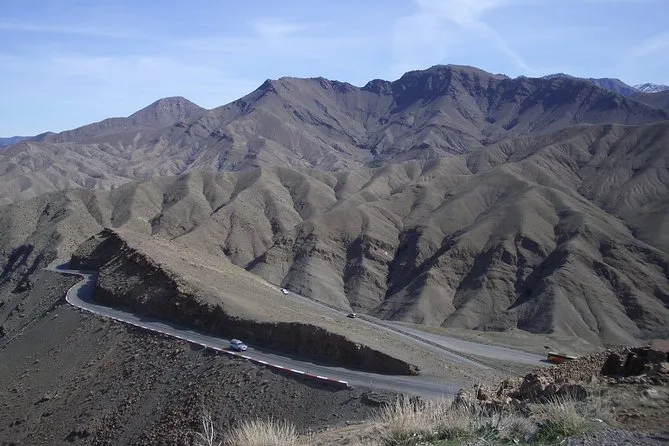
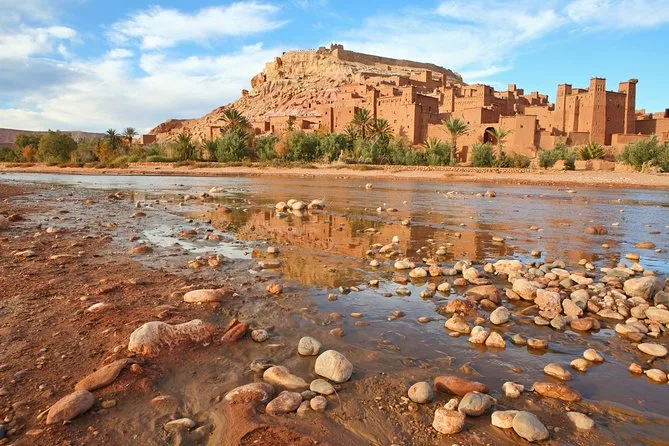
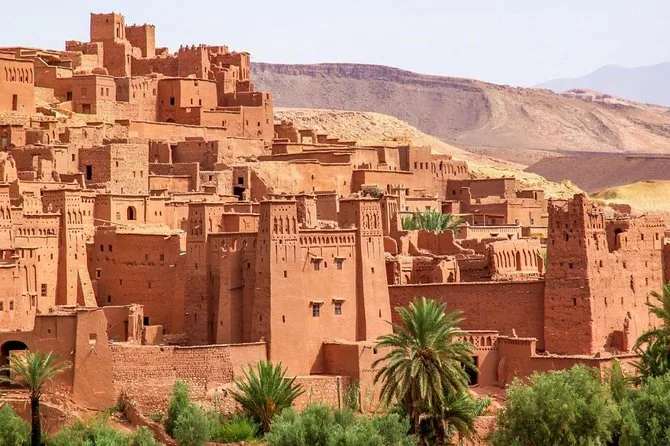
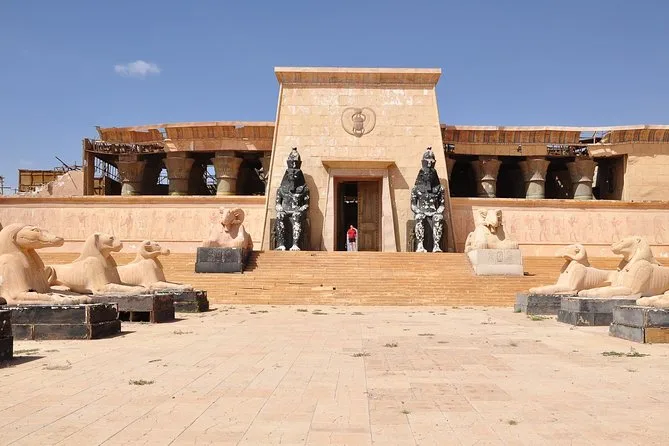
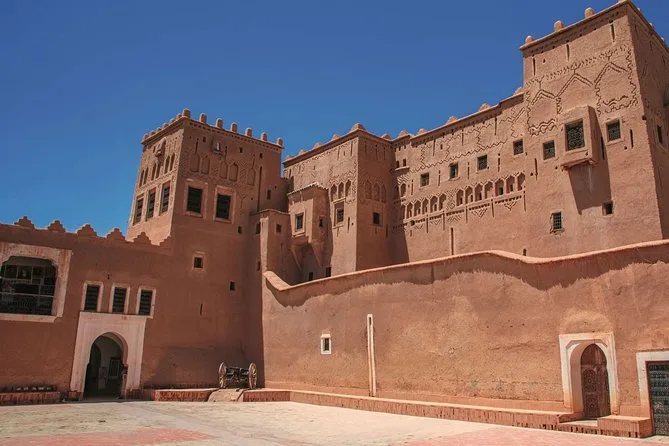
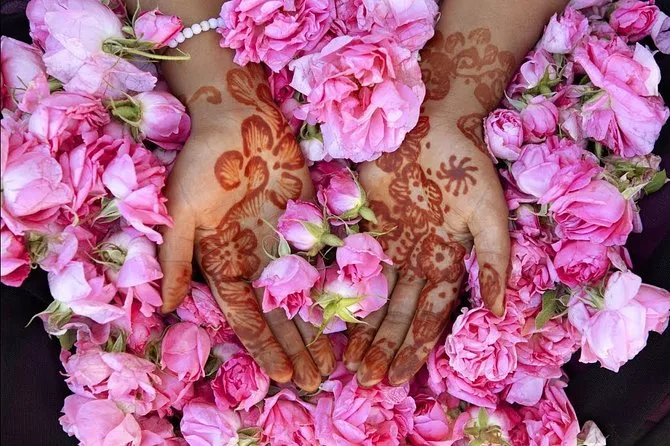
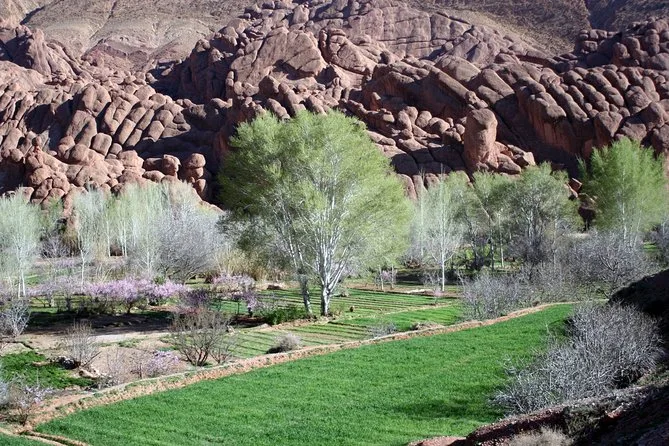
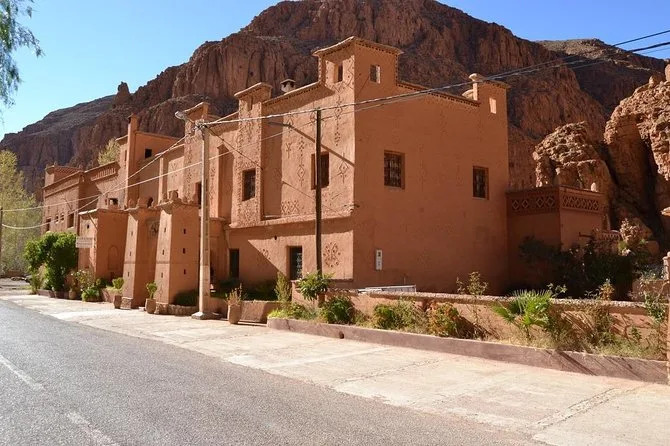
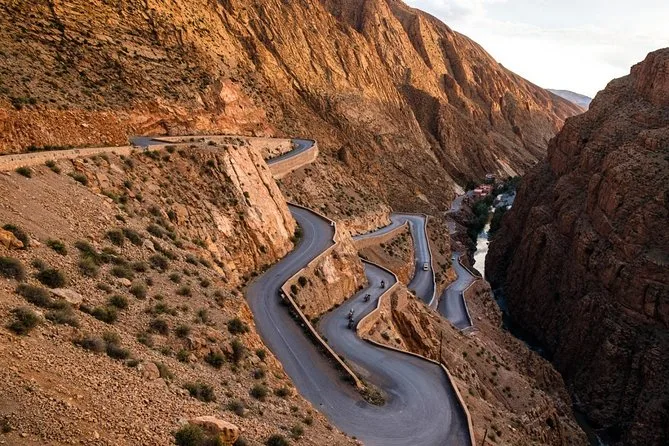
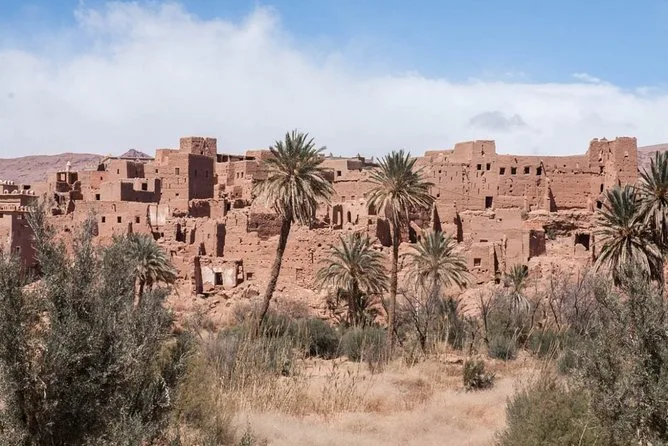
The drive leaves Marrakech at seven in the morning, climbing through villages and markets that fade into the High Atlas foothills within 45 minutes. You cross the Tizi-n'Tichka Pass—the second-highest summit in Morocco after Toubkal—where the road opens onto views of the mountains themselves. The Ait Benhaddou Ksar, a UNESCO World Heritage site since 1987 and a film location for Gladiator, The Mummy, Prince of Persia and Game of Thrones, sits at the pass's far side; you stop for lunch and a walk through the old palace compound. From there it's 20 minutes to Ouarzazate, nicknamed the Hollywood of Africa, where a 45-minute stop includes the cinema museum and Taourirt Kasbah. By late afternoon you reach the Valley of Roses, where the local economy runs on rose oil and perfume extraction done the traditional way. The landscape shifts again—rock formations called the Toes of Monkeys rise from the valley floor—and you arrive at your first night's accommodation in a traditional kasbah in Dades Gorge.
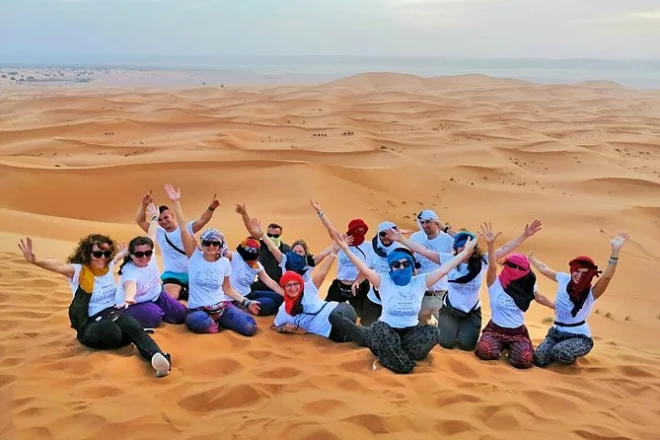
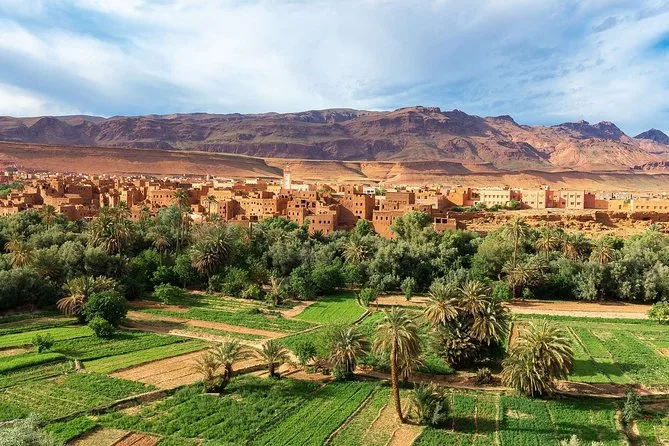
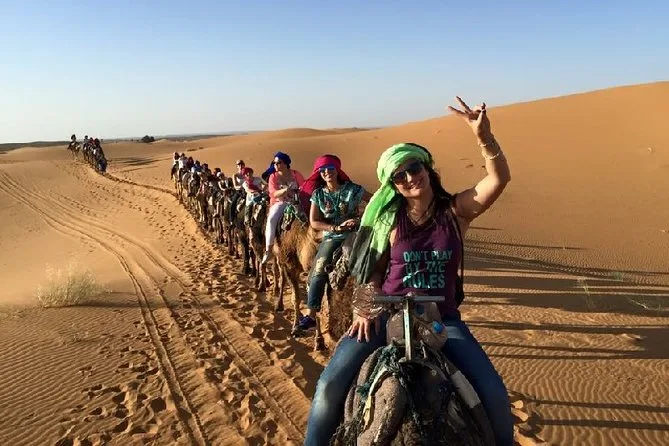
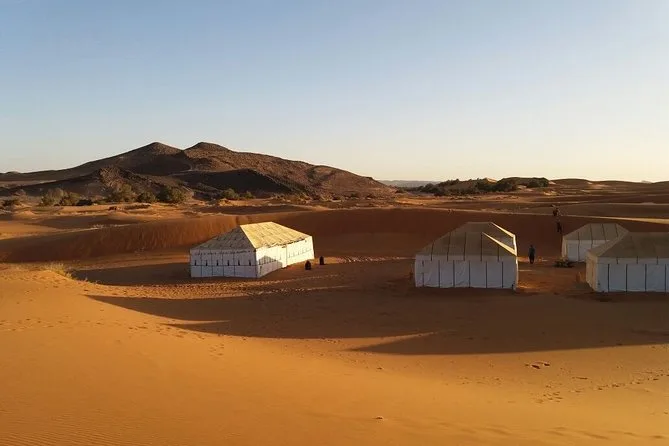
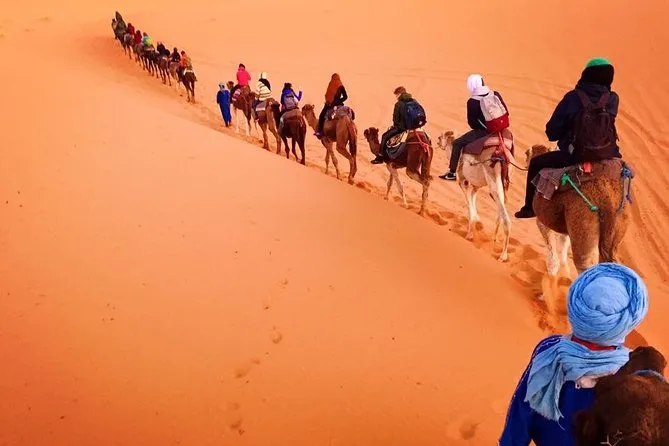
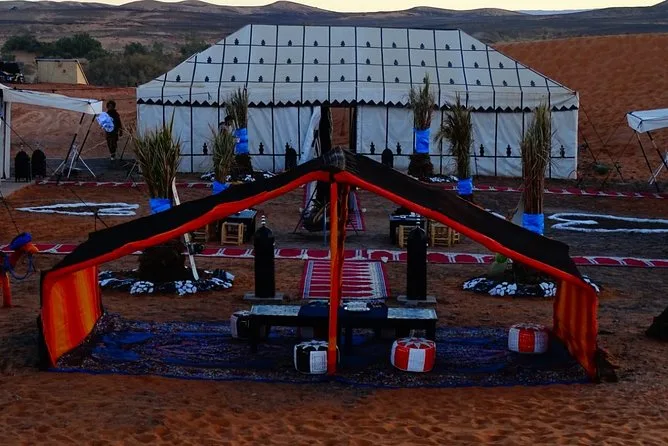
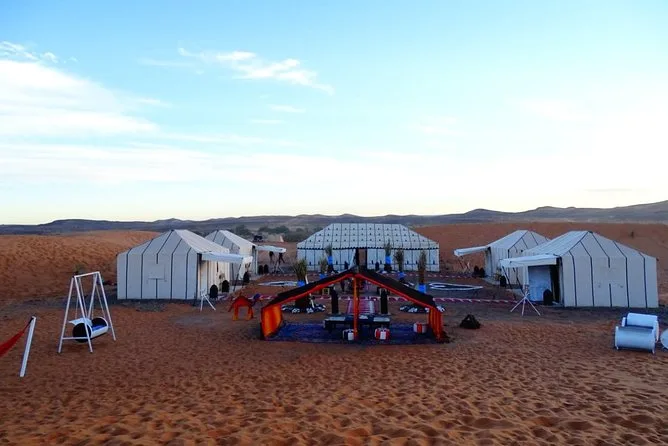
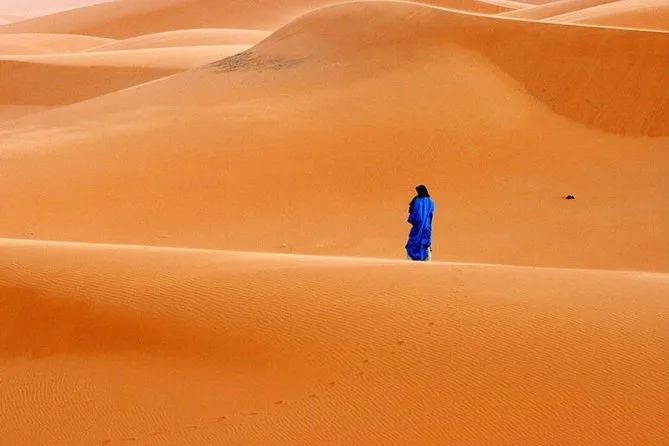
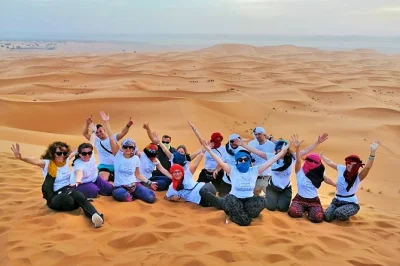
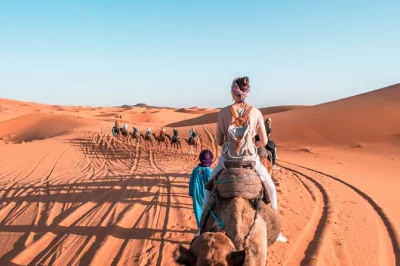
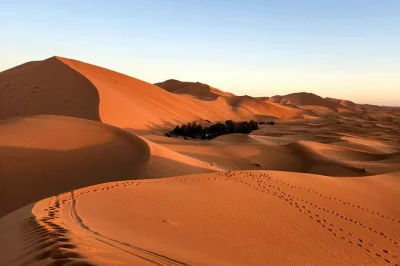
Day two is dedicated to the eastern gorges. A local guide meets you in Tinghir for a 90-minute walk through the oasis, then leads you into Todra Gorge. After lunch in the village, the drive turns south toward Merzouga, passing through Tin-Jdad, Erfoud and Rissani. When you arrive at Merzouga, a 45-minute camel ride takes you into Erg Chabbi at sunset—the dunes rise to 160 meters and shift color from rose gold to orange, pink and purple as the light moves. You spend the night in a Berber tent with a fire and folkloric music. The next morning, another 45-minute camel ride at sunrise brings you back out of the sand. Merzouga sits in one of Morocco's best bird-watching zones; desert sparrows, Egyptian nightjars, desert warblers, fulvous babblers and blue-cheeked bee-eaters live here, and in spring a shallow lake northwest of town attracts flamingos.
The return journey on day three starts at seven in the morning with a walk in the sand after breakfast, then the driver brings you back toward Marrakech. You stop for photographs at scenic points, then eat a Berber meal at a restaurant in the Atlas foothills overlooking villages and mountains. A final stop in Ait Barka village gives you time to rest and drink tea before the driver drops you at your hotel or nearby riad by 7:30 p.m. The entire route covers ground you would not reach without a vehicle and a guide who knows where to stop.

What’s included
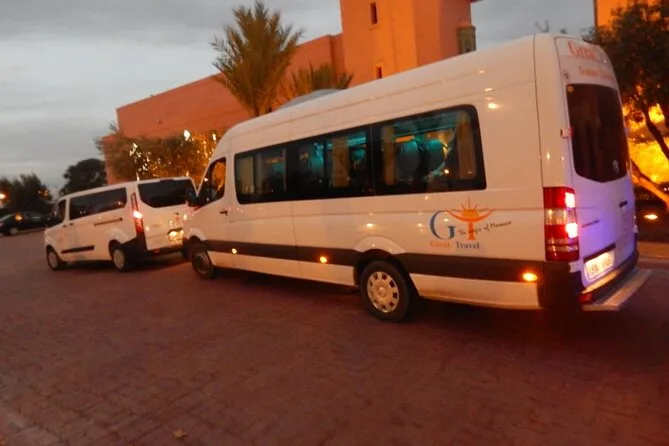
- Air-conditioned vehicle with driver for all three days.
- two nights accommodation in your chosen tier (standard, comfort or VIP).
- 1 hour and 30 minutes total camel riding split between sunset and sunrise at Merzouga.
- pickup and drop-off from central Marrakech hotels and riads.
Operated by Great Travel Morocco
Is this one for you?Choose shared transport if you're traveling with a flexible budget; pick private if you need your own vehicle and driver for the full duration.
Traveler reviews
Compare the 13 similar options
 Merzouga & Erg Chabbi 3 Days Sahara Tour from Marrakech★ 4.80 (156)3dEN · FR +1US$ 94
 3-Day Marrakech to Merzouga Desert Tour: Camel Trek & Berber CampThree days from Marrakech through the High Atlas, Kasbah Ait Ben Haddou and Todra Gorges to Merzouga's dunes★ 4.97 (36)3dEN · FR +1US$ 116View ›
 Marrakech to Merzouga: Sahara Desert Tour with Berber CampFeel the shift from Marrakech to Merzouga on a 4-day Sahara tour, ride camels, share tea with nomads, and sleep under desert stars. Includes pickup & all stays.★ 4.89 (311)4dEN · FR +1US$ 236View ›
 Marrakech: Merzouga Desert & Ait Ben Haddou 3-Day Tour3-day desert tour from Marrakech with camel ride, luxury camp, Ait Ben Haddou UNESCO site & Atlas Mountains. Includes transport, meals, local guides.★ 4.97 (515)3dEN · AR +3US$ 152View ›
 Marrakech to Fes: 3-Day Sahara Desert Tour, Camel Trek & KasbahsFeel the shift from Marrakech’s bustle to Sahara silence, cross Atlas passes, ride camels at sunset in Merzouga, and sleep under desert stars. Includes pickup.★ 4.87 (6,718)3dEN · AR +2US$ 233View ›
 Marrakech to Merzouga: Sahara Camel Trek & Desert Camp 3-Day TourFeel the magic of Morocco on a Marrakech to Merzouga desert tour with camel trek, Berber camp night, Atlas Mountains crossing, and Kasbah Ait Ben Haddou visit. Includes pickup.★ 4.67 (83)3dEN · FR +1US$ 181View ›
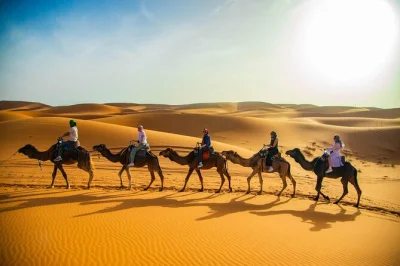 Marrakech to Merzouga Desert Tour: Camel Rides & CampThree-day guided tour from Marrakech through the High Atlas, Ait Ben Haddou and Todra Gorge to Merzouga's Erg Chebbi dunes with camel rides at sunset★ 4.91 (10,240)3dEN · AR +5US$ 129View ›
 3-Day Desert Tour Marrakech to Fes: Camel Rides & Sahara CampThree-day desert tour from Marrakech to Fes featuring camel treks and nights in a nomad tent at Merzouga, ending with sunrise over the Sahara dunes.★ 4.91 (35)3dEN · FR +1US$ 198View ›
 Marrakech to Merzouga: 3-Day Desert Tour & Luxury Camp3-day Sahara Desert tour from Marrakech to Merzouga with camel trek, Todra Gorge, Aït Benhaddou, and overnight luxury camp. Includes transport, meals, guide.★ 4.97 (175)3dEN · AR +3US$ 120View ›
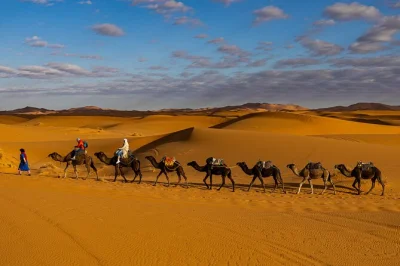 Marrakech to Merzouga: Sahara Desert Safari, Camel Trek & Berber CampWake up in Marrakech, cross the Atlas Mountains, wander Ait Ben Haddou, ride camels at sunset in Merzouga and sleep under desert stars. Includes pickup & all stays.★ 4.98 (244)4dEN · AR +2US$ 562View ›
 Marrakech to Fez: 4-Day Desert & Gorges with Camel Trek4-day desert tour from Marrakech through Sahara, Todra & Dades Gorges, camel trek, Ait Benhaddou, 3 nights with meals. Small groups, air-conditioned transport.★ 4.76 (92)4dEN · FR +1US$ 370View ›
 Marrakech to Merzouga 3-Day Desert Tour: Camel Trekking & CampThree days crossing the Atlas Mountains, Dades Gorge and Todra Valley to reach Merzouga's sand dunes—you ride camels at sunset★ 4.95 (76)3dEN · AR +2US$ 141View ›
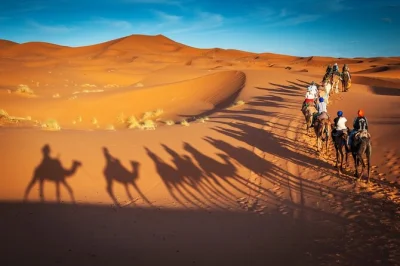 3-Day Merzouga Desert Tour: Camel Rides & Desert CampThree-day Atlas Mountains trek to the Sahara with camel rides across Erg Chebbi dunes and overnight in a traditional desert camp, including all transport and meals.★ 4.90 (1,941)3dEN · AR +8US$ 145View ›
Top questions
What's the difference between the standard, comfort and VIP accommodation options on this tour?
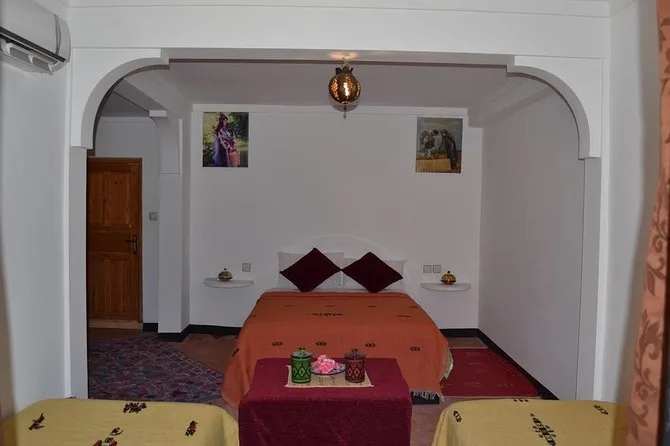
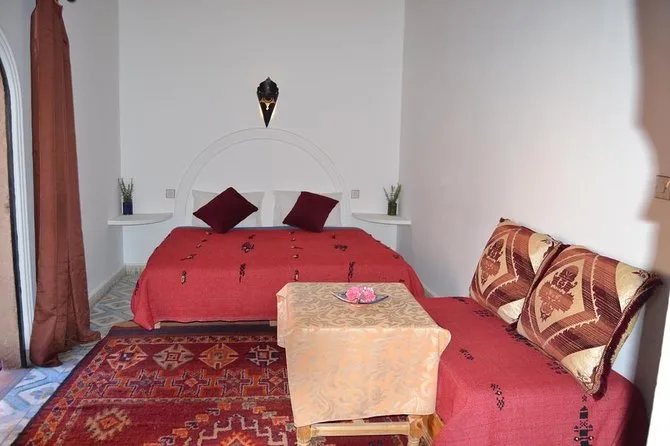
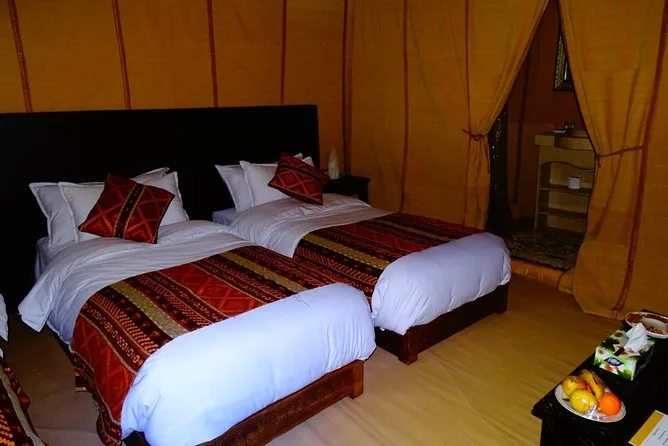
Standard accommodation is in non-classified establishments with basic features; comfort accommodation is equivalent to a 3-star international hotel; VIP or luxury accommodation is equivalent to a 5-star hotel. All three options include two nights, one in a traditional kasbah in Dades Gorge and one in a Berber tent in Merzouga.
How much camel riding is included in the Merzouga part of the tour?
You ride camels for a total of 1 hour and 30 minutes—45 minutes at sunset to enter Erg Chabbi on day two, and 45 minutes at sunrise to exit the dunes on day three morning.
Does the tour price include meals and drinks?
Lunch is not included on any of the three days, nor are drinks. You'll stop for meals in villages along the route and have time to eat, but you'll pay separately for food and beverages.
What languages does the guide speak?
The guide speaks English, Spanish or French, depending on the group's needs.
Is pickup from my hotel in Marrakech included?
Pickup and drop-off are included, but only from a defined central area of Marrakech. If you stay outside that zone, you'll meet the driver at the designated meeting point or arrange pickup by contacting the operator on WhatsApp.
What happens at Ait Benhaddou and Todra Gorge—do I get a guide there too?
Local guides are not included at either Ait Benhaddou or Todra Gorge; you walk these sites on your own or hire a local guide separately if you want one.
Merzouga & Erg Chabbi 3 Days Sahara Tour from Marrakech
3d · EN · FR +1 · at your hotel
from US$ 94 per person
★★★★★★★★★★4.80156 reviewsVerified traveler reviews via our booking provider
