
3-Day Sahara Desert Tour from Fez: Camel trek & gorges


Cedar forests, five gorges, one desert night on camel
A 3-day guided desert tour departing Fez and ending in Marrakech, with overnight stays in a Sahara camp and a Dades gorges hotel, a camel trek at sunset and sunrise, and stops at Todra Gorge, Dades Gorge, Ait Benhaddou and the Rose Valley. Your local guide speaks English, Spanish, French or German, and hotel pickup is included; the minimum group size is four paying adults.
 3d
3d

Step-by-step itinerary
Day 1 — Fes to Merzouga Desert
- Stop in Ifrane for coffee
- Observe Barbary apes in cedar forests
- Lunch in Midelt
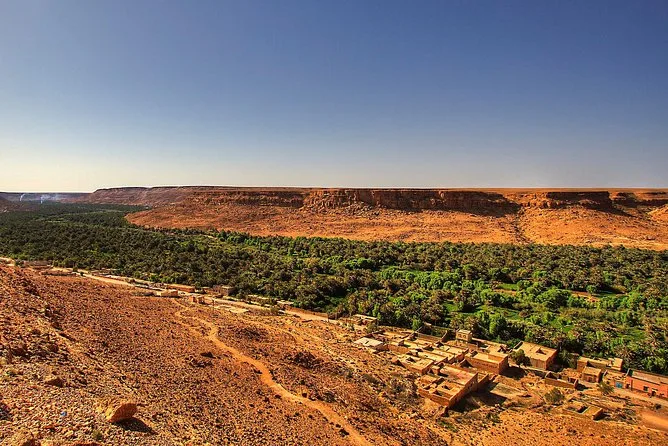
- Drive through Ziz Valley and view oasis
- Visit Erfoud fossil shops
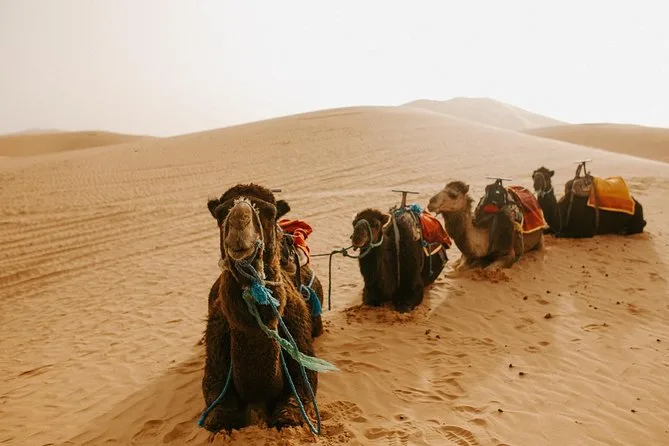
- Camel ride to desert camp at Merzouga
Day 2 — Merzouga to Dades Valley
- Visit Rissani market and donkey parking
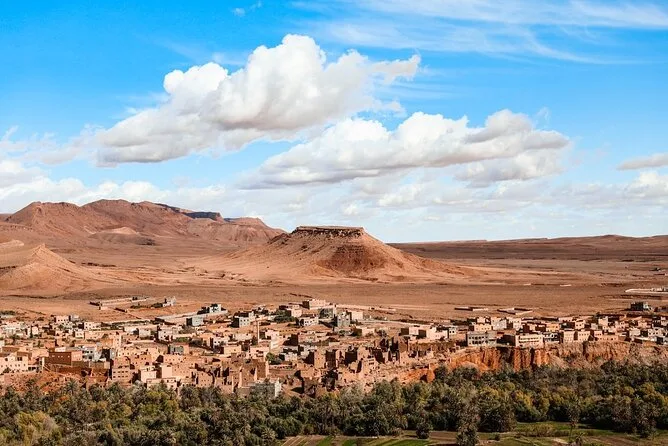
- Explore water channels and Todra Gorges
- Drive to Dades Valley with photo stops
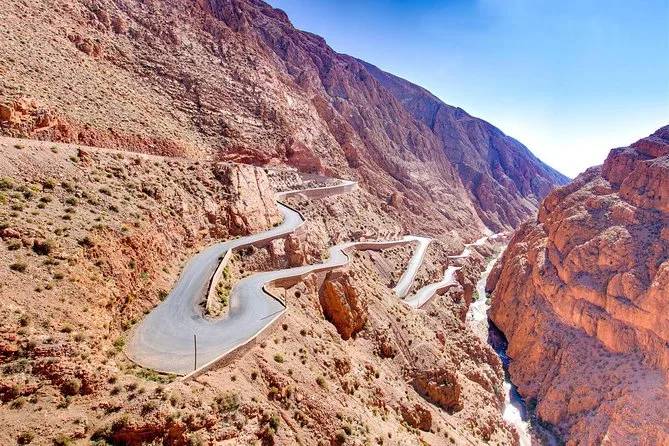
- Explore Dades Gorge and monkey fingers
- Check into hotel in Dades Valley
Day 3 — Dades Gorges to Marrakech
- Visit Kelaa M'Gouna rose farms
- Pass Skoura palm grove to Ouarzazate
- Visit Taourirt Kasbah or film studio
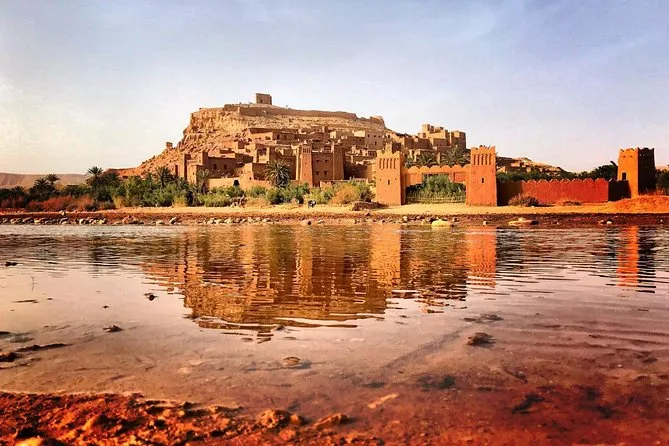
- Tour Ait Ben Haddou kasbahs
- Drive over Tizi n Tichka Pass to Marrakech
- Drop off at accommodation in Marrakech

The Experience
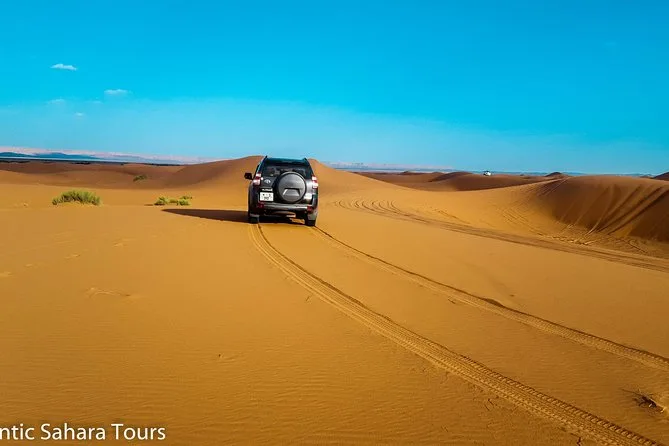
If you're arriving in Fez without a car or heading south to Marrakech and want to see the desert without building an itinerary yourself, this tour leaves the planning to a guide who knows the route. Day one takes you south through the Middle Atlas, where you stop to watch Barbary apes in the cedar forests, then descends into the Ziz Valley—a ribbon of palm trees and date plantations—before reaching Merzouga at the edge of the Sahara. Once there, a camel carries you across the golden dunes at sunset while a 4x4 transports your luggage to the camp. You sleep in a private tent with an ensuite bathroom and shower.
Day two moves west through Rissani's livestock market and into the Todra Gorges, where the river has carved a narrow canyon you can walk and explore. The route then climbs into Dades Valley, where the Dades River has sculpted red canyons and old kasbahs cling to the hillside. You overnight in a private room with air conditioning. On the final day, you pass through the Rose Valley—farmland bordered with fragrant rose bushes—and the Skoura palm grove before reaching Ouarzazate, where you can visit a film studio or the Taourirt Kasbah. The last stop is Ait Benhaddou, a fortified city on the former caravan route, before the drive north over the Tizi n Tichka Pass into Marrakech.
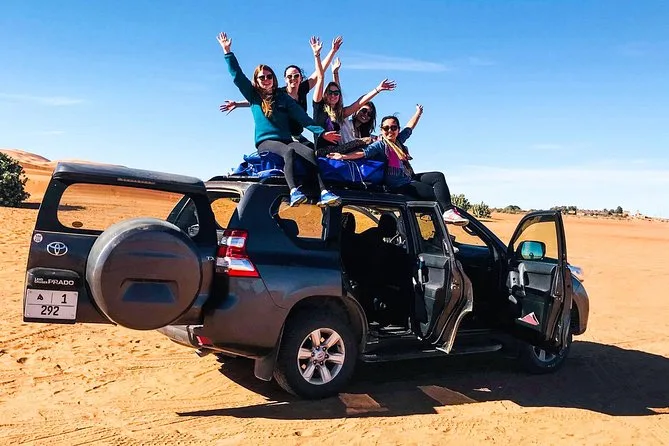
A morning camel ride is included on day two if you want it; you can skip it and travel by SUV instead. The guide is with you throughout, and meals at hotels and camps are arranged—you only need to note any dietary requirements when you book. July and August bring intense heat, so spring and autumn are better times to go.

What’s included
- Three nights' accommodation—one in a private Sahara camp tent with ensuite bathroom and shower, one in a private hotel room with air conditioning.
- local guide in English, Spanish, French or German.
- camel trekking at sunset and sunrise (or SUV alternative).
- hotel pickup in Fez and drop-off in Marrakech.
- breakfast and dinner at camps and hotels.
- guided entry to Ait Benhaddou village.
Operated by Authentic Sahara Tours
Is this one for you?Book this if you're based in Fez without a car—the guide drives you across three days through gorges and desert to Marrakech, handling all transport and camp logistics so you focus on the landscape and camel trekking.
Traveler reviews
Compare the 13 similar options
 3-Day Sahara Desert Tour from Fez: Camel trek & gorges★ 4.91 (159)3dEN · DE +3US$ 392
 Fes to Marrakech: Sahara Desert Tour, Camel Trek & Aït Ben HaddouFeel the silence of the Sahara on a Fes to Marrakech desert tour with camel trek, sunrise over Erg Chebbi, Todra Gorge walk, and pickup from your hotel.★ 4.71 (84)3dEN · DE +3US$ 176View ›
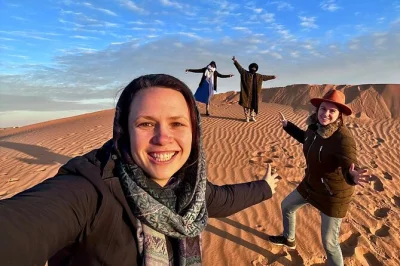 Fes to Marrakech: Desert Camp, Camel Ride & Atlas MountainsWake up in the Erg Chebbi dunes, ride camels at sunset, and cross the Tizi-n-Tichka Pass on this 3-day Fes to Marrakech tour with local guide and all transport included.★ 4.74 (223)3dEN · AR +2US$ 157View ›
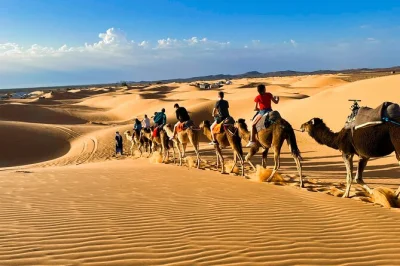 Fes to Marrakech desert tour: 3 days with camel trekkingThree-day desert tour from Fes to Marrakech with camel trekking across Erg Chebbi dunes, nights in a luxury camp and hotel★ 4.98 (573)3dENUS$ 396View ›
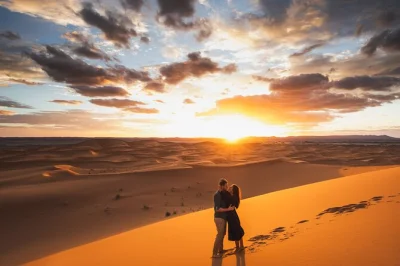 Fes to Marrakech 3-day Sahara tour: Camel ride & desert campThree-day journey from Fes to Marrakech through the Atlas Mountains and Sahara, featuring a sunset camel ride, desert camp overnight★ 4.93 (182)3dEN · FR +1US$ 293View ›
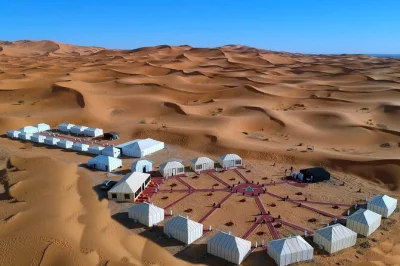 Fez to Marrakech: 3-Day Desert Safari with Camel Ride & Ait Ben HaddouThree-day Fez to Marrakech tour via the Sahara with camel rides at Erg Chebbi, stays in Todra Gorge and Ait Ben Haddou, minivan and English-speaking driver included.★ 4.85 (369)3dEN · FR +1US$ 196View ›
 Fez to Marrakech via Merzouga: 3-day desert & mountain tourThree-day tour from Fez crossing the Atlas Mountains and Sahara to Marrakech, with camel trekking at Erg Chebbi dunes★ 4.84 (1,278)3dEN · FR +1US$ 222View ›
 3-Day Desert Tour from Fes to Marrakech: Merzouga Camel TrekThree-day desert tour from Fes through Merzouga with camel rides, Berber camp overnight and hotel stays—pickup included, live guide in your language★ 4.90 (124)3dEN · AR +4US$ 222View ›
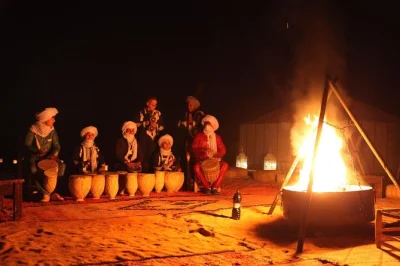 Fes to Marrakech: Private Sahara Desert Tour with Camel TrekExperience Morocco’s Sahara desert, Berber villages, and ancient kasbahs on a private 3-day tour from Fes to Marrakech with local guide, camel trek, and hotel pickup.★ 5.00 (18)3dEN · FR +1US$ 738View ›
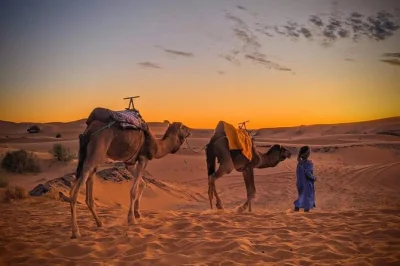 Fez to Marrakech: 3-Day Desert Trip & Ait Benhaddou KasbahThree days from Fez through Merzouga's dunes with camel rides, desert camp overnight, and Ait Benhaddou UNESCO site. Private vehicle, all meals and accommodation included.★ 4.50 (8)3dEN · FR +1US$ 732View ›
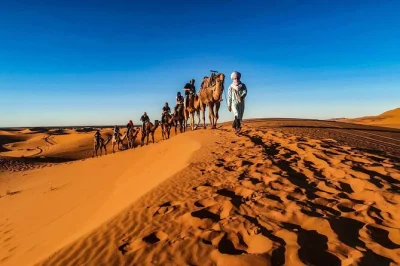 Fez to Marrakech: Sahara Camel Ride & Todra Gorge 3-Day TripWake up in Fez, cross cedar forests, ride camels over Erg Chebbi dunes, and wander Todra Gorge on this 3-day Morocco journey—includes hotel pickup and driver-guide.★ 4.88 (150)3dEN · AR +2US$ 451View ›
 Fes to Marrakech: Sahara Camel Trek, Todra Gorge & Atlas PassFeel the desert wind on a camel trek, wander Ait Ben Haddou’s ancient walls, and cross the Atlas Mountains—includes pickup and overnight desert camp.★ 4.98 (137)3dENUS$ 217View ›
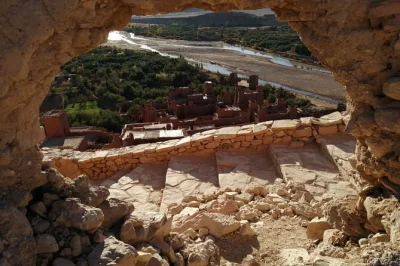 3-Day Marrakech to Fez Desert Tour: Ait Ben Haddou & MerzougaExperience a 3-day Marrakech to Fez desert tour with camel ride, Ait Ben Haddou, Atlas Mountains, and a Berber camp night. Book your Morocco adventure now.★ 4.79 (19)3dENUS$ 170View ›
Top questions
What exactly happens on the camel ride in the Sahara?
The camel trek happens twice: an evening ride across the dunes to the camp at sunset, and a morning ride back from the camp at sunrise. Your luggage travels separately by 4x4 so you ride unencumbered. If you prefer not to ride, you can travel by SUV instead.
Where do I sleep on this tour?
Night one is in a private tent with an ensuite bathroom and shower at Sahara Stars Camp or Pueblo Touareg in Merzouga. Night two is in a private room with air conditioning at Riad Rihana Dades or Hotel Atlas Dades in the Dades Valley.
What are the Todra and Dades gorges like?
Todra Gorge is a narrow canyon carved by the river where you can walk and explore the rock walls. Dades Gorge sits in a valley of red-colored canyons and old kasbahs, with a winding road and views the guide will stop to show you; the landscape is dramatic enough that film studios have used it for location shoots.
Does the tour include meals?
Breakfast, dinner and overnight accommodation are included at both camps and hotels. Lunch is not included, but the guide stops in towns where you can eat at local restaurants; the operator asks you to note any dietary requirements at booking.
What languages does the guide speak?
Your guide speaks English, Spanish, French, German or one additional language depending on availability. Confirm the language when you reconfirm your pickup details after booking.
How do I get picked up, and where does the tour end?
Hotel pickup in Fez is included; you'll reconfirm the pickup location and time with the operator after booking. The tour ends with a drop-off at your accommodation in Marrakech on the afternoon of day three.
3-Day Sahara Desert Tour from Fez: Camel trek & gorges
3d · EN · DE +3 · at your hotel
from US$ 392 per person
★★★★★★★★★★4.91159 reviewsVerified traveler reviews via our booking provider
