
2-Day Chegaga Desert Tour from Ouarzazate: Camel Trek & Berber Kasbahs


Chegaga Sahara Adventure: Camel Ride, Draa Valley & Desert Camp
If you want to see Morocco’s desert beyond postcards—real kasbahs, endless dunes, starry nights by a campfire—this two-day Chegaga tour is for you. You’ll ride camels, meet locals, eat home-cooked food, and come home with sand in your shoes (and probably your pockets).
 2d
2d

Step-by-step itinerary
Day 1 — Ouarzazate to Chegaga Desert
- Breakfast at hotel
- Drive through Anti-Atlas mountains and Drâa valley
- Visit Kasbah of Tamnougalte
- Lunch and visit M'Hamid center
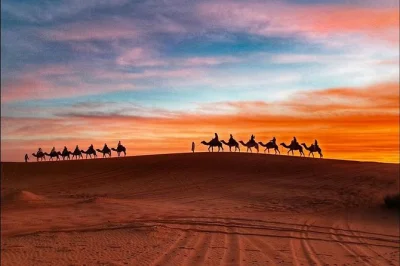
- Camel ride to dunes and sunset at bivouac
Day 2 — Chegaga to Ouarzazate Return
- Camel ride to Ksour of Tamnougalte and visit kasbah, library, potters
- Lunch with locals
- Travel through Zagora palm trees on caravan route
- Drive between Chegaga dunes and Lake Iriqui
- Stop at carpet cooperative in Taznakht
- Drive to Ouarzazate

The Experience
The morning air in Ouarzazate felt cool as we loaded up after breakfast—bags stuffed with scarves and sunscreen. Our driver, Youssef, grinned and pointed the van south. The Anti-Atlas mountains rose up fast, all jagged edges and red rock. Every so often, we’d pull over for photos—sometimes just to stretch our legs and watch goats picking their way along the cliffs. The Draa Valley opened up below us like a green ribbon; date palms everywhere, little mud-brick villages tucked into the folds.
We stopped at Tamnougalte Kasbah. It’s not polished or touristy—just old walls, faded paint, and kids kicking a ball outside. Our guide explained how families used to live here together for protection. Inside, it smelled faintly of dust and mint tea. By lunchtime we reached Zagora—a busy spot where locals fill up on grilled brochettes and sweet oranges from roadside stalls. After lunch, M’Hamid was next. It’s the last real town before the desert swallows everything. We grabbed bottled water at a tiny shop (the owner’s cat kept weaving between our legs) before heading out for the big crossing.
Tents were handed out at the camp—nothing fancy but surprisingly cozy once you settle in. Then came my favorite part: climbing onto a camel as the sun started to dip low. The sand felt warm underfoot; even the breeze tasted dry and sweet somehow. We rode out to the big dunes of Chegaga just in time for sunset—the sky turned every shade of orange you can imagine. Back at camp, dinner was cooked over an open fire while someone played drums under more stars than I’ve ever seen.
Next morning, after a simple breakfast (flatbread still warm), we set off again by camel—an hour rocking gently through silence broken only by hoofbeats and distant birdsong. Back near Tamnougalte, we visited a Koranic library (the calligraphy is beautiful) and watched potters shape clay with practiced hands. Lunch was with a local family—homemade tagine bubbling away while kids peeked around corners at us.
The road back wound through tall palms near Zagora and then across rough tracks past Lake Iriqui—a wide empty plain that looked almost lunar in places. We stopped in Taznakht too; it’s famous for carpets, and at the cooperative they showed us how each pattern tells its own story (I couldn’t resist buying a small one). By late afternoon we rolled back into Ouarzazate dusty but happy—and honestly wishing we could do it all again.

What’s included
- Your transport is air-conditioned (trust me, you’ll appreciate it after midday).
- Both breakfast and dinner are covered; lunch stops feature local food or family-style meals depending on where we are that day.
- Overnight? You’ll sleep in a tent right out on the sand under Saharan stars—with guides nearby if you need anything.
Operated by Easy Sahara
Traveler reviews
Compare the 7 similar options
 2-Day Chegaga Desert Tour from Ouarzazate: Camel Trek & Berber Kasbahs★ 4.86 (7)2dEN · FR +1US$ 351
 Draa Valley & Tinfou Dunes Day Trip from Ouarzazate: Camel RideDay trip from Ouarzazate through the Draa Valley with a one-hour camel ride at Tinfou dunes, lunch by the pool at a palm grove, and hotel pickup included★ 4.97 (181)9h–10hEN · FR +1US$ 187View ›
 Private Ouarzazate tour: Dades Gorge, Valley of Roses, SkouraPrivate tour from Ouarzazate through Skoura's palm groves, the Valley of Roses, and Dades Gorge with guide, lunch and hotel pickup★ 4.98 (129)10h–12hEN · FR +1US$ 140View ›
 3-Day Ouarzazate Tour: Dades Gorge, Merzouga Desert & KasbahsThree-day guided tour from Ouarzazate through oasis villages, Dades and Todra gorges, ending with a camel ride and night under the stars in Merzouga desert.★ 4.96 (84)3dEN · FR +1US$ 691View ›
 Marrakech to Merzouga Desert: 3-Day Group Tour with Camel Trek & Berber CampFeel the desert wind on a 3-day Marrakech to Merzouga tour—ride camels, sleep in a Berber camp, share music by the fire. Includes pickup, meals, and guide.★ 4.94 (318)3dEN · FR +1US$ 117View ›
 Ouarzazate: Draa Valley & Zagora Desert Day Trip with Camel RidePrivate day trip from Ouarzazate through Anti-Atlas mountains, Draa Valley and Tinfou sand dunes. Includes hotel pickup, lunch and camel ride option. Around 8-10 hours.★ 4.92 (26)10hEN · FRUS$ 164View ›
 Private Ait Ben Haddou & Ouarzazate Day Trip with LunchWalk ancient ksars, explore Ouarzazate’s kasbahs, and enjoy a local lunch on this private day tour. Includes entry fees, guide, air-conditioned ride, and pool access.★ 4.94 (17)5hEN · FR +1US$ 174View ›
Top questions
Is this Chegaga desert tour suitable for beginners or families?
Yes! The trip is designed for all fitness levels and families are welcome. Camel rides are gentle and guides help everyone feel comfortable.
What should I pack for the overnight desert stay?
Bring layers—it gets hot during the day but chilly at night. A scarf or hat helps with sun and wind; don’t forget sunscreen and water bottles.
Are meals included on this 2-day Sahara tour?
Breakfasts and dinners are included; lunches are usually with locals or at small restaurants along the route.
How long is the camel ride to Chegaga dunes?
The camel trek lasts about an hour each way—enough time to enjoy the scenery without getting sore!
2-Day Chegaga Desert Tour from Ouarzazate: Camel Trek & Berber Kasbahs
2d · EN · FR +1 · at your hotel
from US$ 351 per person
★★★★★★★★★★4.867 reviewsVerified traveler reviews via our booking provider
