
Teotihuacán: Pyramids Day Tour with Bike Ride & Lunch

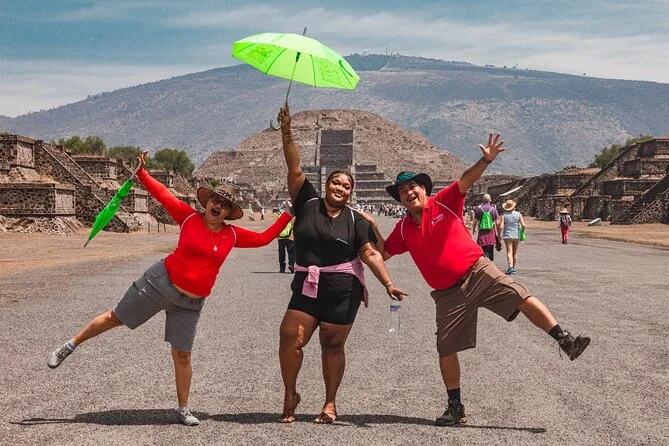
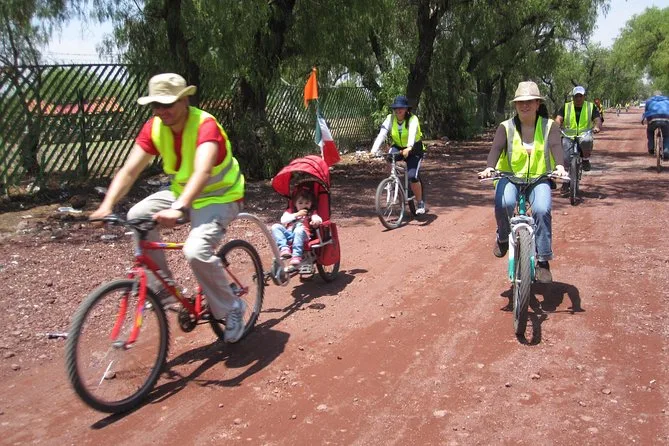
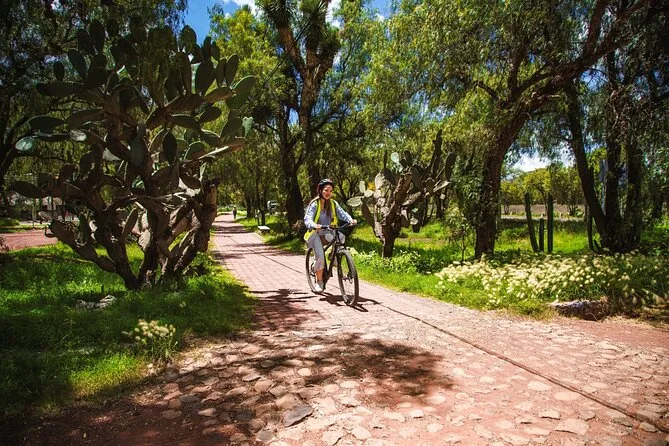

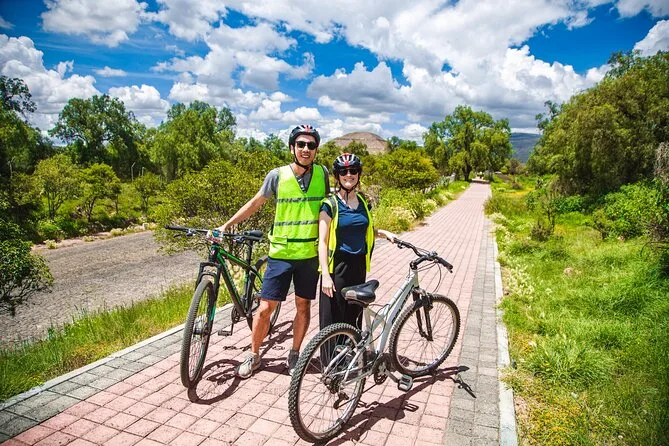

Walk ancient avenues see murals taste pulque and pedal past pyramids
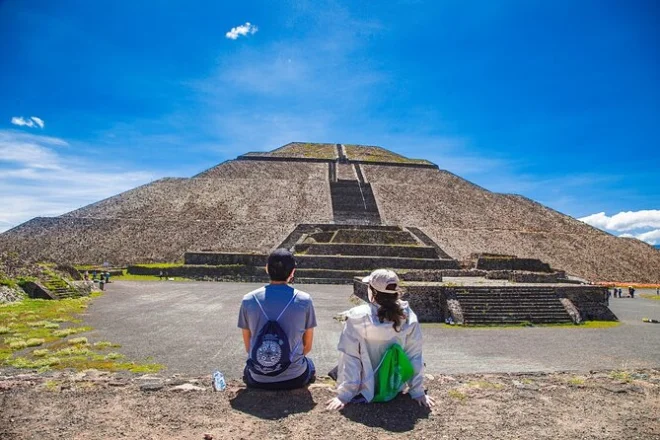
You’ll walk among Teotihuacán’s pyramids as sunlight warms ancient stones, bike through quiet valley roads with your guide pointing out hidden murals, taste fresh pulque at a local workshop, and share lunch where tortillas come hot off the stove. This isn’t just sightseeing—it’s feeling history under your feet.
 8h
8h

Step-by-step itinerary
Explore Teotihuacán archaeological site
- Meet guide and register
- Walk northern archaeological site
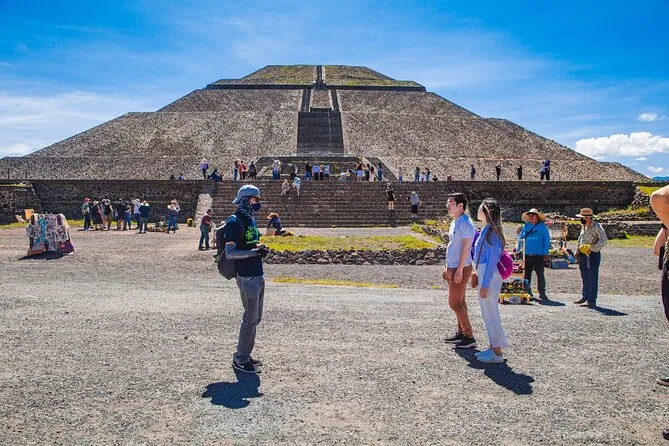
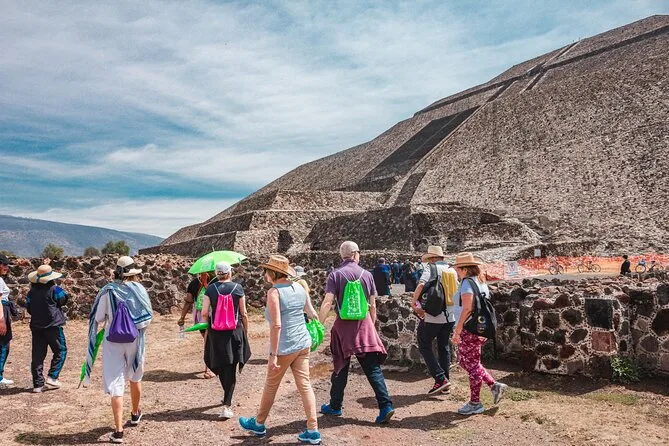
- See Pyramids of the Sun and Moon
- Visit Teotihuacán Valley viewpoints
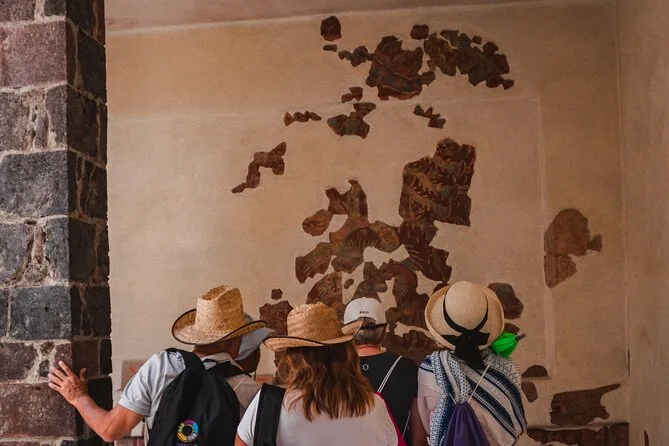
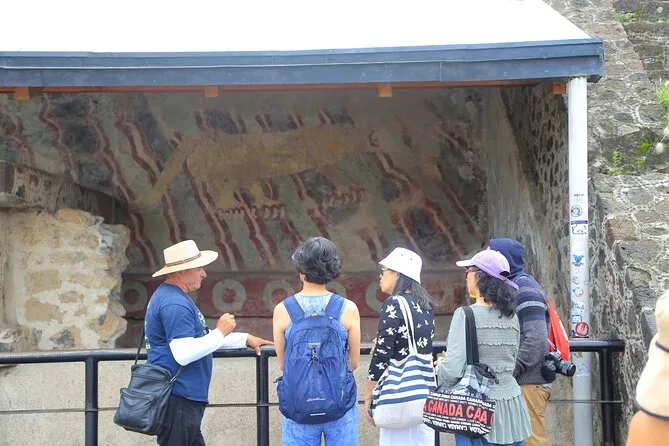
- Explore neighborhood with mural paintings
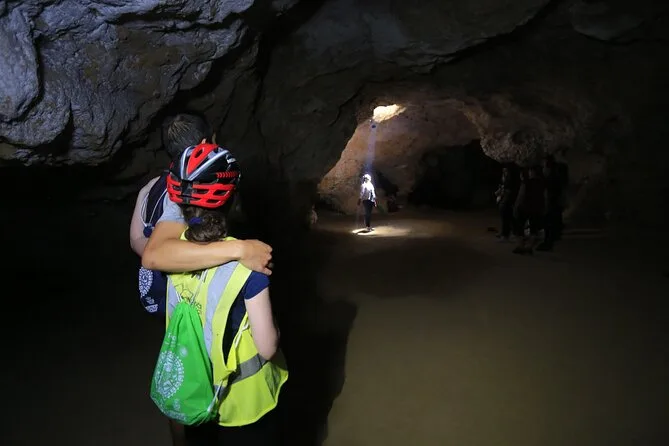
- Visit ancient pre-Hispanic observatory
- Tour local products cooperative
- Enjoy Mexican lunch at local restaurant

The Experience
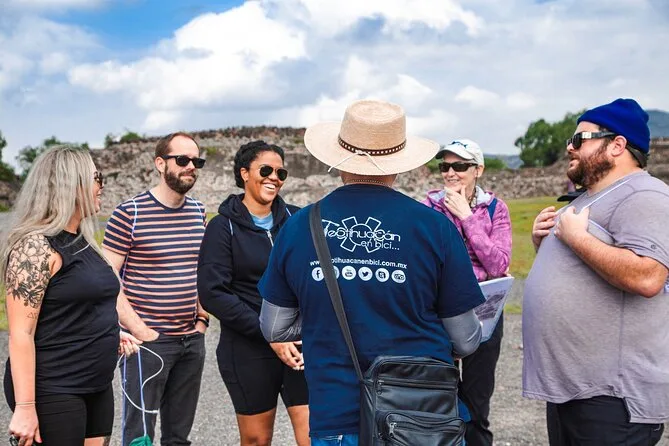
Hands sticky from cactus fruit, I tried to wipe them on my jeans before our guide, Martín, caught me grinning. He’d just handed us a chunk of obsidian—cold and heavier than it looked—and pointed out how the light played off its edge. I’d seen photos of the Pyramids of the Sun and Moon before, but standing at their base in Teotihuacán, hearing kids laughing in Spanish nearby and feeling the sun already warming my neck, it hit different. The scale is...well, you have to squint up until your eyes water. We started early from Mexico City (pickup was smooth, even though I almost forgot my hat), so there was still a bit of morning haze clinging to the stones.
We walked along the Causeway of the Dead—Martín called it Calzada de los Muertos—and he stopped every so often to show us faded wall paintings or a spot where you could still smell earth and incense if you leaned in close. I didn’t expect to be so drawn in by the murals; some colors are stubbornly bright after all these centuries. When we ducked into an old cave that used to be an observatory, it was cool and echoey inside—someone’s phone flashlight flickered on, but mostly it was just quiet except for Martín’s voice explaining how people here watched the stars.
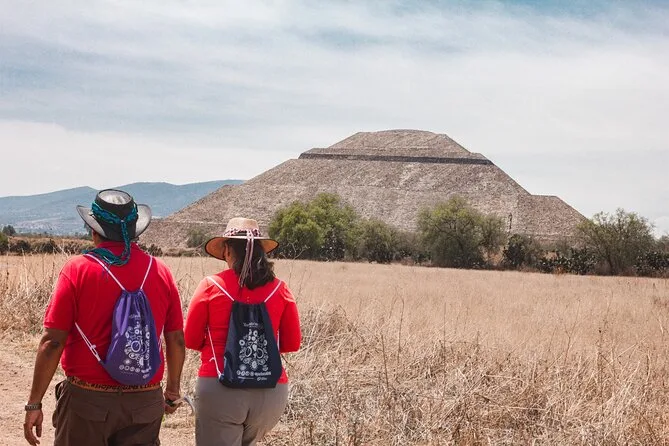
Afterwards, we switched gears—literally—for the optional bike ride around Teotihuacán’s valley. Not gonna lie: my legs complained at first (it’s about 10 km), but coasting past agave fields with those pyramids always peeking over rooftops felt surreal. We stopped at a family-run workshop where they showed us how obsidian is shaped (and let us try pulque—the “drink of the gods”—which tasted kind of funky-sour but also refreshing?). Li laughed when I tried to say “pulque” properly in Spanish—probably butchered it. Lunch was at a local spot: tortillas warm enough to steam up my glasses and salsa that made everyone pause for water.
I keep thinking about that view from the top steps, wind tugging at my shirt and Mexico City just a memory on the horizon behind us. It’s not just seeing Teotihuacán—it’s all those little moments with people who live here now, sharing what they know and love. If you’re curious about this place beyond postcards, this day trip from Mexico City really sticks with you.

What’s included
Your day includes hotel pickup from central Mexico City neighborhoods like Zona Rosa or Polanco, guided walking tour of Teotihuacán’s pyramids and murals (with transfers by van or optional mountain bike), bottled water along the way, entry to a local workshop where you can try pulque or cactus fruit products, plus a Mexican lunch at a neighborhood restaurant before returning in comfort that evening.
Operated by Teotihuacan en Bici
Traveler reviews
Compare the 13 similar options
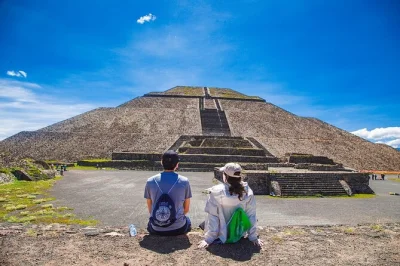 Teotihuacán: Pyramids Day Tour with Bike Ride & Lunch★ 4.85 (268)8hEN · ESUS$ 120
 Teotihuacan: Balloon Flight, Cave Breakfast & CDMX PickupFloat above Teotihuacan at sunrise, enjoy breakfast in a natural cave, and explore artisan workshops with hotel pickup included—an early start worth every minute.★ 4.88 (119)6h–8hEN · IT +1US$ 217View ›
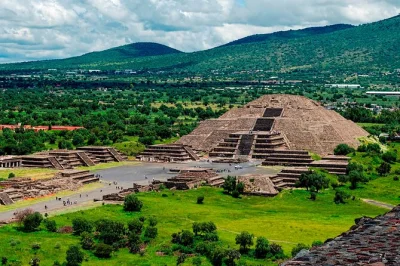 Teotihuacan & Guadalupe: Pyramids, Basilica & Local TastingsFeel the history at Teotihuacan pyramids, taste local spirits, and visit the Basilica of Guadalupe—all with pickup from Mexico City and a guide who grew up nearby.★ 4.75 (1,451)8h 30mEN · ESUS$ 42View ›
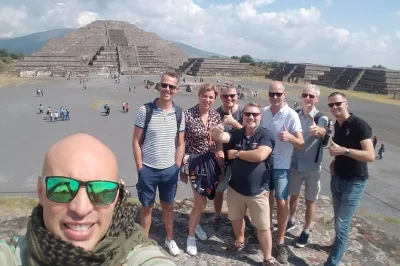 Teotihuacan Private Tour from Mexico City & Pyramid ClimbPrivate Teotihuacan tour from Mexico City with early start to beat crowds, pyramid of the Sun climb, expert guide & traditional drink tasting. Hotel pickup included.★ 4.95 (2,106)1h–5hEN · ESUS$ 140View ›
 Mexico City: Coyoacán & Xochimilco with Museum & TrajineraSix-hour tour of Coyoacán's bohemian streets and Xochimilco's UNESCO canals. Includes museum entry, colorful boat ride, pickup and lunch. Minimum 2 people.6hEN · FR +1US$ 145View ›
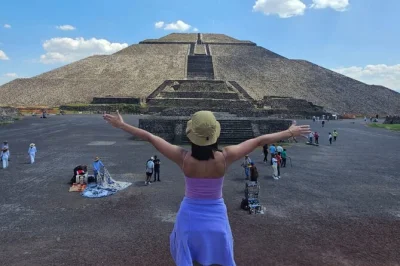 Teotihuacan Early Morning Tour: Walk the Avenue of the DeadVisit Teotihuacan from Mexico City before 9:00 am. Walk past the Temple of Quetzalcoatl, Pyramid of the Sun and Moon with a guide. Transport included.★ 4.91 (1,047)5h–6hEN · ESUS$ 45View ›
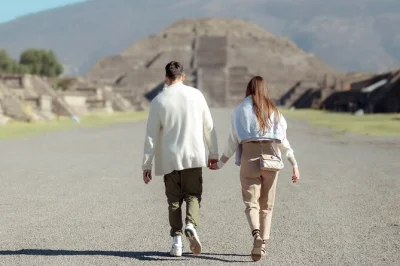 Teotihuacan Pyramids: Early Morning Express Tour & PickupArrive at Teotihuacan before crowds, walk the pyramids in peace, and hear stories from a real guide. Includes early pickup, snacks, and a smooth return to Mexico City.★ 4.92 (515)5hEN · ESUS$ 70View ›
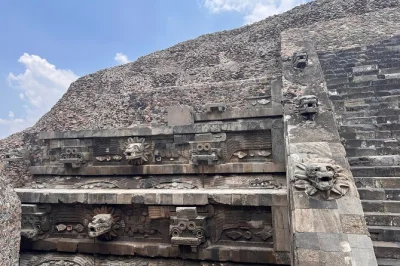 Teotihuacán Pyramids Private Tour from Mexico CityPrivate Teotihuacán tour from Mexico City with hotel pickup, museum entry & guided walk through Pyramid of the Sun. 1 hour 15 min transfer, includes water & snacks.★ 4.84 (576)5h 30mEN · ESUS$ 120View ›
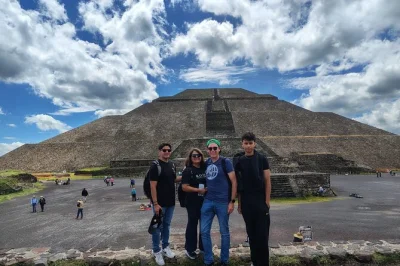 Teotihuacan Pyramids: Early Access Tour & No Shopping StopsSkip the crowds at Teotihuacan with early pickup from Mexico City, guided walks along the Avenue of the Dead, and no commercial detours—just pure history.★ 4.90 (908)6hEN · ESUS$ 45View ›
 Chapultepec Castle Mexico City: Skip-the-Line Entry & ViewsPriority access to Chapultepec Castle in Mexico City with no queue. Explore royal rooms, murals and artifacts. Includes admission and digital concierge support.30m–3h 20mUS$ 24View ›
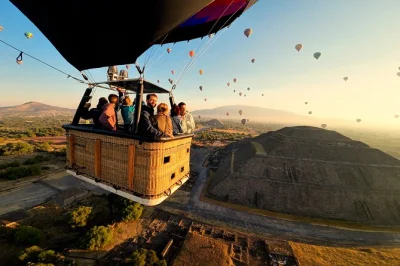 Teotihuacan: Hot Air Balloon Flight & Cave Breakfast TourFloat above Teotihuacan’s pyramids at sunrise, then share a cave breakfast with local flavors and stories. Includes pickup, guided flight, and free time to explore.★ 4.94 (908)3h–8hEN · RU +2US$ 140View ›
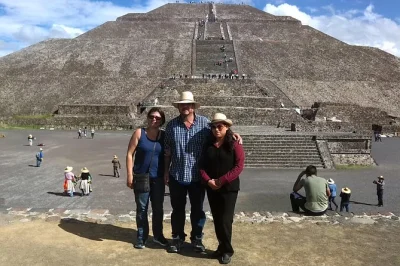 Mexico City: Teotihuacan & Guadalupe Shrine Private TourPrivate Mexico City tour with hotel pickup: Teotihuacan pyramids, Tlatelolco ruins, Basilica of Guadalupe, and lunch. Expert guide, all-inclusive transport and entry.★ 4.93 (955)6hEN · ESUS$ 190View ›
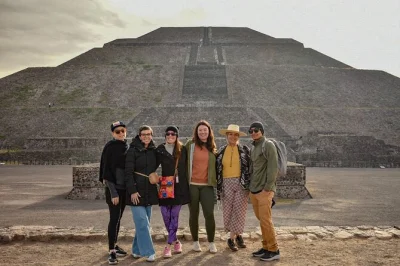 Teotihuacan Pyramids Tour from Mexico City: 5-hour early morningFive-hour Teotihuacan tour from Mexico City with expert guide, entry, and air-conditioned transport. Visit Avenue of the Dead and three pyramids.★ 4.86 (9,582)5h 30mEN · ESUS$ 49View ›
Top questions
How long does the Teotihuacán day tour take?
The full-day tour lasts several hours including transfers from Mexico City; exact timing depends on traffic and chosen activities.
Is hotel pickup included for this Teotihuacán tour?
Yes, pickup is included from hotels in Zona Rosa, Centro, Polanco and Condesa areas of Mexico City.
Do I need to be fit for the bike ride in Teotihuacán?
The optional bike ride is about 10 km (6 miles) around flat terrain; suitable for most fitness levels.
What food is included on this day trip?
A Mexican lunch at a local restaurant is included; vegetarian options are available if requested when booking.
Are guides knowledgeable about Teotihuacán history?
Yes, tours are led by local guides who share insights about history, murals, astronomy and daily life in ancient Teotihuacán.
Can infants join this tour?
Infants can join; they must sit on an adult's lap or use specialized infant seats if needed.
Is bottled water provided during the tour?
Bottled water is included for all participants throughout the day trip.
What languages do guides speak?
Tours may be operated by multilingual guides depending on group needs.
Teotihuacán: Pyramids Day Tour with Bike Ride & Lunch
8h · EN · ES · at your hotel
from US$ 120 per person
★★★★★★★★★★4.85268 reviews
