

 +507 6792-0894


Nairobi Kibera: Walking Tour with Kevin & Community Stories










Summary
Kibera’s daily rhythm, family stories and street markets in Nairobi
You’ll walk through Nairobi’s Kibera alongside Kevin, meeting local families and children at an orphanage school, watching artisans at work in a bone workshop, tasting street food on main street market, and hearing honest stories about life here. Expect warmth, laughter, tough truths — and moments you’ll remember long after you leave.

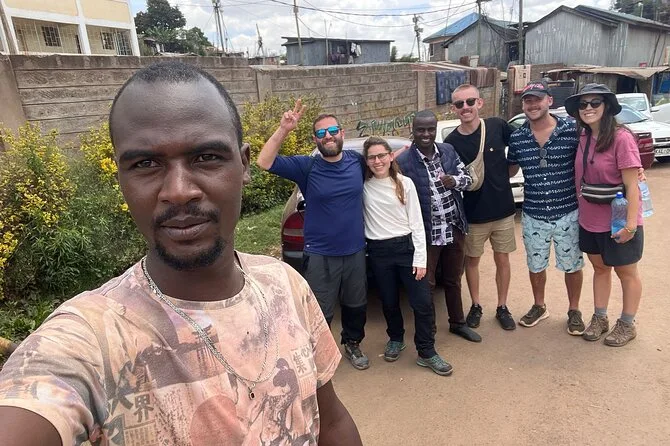
The first thing that hit me in Kibera wasn’t what I expected — it was the sound. Kids shouting, radios tangled with laughter, someone frying something that smelled sharp and sweet at the same time. Kevin met us right by the edge of the market, grinning like he’d known us for years. He waved us through a maze of stalls where everyone seemed to know his name. “Big Brother!” one boy called out, and Kevin just laughed. You could tell he’d walked these tracks a thousand times.
We ducked into an African bone workshop — I’d never seen anything like it. The air was thick with dust and the clack of tools on bone. One of the guys showed me how they carve old cow bones into bracelets; my hands got chalky just holding one. After that, we visited the orphanage school where some of the kids ran up to Kevin, hugging him around the waist. He told us about how he’d helped bring them here off the streets. There was this moment — a girl named Amina handed me a drawing she made in class, all bright colors and crooked lines. I still have it tucked inside my notebook.
Kevin led us past his house (his mom waved from the doorway), then along a train track where laundry flapped like flags above our heads. The landfill nearby wasn’t easy to see — honestly, it smelled rough — but nobody pretended otherwise. Kevin talked straight about life here, good and bad, never sugarcoating it but never letting it get too heavy either. At one point he pointed out his favorite chapati stand; we grabbed some for lunch and ate leaning against a wall while he told stories about growing up here.
I didn’t expect to feel so welcome in Kibera or to laugh as much as we did with Kevin and his friends. There’s this energy here that sticks with you long after you leave — maybe it’s hope or maybe just stubborn joy in small things, like fresh chapati or kids singing on their way home from school.
 4h
4h

Step-by-step itinerary
Day 1 — Explore Kibera community sites
- Visit African bone workshop
- Tour orphanage school
- See Kevin’s house and family
- Walk through landfill area
- Walk along train track
- Explore main street market

Top questions

Is this Kibera tour safe for visitors?
The tour is guided by Kevin who lives in Kibera; safety is prioritized but travelers should be aware of surroundings as in any busy city area.
How long does the Kibera walking tour take?
The experience typically lasts half a day; exact timing may vary depending on group pace and conversation stops.
What do you see on this Kibera slum tour?
You visit an African bone workshop, an orphanage school, Kevin’s house and family area, landfill site, train track route, and main street market.
Is lunch included during the tour?
No formal lunch is included but there are opportunities to try local street food during the walk if you wish.
Are children allowed on this tour?
Infants are required to sit on an adult’s lap; otherwise suitable for all ages with reasonable fitness levels.
Can pregnant travelers join this Kibera tour?
This tour is not recommended for pregnant travelers due to uneven ground and walking conditions.
Will I meet locals during this experience?
Yes; you’ll meet local artisans at workshops, children at the orphanage school, market vendors, and Kevin’s family members along the way.

What’s included
Your day includes a guided walk through Nairobi’s Kibera neighborhood with Kevin as your host—visiting an African bone workshop, an orphanage school supported by community profits from your booking, time at Kevin’s home area with his family nearby, walks along train tracks and through main street markets. All experiences are led by your local guide from start to finish.
 Super deal
  Free booking, free cancellation.
  Don't lose your place.


 Do you need help planning your next activity?
  +507 6792-0894


