

 +507 6792-0894


Tsuruoka & Dewa Sanzan Private Tour with Licensed Guide



Summary
Private Walking Tour of Tsuruoka and the Three Sacred Mountains
You’ll walk ancient paths through towering cedars, visit sacred shrines with a local guide who knows every shortcut, and catch real moments of Tsuruoka life—from monks on pilgrimage to families picnicking under cherry blossoms. This tour isn’t just sightseeing; it’s stepping into centuries-old traditions at your own pace.

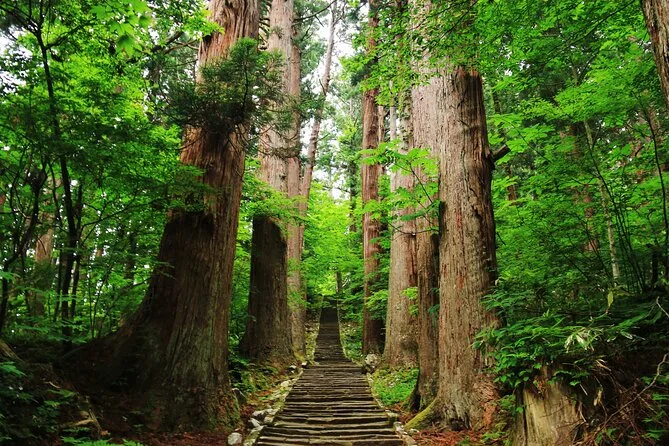
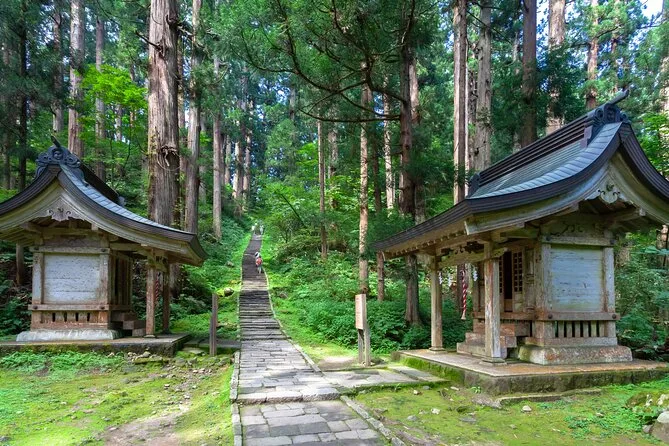
I met our guide right outside my hotel in Tsuruoka—no fuss, just a quick hello and we were off on foot. The air had that crisp, early-morning chill you only get up north, and you could already smell incense drifting from somewhere nearby. Our first stop was Mt. Haguro. The stone steps looked endless at first glance, but our guide explained how each of the Three Sacred Mountains represents a different world: Haguro for the present, Gassan for the past, and Yudono for rebirth. It’s wild to think people have been making this pilgrimage for over 1,400 years.
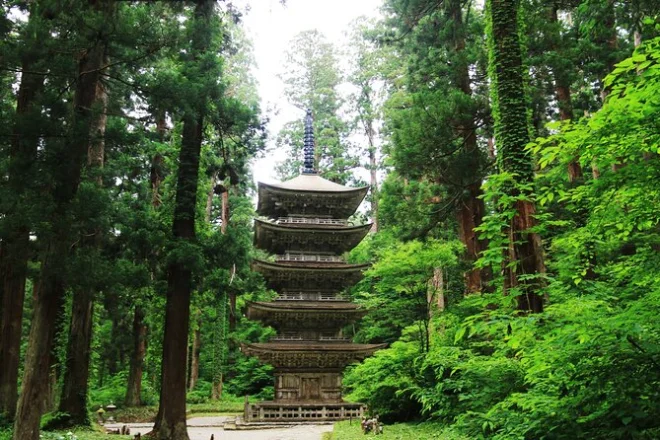
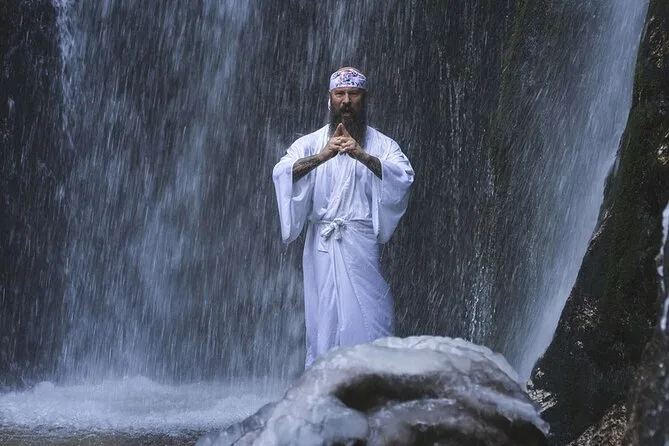
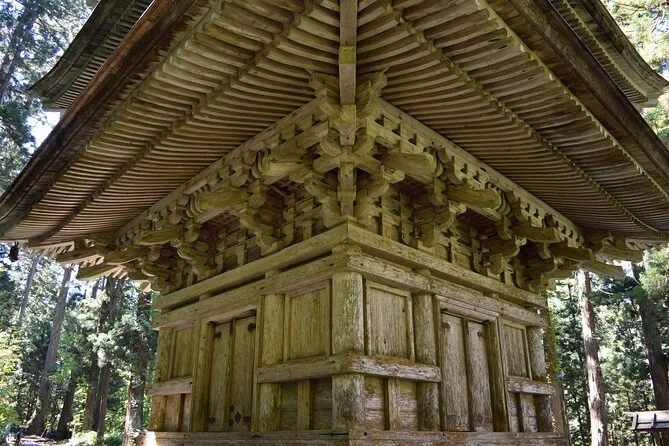
Walking up through the cedar forest, I kept hearing birds—honestly louder than I expected—and every so often we’d pass a Yamabushi monk in white robes moving quietly along the path. Our guide pointed out little things I’d never notice alone: mossy statues tucked behind tree roots, or how the light hits the five-story pagoda just after 10am. We ducked into the Dewa Sanzan History Museum too; it’s packed with old ritual tools and masks from when Buddhism and Shintoism mixed here. If you’re curious about mountain worship or Shugendo, this is where it all comes together.
We grabbed some snacks from a vendor near Tsuruoka Park—sakura mochi if you’re lucky enough to visit during cherry blossom season (the park’s got over 700 trees). Locals spread out tarps under the petals, eating and laughing like it’s their own backyard picnic. Our guide shared stories about how visiting both Ise Grand Shrine in the west and Dewa Sanzan in the east used to be a rite of passage in Japan. If you want to see Gassan or Yudono shrines up close, check your timing—those spots are only open certain months due to snow.
 10h
10h

Step-by-step itinerary
Day 1 — Explore Dewa Sanzan and Tsuruoka
- Learn about the Three Sacred Mountains of Dewa
- Visit Mt. Haguro, the present world
- Explore Mt. Gassan, the past or afterlife (seasonal)
- Tour Dewa Sanzan History Museum
- Understand the significance of Ise Grand Shrine and Dewa Sanzan
- Continue learning about Ise Grand Shrine and Dewa Sanzan
- Visit Mt. Yudono, the future or rebirth (seasonal)
- Enjoy cherry blossom viewing at Tsuruoka Park

Top questions

Is this tour suitable for someone using a wheelchair?
Yes! All areas are wheelchair accessible and transportation options can accommodate wheelchairs as well.
Can I choose which sites we visit?
Absolutely—you can pick your must-see spots from our list when booking, and we’ll customize your itinerary together.
Are infants or small children allowed?
Yes, infants and small children are welcome! You can bring a pram or stroller if needed.
When is Mt. Gassan open for visits?
Mt. Gassan is usually open between July and mid-September due to snow conditions.
Will we have an English-speaking guide?
Your tour will be led by a licensed local English-speaking guide who knows Tsuruoka inside out.

What’s included
You’ll meet your licensed local guide on foot within Tsuruoka city. The tour includes guidance in English (or other languages), entry to selected sites like Mt. Haguro or Dewa Sanzan History Museum (based on your choices), plus flexibility to customize your route. Service animals are welcome, public transport is nearby if needed, and everything’s set up for all fitness levels—even families with strollers or those needing wheelchair access.
 Super deal
  Free booking, free cancellation.
  Don't lose your place.


 Do you need help planning your next activity?
  +507 6792-0894


