


Kyoto day trip from Osaka: Nijo Castle, Fushimi Inari, Arashiyama
Nine hours across four centuries of Japanese history and nature
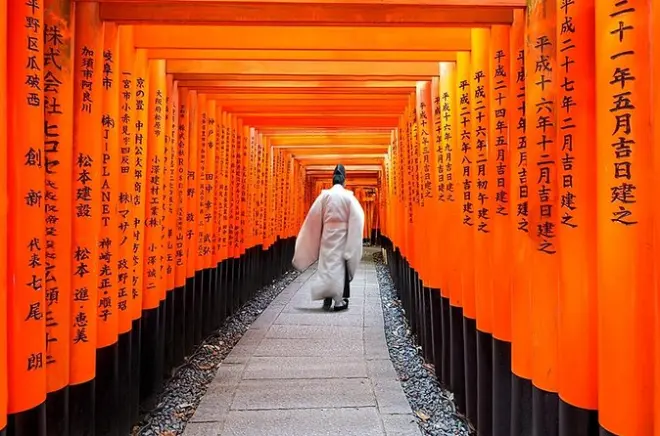
A nine-hour guided tour from Osaka or Kyoto through Kyoto's most recognizable landmarks: Nijo Castle, a UNESCO World Heritage site built in 1603; Fushimi Inari Shrine with its thousands of vermilion torii gates; and the Arashiyama district, where bamboo forests, Nonomiya Shrine, the Togetsukyo Bridge, and the Kimono Forest textile installation fill a single day. An English or Chinese-speaking guide and air-conditioned vehicle are included.
Options for this experience
2 optionsStep-by-step itinerary
Kyoto sightseeing highlights
- Depart from Osaka or Kyoto
- Visit Nijo Castle and gardens
- Explore Fushimi Inari Shrine torii gates
- Walk through Arashiyama Bamboo Forest
- Visit Nonomiya Shrine
- See Kimono Forest installation
- View Togetsukyo Bridge
- Nijo Castle 1h
- Nonomiya Shrine 20m
- Arashiyama Kimono Forest 20m
- Togetsukyo Bridge 20m
What’s included
- Air-conditioned vehicle throughout the day.
- English or Chinese-speaking guide.
- access to Nijo Castle, Fushimi Inari Shrine, the Arashiyama bamboo forests, Nonomiya Shrine, the Togetsukyo Bridge, the Kimono Forest, and Kinkaku-ji Temple.
Times
- Every day 08:00 09:00
Information
Nine hours through Kyoto's feudal past and natural beauty: Nijo Castle's palace buildings, thousands of vermilion torii gates at Fushimi Inari.
More experiences you might like



Traveler reviews
The experience
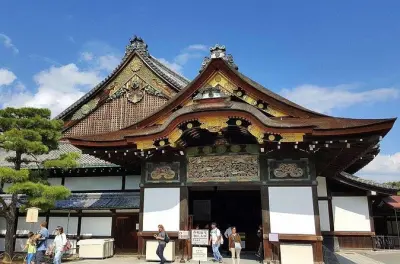
The day starts at Nijo-jo Castle, built in 1603 as the Kyoto residence of Tokugawa Ieyasu, the first shogun of the Edo Period. The palace buildings are among the best surviving examples of feudal-era castle architecture in Japan, and the entire complex (divided into the Honmaru and Ninomaru defensive circles, surrounded by stone walls and moats) was designated a UNESCO World Heritage Site in 1994. Admission costs 1,300 yen, which you pay separately at the gate.
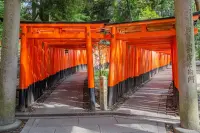
From there, the route moves to Fushimi Inari Taisha, the head shrine among roughly 30,000 Inari shrines across Japan. The shrine is built around Senbon Torii: thousands of vermilion red torii gates stacked in tunnel-like pathways up the sacred Mount Inari. People have gathered here since 711 AD to pray for harvests, business success, and family safety. The sheer number of gates creates an immersive, otherworldly passage that photographs cannot quite capture.
The afternoon centers on Arashiyama, a district on Kyoto's west side where multiple stops fill the remaining hours. The bamboo forests are the draw: towering stalks lining peaceful walking paths where the air feels noticeably quieter than the city. Nonomiya Shrine sits within the district, distinguished by its black kuroki torii gate rather than the vermilion ones found elsewhere. The shrine has a centuries-long reputation for interceding on behalf of women seeking love, children, and safe childbirth. The Togetsukyo Bridge, originally built during the Heian Period and reconstructed in the 1930s, spans the Katsura River and frames views of the surrounding mountains. The Kimono Forest (600 clear acrylic cylinders standing two meters tall, each dressed in vibrant kimono fabrics showing 32 traditional Kyo-yuzen designs) offers a modern textile art perspective on Japanese craftsmanship. Kinkaku-ji, the Golden Pavilion, rounds out the day: a three-story Zen Buddhist temple covered in gold leaf, each floor displaying a different architectural style (shinden, samurai, and zen), and itself a UNESCO World Heritage site. Admission to Kinkaku-ji costs 500 yen.
Top questions
What languages is the tour guided in?
Live guide in English and Chinese.
Can children come?
Yes. Ticket types: Infant (under 3).
What is Nijo Castle and why does it matter in Japanese history?
Nijo-jo Castle was built in 1603 as the Kyoto residence of Tokugawa Ieyasu, the first shogun of the Edo Period, and has witnessed some of the most important events in Japanese history over the 400 years since its construction. Its palace buildings are considered the best surviving examples of feudal-era castle palace architecture in Japan, which is why it earned UNESCO World Heritage status in 1994.
What makes Fushimi Inari Shrine famous?
Fushimi Inari Taisha is the head shrine among roughly 30,000 Inari shrines in Japan and is renowned for Senbon Torii: thousands of vermilion red torii gates that create a stunning tunnel-like pathway up the sacred Mount Inari. The shrine has been a pilgrimage site since 711 AD for people praying for bountiful harvests, business prosperity, and family safety.
What will I see in the Arashiyama bamboo forests?
The Arashiyama bamboo forests feature towering bamboo stalks lining peaceful walking paths surrounded by lush greenery. The groves are especially captivating when a breeze moves through the tall stalks, and the serene natural setting serves as one of Kyoto's most recognizable symbols.
What is the Kimono Forest?
The Kimono Forest is a textile art installation made up of 600 clear acrylic cylinders, each standing two meters tall and adorned with vibrant kimono fabrics. The installation showcases 32 traditional Kyo-yuzen designs, ranging from elegant floral patterns to geometric shapes and traditional Japanese symbols, offering a unique perspective on Japanese textile craftsmanship.
How much does entry to the main sites cost?
Nijo Castle admission is 1,300 yen and Kinkaku-ji (Golden Pavilion) is 500 yen. Both are paid separately at each site. Lunch is not included in the tour price.
Operated by F Trip. Explorevia does not run this tour: we compare it with similar options, and you book it with our booking partner.
Prices and times updated yesterday
Kyoto day trip from Osaka: Nijo Castle, Fushimi Inari, Arashiyama
9h · EN +1
from JP¥ 10,461 per person
≈ US$ 64 in your currency
Next, you choose your date and number of travelers and see the final price.