
Kanazawa Walking Tour: Garden, Castle & Geisha District


Four centuries of samurai rule, told through a garden, a fortress, a house and a teahouse.
A small-group walking tour of Kanazawa with an English-speaking guide covers Kenrokuen Garden, Kanazawa Castle exterior, Nomura House (a samurai residence with admission included), and Higashi Chaya Geisha District in three hours. A one-way taxi ride from the samurai district to the geisha quarter is included, breaking up the walking and keeping the pace manageable. The tour runs at 8:30 AM or 1:30 PM, and the meeting point is Kenrokuen Information Center.
Compare the 9 alternatives
 Kenroku-en Garden & Kanazawa Castle Walking Tour: Local GuideEvery day · First departure 08:30, last 13:00 · All ages★ 4.94 (33)2hENJP¥ 3,600View ›
 Kanazawa Castle & Samurai History Walking TourEvery day · First departure 08:30, last 15:00 · All ages★ 4.92 (554)2h 30m–3hENJP¥ 9,300View ›
 Kanazawa half-day private tour: Castle, garden, geisha districtEvery day · First departure 09:00, last 13:00 · From age 10★ 5.00 (7)4hENJP¥ 30,000View ›
 Kanazawa Half-Day E-bike Tour: Geisha District & CastleEvery day · 09:00 and 13:30 · Ages 14–70★ 4.90 (69)4hENJP¥ 19,500View ›
 Kanazawa Half Day Tour Private Guide Geisha & SamuraiEvery day · 08:30 and 13:30★ 4.94 (443)4hEN · JAJP¥ 20,308View ›
 Kanazawa Ninja Temple and Geisha District: 2-hour walking tourEvery day · 09:00, 12:30 and 15:00 · All ages★ 4.77 (56)2hENJP¥ 11,000View ›
 Kanazawa: Samurai District, Matcha & Geisha with Garden EntryEvery day · 09:00 · From age 6★ 4.93 (107)9hENJP¥ 22,300View ›
 7-Hour Kanazawa Private Tour: Geisha Houses & Samurai DistrictsEvery day · First departure 08:30, last 10:00 · Ages 15–65★ 5.00 (6)7hENJP¥ 35,500View ›
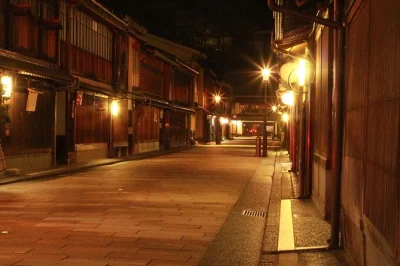 Kanazawa Geisha Districts Night Tour & 3-Course DinnerEvery day except Wednesday and Thursday · 18:00★ 4.89 (215)2h 30mENJP¥ 16,000View › Compare more experiences like this »
Step-by-step itinerary
Explore Kanazawa's iconic highlights
- Meet at Kenrokuen Information Center
- Visit Kenrokuen Garden and learn its philosophy
- Explore Kanazawa Castle exterior
- Tour Nomura House and samurai heritage
- Taxi ride to Higashi Chaya Geisha District
- Discover Higashi Chaya Geisha District
The experience
The tour opens at Kenrokuen, one of Japan's three great gardens, where the guide explains how the Maeda clan (samurai lords who ruled for 300 years) designed every stone and water channel as a statement of political power and cultural refinement. From there, you walk to Kanazawa Castle and see the massive stone walls and white roofs that still anchor the city's identity, then move into the Samurai District's narrow earthen-walled streets to enter Nomura House, a premier samurai residence with an award-winning garden and displays of authentic armor and weapons.
Instead of walking the longest stretch, you take a taxi ride with the guide to Higashi Chaya Geisha District, where traditional teahouses line the streets and you learn how Kanazawa's crafts and performing arts have survived and been passed down. The guide ties these four stops together, showing how history, culture, nature and art connect across the city rather than treating each as a separate sight. The whole experience runs three hours, so it fits a morning or afternoon without consuming the rest of the day.
Arrive on time at the Kenrokuen Information Center. Late arrivals cannot join midway, and the tour ends at the last stop with no additional drop-off service. The itinerary may shift depending on weather, traffic or if any site closes, but an alternative is substituted. You'll walk primarily throughout, so a moderate level of fitness helps.
What’s included
- Professional English-speaking guide.
- admission to Kenrokuen Garden.
- admission to Nomura House samurai residence.
- one-way taxi ride from Nagamachi Samurai District to Higashi Chaya Geisha District.
Options for this experience
2 optionsBefore you book
Prices and times updated today
Operated by Japan Panoramic Tours
Is this one for you?Choose the morning departure if you want the garden and castle before the crowds build. Choose the afternoon if you prefer a later start. Either way, the taxi ride means you spend your energy on the stops themselves rather than on walking between neighborhoods, so three hours covers four major sites without exhaustion.
Traveler reviews
Top questions
Can children come?
Yes. Ticket types: Infant (under 4): free.
What is Kenrokuen Garden and why does the guide spend time there?
Kenrokuen is one of Japan's three great gardens, designed by the Maeda clan over centuries. The guide explains the hidden philosophy behind its layout: how every element, from stone placement to water flow, was a subtle expression of the clan's political stability and cultural authority, so you see the garden as a work of strategy, not just beauty.
Do I get to go inside Nomura House, or just look at it from outside?
Nomura House admission is included, so you walk through the historic earthen walls and step inside to see the samurai residence's traditional garden, authentic armor and weapons, and the rooms where a samurai family lived. It is a hands-on look at how samurai valued their homes and their heritage.
How much walking is there, and what happens between the samurai district and the geisha district?
You walk through most of the tour, but a one-way taxi ride is included from Nagamachi Samurai District to Higashi Chaya Geisha District, so the longest stretch becomes a rest. The guide rides with you, so the experience stays continuous even though you are not on foot.
What time does the tour start, and how long does it take?
The tour runs for three hours and starts at either 8:30 AM (morning option) or 1:30 PM (afternoon option). You choose which departure suits your schedule at checkout.
What is Higashi Chaya District like, and what will I learn there?
Higashi Chaya is Kanazawa's atmospheric geisha quarter, lined with traditional teahouses. The guide shows how the district has preserved geisha culture and traditional craftsmanship over generations, and you see how performing arts and local trades remain central to the city's identity today.
Kanazawa Walking Tour: Garden, Castle & Geisha District
3h · EN
from JP¥ 8,718 per person
4.99440 reviewsVerified traveler reviews via our booking provider