

 +507 6792-0894


Rome: Jewish Ghetto & Trastevere Walking Tour Stories
 1h 30m–2h
 4.58
(1769 reviews)
4.58
(1769 reviews)


Summary
Walk Rome’s layered history from Campidoglio to Trastevere with stories at every turn
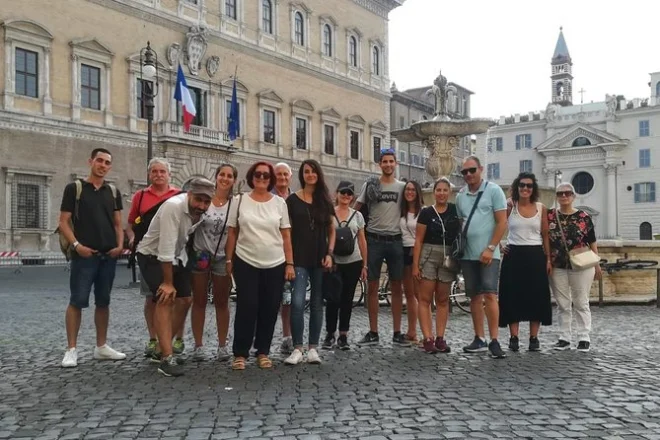
You’ll wander Rome’s Jewish Ghetto with a local guide who shares personal stories, taste fruit at Campo de’ Fiori market, cross Tiber Island’s ancient bridge, and finish in lively Trastevere as evening lights glow. Every stop feels lived-in and unexpected—this isn’t just sightseeing; it’s memory-making in motion.

We started out stepping down from Campidoglio Hill — the stones were still a bit damp from last night’s rain, and I nearly slipped (caught myself, but my friend snorted). Our guide, Giulia, waved us over and pointed out the Theatre of Marcellus. She told us Romans used to mistake it for a mini Colosseum; I can see why. The air smelled faintly of espresso drifting from somewhere nearby, even though it was late morning. There’s something about Rome that makes you want to slow your pace, but we kept moving because there was so much packed into this walk.
I didn’t expect the Jewish Ghetto to feel so alive — kids chasing pigeons near the synagogue, old men arguing about football in a mix of Italian and what Giulia said was Ladino. She showed us where the best artichokes are fried (I still regret not trying one right then), and told us about her grandmother’s childhood here during the war. It hit me harder than I thought. We crossed Campo de’ Fiori where vendors were shouting prices for peaches and tomatoes; one woman handed me a slice without asking, sticky sweet and warm from the sun.
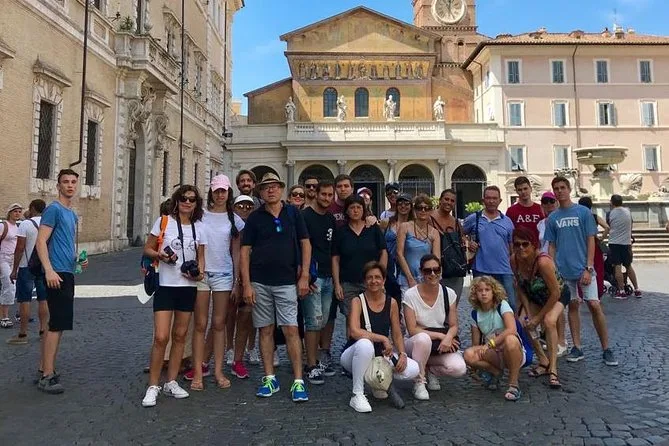
Crossing Ponte Fabricio onto Tiber Island felt like stepping into another rhythm — suddenly quieter except for water slapping against stone below. A couple sat on the edge sharing gelato; I almost asked them which flavor but chickened out. In Trastevere, everything changed again: laundry flapping above narrow lanes, laughter echoing off ochre walls. We ended at Piazza Santa Maria in Trastevere just as golden light hit the mosaics — Giulia said locals call this “the real heart” of Rome. Maybe she’s right. I keep thinking about that square when I hear church bells now.
1h 30m–2h

Step-by-step itinerary
Day 1 — Explore Jewish Ghetto and Trastevere
- Start at Campidoglio Hill
- Visit Jewish Ghetto
- Walk through Campo de’ Fiori market
- See Piazza Farnese
- Cross to Tiber Island
- Explore Trastevere neighborhood
- End at Piazza Santa Maria in Trastevere

Top questions

How long is the Jewish Ghetto & Trastevere walking tour?
The tour covers several neighborhoods at a relaxed walking pace; specific duration isn’t listed but expect a few hours on foot.
Does this tour include pickup or transportation?
No hotel pickup is included; you meet at the starting point near Campidoglio Hill.
Is the tour wheelchair accessible?
Yes, all areas and surfaces are wheelchair accessible throughout the route.
Are infants or small children allowed on this tour?
Yes, infants and small children can join in a pram or stroller.
What if I need help or run late for my booking?
The chat function isn’t instant—call or WhatsApp for faster assistance if needed before your tour starts.
Is lunch or food included in the tour?
No set meal is included but you’ll visit markets where you can sample local produce along the way.
What languages are spoken by guides?
The main language is English; some guides may speak Italian or other languages depending on availability.

What’s included
Your walk includes a professional local guide sharing stories through Rome’s Jewish Ghetto, Campo de’ Fiori market square, Tiber Island, and Trastevere district—all fully accessible for wheelchairs or strollers. Flexible support by phone or WhatsApp is available if you need help before arrival.
 Super deal
  Free booking, free cancellation.
  Don't lose your place.


 Do you need help planning your next activity?
  +507 6792-0894


