
Walking tour of Palermo: markets, churches and squares


Walk through seven centuries of Palermo in a single afternoon
A guided walking tour of central Palermo covering nine landmarks—Teatro Massimo, Capo Market, Palermo Cathedral, Four Corners, Martorana, Church of the Gesù, and the historic streets and squares that shaped the city. The tour runs two to three hours with a certified guide in English or Italian, and children from age one are welcome.
 2h–3h
2h–3h

Step-by-step itinerary
Explore Palermo's historic center
- Visit Piazza and Pretoria Fountain
- See Four Corners square
- Tour Santa Caterina monastery and confectionery
- Visit Martorana church
- Explore Meschita neighborhood
- Visit Church of the Gesù
- Walk along the ancient main street
- Visit Palermo Cathedral
- Explore Capo Market
- See Teatro Massimo opera theater

The Experience
You start in the heart of Palermo and move through the layers of the city on foot. The route takes in Piazza Pretoria with its white marble fountain, the baroque geometry of Four Corners, and the cloister inside the former Dominican monastery where you can see the confectionery the monks once ran. Martorana church—a rare blend of Norman and Baroque—opens onto the old Meschita neighborhood where Palermo's Jewish community lived until 1493. The Church of the Gesù stops you with the sheer density of its marble work. All of this unfolds before you reach the Cathedral itself, which holds the tombs of Norman kings.
The walk also takes in Via Vittorio Emanuele, the oldest street in the city, lined with noble palaces and Sicilian craft shops, and ends at Capo Market—the working food market that still supplies the neighborhood, crowded with fruit, vegetables, fish and spices. Teatro Massimo, the neoclassical opera house that is the largest in Italy and third in Europe, anchors the final stretch. A certified guide in English or Italian leads the whole route and explains what you are standing in front of.
The tour runs two to three hours and suits all fitness levels. Infants and small children can come in a pram or stroller, and service animals are allowed. Public transport stops are nearby if you need to cut the walk short or arrive by bus.

What’s included
Certified guide in English or Italian; walking tour of nine landmarks including Teatro Massimo, Capo Market, Palermo Cathedral, Four Corners, Martorana, Church of the Gesù, and historic streets and squares.
Operated by Manuela Randazzo
Is this one for you?If you land in Palermo and want to see the main sights without planning the route yourself, this two- to three-hour walk covers the Cathedral, the opera house, the markets and the baroque churches in one afternoon—the guide handles the stops and the timing, so you just follow.
Traveler reviews
Compare the 13 similar options
 Walking tour of Palermo: markets, churches and squares★ 4.79 (117)2h–3hEN · IT€ 45
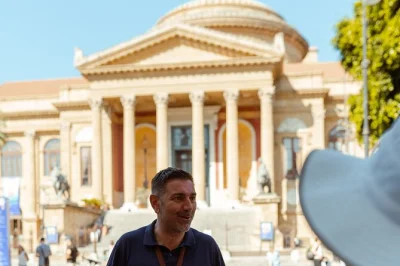 Palermo: UNESCO Walking Tour, Cathedral Entry & CannoloStep into Palermo’s lively streets, see UNESCO sites, taste a fresh cannolo, and explore with a licensed guide. Includes Cathedral entry and small group intimacy.★ 4.82 (409)3hEN · ES€ 29View ›
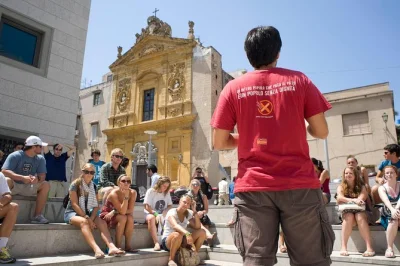 Palermo: Anti-Mafia Walking Tour & Capo Market StoriesWalk Palermo’s streets with a local guide, hear anti-mafia stories at Capo Market, see the Godfather opera house & support Addiopizzo shops. Includes solidarity fee.★ 4.81 (1,148)3hEN · IT +2€ 34View ›
 Palermo: Street Food, Markets & Cathedral Tour in 3 HoursFollow a Palermo native through lively markets, taste street food, and explore the city’s baroque heart. Includes cathedral entry and free tastings.★ 4.97 (358)3hIT€ 30View ›
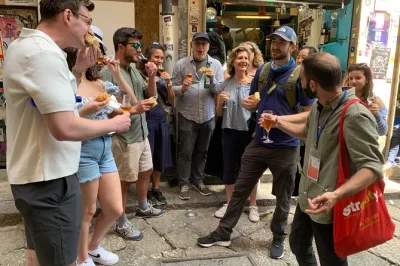 Palermo Street Food Tour Capo & Vucciria Markets Local GuideWalk Palermo's Capo and Vucciria markets with a local guide, tasting 10 street foods—arancini, panelle, pani ca' meusa—plus wine and seasonal dessert.★ 4.91 (2,322)3hEN€ 69View ›
 Palermo Walking Tour and Street Food: Markets and CathedralWalk through Palermo's old markets with a local guide, tasting street food at Capo Market and a traditional friggitoria before visiting the UNESCO-listed Cathedral.★ 4.89 (638)3hEN · IT€ 46View ›
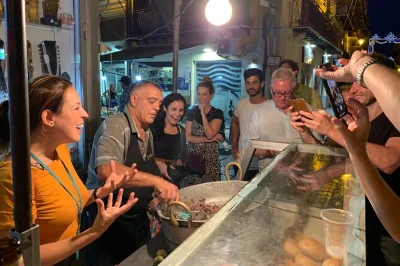 Palermo Night Street Food Tour & Vucciria MarketThree-hour walking food tour through Palermo's backstreets with local guide. Includes 7-8 street foods, beer, wine, and dessert. Small groups, Teatro Massimo start.★ 4.88 (596)3hEN€ 69View ›
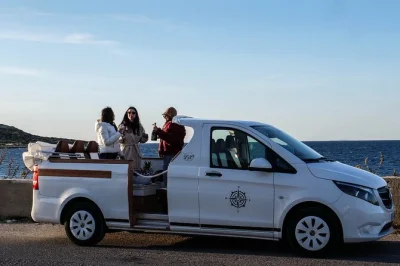 Palermo city tour in CruiserCar: nine-seater cabriolet with guideRide through Palermo in a nine-seater open-air CruiserCar with a live guide, stopping at Teatro Massimo, Quattro Canti, Mount Pellegrino and the Cathedral★ 4.77 (194)1h–6hEN · DE +3€ 99View ›
 Godfather tour from Palermo: Corleone, Ficuzza & MonrealePrivate tour from Palermo to Corleone village and Monreale Cathedral with hotel pickup and English-speaking driver—visit the anti-Mafia Museum★ 4.91 (88)6h–7hEN · IT€ 275View ›
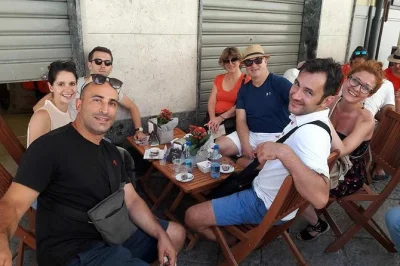 Palermo: Walking Tour & Vucciria Market Street Food TastingPalermo walking tour with Vucciria Market street food tasting. Visit Four Corners, Pretoria Fountain & Chiesa del Gesù. Includes arancini, cannoli, pizza & local guide.★ 4.94 (401)3hEN€ 50View ›
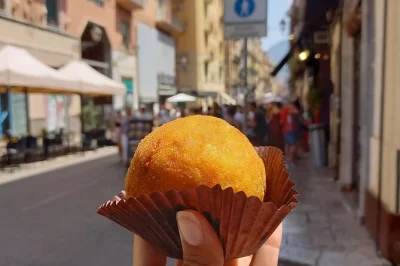 Palermo Street Food Tour: Taste Traditional Sicilian DishesWalk through Palermo's historic center tasting panino con la milza, panelle, Pasta alla Norma and Sicilian cannoli at carefully chosen stops★ 4.90 (196)3h 30mEN · IT€ 69View ›
 Palermo Food & Wine Tour: Pasta, Market & Local TastingsFull-day Palermo food tour with local guide. Vucciria Market, Teatro Massimo area, 3 wines, lunch with 2 pastas, cheese and cannoli. Family-run spots only.★ 4.97 (125)4hEN€ 99View ›
 Palermo Street Food Tour with Chef & Wine TastingPrivate food tour in Palermo led by chef Fulvio. Ballarò and Vucciria markets, arancine, panelle, pane ca meusa, cannolo and zibibbo wine. Small groups, Teatro Massimo start.★ 4.68 (34)3hEN · IT€ 79View ›
Top questions
What is inside Martorana church that makes it different from other churches in Palermo?
Martorana is a rare example of Norman and Baroque art combined in one building, and the source describes it as one of the most beautiful churches in Palermo. It is visitable only when the site is open for visits; if it is closed on the day of your tour, the guide will offer an alternative or add another church to the route instead.
Does the tour go inside Palermo Cathedral, or do we just see it from outside?
The tour includes a visit to Palermo Cathedral itself, where you can see the tombs of the Norman kings and the silver chapel of Santa Rosalia. The Cathedral is the most important church in the city and is included in the walking route.
Can I visit the Church of the Gesù and the baroque church at Santa Caterina during the tour?
The Church of the Gesù is part of the walking route, but entrance fees for both the Church of the Gesù and the baroque church of Santa Caterina d'Alessandria are paid separately by you at the time of the tour, not included in the tour price.
What is Capo Market like, and do we have time to buy food there?
Capo Market is a working food market in the neighborhood, full of fruit, vegetables, fish and spices—described as the soul of the city. The tour passes through it as part of the route, and you have the chance to see it in action, though the tour itself does not include a meal or shopping time.
Is this tour suitable if I am visiting Palermo for the first time?
Yes. The tour covers nine of the city's most important landmarks—from the Cathedral and Teatro Massimo to the historic markets and squares—and a certified guide explains the history and culture as you walk, so you get a solid introduction to central Palermo in a single afternoon.
Can I bring my baby or toddler on this walking tour?
Yes. Infants and small children can ride in a pram or stroller, and children are welcome from age one. The tour is suitable for all fitness levels, so families with young children can join without concern.
Walking tour of Palermo: markets, churches and squares
2h–3h · EN · IT
from € 45 per person
★★★★★★★★★★4.79117 reviews
