
Herculaneum Naples: Small Group Tour & Ancient Houses
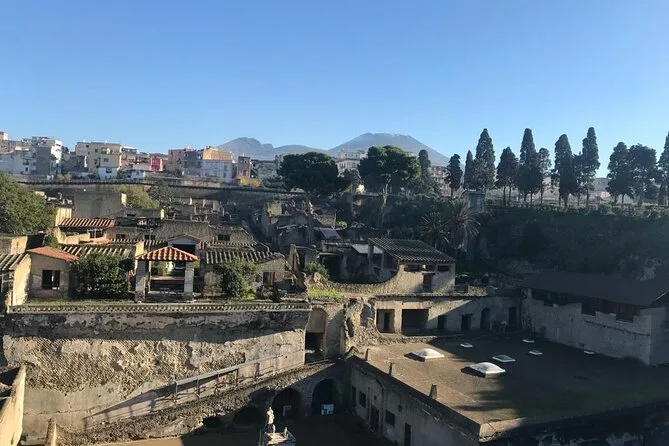
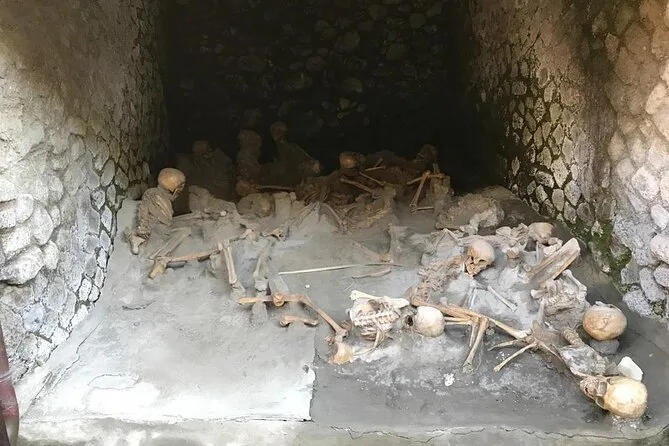
The Wooden Boat Still Sits on the Beach Where People Fled Vesuvius
You walk through the preserved homes of wealthy Romans, see intact mosaics and original paint, then descend to the ancient beach where a wooden boat and human skeletons remain exactly as Vesuvius left them. A licensed guide explains how pyroclastic flows preserved Herculaneum differently and more completely than Pompeii, and small group size means you can linger on details and ask questions without feeling rushed.
Compare the 12 alternatives
 Herculaneum Private Tour: Archaeologist Reveals Roman HomesEvery day · first departure 09:30, last 16:30 · All ages★ 4.90 (148)2hEN · DE +6€ 165View ›
 Naples: Underground Spanish Quarters Tour & WWII ShelterEvery day · first departure 10:00, last 15:00★ 4.81 (2,053)1hEN · IT€ 18View ›
 Herculaneum Tour with Archaeologist: Small Group, 2 HoursEvery day · first departure 07:40, last 15:00 · All ages★ 4.85 (1,287)2hEN · DE +3€ 35View ›
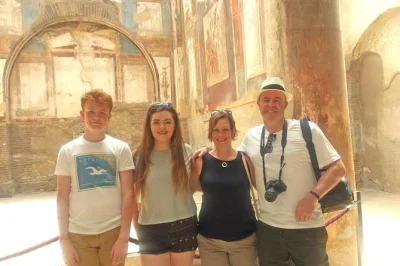 Herculaneum Walking Tour: Skip the Line Guided RuinsEvery day except Wednesday · 09:30 and 13:30 · All ages★ 4.69 (35)2hEN€ 179View ›
 Naples: Veiled Christ & Cappella Sansevero Small GroupEvery day · first departure 10:00, last 14:00 · All ages★ 4.81 (177)35mEN · IT +2€ 25View ›
 Pompeii, Herculaneum & Vesuvius day trip from NaplesMon and Sun · 08:00 and 08:30 · season until 17 Nov · All ages★ 4.55 (589)8hEN · IT€ 120View ›
 Private Herculaneum Tour from Naples: Skip-the-Line EntryEvery day · first departure 08:00, last 15:30 · From age 3★ 4.63 (86)4hEN · IT +1€ 139View ›
 Pompeii & Herculaneum from Naples: Small Group with ArchaeologistEvery day · 09:20 and 09:45 · All ages★ 4.88 (146)8hEN€ 116View ›
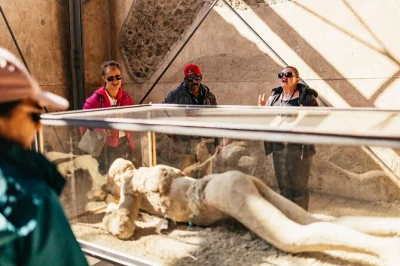 Naples: Pompeii & Herculaneum Small Group Day TripEvery day · 08:30 · All ages★ 4.67 (263)8hEN · IT +1€ 115View ›
 Naples Hop-On Hop-Off Bus Tour: Two Routes, Eight LanguagesEvery day · 09:30 · All ages★ 3.67 (660)40m–1h 10m€ 27View ›
 Pompeii, Sorrento & Positano Day Trip from Naples with PickupEvery day · first departure 07:30, last 09:30 · All ages★ 4.58 (71)7h 30m€ 129View ›
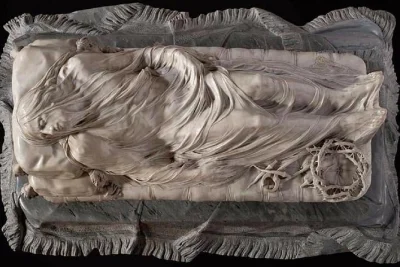 Naples: Veiled Christ, Santa Chiara Cloister & Spaccanapoli WalkEvery day · first departure 09:30, last 11:30 · All ages★ 4.88 (528)2h 30mEN · IT +1€ 42View › Compare more experiences like this »
Step-by-step itinerary
Explore Herculaneum archaeological site
- Visit House of the Deer
- See House of the Wooden Partition
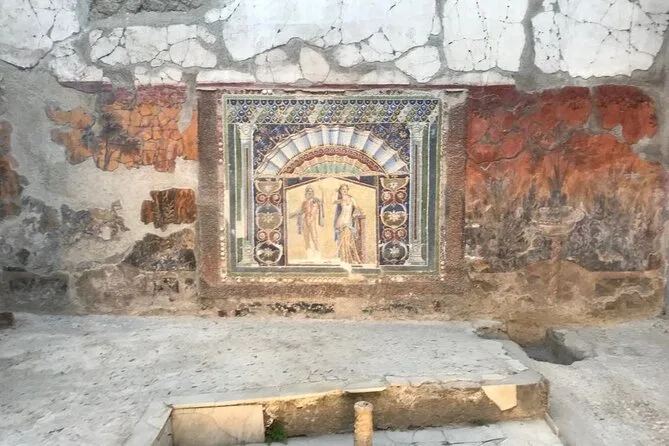
- Explore House of Neptune and Amphitrite
- Visit House of the Bicentenary
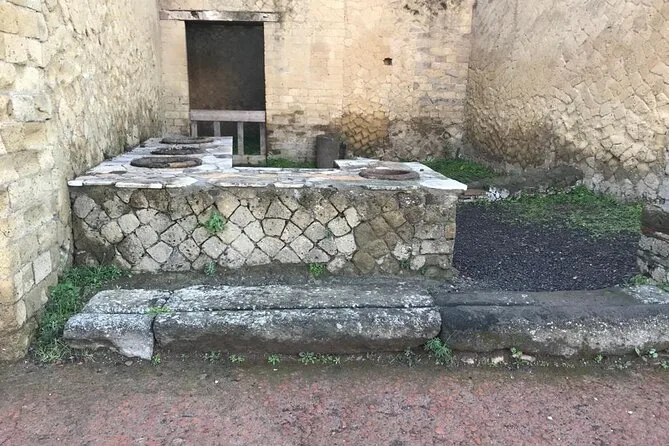
- View typical Roman shops
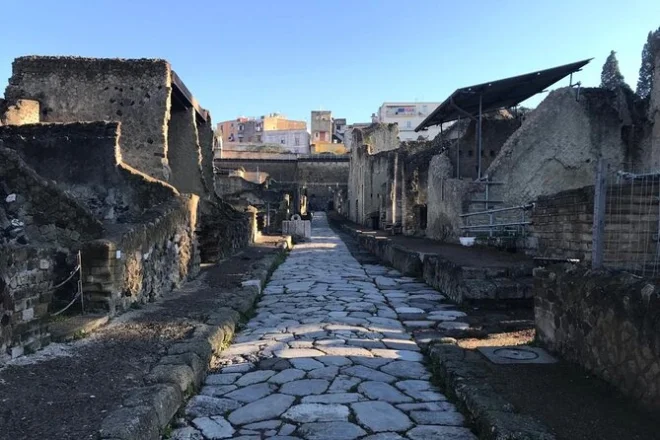
- Tour public baths and main street
- See significant public buildings
- Visit ancient beach with skeletons
- Observe preserved wooden boat on beach
The experience
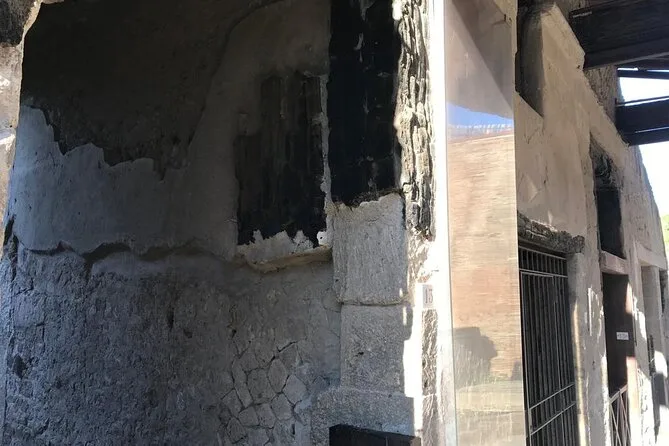
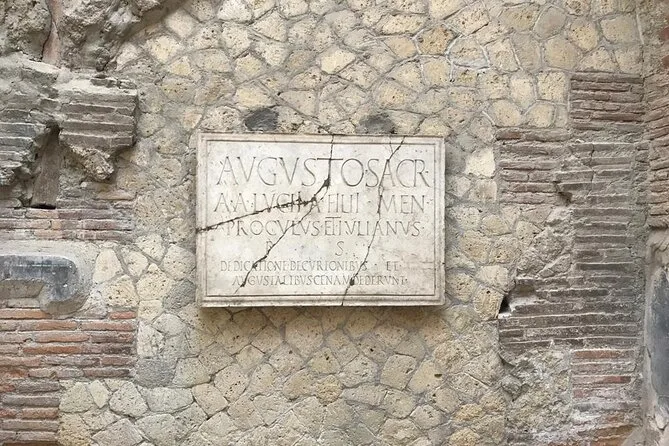
The first thing you notice walking into Herculaneum Archaeological Park near Naples is how quiet it is. Not the silence of an empty place, but the weight of it. You're standing 80 feet above what was once a thriving Roman coastal town, buried whole by Mount Vesuvius in 79 A.D. Unlike Pompeii, which was smothered in ash and pumice, Herculaneum was hit by pyroclastic flows so hot and fast they carbonized wood, sealed papyri, and left the town in a state of preservation that still catches archaeologists off guard. Your licensed guide walks you down into the excavation, and the scale of it hits differently than photographs prepare you for.
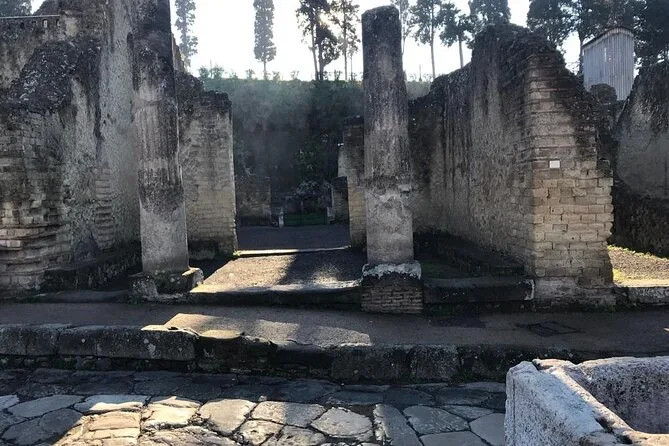
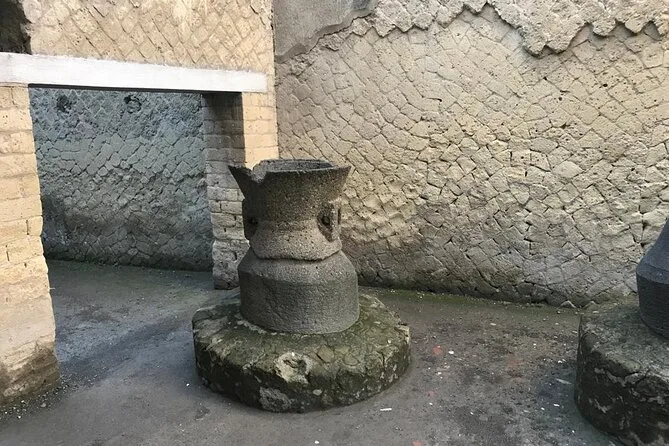
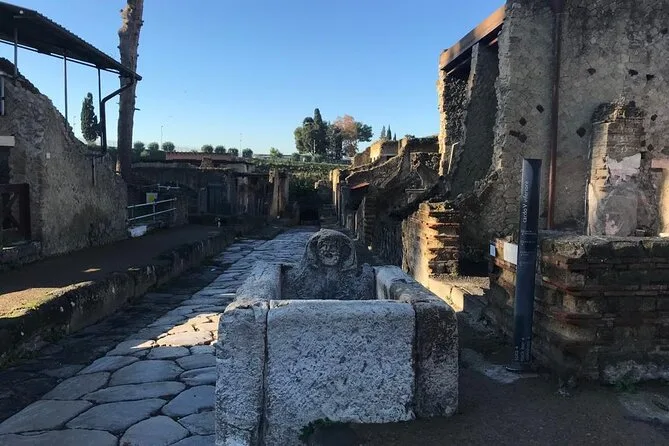
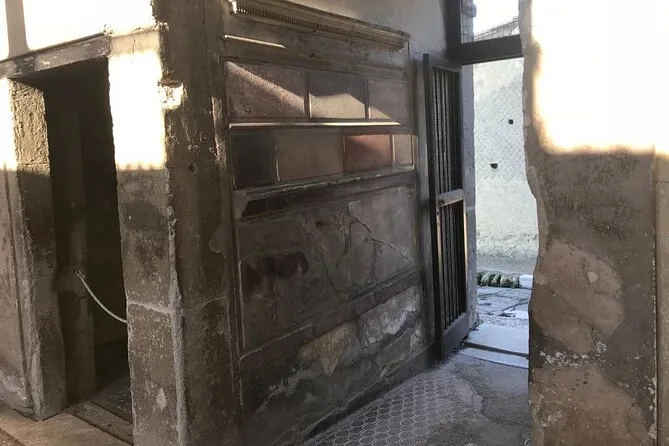
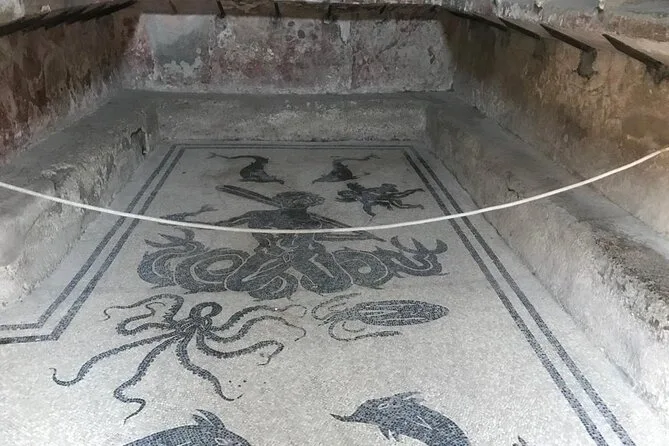
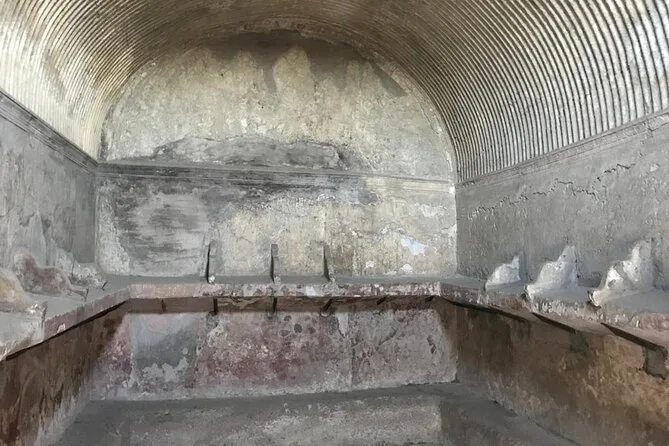
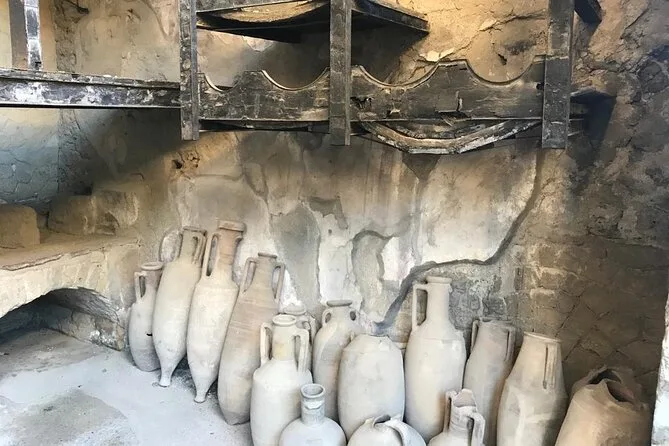
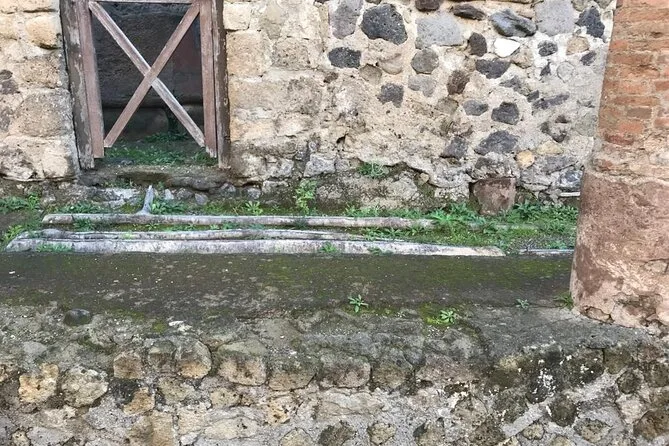
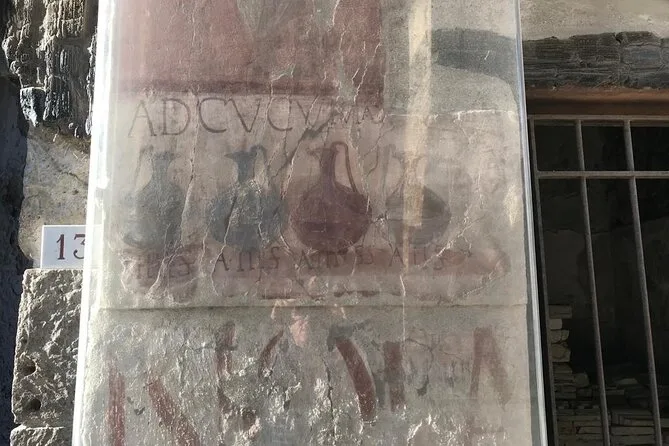
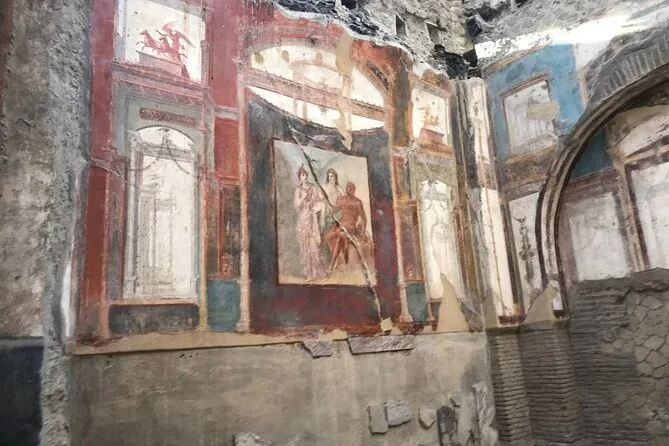
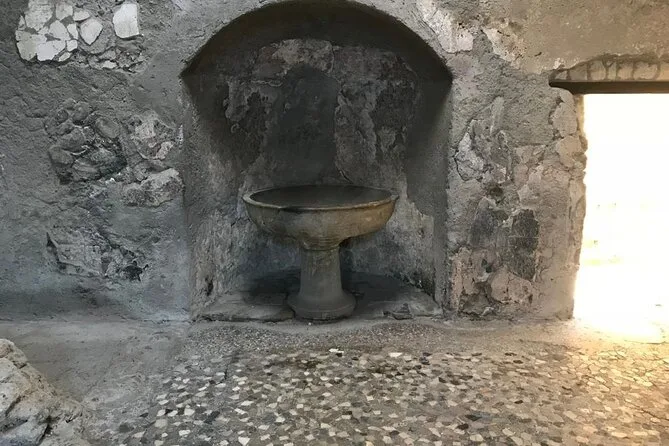
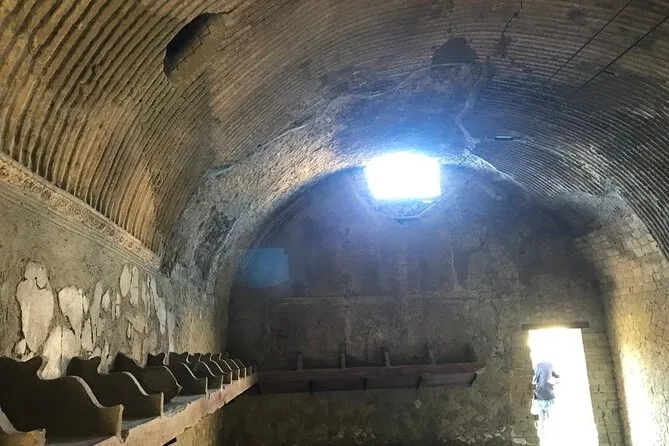
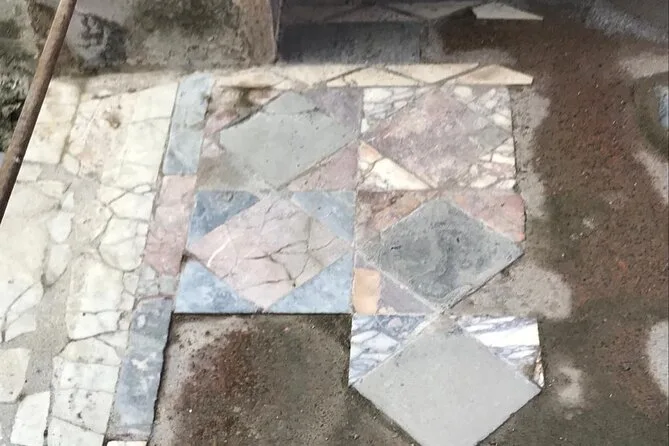
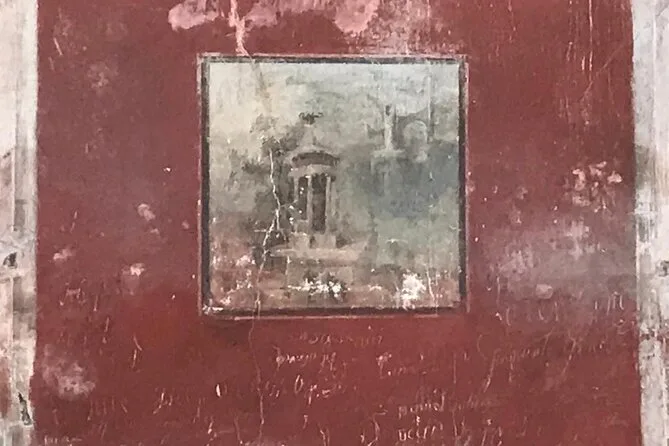
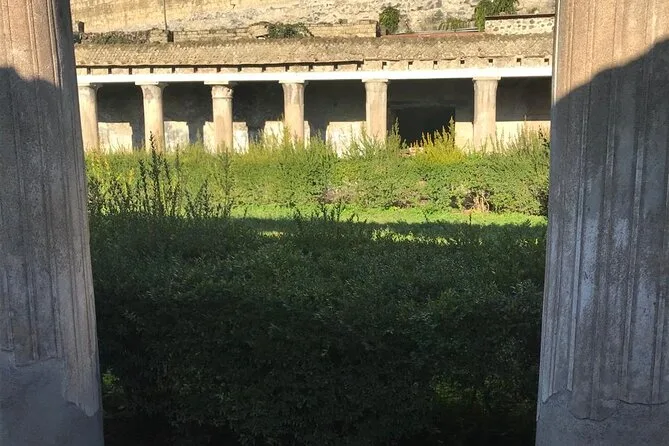
The tour moves through the private houses first (the House of the Deer, the House of Neptune and Amphitrite, the House of the Wooden Partition), and you start to see why Herculaneum was different from its famous neighbor. This was where the wealthy lived. The decorations are intact. Mosaics haven't faded. You can see the original paint on walls, the elegant details in courtyards, the way light would have moved through rooms. Your guide points out the traces of daily life: a loaf of bread carbonized on a shelf, the grooves worn into stone thresholds by thousands of footsteps. The Roman shops line the street much as they were left, and the public baths still have their marble fixtures and heating systems visible. It's one thing to read that Herculaneum was better preserved than Pompeii. It's another to stand in front of evidence.
Then you reach the ancient beach, and the mood shifts. The excavation has uncovered the seafront buildings where residents tried to shelter during the eruption. Inside the vaulted chambers, archaeologists found the skeletons of people huddled together, their bodies preserved in the positions they held when the pyroclastic flow hit. And on the beach itself, a wooden boat (still intact, still recognizable as a boat) sits where someone abandoned it nearly 2,000 years ago. It's not sensational or staged. It's just there, and it changes how you think about that day. Your guide explains the sequence of events, the temperatures involved, why wood survived here when it burned elsewhere. Small groups mean you can ask questions without holding up thirty other people.
The whole experience takes a few hours, and the pace lets you absorb what you're seeing rather than rush through a checklist. Herculaneum is smaller than Pompeii but denser with detail, and a licensed Campania guide knows the stories and the science that make those details matter. If you're traveling with a stroller or have mobility concerns, the park is accessible and staff can advise on routes. Public transport gets you there from Naples, or you can arrange your own way. The tour itself is the guided walk through the site.
What’s included
Your tour includes entry to Herculaneum Archaeological Park and a guided walk with a guide licensed by Regione Campania. You'll visit the House of the Deer, House of Neptune and Amphitrite, House of the Wooden Partition, House of the Bicentenary, Roman shops, public baths, the main street, and the ancient beach where skeletons and a preserved wooden boat remain in the vaulted shelter buildings.
Options for this experience
3 optionsBefore you book
Prices and times updated 6 days ago
Operated by Pompeiify
Is this one for you?Book this if you want to see Roman life preserved in detail without the crowds of Pompeii: Herculaneum is smaller and wealthier, which is exactly what makes the original decorations and intact wood survive here when they burned elsewhere.
Traveler reviews
Top questions
What languages is the guide in?
In English, at 09:30, 13:00 and 14:30. In Italian, at 14:30. In German, at 15:00.
Can children come?
Yes. Ticket types: Youth (6 to 12 years); Child (under 6): free.
How is Herculaneum different from Pompeii?
Herculaneum was buried by pyroclastic flows (superheated ash and gas) rather than pumice and ash, which preserved organic materials like wood and papyri far better. It was also a wealthier residential area with more intact decorations and smaller than Pompeii, so you see fewer sites but in greater detail.
What's included in the tour?
Entry to Herculaneum Archaeological Park, a licensed guide, and visits to the House of the Deer, House of Neptune and Amphitrite, House of the Wooden Partition, House of the Bicentenary, Roman shops, public baths, the main street, and the ancient beach with preserved skeletons and the wooden boat.
Is Herculaneum accessible with a stroller or for people with mobility issues?
Yes. Infants and small children can use a pram or stroller, and the site is suitable for all physical fitness levels. Staff can advise on accessible routes through the excavation.
How do I get to Herculaneum from Naples?
Public transportation options are available nearby. You can also arrange your own transport. The tour itself begins at the archaeological park entrance.
Are service animals allowed?
Yes, service animals are allowed on the tour.
Herculaneum Naples: Small Group Tour & Ancient Houses
2h · EN · DE · IT
from € 42 per person
4.97176 reviewsVerified traveler reviews via our booking provider