
Dublin: 1916 Rebellion Walking Tour & GPO


Two hours tracing the GPO, Dublin Castle, and the week that changed Ireland
You walk Dublin's historic center for two hours with a professional guide, visiting the GPO, Dublin Castle, and City Hall while learning the story of the 1916 Rising, the War of Independence, and the Civil War. You receive a copy of the 1916 Proclamation at the start and don't need any prior knowledge of Irish history. The fixed route varies by day, so the tour stays fresh even for repeat visitors.
Compare the 12 alternatives
 Dublin: 2-Hour Historical Walking Tour & Trinity CollegeEvery day · 11:00 · All ages★ 4.89 (1,038)2hEN€ 19View ›
 Dublin: Walking Tour with Castle, Bridges & Temple Bar StoriesEvery day · 10:00, 13:00 and 15:00 · All ages★ 4.94 (7,548)2hEN€ 24View ›
 Dublin: 90-Minute Walking Tour & Historic SitesEvery day · first departure 09:30, last 15:30★ 4.86 (1,024)1h 45mEN€ 18View ›
 Dublin: Book of Kells Early Access & Castle Walking TourEvery day · first departure 08:30, last 15:00 · From age 4★ 4.66 (4,317)2h 30mEN · DE +3€ 72View ›
 Haunted Dublin Walking Tour: Medieval streets & gothic secretsEvery day · 18:00 · All ages★ 4.93 (1,162)2hEN€ 24View ›
 Dublin: Dark History Walking Tour & Gruesome StoriesEvery day · 17:30 · From age 18★ 4.89 (2,409)2hEN€ 24View ›
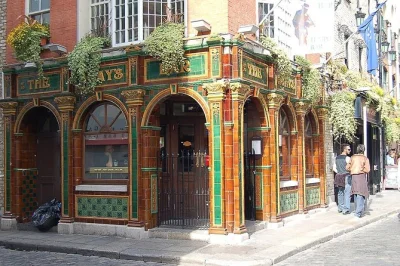 Dublin Walking Tour: City Icons, Temple Bar & Castle StoriesEvery day · 10:15 and 14:15 · season until 31 Oct · All ages★ 4.55 (231)2h 30mEN€ 28View ›
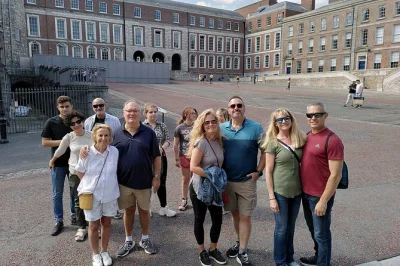 Dublin: Complete Walking Tour with Italian-Speaking GuideWed, Fri, Sat and Sun · 09:30, 10:00 and 14:30 · All ages★ 4.97 (216)3hIT€ 90View ›
 Dublin Walking Tour: 3 Hours, Local Guide, Hidden GemsThu–Sun · 11:00★ 4.96 (114)2h 30mEN€ 24View ›
 Dublin: LGBTQ Pride Walking Tour, Queer History & CultureNext departure: 31 Dec · All ages★ 5.00 (108)2hEN€ 24View ›
 Private Walking Tour Dublin: 3 Hours, All Main SitesEvery day · first departure 08:00, last 20:00 · All ages★ 4.99 (111)3hEN€ 179View ›
 Dublin: Private Medieval Walking Tour with Chester Beatty EntryEvery day · first departure 08:00, last 16:30★ 4.94 (77)3hEN · IT€ 125View › Compare more experiences like this »
Step-by-step itinerary
- Dublin City Hall15m
- Dublin Castle15m
- General Post Office (GPO)30m
1916 Rebellion Walking Tour in Dublin
- Meet at The International Bar
- Introduction to Easter Rising background
- Visit City Hall and discuss 1916 Rising
- Stop at Dublin Castle and discuss history
- View Four Courts from bridge and discuss Civil War
- See Daniel O'Connell's Memorial and bullet holes
- Stop at Big Jim Larkin statue
- Visit GPO and learn about Easter 1916 events
- Optional visit to Moore Street last stand site
- Possible stop at Old Parliament and Trinity College
The experience
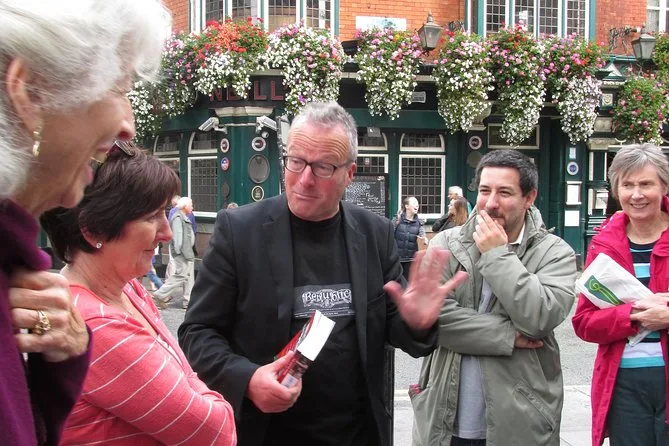
So you're standing outside the International Bar on Wicklow Street and Lorcan Collins hands you a copy of the 1916 Proclamation (the actual words that were read aloud at the GPO just down the street), and suddenly this isn't just a walking tour, it's a conversation about why this matters. The 1916 Rebellion Walking Tour starts with a short setup about the build-up to Easter Week: the Great Hunger, the decades of agitation, the moment when everything tipped. Collins has been running this since 1996, and he knows how to pitch it so you're not drowning in dates but actually following the thread.
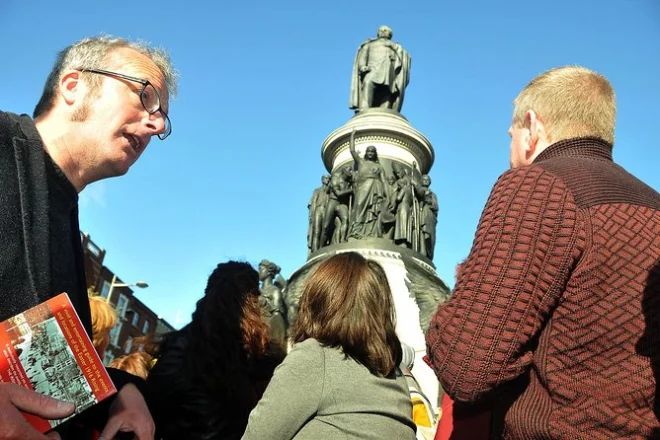
The walk itself moves through Dublin's center, hitting the places where the revolution actually happened. You'll stand at City Hall, where the Irish Citizen Army held the building during the Rising. Then Dublin Castle (the seat of British power in Ireland for centuries), and the guide explains its role in both 1916 and the War of Independence that followed. The GPO is the anchor stop, the headquarters where Pearse read the Proclamation, and it's the kind of place where you can feel the weight of what occurred there. Along the way there are smaller stops: Daniel O'Connell's Memorial with its bullet holes from the fighting, the statue of Big Jim Larkin, sometimes Moore Street where the GPO garrison made their final stand. The route shifts depending on the day and the guide's choice, so it doesn't calcify into routine.
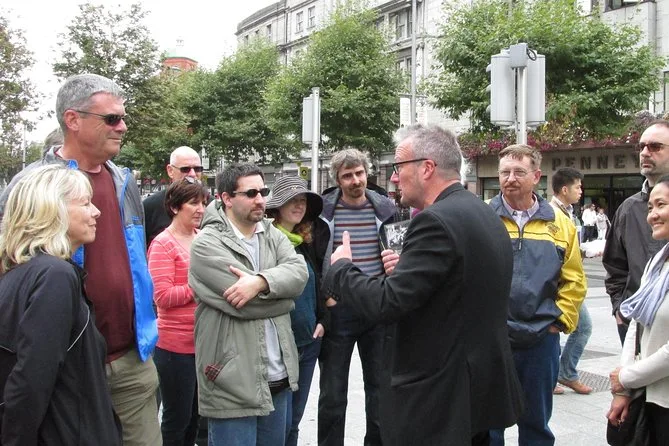
What makes this work is that it's not a lecture delivered at you. The guide asks questions, lets people interrupt, doesn't assume you know anything about Irish history or why 1916 matters to the country now. The tour also covers the War of Independence (1919–21) and the Civil War (1922–23), so you get the full arc, not just the famous week. Two hours is tight enough that it moves, long enough that you actually absorb something. You're walking the whole time, so wear shoes that don't punish you, and know that the pace is steady but not rushed.
What’s included
- Your tour includes a professional guide, a copy of the 1916 Proclamation, and entry to the outdoor sites visited (GPO, Dublin Castle, City Hall, and other street-level locations).
- The guide provides historical context and explanation at each stop.
- No meals or additional entry fees are included.
Before you book
Prices and times updated 4 days ago
Operated by 1916 Rebellion Walking Tour
Is this one for you?Book this if you want to understand Dublin's role in Irish independence without arranging a guide yourself: the two-hour format fits a morning or afternoon, and the interactive setup means you'll actually retain what you learn rather than just walking past buildings.
Traveler reviews
Top questions
Can children come?
Yes. Ticket types: Child (8 to 14 years); Infant (1 to 7 years): free.
What happens if it rains?
It may be canceled due to bad weather. If that happens, you're offered another date or a refund. Free cancellation up to 24h before the start.
Do I need to know about Irish history before I go?
No. The tour begins with a short introduction covering the build-up from the Great Hunger onward, so you get the context you need. Prior knowledge is not required.
How long is the tour?
Two hours. It starts at the International Bar and covers multiple sites in central Dublin.
Where does the tour meet?
The International Bar on Wicklow Street. You can arrive early to have a drink and read the introductory materials before the tour begins.
What sites do we visit?
The tour includes the GPO, Dublin Castle, City Hall, the Four Courts (viewed from a bridge), Daniel O'Connell's Memorial, and the statue of Big Jim Larkin. The exact route varies, but you'll see the main revolutionary sites.
Is the tour wheelchair accessible?
Yes, the tour is wheelchair accessible. Public transportation options are available nearby.
Who is the guide?
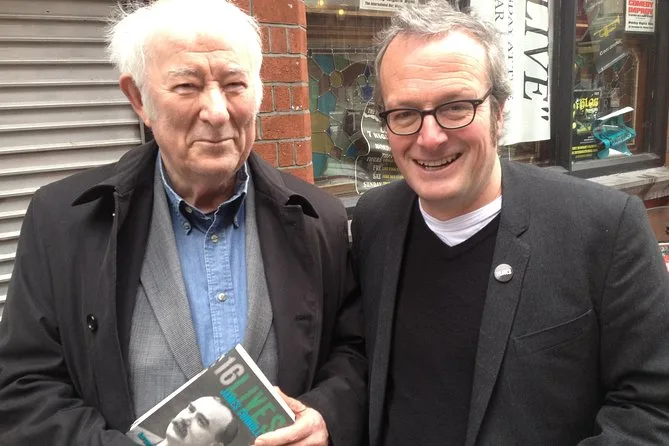
The tour is led by professional guides trained in the 1916 Rebellion Walking Tour program, which was founded by historian and author Lorcan Collins in 1996.
What should I wear?
Comfortable walking shoes are essential. You'll be on your feet for two hours moving through Dublin's streets.
Can I ask questions during the tour?
Yes. The tour is described as highly interactive, and the guide encourages questions during the introduction and throughout the walk.
Is there a tour every day?
Yes, the tour meets daily. Check the booking page for specific times.
Dublin: 1916 Rebellion Walking Tour & GPO
2h · EN
from € 23 per person
4.931,813 reviewsVerified traveler reviews via our booking provider