
Trier Private Walking Tour: Porta Nigra, Cathedral & Roman Sights


Explore Trier’s Roman Heritage with a Local Guide
If you want to really feel Trier’s history under your feet—from Roman gates to hidden churches—this private walking tour is the way to go. You’ll get stories you’d never find in a guidebook and see details most people miss.
 3h
3h

Step-by-step itinerary
Trier Historic Walking Tour
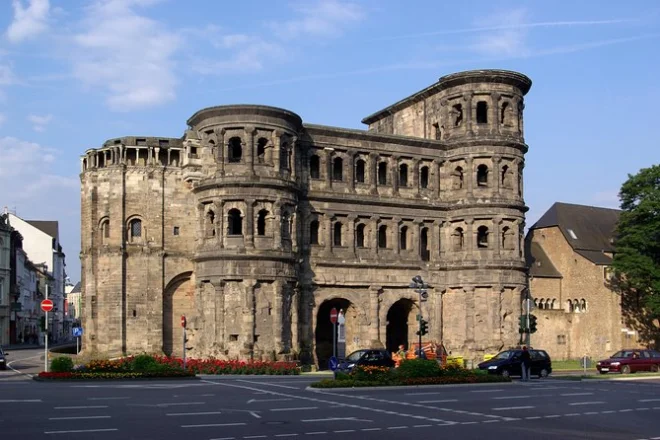
- Explore Porta Nigra, ancient city gate
- Pass by Frankenturm and Market Cross
- Visit St. Gangolf Kirche and Saint George's Fountain
- Visit Cathedral of St. Peter, oldest church
- Tour Basilica of Constantine and Throne Room
- Explore medieval market square shops and cafes
- See fountain in Kornmarkt
- Visit Archbishop's residence and Roman Bath complex

The Experience
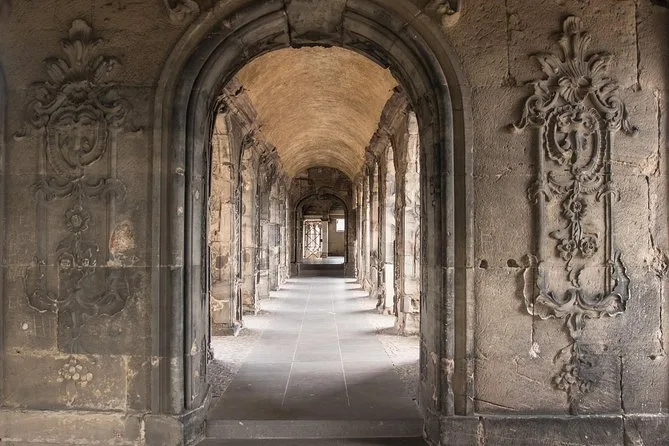
We kicked off our Trier walking tour right at the foot of Porta Nigra. It’s hard to miss—this huge stone gate looms over the city center, and honestly, it’s even more impressive up close than in photos. Our guide, Anna, pointed out the weathered gray stones, some still marked by ancient tool scratches. She shared how the gate’s been standing since around 170 AD. I could almost picture Roman soldiers marching through. There was a street musician nearby playing accordion—his music echoed off the old walls, which made the whole place feel alive.
From there, we wandered past Dreikönigenhaus, that quirky medieval house with its odd little windows and steep steps. Anna told us about its secret entrance—apparently, back in the day, folks used ladders to get inside for safety. We ducked into the main market square next. The Market Cross stands right in the middle, surrounded by colorful shops and bakeries. I grabbed a quick pretzel from a stand called “Backwerk”—still warm, just salty enough. The square buzzed with locals chatting and cyclists weaving through.
We stopped at St. Gangolf Kirche, tucked away behind shopfronts. It’s quieter here, almost hidden unless you know where to look. Inside, sunlight filtered through stained glass and you could smell old wood and candle wax. Just around the corner is Saint George’s Fountain in Kornmarkt. Anna mentioned it was built by the same architect as the Electoral Palace—funny how styles repeat across town.
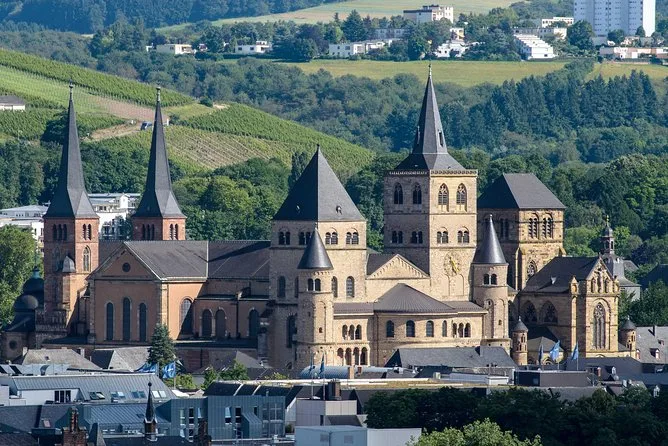
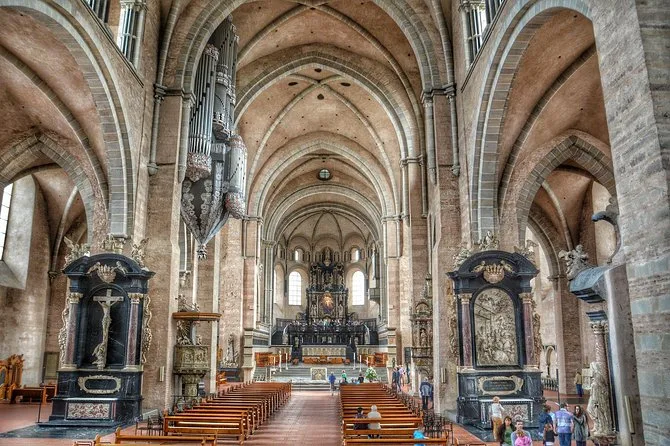
The real highlight for me was stepping into Trier Cathedral. It’s Germany’s oldest church, built on Roman foundations. The cool air inside felt heavy with history. You can see layers of brickwork from different centuries if you look closely at the walls. Anna pointed out a tiny mosaic tucked behind one of the altars—easy to miss if you’re not paying attention.
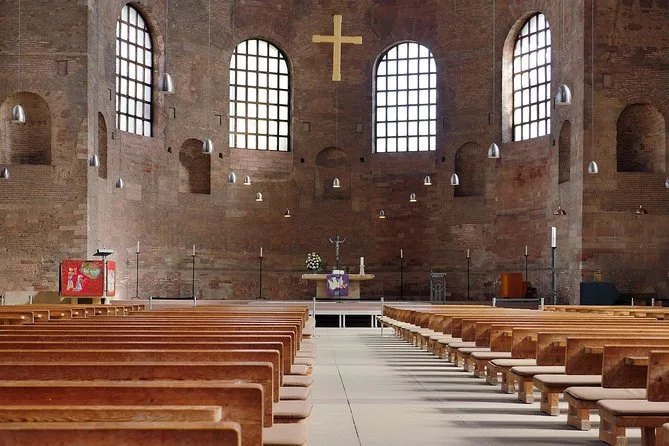
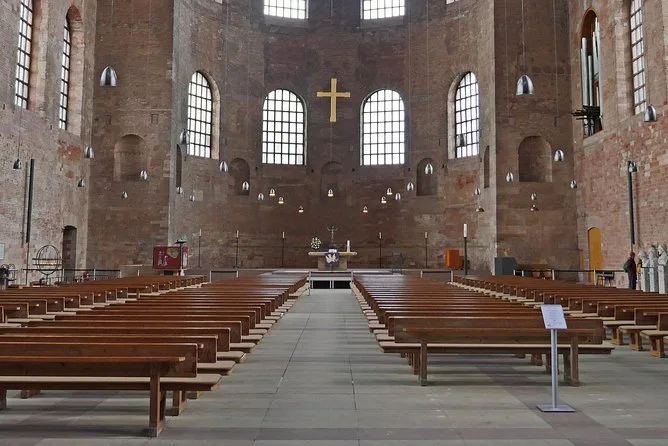
We finished up at the Basilica of Constantine. The sheer size of the throne room is wild—echoes bounce around when you talk. Our guide explained how it survived WWII bombings with barely a scratch. Now it’s used as a Protestant church, but you can still imagine emperors holding court here centuries ago.
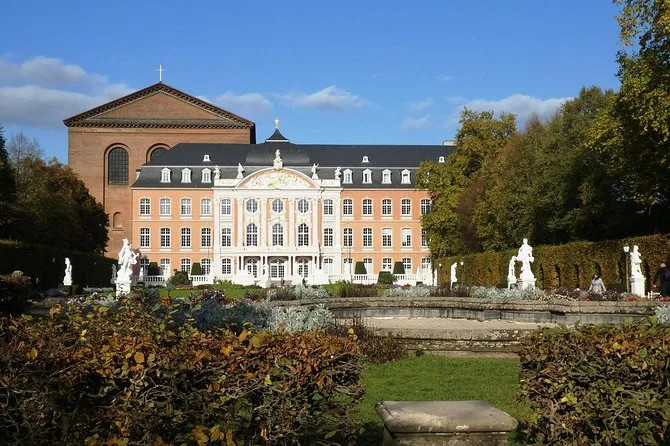
The last stretch took us past the pink-and-white Electoral Palace and down to the old Roman Baths. By then my feet were tired but I didn’t mind; there’s something about walking these ancient streets that makes you want to linger just a bit longer.

What’s included
- Your own private guide for the whole walk.
- entry to main attractions like Trier Cathedral and Basilica of Constantine.
- flexible timing to suit your group.
- tips and stories from a real local.
Operated by BlackBuck Travels
Traveler reviews

Top questions
How long does the walking tour take?
The tour usually lasts about two hours, but it can be adjusted depending on your pace and interests.
Is this tour suitable for kids or older travelers?
Yes, it’s suitable for all fitness levels. There are some cobblestone streets but plenty of places to rest along the way.
Do we enter all the attractions?
You’ll go inside key sites like the Cathedral and Basilica of Constantine. Some stops are viewed from outside due to time or access restrictions.
What language is the tour in?
The tour is offered in several languages—just let us know your preference when booking.
Trier Private Walking Tour: Porta Nigra, Cathedral & Roman Sights
3h · EN · DE +3
from € 200 per person
★★★★★★★★★★4.676 reviewsVerified traveler reviews via our booking provider
