
Nuremberg: Third Reich Walking Tour in Spanish & Jewish History
 Super deal




Summary
Walk Nuremberg’s past from medieval roots to the shadows of the Third Reich
You’ll walk through Nuremberg’s old streets with a Spanish-speaking guide who doesn’t shy away from tough truths—from medieval antisemitism to Nazi propaganda sites and the ruins left behind. Feel history under your feet at former synagogues and trial halls, ending with hope among new generations playing in rebuilt squares.
 3h
3h

Step-by-step itinerary
Day 1 — Explore Nuremberg Third Reich history
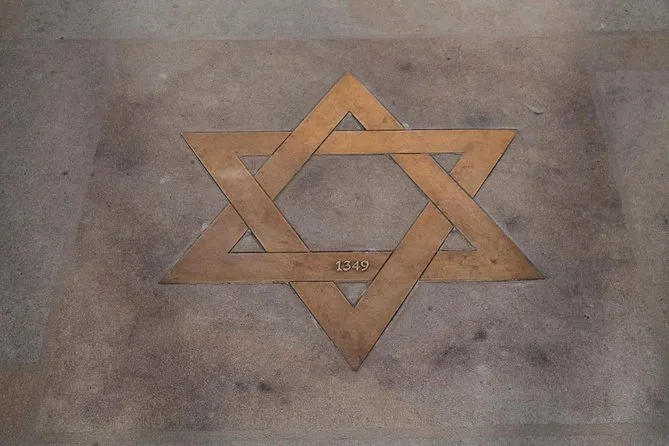
- Visit Jewish quarter and Pogrom of 1349
- Learn antisemitism from Middle Ages to Nazis
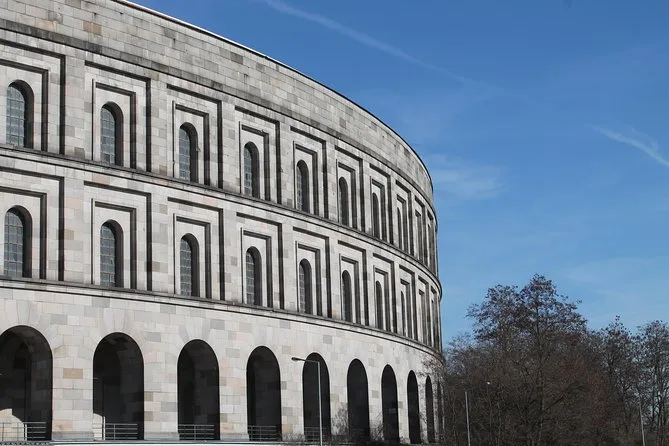
- Discover Hitler's link with Nuremberg
- See Main Synagogue and Night of Broken Crystals
- Explore ruins of Church of Santa Catalina
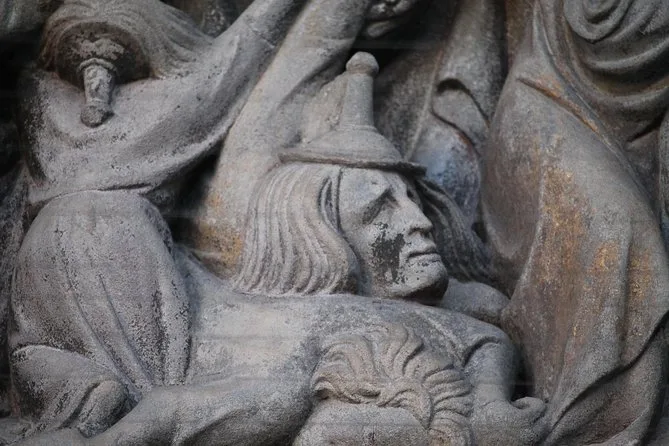
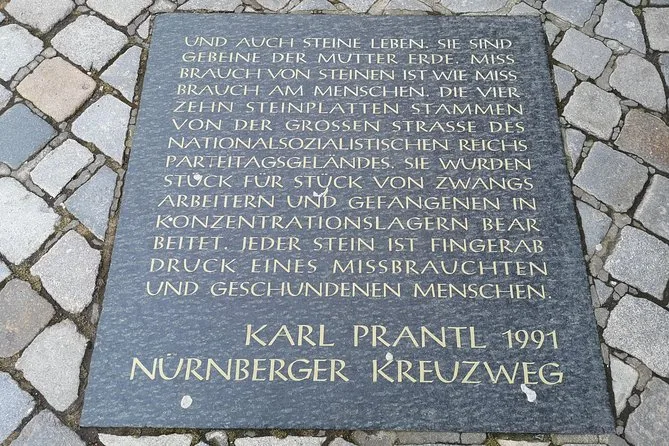
- Visit Via Crucis of Church of San Lorenzo
- View opera house and National Socialism link
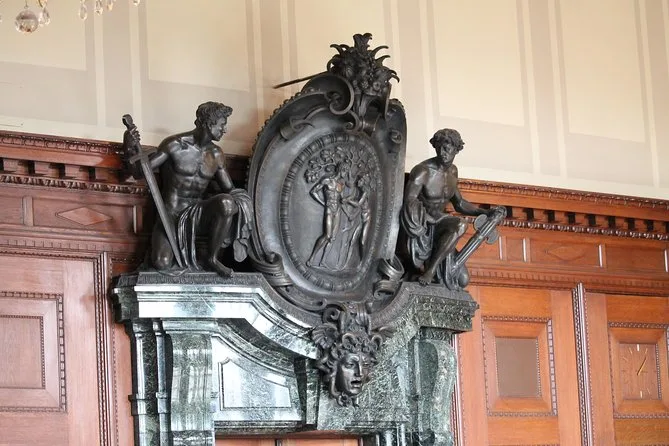
- Study Nuremberg trials
- Walk Street of the Rights of Man

Top questions

Is this Third Reich tour in Nuremberg available in Spanish?
Yes, the tour is guided entirely in Spanish.
Does the tour cover Jewish history in Nuremberg?
Yes, it includes stops at former Jewish quarters and discusses antisemitism from medieval times through National Socialism.
Are sites related to Kristallnacht included?
The tour visits where the main synagogue stood and covers its destruction during Kristallnacht.
Is the tour wheelchair accessible?
Yes, all areas and transportation options are wheelchair accessible.
How long is the walking distance covered on this tour?
The exact distance isn’t specified but all locations are within central Nuremberg.
Are infants or children allowed on this tour?
Yes, infants and small children can join using a pram or stroller.
Will we visit sites connected to Julius Streicher?
The guide discusses Julius Streicher’s role and his connection to Nuremberg during the walk.
Does this tour include information about the Nuremberg Trials?
Yes, you’ll stop near sites associated with the trials and discuss their impact.

What’s included
Your day includes a Spanish-speaking local guide leading you through central Nuremberg’s key historical sites related to Jewish heritage and Third Reich history; all routes are wheelchair accessible and suitable for families with strollers or service animals.

“You see that?” our guide asked, pointing at a stretch of cobblestone near what used to be the Jewish quarter. I’d just noticed how quiet it felt there—like the city was holding its breath. She spoke in Spanish, which felt oddly comforting as we stood in Nuremberg, talking about centuries-old antisemitism and how it twisted itself into something even darker under Hitler. There was this faint smell of rain on stone, and I remember thinking how strange it is to stand where so much has happened—layers of history under your feet.
We passed by where the main synagogue once stood. Nothing left but a plaque and some uneven pavement. Our guide told us about Kristallnacht, her voice dropping a little when she mentioned families forced out into the cold. I tried to picture what those nights must have sounded like—glass breaking, shouts echoing down these same streets—but honestly, you can’t really imagine it. Someone in our group asked about Julius Streicher (I always forget names like that), and she explained his role without flinching. It’s not an easy story to hear.
Later, at the ruins of Santa Catalina, sunlight caught on broken stones and for a second everything felt weirdly peaceful. We talked about how Nuremberg rebuilt itself after the war—the opera house still standing somehow—and then wandered toward the Street of Human Rights. Kids were playing nearby, running between pillars with words carved into them. I guess that’s what stuck with me most: all this heavy history, but also life going on around it. The tour finished not far from where the Nuremberg trials took place; our guide just let us stand there quietly for a bit before saying goodbye.
Similar tours
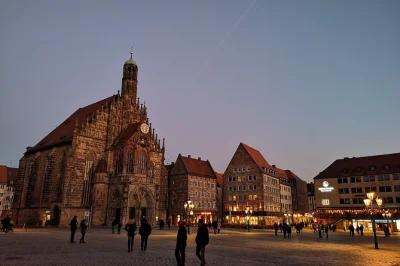 Nuremberg: Medieval Legends Tour in Spanish & Hidden Stories
★★★★★★★★★★ 4.98 (1637) From US$ 23.50
Nuremberg: Medieval Legends Tour in Spanish & Hidden Stories
★★★★★★★★★★ 4.98 (1637) From US$ 23.50
 Nuremberg Walking Tour: Old Town, Castle & WWII Sites
★★★★★★★★★★ 4.82 (96) From US$ 129.23
Nuremberg Walking Tour: Old Town, Castle & WWII Sites
★★★★★★★★★★ 4.82 (96) From US$ 129.23
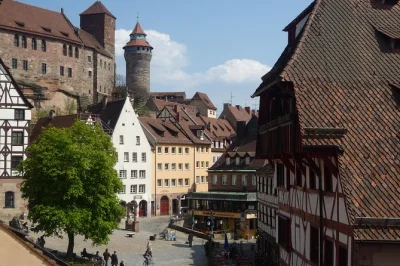 Nuremberg Old Town & Nazi Rally Grounds Walking Tour
★★★★★★★★★★ 4.57 (523) From US$ 43.47
Nuremberg Old Town & Nazi Rally Grounds Walking Tour
★★★★★★★★★★ 4.57 (523) From US$ 43.47
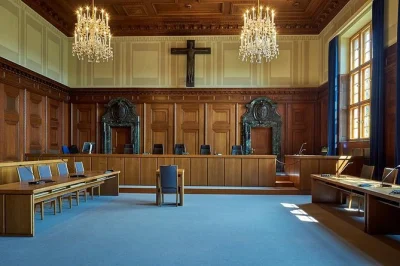 Nuremberg: WWII Courtroom 600 & Nazi Rally Grounds Tour
★★★★★★★★★★ 4.55 (170) From US$ 164.46
Nuremberg: WWII Courtroom 600 & Nazi Rally Grounds Tour
★★★★★★★★★★ 4.55 (170) From US$ 164.46
 Nuremberg: Ghosts & Gallows Night Walk Old Town Stories
★★★★★★★★★★ 4.78 (60) From US$ 41.12
Nuremberg: Ghosts & Gallows Night Walk Old Town Stories
★★★★★★★★★★ 4.78 (60) From US$ 41.12
 Nuremberg Old Town: Walking Tour with Local Stories & Dürer’s House
★★★★★★★★★★ 4.92 (234) From US$ 3.52
Nuremberg Old Town: Walking Tour with Local Stories & Dürer’s House
★★★★★★★★★★ 4.92 (234) From US$ 3.52
 Nuremberg Old Town Walking Tour: Medieval Walls & Market Sights
★★★★★★★★★★ 4.55 (110) From US$ 21.15
Nuremberg Old Town Walking Tour: Medieval Walls & Market Sights
★★★★★★★★★★ 4.55 (110) From US$ 21.15
 Nuremberg: WW2 Rally Grounds & Trials Private Tour Pickup
★★★★★★★★★★ 4.69 (99) From US$ 240.83
Nuremberg: WW2 Rally Grounds & Trials Private Tour Pickup
★★★★★★★★★★ 4.69 (99) From US$ 240.83
 Nuremberg to Prague Private Transfer & Sightseeing Stop
★★★★★★★★★★ 4.63 (8) From US$ 276.07
Nuremberg to Prague Private Transfer & Sightseeing Stop
★★★★★★★★★★ 4.63 (8) From US$ 276.07
 Berlin WWII Walking Tour: Reichstag, Checkpoint Charlie & Private Guide
★★★★★★★★★★ 4.87 (209) From US$ 139.80
Berlin WWII Walking Tour: Reichstag, Checkpoint Charlie & Private Guide
★★★★★★★★★★ 4.87 (209) From US$ 139.80
 Berlin: Half-Day Walking Tour of Landmarks & History
★★★★★★★★★★ 4.92 (10091) From US$ 21.15
Berlin: Half-Day Walking Tour of Landmarks & History
★★★★★★★★★★ 4.92 (10091) From US$ 21.15
 Berlin Wall & East Side Gallery: French Walking Tour
★★★★★★★★★★ 4.97 (234) From US$ 31.72
Berlin Wall & East Side Gallery: French Walking Tour
★★★★★★★★★★ 4.97 (234) From US$ 31.72


 Do you need help planning your next activity?


