
D-Day American Beaches Tour: Omaha, Utah & Airborne Sites


Stand on the beaches where two US divisions landed, then follow the paratroopers inland
This full-day guided tour from Bayeux covers the American D-Day operation across four key sites: Omaha Beach and Utah Beach where seaborne troops landed, Pointe du Hoc where US Rangers scaled the cliffs, and Sainte-Mère-Église where paratroopers fought through the night of June 5. Your guide walks you through the German defenses, the first waves, and the stories of the men who fought there, ending at the Normandy American Cemetery where over 9,000 servicemen are buried. The tour runs 8.5 hours in a small group of no more than 8 people with an experienced, certified guide and air-conditioned minivan transport from central Bayeux.
 8h 30m

Step-by-step itinerary
Explore American D-Day sites
- Drive 30 minutes to Omaha Beach
- Learn about 1st and 29th US infantry landings
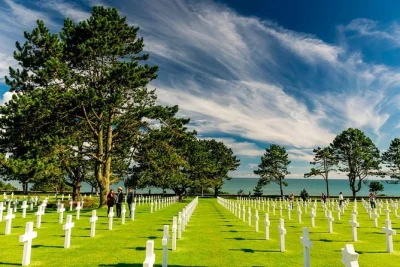
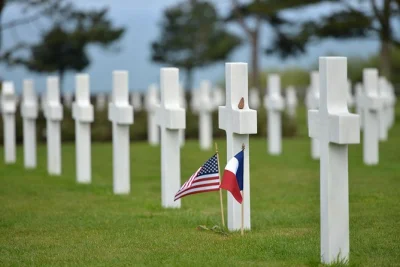
- Visit Normandy American Cemetery
- Explore Pointe du Hoc battlefield
- Drive 30 minutes to Sainte-Mère-Eglise
- Visit Sainte-Mère-Eglise town and hear airborne stories
- Drive 20 minutes to Utah Beach
- Discover Utah Beach landing details
- Drive 15 minutes to Angoville-au-Plain
- Visit Angoville-au-Plain church aid-station
- Drive 35 minutes back to Bayeux

The Experience
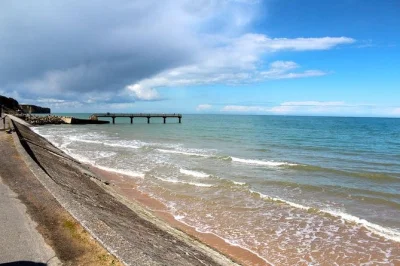
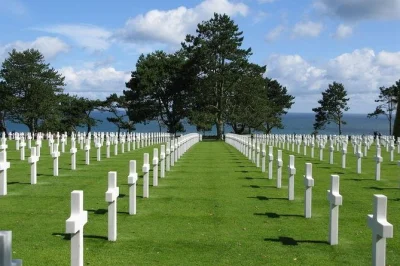
The day starts with a 30-minute drive from Bayeux to Omaha Beach, where the 1st and 29th US Infantry Divisions came ashore. Your guide uses maps and photographs to walk you through the German defenses and the brutal reality of the first waves—why the beach earned the name "bloody Omaha." You stand on the sand where those soldiers landed and hear the details of how they conquered it. Just behind the beach sits the Normandy American Cemetery, the resting place of more than 9,000 American servicemen and women. This is the most visited D-Day site in Normandy, and the guide will take you through it to pay respects to those who gave their lives.
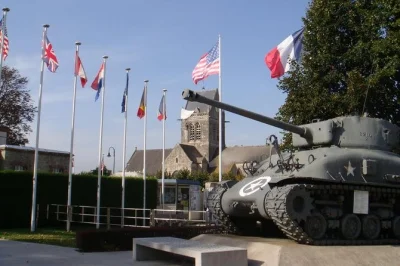
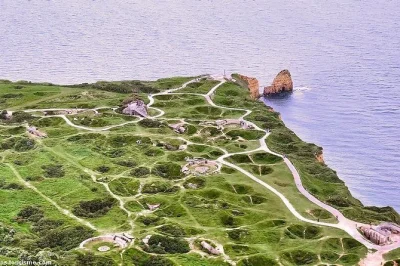
After Omaha, a 30-minute drive takes you to Pointe du Hoc, where the 2nd US Ranger Battalion under Lieutenant Colonel James E. Rudder scaled the cliffs to destroy a German gun battery that threatened the entire US landing operation. The bomb craters, bunkers and dugouts are still visible on the ground. From there, another 30 minutes brings you to Sainte-Mère-Église, the first town captured by American paratroopers. Your guide explains the airborne operation that dropped men into the Norman countryside on the night of June 5, including the story of the paratrooper who got stuck on the church tower. This is the heart of what the airborne soldiers faced.
A 20-minute drive takes you to Utah Beach, where the 4th Infantry Division landed. Your guide describes how Brigadier General Theodore Roosevelt Jr. led the first wave ashore at 6:30am and was later awarded the Medal of Honor for his actions that day. The final stop is the church of Angoville-au-Plain, a 15-minute drive away, which served as an aid station where two young medics treated about 80 wounded soldiers over two days—a moving story about dedication on the battlefield. The return drive to Bayeux takes 35 minutes.

What’s included
- Experienced and certified guide leading the tour in English.
- round-trip transport from central Bayeux in an air-conditioned minivan.
- entry to all four sites (Omaha Beach, Pointe du Hoc, Sainte-Mère-Église, and Utah Beach).
- access to the Normandy American Cemetery and the church of Angoville-au-Plain.
Operated by HQ Company Tour
Is this one for you?Small groups of no more than 8 people mean your guide can answer questions and move at a pace that lets the history sink in, rather than rushing through the sites with a bus full of tourists. The minivan also reaches the smaller villages and narrow roads around Sainte-Mère-Église and Angoville-au-Plain that larger tours cannot access.
Traveler reviews
Compare the 13 similar options
 D-Day American Beaches Tour: Omaha, Utah & Airborne Sites★ 4.96 (141)8h 30mEN€ 140
 Normandy D-Day Beaches Tour: Four Battle Sites with GuideFull-day D-Day tour from Bayeux with English-speaking guide visiting Omaha Beach, Pointe du Hoc, Utah Beach museum, Sainte-Mère-Église★ 4.92 (2,531)9hEN€ 140View ›
 Bayeux: Omaha Beach & Pointe du Hoc D-Day Tour with GuideHalf-day D-Day sites tour from Bayeux covering Omaha Beach, Pointe du Hoc, and Normandy American Cemetery. English-speaking guide and air-conditioned transport included.★ 4.83 (387)4hEN€ 110View ›
 Band of Brothers Tour from Bayeux: Easy Company battlefieldsFull-day guided tour of D-Day sites from Bayeux with certified guide and minivan transport—walk Omaha Beach, Pointe du Hoc★ 4.95 (112)8h 30mEN€ 140View ›
 Bayeux: Omaha Beach & D-Day Sites Half-Day TourVisit Omaha Beach, American Cemetery, German gun battery, and Mulberry Harbour from Bayeux. 4.5-hour tour with 1pm pickup, guide, air-conditioned minivan included.★ 4.89 (316)5hEN€ 95View ›
 Bayeux: D-Day Beaches & American Cemetery Full DayFull-day tour of Omaha Beach, Pointe du Hoc, and Normandy American Cemetery from Bayeux. Includes Airborne Museum and English-speaking guide. Small groups.★ 4.93 (259)8h 20mEN€ 149View ›
 Normandy D-Day beaches tour from Bayeux: three sites, small groupVisit Omaha Beach, Pointe du Hoc and the American Cemetery on a five-hour afternoon minivan tour from Bayeux with hotel pickup and expert guide for up to eight people.★ 4.74 (1,216)5hEN€ 92View ›
 Private D-Day Tour from Bayeux: Utah, Omaha & Pointe du HocPrivate guided D-Day tour from Bayeux visiting Utah Beach, Omaha Beach, Pointe du Hoc and the Normandy American Cemetery with English or Dutch-speaking★ 5.00 (289)8h–9hEN · NL€ 545per groupView ›
 Omaha Beach Half-Day Tour from Bayeux: D-Day SitesVisit three D-Day landing sites from Bayeux: Omaha Beach where American forces landed, Pointe du Hoc where rangers took the German gun battery★ 4.68 (348)3h 30mEN€ 82View ›
 Private D-Day Tour from Bayeux: American Sectors & BeachesPrivate D-Day tour from Bayeux covering Omaha Beach, Pointe du Hoc, and the American Cemetery with a guide and hotel pickup—no shared groups, just your party and the history.★ 4.99 (623)8hEN€ 344View ›
 Omaha Beach Walking Tour: D-Day Trenches & American CemeteryWalk Omaha Beach's Easy Red and Fox Green sectors with a guide who traces the June 6, 1944 landings through German and American soldier accounts★ 5.00 (32)2hEN · FR€ 30View ›
 Private D-Day Tour from Bayeux: Normandy Beaches & BattlefieldsEight-hour private tour from Bayeux covering Omaha Beach, Pointe du Hoc, and the American Cemetery with a guide in English or French★ 4.96 (189)8hEN · FR€ 349View ›
 Omaha Beach D-Day Tour from Bayeux: Landing Sites & CemeteryHalf-day D-Day tour from Bayeux with expert guide, air-conditioned transport and entry to the Normandy American Cemetery★ 4.83 (71)4hEN€ 85View ›
Top questions
What exactly happened at Omaha Beach on D-Day?
Omaha Beach was where the 1st and 29th US Infantry Divisions landed on June 6, 1944. The German defenses were stronger than expected and the first waves faced brutal casualties, which is why it became known as "bloody Omaha." Your guide walks you through the layout of those defenses and explains how the soldiers overcame them.
Can I visit both the landing beaches on this tour?
Yes. The tour covers both Omaha Beach and Utah Beach, where different US divisions landed. Omaha is where the 1st and 29th Divisions came ashore, and Utah is where the 4th Infantry Division landed under Brigadier General Theodore Roosevelt Jr. The two beaches show different aspects of the American seaborne operation.
What is Sainte-Mère-Église and why is it important?
Sainte-Mère-Église was the first town captured by American paratroopers during the airborne operation on the night of June 5, 1944. It sits in the heart of the drop zone where thousands of paratroopers landed inland from the beaches. Your guide shares the details of this crucial operation and stories of the men who fought there, including the paratrooper who got stuck on the church tower.
Does the tour include the American Cemetery?
Yes. After Omaha Beach, your guide takes you to the Normandy American Cemetery, the resting place of more than 9,000 American servicemen and women. It is the most visited D-Day site in Normandy and a place to pay respects to those who died liberating Europe.
How long is the tour and what is the group size?
The tour runs 8.5 hours and travels in a small group of no more than 8 people in an air-conditioned minivan. Your guide is experienced and certified, and transport is included from central Bayeux with the return at the end of the day.
D-Day American Beaches Tour: Omaha, Utah & Airborne Sites
8h 30m · EN
from € 140 per person
★★★★★★★★★★4.96141 reviews
