
4-Day Nile Cruise Aswan to Luxor: Temple Tours & Overnight Aboard
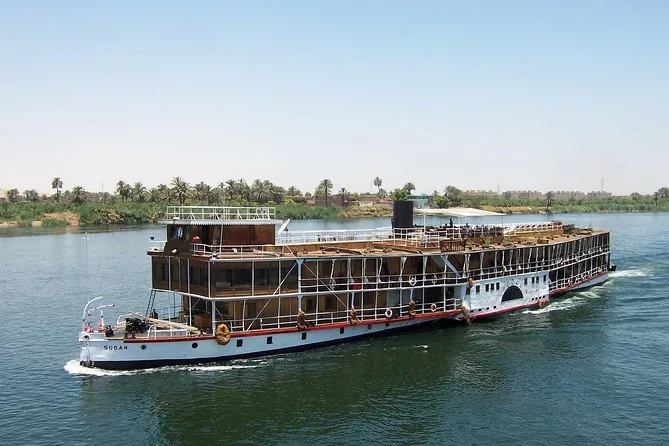
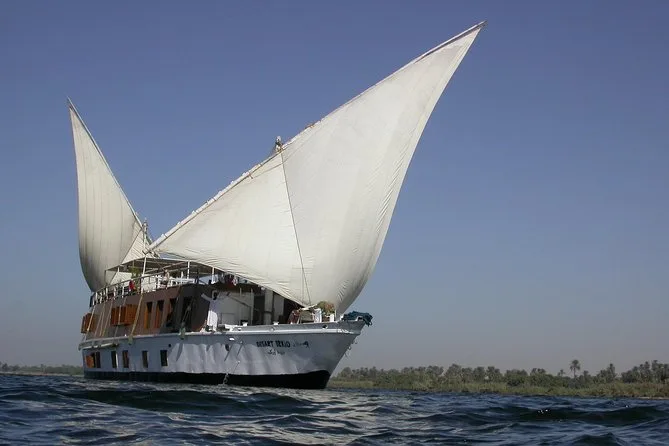
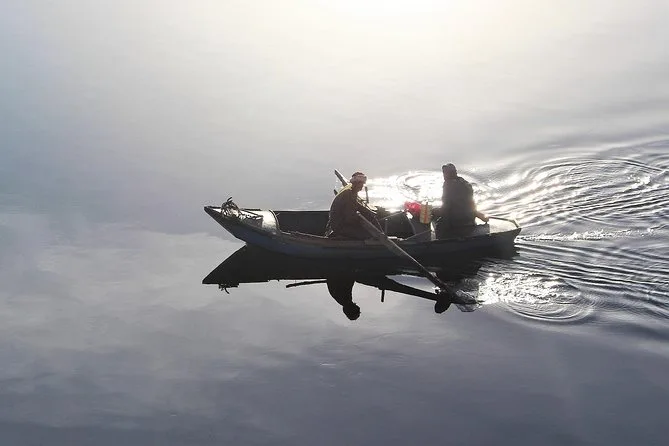
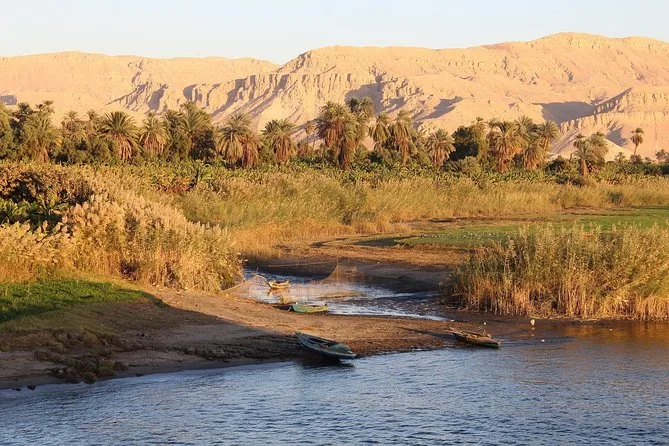
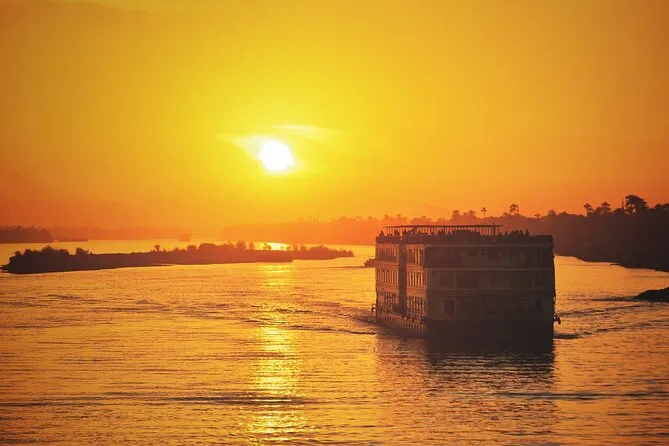
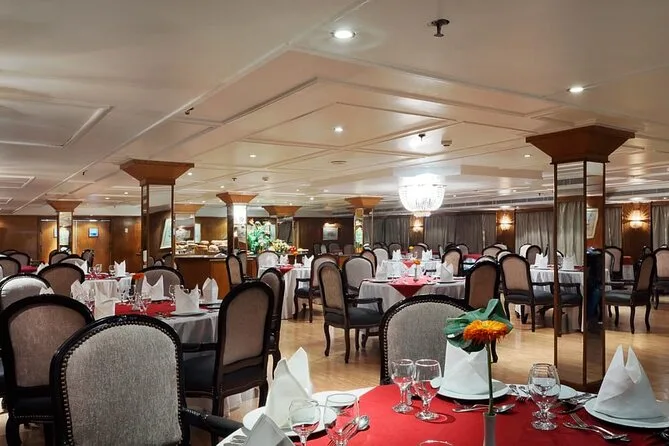
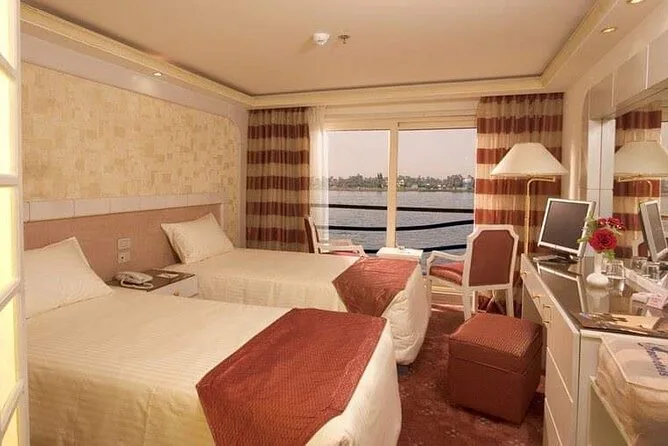
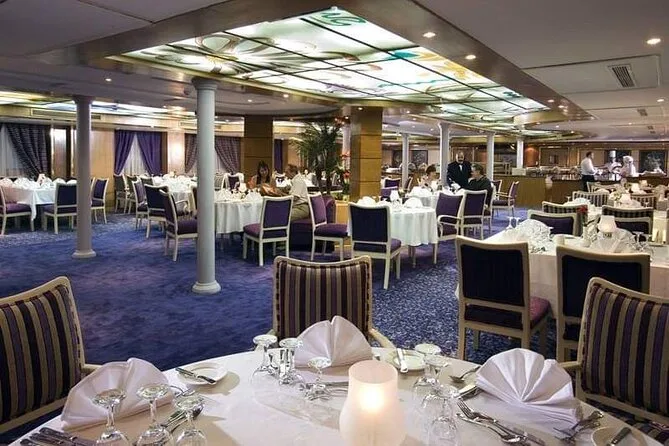
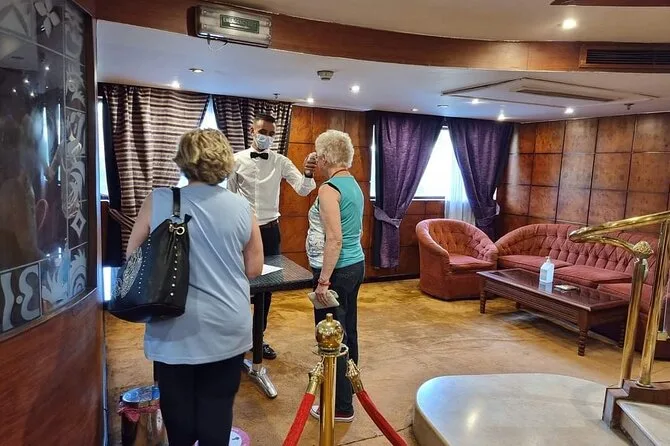

Four days following the Nile from Aswan's markets to Luxor's royal tombs, sleeping on the water between temples.
A 4-day Nile cruise from Aswan to Luxor with private Egyptologist guide, accommodation aboard the ship, all meals, entrance fees and air-conditioned transport included. You visit the High Dam and Temple of Philae on day one, Kom Ombo and Edfu temples on day two, the Valley of the Kings and Temple of Hatshepsut on day three, and Karnak and Luxor temples on the final morning before checkout. The guide speaks your language and the itinerary is fixed, so the logistics of moving between sites and timing the days are already arranged.
 4d
4d

Step-by-step itinerary
Day 1 — Aswan city tours – Aswan on
- Check in before 12:00 PM
- Have lunch on board
- Visit The High Dam
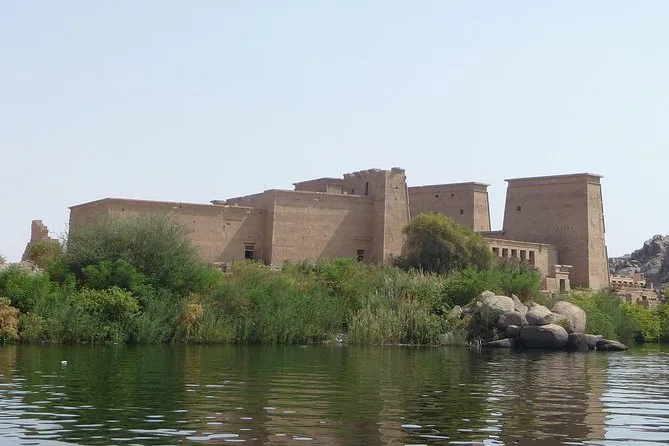
- Sail to Temple of Philae by motor boat
- Visit The Unfinished Obelisk
Day 2 — Kom Ombo – Edfu
- Have breakfast on board
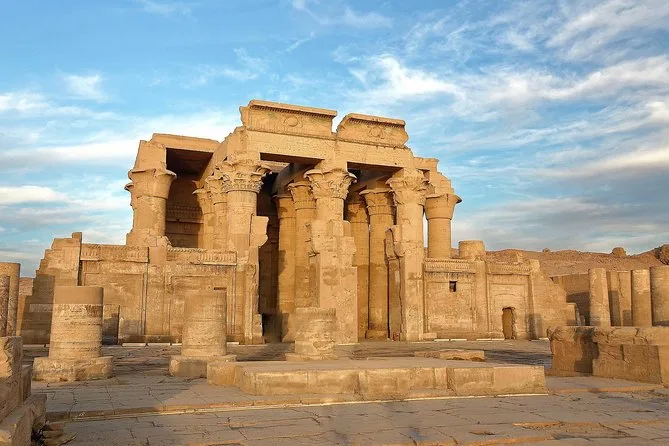
- Visit Temple of Kom Ombo with Egyptologist
- Enjoy lunch on sun deck
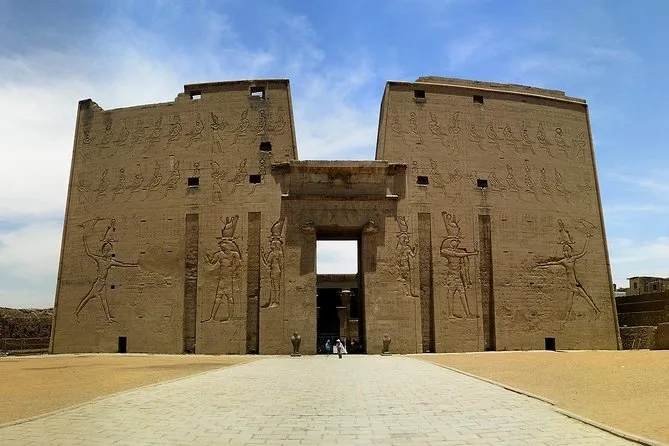
- Ride chariot to Temple of Horus in Edfu
- Relax on board ship
- Attend Egyptian Folkloric Show
Day 3 — Luxor west bank – Luxor on
- Visit Valley of the Kings
- Visit Temple of Queen Hatshepsut at Deir El Bahari
- Visit Colossi of Memnon
- Return to ship for lunch
Day 4 — Check out – Luxor east bank
- Check out after breakfast at 08:00 AM
- Tour Karnak Temples Complex
- Visit Temple of Luxor
- Transfer by private A-C van in Luxor

The Experience
Check in before noon on day one and have lunch aboard before heading out. You'll see the High Dam built in 1960 to control the Nile's flood, then take a motorboat to Temple of Philae, which dates to the Graeco-Roman period and was dedicated to the goddess Isis. The day ends with the Unfinished Obelisk, a massive stone left abandoned in the quarry. You sleep on the ship that night.
Day two starts with breakfast on board, then your guide takes you to Temple of Kom Ombo, where two gods—Sobek and Haroeris—were worshipped together. Lunch is served on the sun deck while the ship moves downriver. In the afternoon you ride in a chariot to Temple of Horus at Edfu, one of Egypt's best-preserved temples. Back on board for dinner, there's an Egyptian folkloric show that evening.
The west bank of Luxor is the focus of day three. You explore the Valley of the Kings, the royal cemetery where pharaohs were buried, then visit Temple of Hatshepsut at Deir El Bahari—a temple carved directly into the mountainside—and the Colossi of Memnon, two massive statues from the reign of Amenhotep III. Lunch is back on the ship.
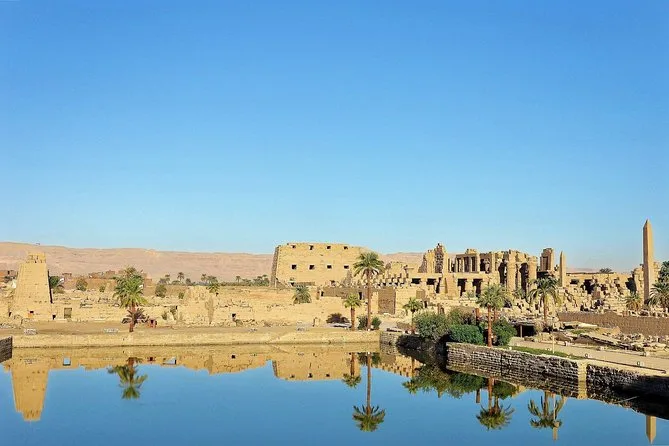
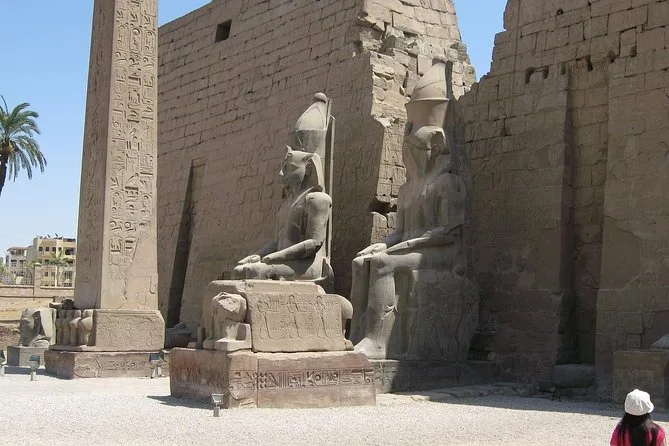
On the final morning you check out after breakfast and tour the east bank: Karnak Temples Complex, the largest temple construction in the world, and Temple of Luxor, built by 12th-dynasty kings and completed by Ramses II. After the tour, a private air-conditioned van takes you to your location in Luxor and the cruise ends.

What’s included
- Private Egyptologist guide in your chosen language.
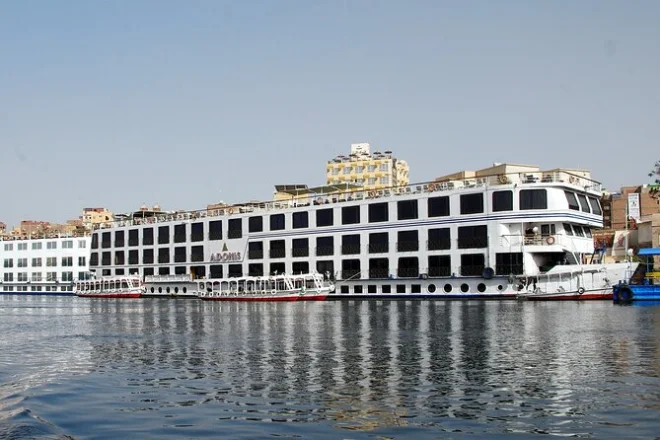
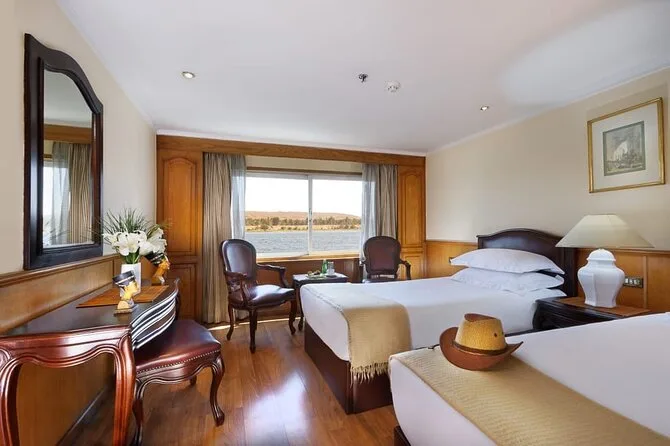
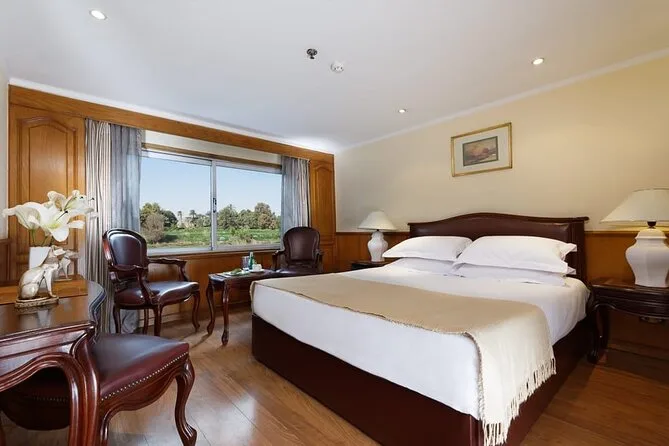
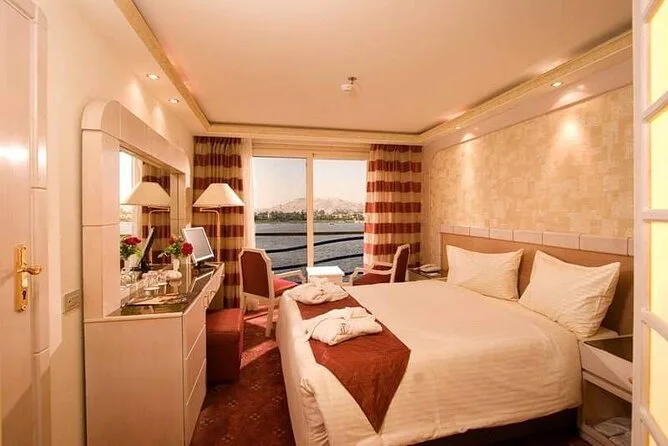
- 3 or 4 nights' accommodation on board with Mediterranean stone floors, dark wood furnishings and Egyptian cotton sheets.
- all meals on a full-board basis.
- entrance fees to High Dam, Temple of Philae, Unfinished Obelisk, Kom Ombo, Edfu, Valley of the Kings, Hatshepsut, Colossi of Memnon, Karnak and Luxor temples.
- air-conditioned vehicle transport between sites.
- assistance from staff during your stay and excursions.
- all service charges and taxes.
Operated by Canary Tours Egypt
Is this one for you?The cruise moves you downriver on a fixed schedule, so you don't arrange transport between temples or time the days yourself—the ship carries you overnight to each stop, and meals happen on board between tours. If you want the major temples of Upper Egypt without building an itinerary or managing logistics, this pace works; if you prefer to linger at one site or set your own rhythm, a private guide and car would suit you better.
Traveler reviews
Compare the 13 similar options
 4-Day Nile Cruise Aswan to Luxor: Temple Tours & Overnight Aboard★ 5.00 (1)4dEN · DE +4US$ 1,020
 Aswan: Philae Temple Guided Tour with Private EgyptologistFeel the magic of Philae Temple on a private guided tour from Aswan, with hotel pickup, motorboat ride, and stories from a real Egyptologist—easy booking included.★ 4.62 (112)2hEN · DE +2US$ 35View ›
 Aswan: Philae Temple, High Dam & Obelisk tour with guideVisit Aswan’s Philae Temple, High Dam, and Unfinished Obelisk with a local Egyptologist. Includes hotel pickup, entry fees, and motorboat ride. Book now.★ 4.68 (19)4hEN · AR +4US$ 59View ›
 4-Day Nile Cruise Aswan to Luxor: Abu Simbel & Hot Air BalloonCruise the Nile from Aswan to Luxor with 5-star accommodation, visit Abu Simbel temples, and soar over Luxor's West Bank by hot air balloon with an Egyptology guide.★ 4.88 (227)4dEN · AR +1US$ 1,100View ›
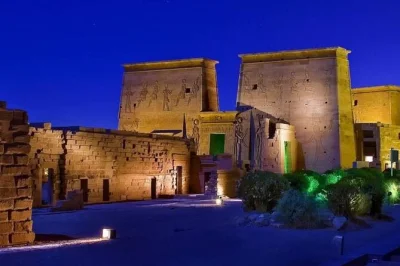 Philae Temple Sound & Light Show from Aswan: Private Evening TourPrivate evening tour to Philae Temple with hotel pickup, boat transfer and multimedia show narrated in your language★ 4.05 (19)2hUS$ 22View ›
 Aswan to Luxor: 4-Day Nile Cruise & Abu Simbel with Hot Air Balloon4-day Nile cruise from Aswan to Luxor with Abu Simbel temples, hot air balloon ride, and accommodation. Includes Kom Ombo, Edfu, Valley of the Kings, and entertainment.★ 4.93 (91)4dEN · ARUS$ 675View ›
 Aswan: High Dam, Unfinished Obelisk & Philae Temple Private TourPrivate Aswan day tour with Egyptologist guide covers Philae Temple, Unfinished Obelisk, and High Dam. Hotel pickup included, half-day excursion, motorboat to island temple.★ 4.48 (85)4hEN · AR +3US$ 49View ›
 Aswan to Luxor: Nile Cruise, Hot Air Balloon & Ancient TemplesFloat above Luxor at sunrise, sail the Nile from Aswan, explore Karnak & Valley of the Kings with a private guide. Includes all meals, hotel pickup & river cruise.★ 4.70 (129)3dEN · DE +2US$ 436View ›
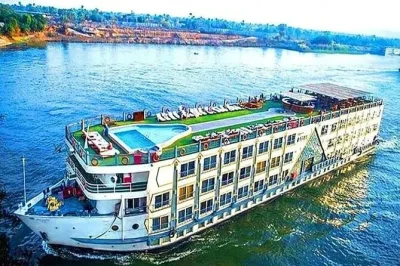 Aswan to Luxor: 4-Day Nile Cruise & Abu Simbel with Guide4-day Nile cruise from Aswan to Luxor with Abu Simbel, Valley of the Kings, and temple visits. Includes meals, 5-star ship, transfers, Egyptology guide. 3 nights onboard.★ 4.69 (502)4dEN · AR +4US$ 249View ›
 Aswan to Luxor Nile Cruise: 4 Days & Abu Simbel Option4-day Nile cruise from Aswan to Luxor with Valley of the Kings and Karnak Temple. Includes 3 nights aboard ship, transfers, meals, and Egyptologist guide.★ 4.68 (97)4dEN · AR +5US$ 200View ›
 Aswan to Luxor: Nile Cruise, Abu Simbel & Hot Air BalloonFloat the Nile from Aswan to Luxor, explore Abu Simbel at sunrise, walk ancient temples, and try a sunrise hot air balloon. Includes all transfers and meals.★ 4.73 (119)4dEN · AR +4US$ 200View ›
 Aswan to Luxor: 4-Day Nile Cruise & Hot Air Balloon4-day Nile cruise from Aswan to Luxor with Abu Simbel, Valley of the Kings, hot air balloon ride & Egyptologist guide. Includes meals, accommodation, airport pickup.★ 4.98 (104)4dEN · ARUS$ 672View ›
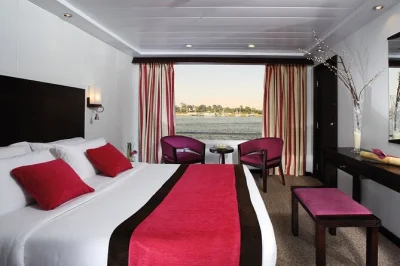 Aswan to Luxor: 1 Night Nile Cruise & BreakfastOvernight Nile cruise from Aswan to Luxor with 5-star accommodation, all meals, and hotel pickup at 11am. Sail downriver, breakfast included, arrive Luxor by 4pm.★ 4.79 (253)2dEN · DE +3US$ 206View ›
Top questions
What's included in the 4-day Nile cruise from Aswan to Luxor?
The cruise includes accommodation aboard the ship for 3 or 4 nights on a full-board basis, all meals, entrance fees to every temple and site, private Egyptologist guide who speaks your language, air-conditioned transport between attractions, and all service charges and taxes. Tipping to the guide and driver is optional.
Which temples and sites do I visit on this Nile cruise?
You see the High Dam, Temple of Philae, the Unfinished Obelisk, Temple of Kom Ombo, Temple of Horus at Edfu, Valley of the Kings, Temple of Hatshepsut, Colossi of Memnon, Karnak Temples Complex and Temple of Luxor. The itinerary moves downriver from Aswan to Luxor over the four days.
Is there a guide included, and what language does the guide speak?
A private Egyptologist guide is included and speaks English, Spanish, Italian, French or one of two additional languages—you choose your language at booking.
When do I check in and check out?
Check-in is before 12:00 PM on day one at Aswan. Check-out is after breakfast at 08:00 AM on day four in Luxor, after which you're transferred by private van to your location in the city.
What happens on the Nile between temple visits?
The ship moves downriver overnight, so you wake at the next destination. Meals are served on board, and on day two there's an Egyptian folkloric show in the evening. You can relax on the sun deck while the ship travels, watching the Nile landscape pass.
Is the cruise accessible for people with mobility needs?
The ship and all areas are wheelchair accessible, transportation is wheelchair accessible, and specialized infant seats are available. Public transportation options are also nearby if needed.
4-Day Nile Cruise Aswan to Luxor: Temple Tours & Overnight Aboard
4d · EN · DE +4 · at your hotel
from US$ 1,020 per person
★★★★★★★★★★5.001 reviewVerified traveler reviews via our booking provider
