


Kutná Hora and Bone Chapel day trip from Prague: UNESCO sites
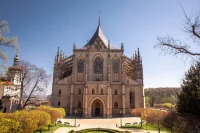
Walk through silver-mining wealth frozen in Gothic stone and Baroque rebuilding
A private guided day trip from Prague to Kutná Hora, a UNESCO-listed medieval city built on silver wealth, with stops at the Cathedral of St. Barbara, the Italian Court mint, Church of St. James, and the Sedlec Ossuary's bone chapel. Hotel pickup and drop-off, professional guide in English, Spanish, French or German, and bottled water are included. Entrance fees to individual sites are paid separately. Lunch at a local Czech restaurant in the town center is available as an optional add-on.
Step-by-step itinerary
Explore Kutná Hora and Bone Chapel
- Visit Cathedral of St. Barbara
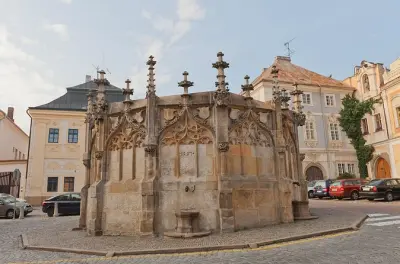
- See Gothic stone fountain on Rejsek Square
- Tour Church of St. James
- Explore Jesuit College and covered bridge
- Visit Church of St. John of Nepomuk
- Discover Italian Court mint
- View Stone House Gothic monument
- Visit Cathedral of Our Lady in Sedlec
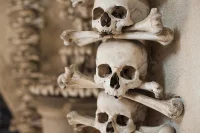
- See Sedlec Ossuary bone decorations
What’s included
- Hotel pickup and drop-off from Prague.
- professional guide in English, Spanish, French or German.
- air-conditioned vehicle.
- bottled water.
- optional lunch at a local Czech restaurant in Kutná Hora's center (paid separately).
Times
- Every day 08:00 08:30 09:00
Before you book
Operated by Eva Prague Tours
Traveler reviews
The experience
Kutná Hora earned its nickname "the city of silver" and "national treasury" because the metal beneath it funded the Czech Kingdom's rise. The day starts with hotel pickup in Prague and a drive to the town center, where the Cathedral of St. Barbara announces itself first: a late Gothic structure with a three-tent roof and flying buttresses so distinctive that it became the town's symbol. St. Barbara is the patron saint of miners, and the cathedral's design reflects the wealth that mining brought. From there, the route moves through the medieval streets: the Gothic stone fountain on Rejsek Square, built in 1493 and originally fed by wooden pipes running four kilometers from a well. The Church of St. James with its 86-meter tower, begun in 1330 and left unfinished on one side because the ground beneath was too unstable from mining to support both towers. The Jesuit College, built between 1667 and the mid-18th century and now an art gallery, connected to St. Barbara's by a covered bridge meant to echo Prague's Charles Bridge.
The Italian Court is where the story of Kutná Hora's power becomes tangible. King Wenceslas II summoned Florentine bankers in 1300 to centralize the kingdom's mints here, replacing scattered operations across the realm. The silver Prague groschen coins minted in this building became one of Europe's strongest currencies. The Church of St. John of Nepomuk, the only Baroque church in town and partly designed by the famous architect Kilián Ignác Dientzenhofer, sits nearby with a richly decorated interior. The Stone House, a Gothic monument, shows how people lived during the city's peak. All of these buildings carry the weight of the 15th-century Hussite wars, which burned much of the town and forced later Baroque rebuilding that merged Gothic and Baroque styles in ways found nowhere else in Europe.
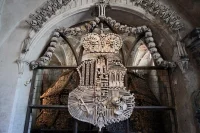
The second half of the day moves to Sedlec, where the Cathedral of Our Lady stands as a UNESCO World Heritage site. Built in High Gothic style during Kutná Hora's silver boom, it was burned by the Hussites in 1421 and rebuilt in the early 18th century by the Baroque architect Jan Blažej Santini. Beneath the Church of All Saints in the cemetery sits the Ossuary: an underground chapel holding the bones of roughly 40,000 people who died in the 1318 plague and the 15th-century Hussite wars. In 1870, František Rint arranged these bones into decorations: bells, coats of arms, and a chandelier. The guide provides context for each stop. Lunch at a local Czech restaurant in Kutná Hora's center can be added to the itinerary.
Is this one for you?The full seven-hour route with multiple stops and walking through town streets suits travelers with moderate fitness who want to understand Kutná Hora's medieval and Baroque layers without rushing. If you prefer a shorter visit or need to avoid stairs and uneven ground, ask about partial-day options when booking.
Compare the 10 alternatives




Top questions
What languages is the tour guided in?
Live guide in English, Spanish, French and German.
What is the Sedlec Ossuary and why are there so many bones in it?
The Sedlec Ossuary is an underground chapel beneath the Church of All Saints in Sedlec, containing the remains of approximately 40,000 people who died during the 1318 plague and the 15th-century Hussite wars. The bones were originally buried in the church cemetery and transferred to the chapel when it closed at the end of the 15th century, then arranged into decorative formations including bells and a chandelier.
How long does this day trip take, and what's included in the price?
The tour runs seven hours total and includes hotel pickup and drop-off in Prague, a professional guide in English, Spanish, French or German, bottled water, and an air-conditioned vehicle. Entrance fees to the Cathedral of St. Barbara, Church of St. James, Cathedral of Our Lady, and the Ossuary are paid separately at each site.
What makes the Cathedral of St. Barbara special in Kutná Hora?
The Cathedral of St. Barbara is Kutná Hora's most significant monument and the town's symbol, built in late Gothic style with a distinctive three-tent roof and intricate flying buttresses. It is dedicated to St. Barbara, the patron saint of miners, reflecting the city's wealth from silver mining.
Can I add lunch to this tour?
Yes, lunch at a local Czech restaurant in the center of Kutná Hora can be arranged as an optional add-on during the day trip.
What was the Italian Court, and why is it important to Kutná Hora's history?
The Italian Court was the royal mint established in 1300 by King Wenceslas II with the help of Florentine bankers. It centralized coin production and minted the silver Prague groschen, which became one of Europe's strongest currencies and a symbol of the kingdom's power during Kutná Hora's peak wealth.
Is this tour physically demanding?
The tour involves walking through medieval streets and visiting multiple churches and sites over seven hours. Moderate physical fitness is recommended, and the tour is not recommended for travelers with poor cardiovascular health.
Kutná Hora and Bone Chapel day trip from Prague: UNESCO sites
7h · EN · ES · FR · DE
from US$ 340 per person
Next, you choose your date and number of travelers and see the final price.