
Zadar Guided Tour with Virtual Reality: 8 Historical Sites





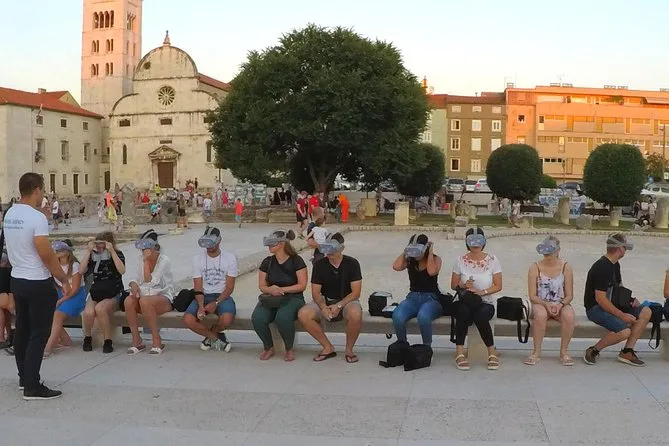
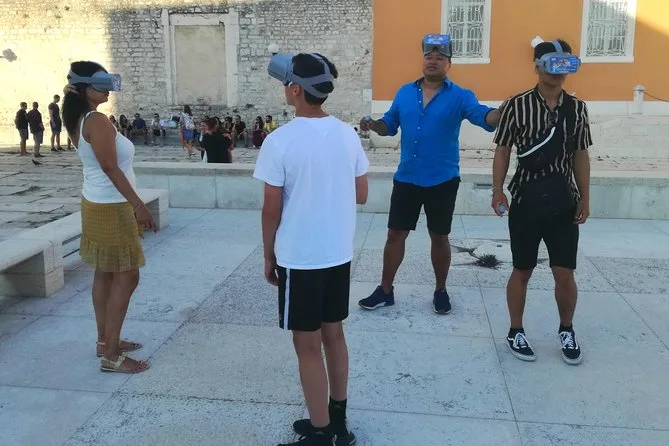
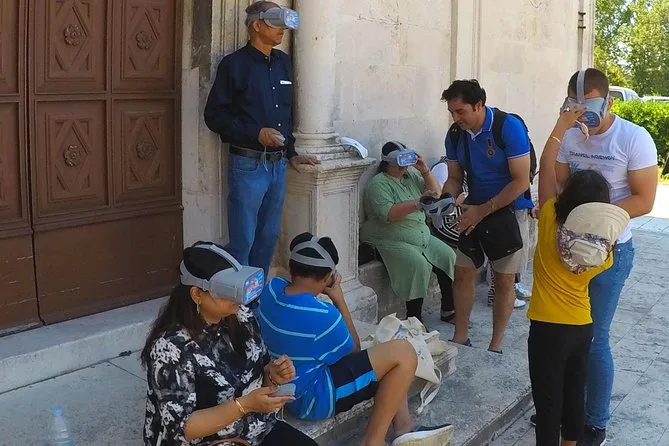
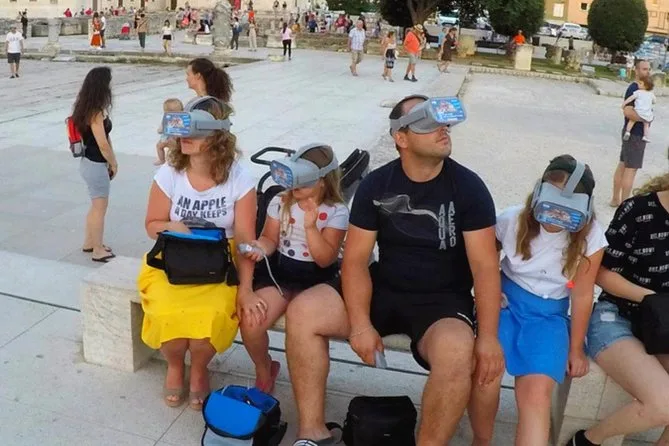

Step into Zadar's past through VR glasses at eight stops across the old town.
A guided walking tour of Zadar's old town that visits eight historical sites, each one experienced through VR glasses that recreate scenes from over 2,000 years of the city's history. The tour lasts two hours, includes an English-speaking guide and a tour assistant, and ends with a tasting of Maraschino, the traditional local liquor. Children from age 6 are welcome, and the route is wheelchair accessible.
 2h
2h

Step-by-step itinerary
Zadar old town VR guided tour
- Visit St. Krševan church with VR
- See interior of St. Simeon church
- Learn about Roman and Venetian city gates
- Explore Roman Forum ruins with VR
- View WWII bombing from St. Anastasia tower
- Tour St. Anastasia cathedral with VR
- Visit former city market site with VR
- Experience Sea Organ and Greeting to the Sun

The Experience
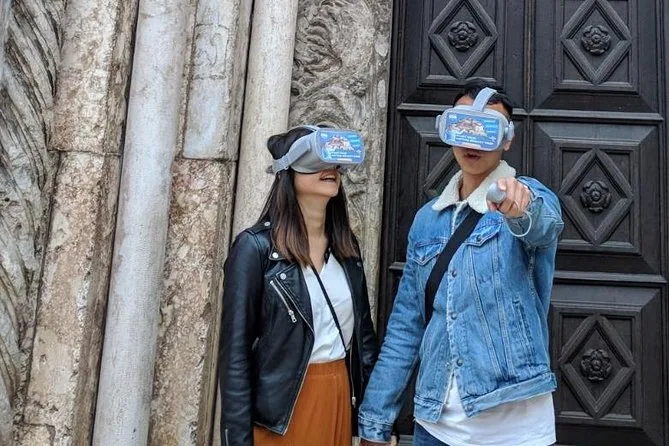
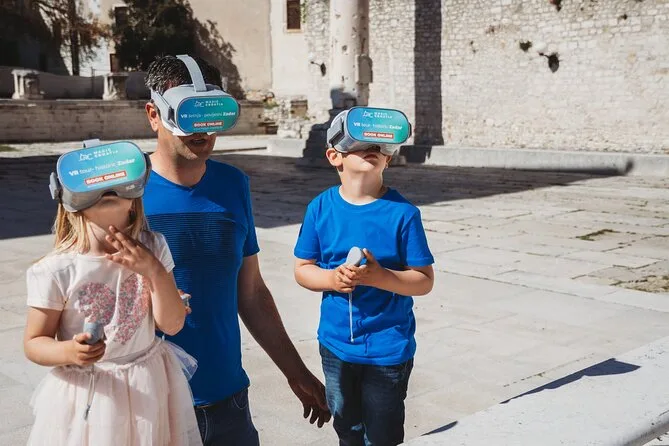
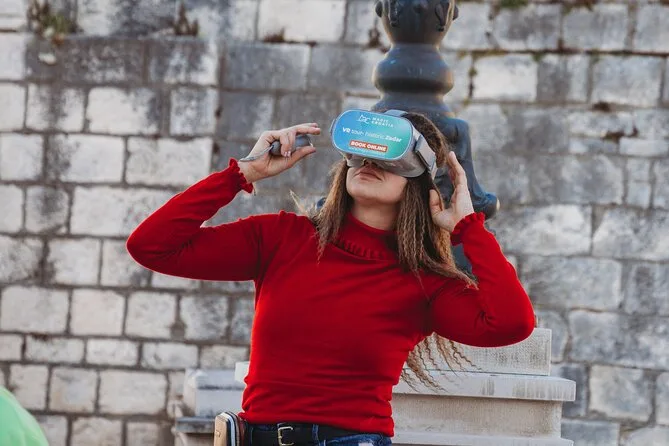
The tour starts in the old town and moves through eight locations on foot. At each stop, you put on an Oculus Go VR headset and watch scenes unfold around you—not imagined, but rendered in 360° with 3D objects, animations and sound. A seven-language audio guide narrates what you're seeing, and you control the pace yourself; a tour assistant stays with the group to help if you need it. The interface is simple enough that no tech experience is required.
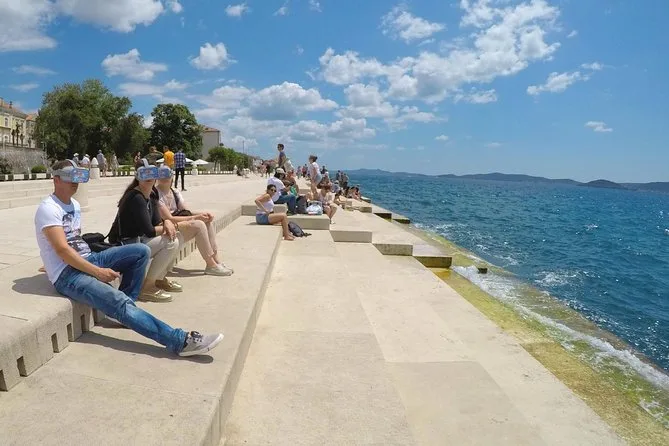
The stops themselves are the draw. You visit the Church of St. Krševan, a Romanesque monastery church from 1175 that's normally closed to the public, and see its courtyard and interior through the headset. At St. Simeon's church, you see the silver Gothic chest holding the relics of the city's patron saint. The Roman Forum—the largest ever built in Croatia, constructed over two centuries starting in the 1st century—appears as a full reconstruction: you watch it take shape from above as if you're in a hot-air balloon, then stand in the center surrounded by recreated buildings and statues, facing the temple of Jupiter, Juno and Minerva. At St. Anastasia's cathedral, you enter spaces normally closed to visitors: the baptistery and sacristy. You see the medieval city gates and Venetian walls, the former market destroyed in World War II, and from the bell tower of St. Anastasia, you watch the 1944 bombing of Zadar unfold—buildings burning, planes dropping bombs, the map of damage that followed. At the Sea Organ and Greeting to the Sun on the promenade, you see the location as it was in the 13th century, watching Crusaders attack the city from the sea.
The tour wraps with a glass of Maraschino, the region's traditional liquor. The whole thing takes two hours and covers ground at a walking pace; the route is accessible to wheelchairs, and strollers work for small children. The guide speaks English, and the audio guide offers seven languages total.

What’s included
- The tour includes the guided walk through eight historical locations.
- VR glasses (Oculus Go headsets) at each stop.
- an audio guide available in seven languages.
- a tour assistant throughout.
- and a glass of Maraschino, the traditional local liquor, at the end.
Operated by Magic Croatia: Trips and Tours
Is this one for you?The two-hour walk and standing at each stop suit anyone comfortable moving through a city on foot; if you prefer to sit while sightseeing or have limited mobility, ask about accessibility options before booking, since the route itself is wheelchair accessible but the VR experience requires standing at each location.
Traveler reviews
Compare the 13 similar options
 Zadar Guided Tour with Virtual Reality: 8 Historical Sites★ 4.76 (33)2hENUS$ 35
 Zadar: Eco Tuk Tuk City Tour with Sea Organ & PickupFeel the pulse of Zadar on an eco tuk tuk ride—see the Sea Organ, Roman Forum, city gates, and Kolovare Beach with local pickup and private guide.★ 4.56 (241)1h 30m–2hEN · DEUS$ 64View ›
 Zadar sunset boat cruise: Sea Organ and Aperol SpritzSunset boat cruise from Zadar's Foša harbor past the Sea Organ, with live serenades and Aperol Spritz — watch the light change over the old town and islands from the water.★ 4.96 (321)1h 15mENUS$ 23View ›
 Zadar Walking Tour: Sea Organ, Roman Forum & Sunset RouteStep into Zadar’s old town with a local guide—hear the Sea Organ, wander Roman ruins, and catch sunset by the water. Includes possible tastings and pickup option.★ 4.90 (230)2hEN · IT +1US$ 28View ›
 Zadar Old Town Walking Tour: Centuries of RulersWalk Zadar's old town with a licensed guide through Roman forums, Venetian walls and the Sea Organ—1.5 hours, stories of Illyrians to Austrians, English-language tour daily.★ 5.00 (14)1h 30mENUS$ 17.56View ›
 Zadar City Walking Tour: Roman Streets & Venetian WallsWalk Zadar's Roman streets and Venetian defenses in 90 minutes with a live guide — morning, afternoon or sunset departure, no museums or churches to enter.★ 4.88 (34)1h 30mEN · IT +1US$ 23View ›
 Zadar Food & Wine Tour: Old Town Walking with Local GuideWalk Zadar's ancient streets with a sommelier, tasting local fish prepared by a MasterChef, prosciutto in a wine garden★ 4.97 (159)2hENUS$ 64View ›
 Zadar: Sea Organ, Old Town & Local Tastings Walk2-hour guided walk through Zadar's Old Town with Sea Organ, Church of St. Donatus & maraschino tasting. Small groups, licensed local guide, all fitness levels.★ 4.98 (463)2hENUS$ 23View ›
 Dugi Otok: Shipwreck Snorkel, Sea Cave & Sakarun BeachSmall-group speedboat tour from Zadar to Dugi Otok with shipwreck snorkel, sea cave swim, military tunnels and Sakarun Beach. Max 12 people, English-speaking skipper, gear included.★ 4.54 (181)8h 30mENUS$ 83View ›
 Zadar City Tour & Nin: UNESCO heritage and Roman ruinsZadar city sightseeing tour with Nin and UNESCO sites. Walk through 9 centuries of history across two Adriatic towns in 4.5 hours, including hotel pickup.★ 5.00 (12)4h 30mENUS$ 84View ›
 Zadar Archipelago: Sailing Tour with Family Skipper & Island StopsFeel the Adriatic breeze on a Zadar sailing tour, swim off Ugljan, snack on fresh seafood in Kali, and pass the Sea Organ—includes skipper and snorkel gear.★ 5.00 (76)4hENUS$ 47View ›
 Walking Tour Zadar: Roman Forum, Sea Organ & Local GuideWalk Zadar's historical center with a licensed guide through Roman ruins, medieval churches and the Sea Organ★ 4.91 (11)2hEN · DE +3US$ 263per groupView ›
 Zadar Food Tour: Local Dishes & City StoriesWalk the Roman Forum and the green market with a local guide, tasting five stops of Croatian coastal dishes—olive oil, prosciutto, wine★ 4.96 (134)3hENUS$ 104View ›
Top questions
What exactly do I see through the VR glasses on this tour?
The VR headset shows 360° reconstructions of historical moments at each of the eight stops—the interiors of churches closed to the public, the Roman Forum as it stood in the 1st century with buildings and statues surrounding you, the 1944 bombing of Zadar from the bell tower, Crusaders attacking from the sea in the 13th century. You control when to move to the next scene, and an audio guide explains what you're seeing.
Do I need to know how to use VR headsets before I book?
No. The Oculus Go headsets have a simple interface, and a tour assistant is with your group the entire time to help if you need it. Most people pick it up immediately.
Is the Roman Forum stop the same as visiting the actual ruins?
The Zadar Roman Forum exists now only as ruins scattered through the old town. On this tour, you see those actual remains in person, but through the VR headset you also see the complete Forum as it looked in the 1st to 3rd century—the full layout, buildings, statues and the temple at its center. When you take off the headset, you're standing at the real site and can see which original stones are still there after 2,000 years.
Can children go on this tour?
Children from age 6 are welcome. The tour is two hours of walking and standing at different stops, and the VR headsets are sized to fit older children and adults.
What's included in the price?
The tour includes the guided walk, the VR glasses and headsets, the audio guide in your choice of seven languages, the tour assistant, and a glass of Maraschino at the end.
How much walking is involved?
You walk between eight stops spread across Zadar's old town over the course of two hours. The route is flat and wheelchair accessible, and strollers work for small children.
Zadar Guided Tour with Virtual Reality: 8 Historical Sites
2h · EN
from US$ 35 per person
★★★★★★★★★★4.7633 reviewsVerified traveler reviews via our booking provider
