
4-Day Lost City Trek Santa Marta: 1,200 Steps to Ruins
Four days in the jungle vs day trip: reach ruins and stay overnight in camp
You hike four days through jungle and cloud forest to reach Ciudad Perdida, sleeping in camps and walking past indigenous villages. SENA-trained guides handle the history and anthropology. Pickup from Santa Marta, meals and snacks included, and your luggage can stay behind or be sent ahead, so you only carry what you need for the trail.
Compare the 8 alternatives
 Lost City Trek from Santa Marta: 4 days through jungle and ruinsEvery day · 08:00 · From age 15★ 4.82 (11)4dEN · ESUS$ 660View ›
 4-Day Lost City Trek Colombia: Climb 1,200 Stone StepsEvery day · 07:00 and 08:30 · From age 8★ 4.93 (137)4dEN · DE +2US$ 640View ›
 Lost City Trek Santa Marta: Kogui Culture & Ancient RuinsEvery day · 00:00 · All ages★ 4.98 (89)3dEN · FR +1US$ 825View ›
 4-Day Lost City Trek in Santa Marta: Small-Group HikeEvery day · 08:30 · From age 8★ 4.85 (254)4dEN · ESUS$ 580View ›
 Lost City Trek 4 Days from Santa Marta: Climb to the RuinsEvery day · 06:00 · Up to 60 years★ 5.00 (6)4dEN · DE +3US$ 575View ›
 4-Day Lost City Trek from Santa Marta: Ciudad PerdidaEvery day · 08:00 · From age 12★ 5.00 (43)4dEN · ESUS$ 580View ›
 5-day Hike to Lost City from Santa Marta: 1,200 Stone StepsEvery day · 07:00 and 08:30 · From age 8★ 5.00 (2)5dEN · DE +2US$ 680View ›
 Lost City Trek Santa Marta: 4-Day Sierra Nevada HikeEvery day · 08:00 · 18–65 years★ 4.94 (1,310)4dEN · ESUS$ 750View › Compare more experiences like this »
Step-by-step itinerary
Day 1: Travel to El Mamey and Camp 1
- Meet at Expotur office 9:30 am
- Drive 2.5 hours to El Mamey
- Have lunch at El Mamey
- Begin search for Tayrona sacred place
- Arrive at Camp 1 late afternoon
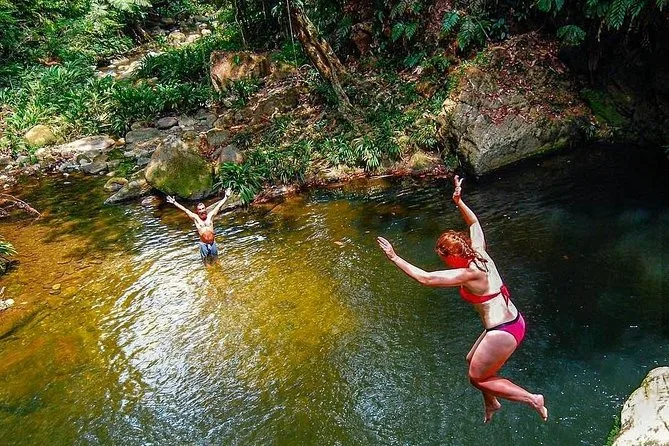
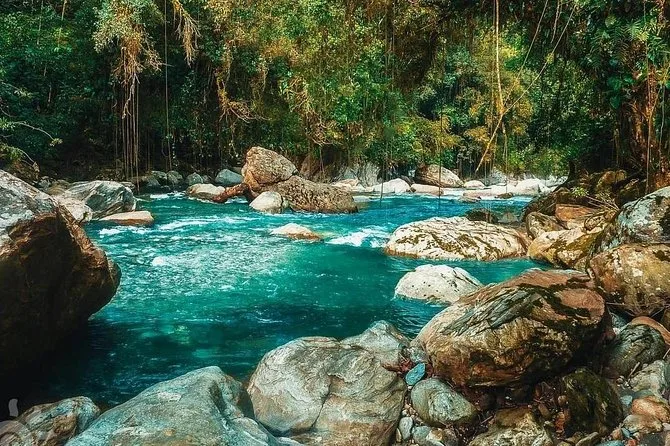
- Relax at rivers, pools, waterfalls
- Dinner and rest in hammocks
Day 2: Hike through Buritaca valley to Camp 3
- Early breakfast at Camp 1
- Walk through Buritaca river valley
- Visit indigenous Kogui village Mutanshi
- Hike 7 hours through Sierra Nevada jungle
- Arrive at Camp 3 for lunch and rest
- Dinner and overnight at Camp 3
Day 3: Ascend to Lost City and return to Camp 2
- Early breakfast at Camp 3
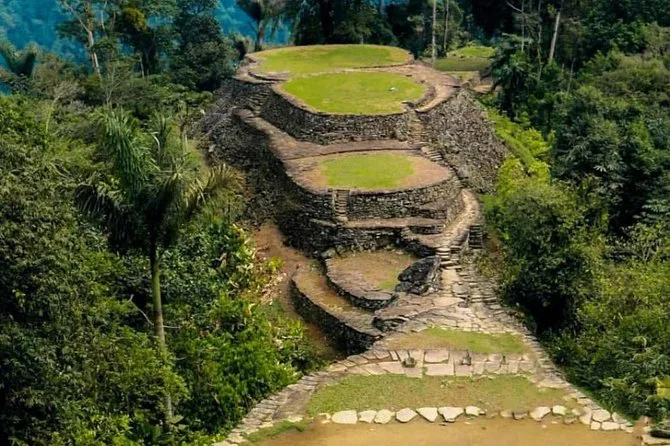
- Climb 1,200 Tayrona steps to Lost City
- Tour Lost City with guide
- Enjoy landscapes and take photos
- Lunch at Lost City
- Return hike to Camp 2
- Dinner and overnight at Camp 2
Day 4: Return from Camp 2 to Santa Marta
- Breakfast at Camp 2
- Hike back passing rivers and waterfalls
- Lunch at El Mamey
- Truck ride back to Santa Marta
- Arrive in Santa Marta around 5 pm
The experience
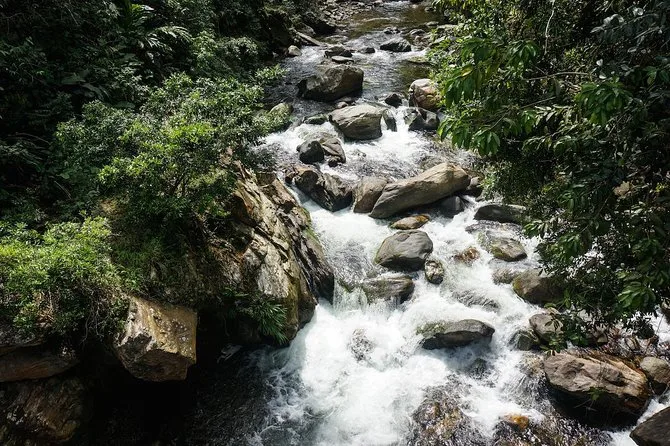
There's something that pulls you toward this trek before you even lace your boots. Maybe it's the idea of walking the same stone steps the Tayronas built centuries ago, or maybe it's just the thought of being unreachable for four days in the Sierra Nevada de Santa Marta. Either way, the hike starts at 9:30 am from the Expotur office in Santa Marta, where a 4×4 truck takes you two and a half hours inland to El Mamey. By afternoon you're at Camp 1, where the jungle opens up around you: rivers, natural pools, waterfalls close enough to wade into. That first night you sleep in a hammock, and the sound of water running somewhere in the dark becomes your only clock.
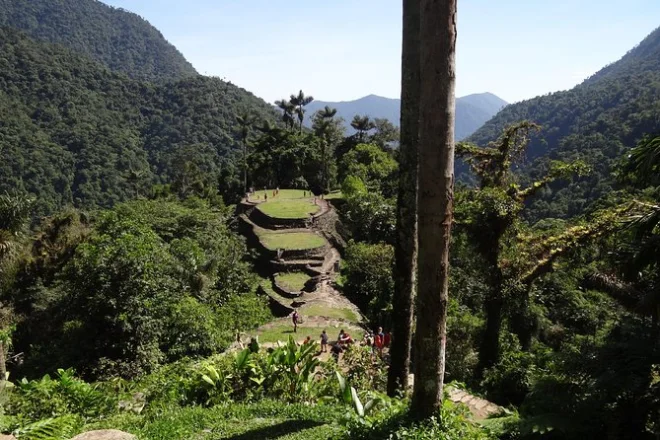
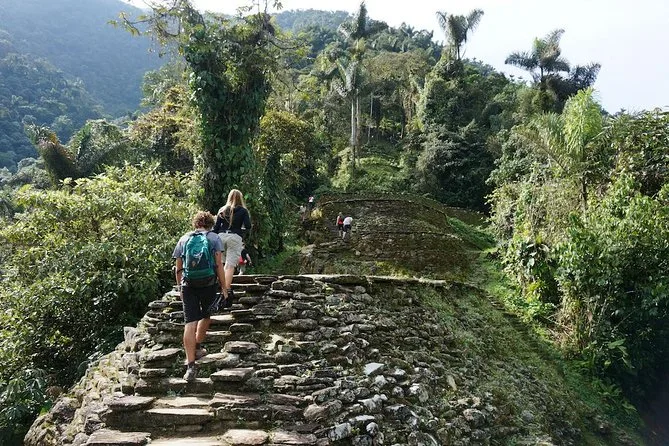
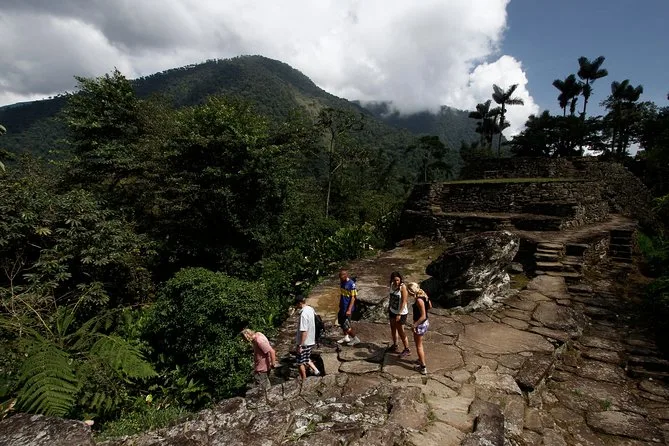
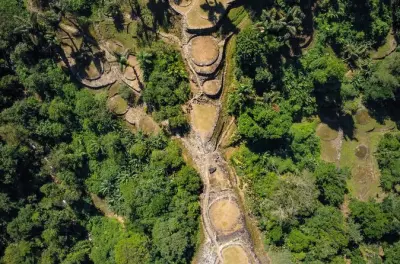
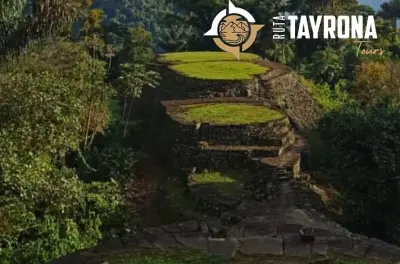
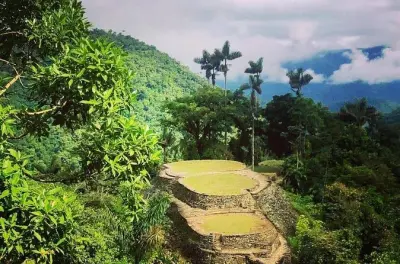
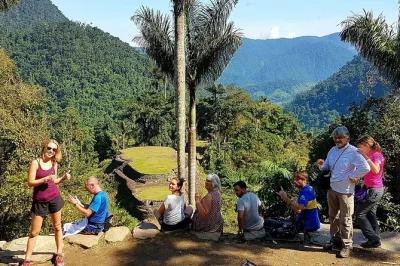
Day two is the long one: seven hours through the Buritaca river valley, walking past Kogui indigenous houses that make up the village of Mutanshi. Your guide (trained by SENA with years in the region) points out plants, explains the anthropological layers of what you're seeing, and introduces you to the people who live there. The jungle gets thicker as you climb, and by the time you reach Camp 3, your legs know they've worked. Day three comes early. Breakfast before dawn, then the 1,200 stone steps. They're steep, uneven, and built by hand centuries ago. When you reach the Lost City itself, the guide walks you through the terraces and explains the relics, the layout, the stories embedded in the stones. You have the morning to sit there, breathe, take photos. Lunch happens at the site. Then the same steps back down to Camp 2.
The last day is the return: breakfast, rivers to cool off in, and a truck waiting at El Mamey to drive you back to Santa Marta by around 5 pm. You'll have hiked roughly 30 kilometers over four days, stayed in camps run by local peasant communities, and slept in hammocks or beds depending on the night. The trek isn't easy. You need moderate fitness, and it's not recommended if you have spinal issues, cardiovascular concerns, or are pregnant. Yellow fever vaccination is advised. But what you get is not a tour of the Lost City. It's a four-day immersion in the Sierra Nevada, guided by people who actually know the region, with your money going directly to the communities you pass through.
What’s included
Your four days include pickup from Santa Marta at 9:30 am, transport by 4×4 to El Mamey, accommodation in three jungle camps with beds and hammocks, all meals and snacks, a SENA-trained regional guide, and entry to Sierra Nevada de Santa Marta National Park. You can leave extra luggage at the Expotur office or have it forwarded to El Mamey if you're continuing elsewhere after the trek.
Before you book
Prices and times updated 7 days ago
Operated by Expotur
Is this one for you?Right for travelers with moderate fitness who want to hike to the Lost City with guides who know the region and communities firsthand. Plan for four full days of hiking and jungle living. That's what makes reaching Ciudad Perdida and visiting Kogui villages possible without rushing.
Traveler reviews
Top questions
What languages is the guide in?
Live guide in English and Spanish.
What happens if it rains?
It may be canceled due to bad weather. If that happens, you're offered another date or a refund. Free cancellation up to 24 h before the start.
How difficult is the Lost City trek?
Moderate to challenging. Day two is seven hours of hiking. Day three includes 1,200 stone steps uphill. You need at least moderate fitness. It's not recommended for people with spinal injuries, poor cardiovascular health, or during pregnancy.
What's included in the four-day trek?
Pickup from Santa Marta, transport to El Mamey, accommodation in camps (hammocks or beds), meals, snacks, and a SENA-trained guide. Entry to Sierra Nevada de Santa Marta National Park is included.
Where do you sleep on the trek?
In three different camps: Camp 1 near El Mamey, Camp 3 in the Buritaca valley near the Kogui village, and Camp 2 after descending from the Lost City. Each has basic facilities: beds, hammocks, showers, bathrooms.
Do I need vaccinations?
Yellow fever vaccination is recommended as a preventive measure for the trek.
Can I leave luggage behind?
Yes. You can leave suitcases at the Expotur main office in Santa Marta at no extra cost. If you're not returning to Santa Marta on the last day, luggage can be sent to El Mamey for pickup.
What time does the trek start?
Pickup is around 9:30 am from the Expotur office in Santa Marta. You return to the city by approximately 5 pm on day four.
Are children allowed on the trek?
Infants must sit on an adult's lap. The trek is physically demanding and not recommended for very young children without moderate fitness.
Who are the guides?
Guides are trained by SENA (Colombia's national training service) and are from the region. They provide cultural, historical, and anthropological information about indigenous communities and the Sierra Nevada.
4-Day Lost City Trek Santa Marta: 1,200 Steps to Ruins
4d · EN · ES
from US$ 760 per person
4.963,601 reviewsVerified traveler reviews via our booking provider