

 +507 6792-0894


Cartagena Street Food Tour: Local Flavors & Hidden Plazas



Summary
Eat Like a Local: Cartagena Food Walk Through Historic Squares
You’ll taste Cartagena’s real flavors on this tour—artisan snacks straight from local hands, stories behind every bite, and hidden corners most visitors miss. If you want to eat like a local and see the city’s heart up close, this walk is for you.

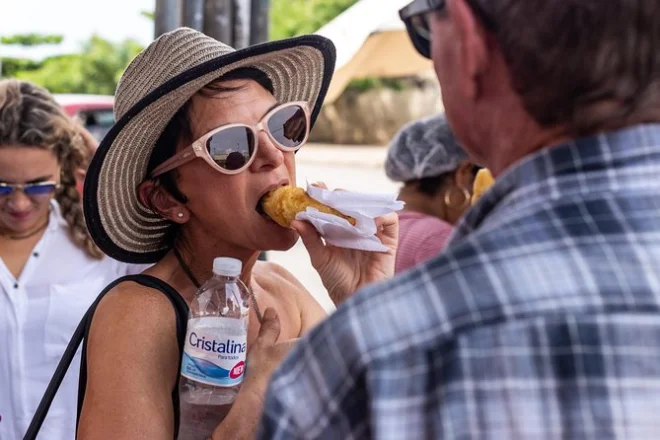
The first thing that hit me was the smell—fried arepas and sweet coconut wafting through the air as we squeezed past fruit carts near La Puerta del Reloj. Our guide, Julie, waved us over to a tiny stall tucked under the arches of the Portal de los Dulces. The vendor handed out chewy cocadas and tamarind balls, sticky and tart, while kids darted between our legs chasing pigeons. It was barely 10am but already warm enough that my shirt stuck to my back.
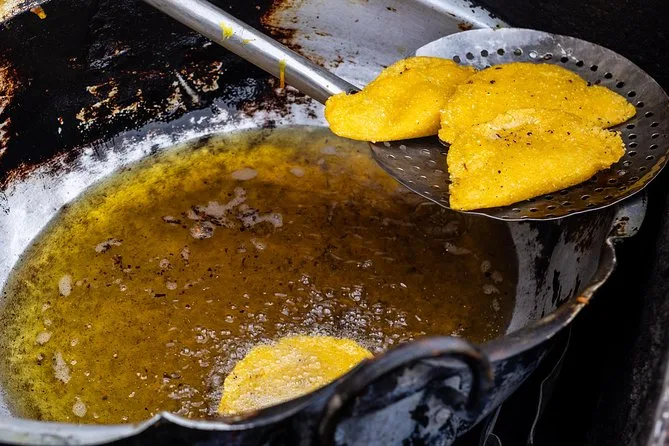
We wandered into Plaza de San Diego next. Locals lounged on shaded benches, sipping tinto from plastic cups. Julie pointed out a woman selling carimañolas—she’s been here for years, apparently, and her yuca pastries have this peppery beef filling you won’t find in restaurants. I bit into one and nearly burned my tongue; totally worth it. The square itself felt calm compared to the bustle outside the walls—just a few artists setting up their easels and some old men arguing about baseball.
Santo Domingo Church loomed ahead, its yellow walls faded by sun and sea air. Right in front sits Botero’s bronze “La Gorda Gertrudis”—people rub her for luck (I did too). Musicians played vallenato nearby, their accordion notes mixing with the sizzle from an empanada cart. Julie explained how each snack has roots in different parts of Colombia—some recipes passed down for generations.
By the time we reached Plaza Bolívar, I’d lost count of how many things I’d tried—arequipe-filled obleas, fried cheese balls, even a cup of icy corozo juice that stained my lips pink. The square buzzed with families and street performers; someone handed me a tiny cup of chicha to try (it’s stronger than it looks). We ended at San Pedro Claver’s plaza surrounded by metal sculptures made from scrap—Julie said they’re by Edgardo Carmona—and watched as vendors packed up for siesta.
 2h–3h
2h–3h

Step-by-step itinerary
Day 1 — Cartagena Street Food Tour
- Visit Santo Domingo Church Plaza
- Explore Plaza de San Pedro Claver
- See Bolivar Square
- Relax at Plaza de San Diego
- View La Puerta del Reloj
- Discover Portal de los Dulces at Plaza de los Coches

Top questions

Is this street food tour suitable for vegetarians?
There are several vegetarian options along the route like arepas de queso and coconut sweets. Let us know your preference so we can point them out during the tour.
How much walking is involved? Is it very hot?
The walk covers about 2km through mostly flat streets in Cartagena’s historic center. Mornings can be warm but there are shaded stops along the way.
Are drinks included with the tastings?
You’ll get to try some local drinks like corozo juice or chicha as part of the experience. Water is also available if you need it.
Is this tour wheelchair accessible?
Yes! The route is wheelchair-friendly and we make sure everyone can access all stops comfortably.

What’s included
You’ll taste everything prepared by local hands—from savory snacks to sweet treats—and sample traditional drinks along the way. All food tastings are included; just bring your appetite!
 Super deal
  Free booking, free cancellation.
  Don't lose your place.


 Do you need help planning your next activity?
  +507 6792-0894


