
Zipaquirá Salt Cathedral & Lake Guatavita from Bogotá


Two Colonial Towns, One Day: Inside the Salt Cathedral & the Lake of Legend
You're driven from your Bogotá hotel to the Salt Cathedral of Zipaquirá, where you walk through tunnels carved from salt and learn how indigenous and colonial history shaped the mine. Then you head to Lake Guatavita to hear the El Dorado legend and stand above the crater lake where the Muisca made sacred offerings. Entry, guide, insurance, and return transport are included; lunch is optional. The whole day takes you out of the city and into two towns most Bogotá visitors miss.
 10h
10h

Step-by-step itinerary
Visit Salt Cathedral and Lake Guatavita
- Visit Zipaquira Town
- Explore Salt Cathedral
- Travel to Guatavita Town
- Guided visit to New Guatavita town
- Learn El Dorado legend at Lake Guatavita

The Experience
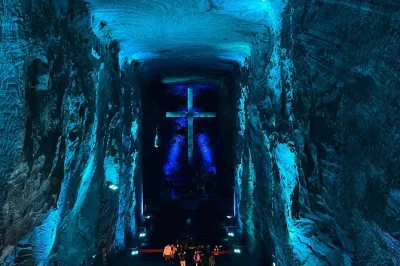
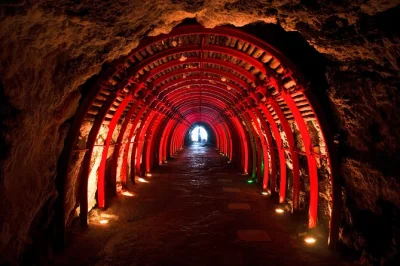
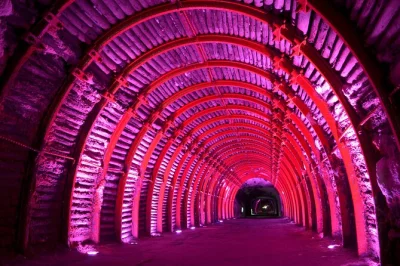
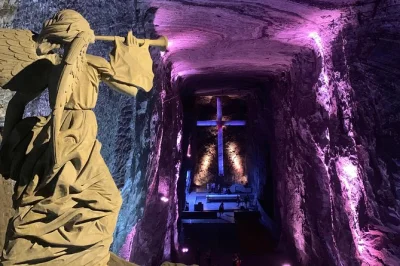
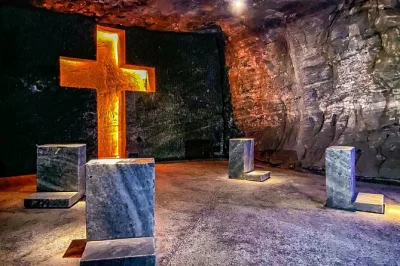
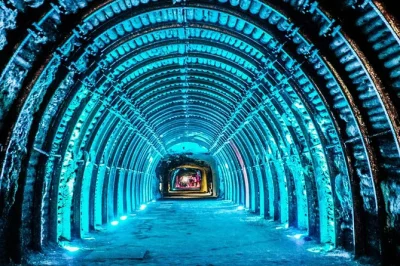
Driving north from Bogotá, you leave the city behind within minutes and head toward Zipaquirá, a town built on top of one of South America's oldest salt mines. The Salt Cathedral of Zipaquirá sits 180 meters underground — carved directly into the salt itself, with a nave, a cross, and an altar all hewn from the mineral walls. Your guide walks you through the tunnels, pointing out the way indigenous workers mined salt for centuries before the Spanish arrived, and how that same salt mine became a place of worship. The cathedral is lit from within, and the scale of it — the fact that it's a real church, not a museum display — hits differently when you're standing in it.
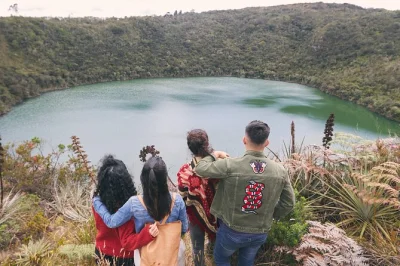
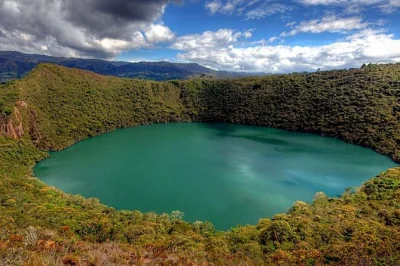
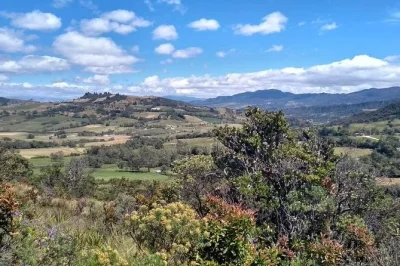
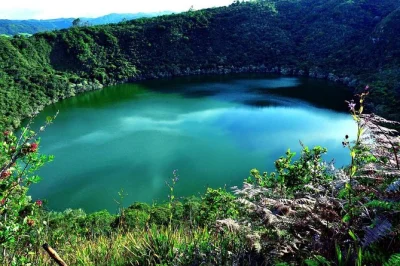
After the cathedral, you drive to Guatavita, a smaller town that sits above Lake Guatavita, the crater lake that inspired the legend of El Dorado. Your guide takes you up to the overlook and tells you the story: Spanish conquistadors heard rumors of a city of gold hidden in the lake, and some of them actually tried to drain it to find treasure. What they found instead was evidence of indigenous ritual — the lake was sacred, a place where the Muisca people made offerings to the gods. Standing at the edge of the crater, you can see why they believed something precious lay beneath the water. The landscape is quiet, high-altitude, and the view stretches across the mountains.
The day includes hotel pickup and drop-off from Bogotá, entry to both sites, and a guide who speaks your language (private tours come with a dedicated guide; shared tours are smaller groups). Lunch is optional — the restaurant at the site offers a menu of the day. The whole experience runs full-day, and you'll need to be reasonably comfortable with walking and altitude, though the paths are manageable for most fitness levels. A minimum of two people is required for the shared option to run; if you're traveling solo, you can book a private tour instead, or the operator will offer you a date change or full refund.

What’s included
- Your day includes hotel pickup and drop-off from Bogotá, entry to the Salt Cathedral of Zipaquirá and Lake Guatavita, all-risk insurance, and a guided tour (on private options).
- Lunch is available at the on-site restaurant for an additional cost.
- Public transportation is available nearby if you prefer to arrange your own transport.
Operated by Gran Colombia Tours
Is this one for you?Book this if you want to leave Bogotá for a full day without arranging your own transport or worrying about entry fees — the pickup, both tickets, and the guide handle the logistics, and the two-site structure means you see both the cathedral and the lake in one trip instead of planning separate outings.
Traveler reviews
Compare the 13 similar options
 Zipaquirá Salt Cathedral & Lake Guatavita from Bogotá★ 4.87 (105)10hEN · ESUS$ 128
 Zipaquira Salt Cathedral & Guatavita Lake tour with pickupFull-day tour from Zipaquira visiting the Salt Cathedral, Guatavita Colonial Town and mountain lake with hotel pickup and bilingual guide included★ 4.77 (262)11h–12hEN · ESUS$ 59View ›
 Zipaquirá Salt Cathedral day trip from Bogotá with pickupDay trip from Bogotá to the underground Zipaquirá Salt Cathedral 180 meters below ground, with hotel pickup★ 4.76 (76)9hEN · ESUS$ 45View ›
 Zipaquirá Salt Cathedral & Guatavita Lagoon Day TripFeel the mystery of Guatavita Lagoon and explore Zipaquirá’s underground Salt Cathedral on a guided day trip from Bogotá, with pickup and all tickets included.★ 4.78 (183)12hEN · ESUS$ 58View ›
 Bogotá: Guatavita Lagoon & Salt Cathedral Day TripFull-day tour from Bogotá to Lake Guatavita and Zipaquirá Salt Cathedral with local guide, lunch and hotel pickup. Includes 152-step hike, audio guide in English or Spanish.★ 4.62 (458)12h–13hEN · ESUS$ 99View ›
 Guatavita Lake & Salt Cathedral Private Day Tour from BogotáVisit Guatavita Lake and Zipaquirá Salt Cathedral on a private tour from Bogotá. Includes transport, lunch, and English guide. Book your spot now.★ 4.61 (38)8h–9hEN · ESUS$ 155View ›
 Zipaquirá Salt Cathedral tour from Bogotá: 180m undergroundTravel 180 meters underground to Colombia's only subterranean cathedral, carved entirely from salt and lit by sculpture and lighting design. Hotel pickup★ 4.96 (637)7hEN · ESUS$ 61View ›
 Zipaquira Salt Cathedral & Guatavita Lagoon from BogotaPrivate full-day tour from Bogota visiting the Salt Cathedral and Guatavita Lagoon. Explore underground salt chambers with audio guide★ 4.82 (150)10hEN · FR +1US$ 251View ›
 Zipaquirá Salt Cathedral tour from Bogotá: 8 hours with pickupEight-hour tour from Bogotá to the Salt Cathedral 180 meters underground in Zipaquirá, with air-conditioned transport, guide★ 4.88 (634)8hEN · ESUS$ 47View ›
 Bogotá: Zipaquirá Salt Cathedral & Lake Guatavita Day TripFull-day tour from Bogotá to Zipaquirá Salt Cathedral and Lake Guatavita with entry tickets, private transport, and dinner at Andres Carne de Res.★ 4.50 (20)10h–12hEN · ESUS$ 154View ›
 Zipaquirá Salt Cathedral: Day Trip from Bogotá with Audio GuideFeel the cool underground air of Zipaquirá’s Salt Cathedral on a day trip from Bogotá, with transport, entry tickets, and audio guide included. Flexible options.★ 4.91 (77)7h–8hUS$ 52View ›
 Bogotá: Zipaquirá Salt Cathedral & Colonial Town Day TripDay trip from Bogotá to Zipaquirá Salt Cathedral, 180m underground with colonial town walk and regional lunch. Roundtrip transport, bilingual guide, fast-track entry included.★ 4.67 (246)7h–8hEN · ESUS$ 66View ›
 Bogotá to Zipaquirá: Salt Cathedral Small Group Tour & EntryFeel the cool air of Zipaquirá’s Salt Cathedral on a small group tour from Bogotá, with direct transport, lunch, and a local host. Includes entry and pickup.★ 4.52 (254)8h–9hEN · ESUS$ 50View ›
Top questions
How long is the full day trip?
It's a full-day excursion from Bogotá. Hotel pickup and drop-off are included, and the drive to Zipaquirá takes roughly 45 minutes to an hour each way.
Is the Salt Cathedral accessible if I have mobility issues?
The cathedral involves walking through tunnels and some uneven salt surfaces. It's suitable for most fitness levels, but if you have specific mobility concerns, contact the guide the day before — they'll help assess what's possible.
Can I do this tour solo, or do I need a group?
The shared tour requires a minimum of two people. If you're traveling alone, you can book a private tour with a dedicated guide, or choose a different date for the shared option.
Is lunch included?
Lunch is optional. A menu of the day is available at the restaurant on-site, but you can choose to skip it or bring your own food.
What's the difference between private and shared tours?
Private tours include a dedicated guide for your group. Shared tours are smaller groups without a guide included, though entry, pickup, drop-off, and insurance are the same. Shared tours are also more affordable.
Do I need to be fit to do this tour?
It's suitable for all fitness levels. The cathedral walk is underground but not strenuous, and Lake Guatavita has a viewpoint accessible by a moderate walk. Altitude may affect some people — Bogotá sits at 2,640 meters.
What language is the guide?
The guide will be in your language on private tours. Contact the operator to confirm language availability for shared tours.
What's included in the price?
Entry to both the Salt Cathedral and Lake Guatavita, hotel pickup and drop-off, all-risk insurance, and a guide (on private tours). Lunch is optional.
Zipaquirá Salt Cathedral & Lake Guatavita from Bogotá
10h · EN · ES · at your hotel
from US$ 128 per person
★★★★★★★★★★4.87105 reviewsVerified traveler reviews via our booking provider
