
Plovdiv Old Town Walking Tour: Roman Theatre & Revival Houses
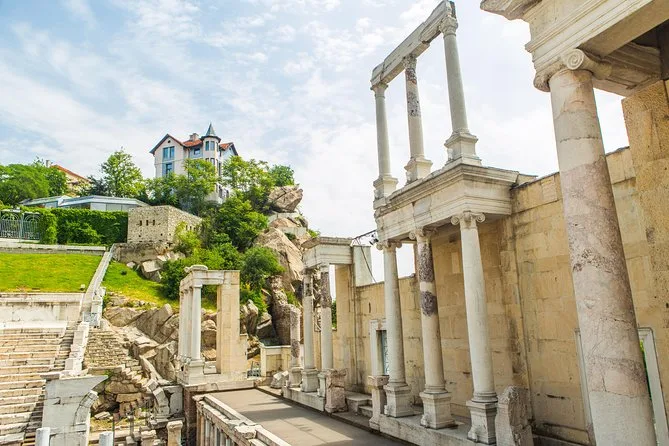
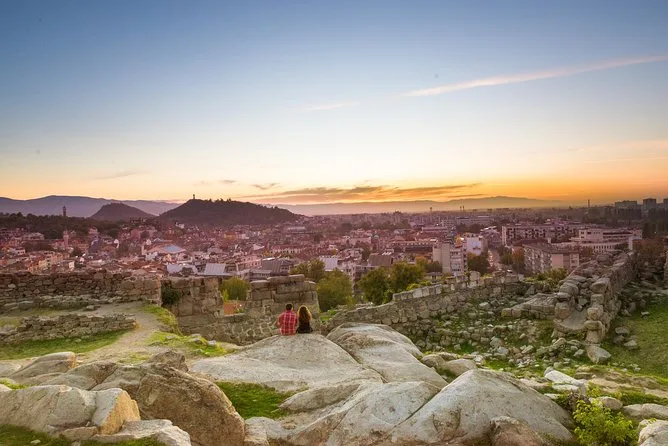
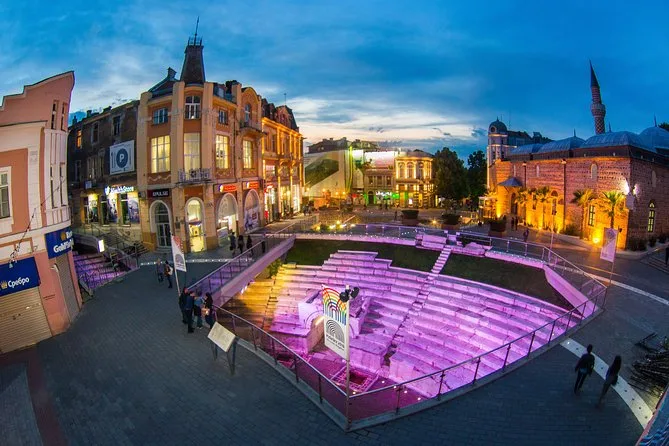
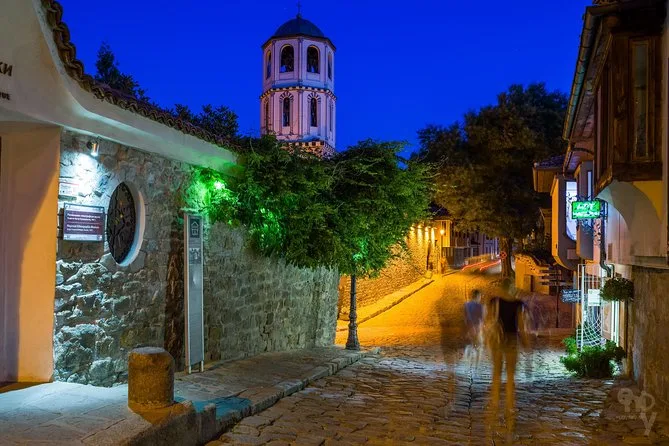

Stand inside the Roman theatre where gladiators once fought, then climb to fortress ruins for a view across three hills.
A walking tour of Plovdiv's central area with a local guide covering ancient Roman and Thracian ruins, Bulgarian Revival architecture, and the city's layered history across two to three hours. The guide speaks English, Spanish, Italian or French; pickup is included and children from age one are welcome. All fitness levels suit the pace, though steep terrain makes it challenging for those with mobility concerns.
 2h–3h
2h–3h

Step-by-step itinerary
Explore Plovdiv's central landmarks
- Visit Tsar Simeon Garden
- See Stadium of Trimontium ruins
- Walk through Plovdiv Old Town
- Explore Roman Theatre
- Visit Church of Constantine and Helena
- Pass by medieval Hisar Kapia gate
- Tour Plovdiv Regional Ethnographic Museum
- Climb Nebet Tepe hill ruins
- Visit Balabanov House museum
- Explore Hindliyan House museum
- Stroll through Kapana art district

The Experience
You arrive in Plovdiv with a free afternoon and no plan to build. The guide meets you and walks the central area where the city's defining landmarks cluster close enough to see on foot. You start in Tsar Simeon Garden, a park built around statues, fountains and memorials that opens onto the Main Street, then move through the Old Town's three hills—Dzhambaz Tepe, Taksim Tepe and Nebet Tepe—where layers of settlement stack from Copper Age foundations through Roman occupation to the 19th-century Revival period.
The Roman Theatre anchors the route. Built in the 1st century AD in the saddle between two hills, it still holds 5,000 to 7,000 people and hosts the Opera Open festival each summer. Inscriptions carved into the seats mark where high-status Romans sat; the theatre also served as the seat of the Thracian Provincial Assembly. Next to it stands the Stadium of Trimontium, one of the largest Roman structures on the Balkan peninsula—240 metres long, 50 metres wide, built under Emperor Hadrian. Most of it lies buried under the city now, but the northern section is uncovered, and a scale model shows how it stood when it could seat 30,000 spectators for games like the Pythian Games in Greece.
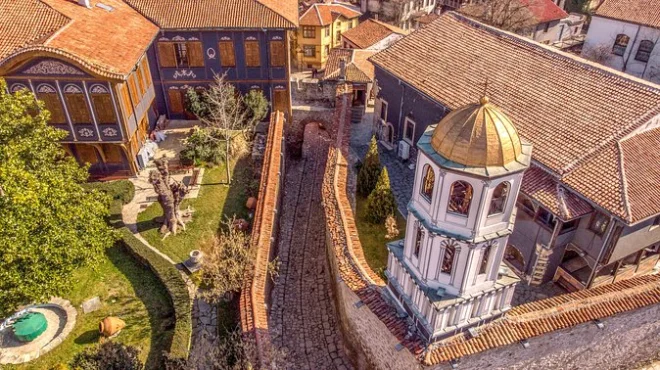
You walk Revival-period houses that function as museums: the Hindliyan House, built 1835–1840 by a merchant, has hand-painted landscapes on its walls depicting Stockholm, Lisbon, Saint Petersburg and Venice—likely copied from postcards he brought home—and the only preserved bathroom in the Old Town with running hot and cold water. Balabanov House displays modern Bulgarian art on the ground floor and late Baroque furniture upstairs, each ceiling carved differently. The Regional Ethnographic Museum holds 40,000 objects—furniture, instruments, clothing, pottery, tools—that document how people lived here across centuries. The medieval Hisar Kapia gate, built in the 11th century on Roman foundations, frames the eastern entrance to the old acropolis. From Nebet Tepe, the northernmost hill, you see the fortress ruins and a panoramic view across the city's eastern, northern and western sides.
Kapana, the art district, closes the walk. A labyrinth of cobblestoned streets lined with workshops, galleries, cafes and street art, it grew from a 15th-century craftsmen's quarter into a hub for contemporary artists. The guide speaks one of four languages; pickup from your hotel is arranged before you book.

What’s included
- Local guide in your choice of English, Spanish, Italian or French.
- hotel pickup.
- access to all landmarks on the route including the Roman Theatre, Stadium of Trimontium, Hisar Kapia gate, Revival-period house museums and Nebet Tepe fortress ruins.
Operated by Enjoy Plovdiv
Is this one for you?If you land in Plovdiv with a free afternoon and no transport arranged, this tour solves the logistics—pickup is set, the route is planned and a guide who knows the city's layers handles the stops. You walk at a pace that lets you stand inside each place instead of rushing past it.
Traveler reviews
More experiences you might like
 Plovdiv Old Town Walking Tour: Roman Theatre & Revival Houses★ 5.00 (1)2h–3hEN · IT +2US$ 88
 Plovdiv Old Town: Self-Guided Audio Tour & Map in 9 LanguagesExplore Plovdiv’s Roman Theater, ancient hills, and colorful houses at your own pace with a self-guided audio tour and map. Includes access in 9 languages.★ 4.50 (6)2h–3hUS$ 8.20View ›
 Day Trip: Thracian Tombs & Rose Valley Tour from PlovdivVisit the Valley of the Thracian Kings and Rose Valley on a day trip from Plovdiv. Explore ancient tombs, taste rose products, and learn local traditions.★ 4.33 (3)5h–7hEN · IT +2US$ 228View ›
Top questions
What is the Roman Theatre in Plovdiv and why does it matter?
The Roman Theatre is a 1st-century AD structure built between two of the Old Town's three hills, one of the best-preserved theatres in the world. It held 5,000 to 7,000 spectators for theatre performances, gladiator games and hunting spectacles, and still hosts the Opera Open festival and other cultural events today. Inscriptions on the seats show it was also used as the seat of the Thracian Provincial Assembly.
Can I climb to the fortress ruins and see a view of the whole city?
Yes. Nebet Tepe, the northernmost of the three hills, has the ruins of Plovdiv's oldest settlement, founded in the Copper Age and later the Thracian city of Eumolpia. The fortress ruins are accessible to visitors and offer a panoramic view of the eastern, northern and western sides of Plovdiv.
What will I see inside the Revival-period houses?
The Hindliyan House displays hand-painted wall murals of European cities, intricate Neo-Baroque ceilings and the only preserved bathroom in the Old Town with running hot and cold water. Balabanov House shows modern Bulgarian art on the ground floor and late Baroque furniture upstairs, with unique carved ceilings in each room. Both are stunning examples of 19th-century merchant architecture.
How long does the tour take and what's included?
The tour runs two to three hours with a local guide who speaks English, Spanish, Italian or French. Pickup from your hotel is included; children from age one are welcome, and the pace suits all fitness levels, though steep terrain in the Old Town makes it difficult for those with mobility concerns.
What is Kapana and why is it part of the walk?
Kapana, also called the Trap, is Plovdiv's art district—a labyrinth of cobblestoned streets lined with artist workshops, galleries, cafes and street art. It emerged as a centre for craftsmen in the 15th century and has grown into a hub for contemporary artists; the building facades themselves are painted works of art that change constantly.
Will I learn about Bulgaria's rural past on this tour?
Yes. The Regional Ethnographic Museum, housed in an ornate Revival-period building, holds 40,000 cultural artifacts—furniture, musical instruments, clothing, pottery and household tools—that show how people lived in this region across centuries, offering a window into Bulgaria's rural lifestyle and traditions.
Plovdiv Old Town Walking Tour: Roman Theatre & Revival Houses
2h–3h · EN · IT +2 · at your hotel
from US$ 88 per person
★★★★★★★★★★5.001 reviewVerified traveler reviews via our booking provider
