
Huayna Potosí 3-Day Climb: La Paz to 6,088m Summit


The Mountain You Can See from La Paz — and Climb in Three Days
You leave La Paz at 9 a.m., drive three hours to base camp at 4,700 meters, and practice on the glacier that afternoon. Day two is a four-hour walk to high camp at 5,200 meters. Day three starts at 1 a.m., summits at 6,088 meters around sunrise, and returns you to the city by early afternoon. Your guide, all climbing gear, two nights in shelter, and meals are included; acclimatization and rope work are taught on the mountain itself.
 3d
3d

Step-by-step itinerary
Day 1 — Travel to base camp and acclimatize
- Start at office at 9:00 a.m.
- Drive from La Paz to El Alto
- Stop for panoramic photo in El Alto
- Continue to base camp via Milluni lagoon
- Arrive at base camp and have lunch
- Practice on old glacier for acclimatization
- Sleep at base camp (4700 m)
Day 2 — Hike to high camp at 5200 m
- Have breakfast at base camp
- Check equipment with guides
- Wait at base camp until lunch
- Hike 4 hours to high camp with equipment
- Dinner at high camp at 5:30 p.m.
- Rest for summit climb
Day 3 — Summit climb and return to La Paz
- Wake up at 1:00 a.m. and prepare equipment
- Have breakfast
- Climb 6 hours to summit
- Enjoy summit views at 6088 m
- Descend 2 hours to high camp
- Descend 1.5 hours to base camp
- Return to La Paz, arrive around 13:30

The Experience
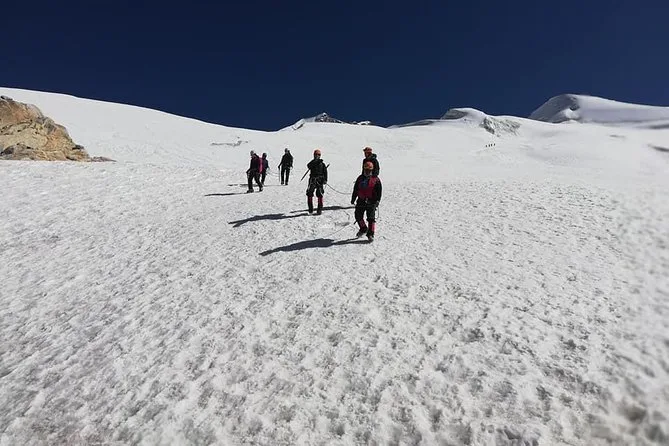
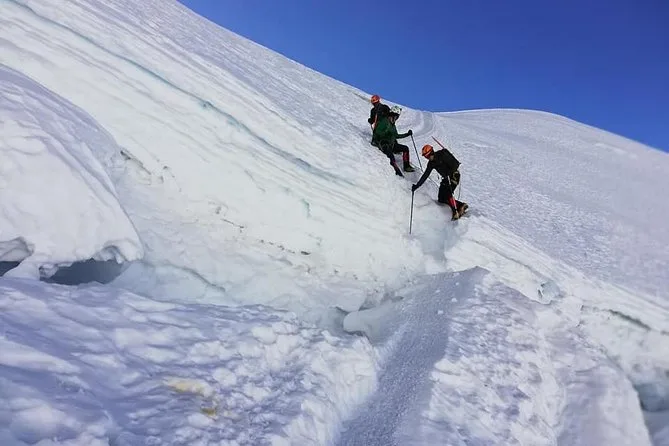
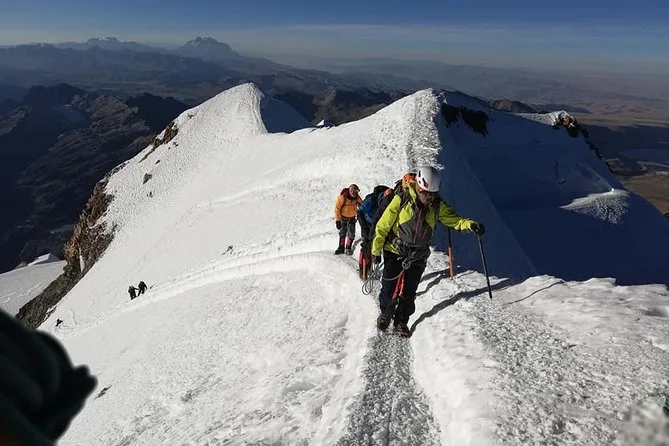
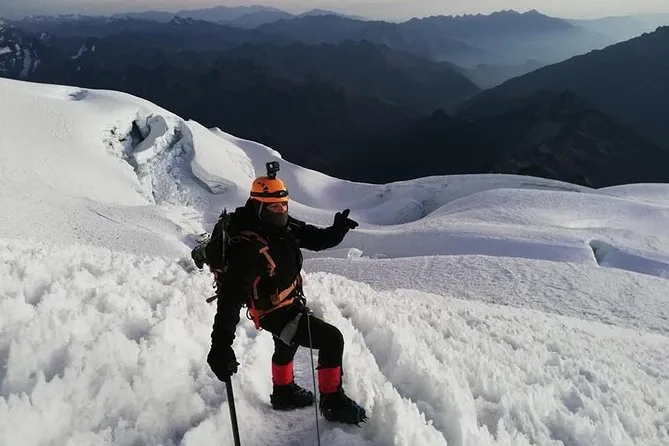
You're standing in La Paz at 3,640 meters, and there it is on the horizon: Huayna Potosí, a white peak rising another 2,400 meters into the thin air of the Cordillera Real. The climb starts at 9 a.m. from the office, and the first three hours are just driving — out of the city toward Zongo, past El Alto at 4,050 meters, then along Milluni lagoon where the landscape opens up and the mountain gets closer. By noon you're at base camp, 4,700 meters, eating lunch and meeting your guide. The real work begins that afternoon: a practice session on the old glacier to learn how to move on snow and ice, how to use crampons, how to trust the rope. It sounds technical, but it's not — Huayna Potosí has the infrastructure for this. Pre-established camps, fixed routes, guides who do this climb dozens of times a year. You sleep at base camp that first night, already higher than most people ever go.
Day two is the long walk. After breakfast and a gear check with your guide — the kind where you actually verify everything is packed — you have lunch and then spend four hours moving uphill with your backpack to Campo Alto at 5,200 meters. It's steady, not rushed. Dinner is around 5:30 p.m., and then the goal is sleep, though at that altitude sleep is lighter than you'd expect. The mountain doesn't feel real yet; it's just the next camp, the next morning.
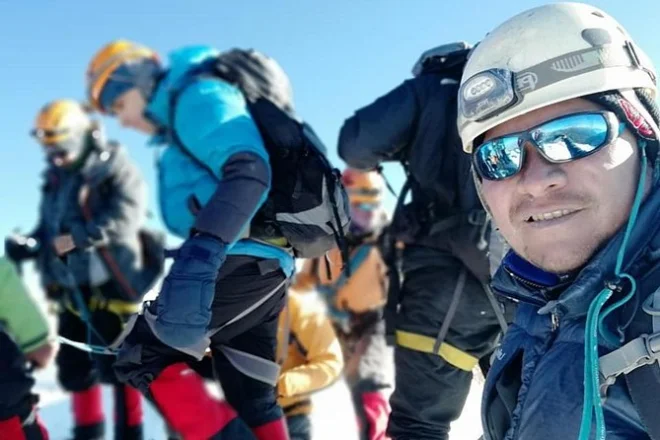
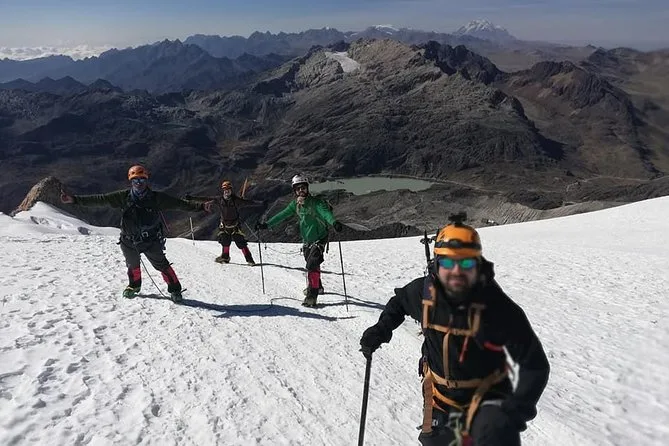
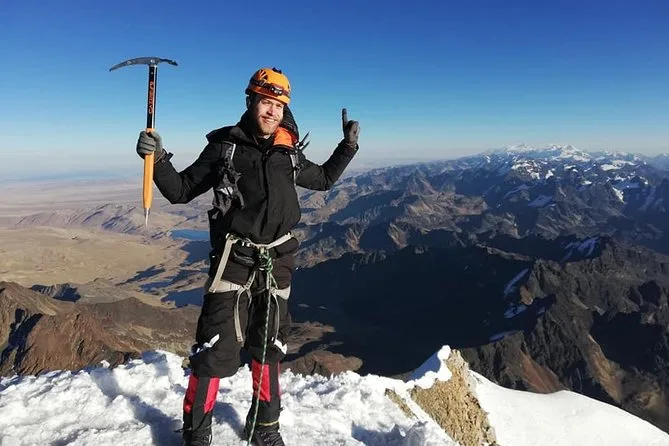
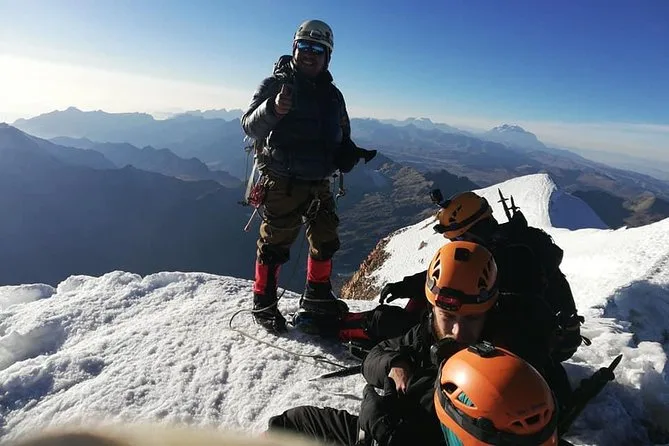
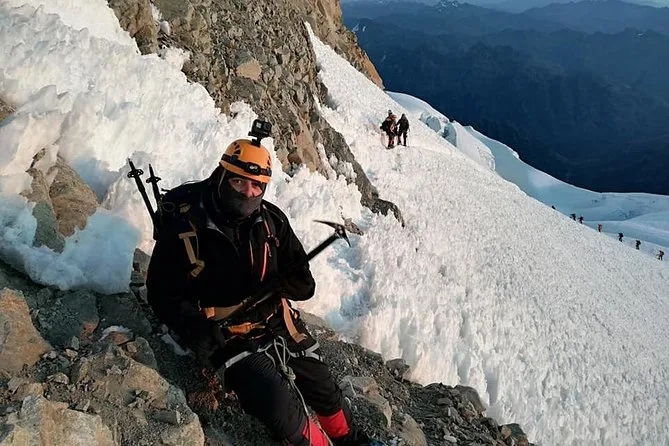
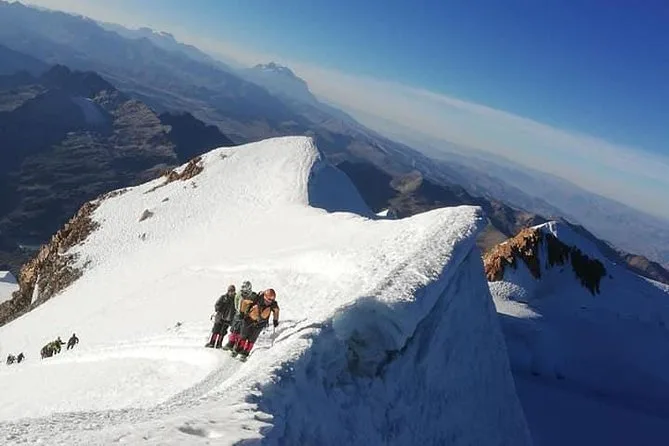
You wake at 1 a.m. on day three. The cold is sharp. You eat breakfast in the dark, strap on your full climbing kit — harness, helmet, crampons — and start moving toward the summit around 2 a.m. Six hours of ascent, mostly on snow and ice, with your guide managing the rope and the pace. The sun rises as you climb, and you reach the top together, 6,088 meters, with the whole Altiplano spreading below you. Then the descent: two hours back to Campo Alto, another hour and a half down to base camp, and then the drive back to La Paz, arriving around 1:30 p.m. You're done by early afternoon on the third day.
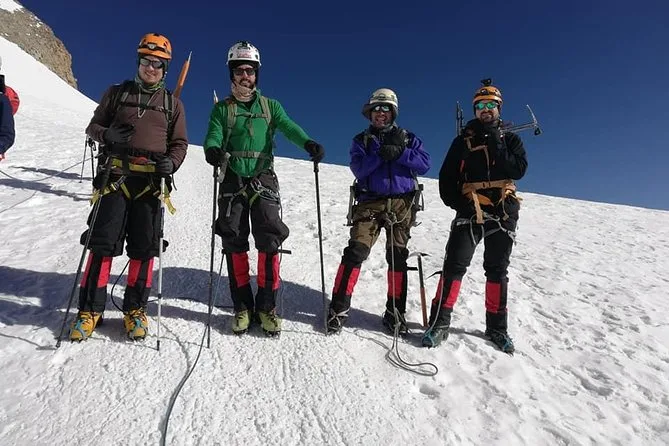
The climb is popular because it works. The acclimatization routine — base camp, then high camp, then summit push — is the same system used on bigger mountains. Your guide is with you the whole way, one professional for every two climbers. The equipment is provided: ice axe, crampons, harness, rope, helmet. Food is included if your group is three people or more. You don't need to be a technical climber; you need to be willing to move slowly, breathe deliberately, and trust the process. The mountain is visible from La Paz, but that doesn't make it easy. It makes it real.

What’s included
- Transport from La Paz to base camp and back to the city.
- all climbing equipment (ice axe, crampons, harness, helmet, rope).
- professional climbing guide (one guide for every two climbers).
- two nights in mountain shelter.
- meals including lunch on day one, dinner and breakfast at high camp, and breakfast before the summit push (food is provided if your group is three people or more).
Operated by SouthTreks
Is this one for you?Right for climbers who want to reach 6,000+ meters without technical expertise and don't want to arrange transport, gear, or acclimatization logistics themselves — the three-day structure and pre-established camps handle the planning, leaving you to focus on the climb.
Traveler reviews
Compare the 5 similar options
 Huayna Potosí 3-Day Climb: La Paz to 6,088m Summit★ 4.85 (158)3dEN · ESUS$ 327
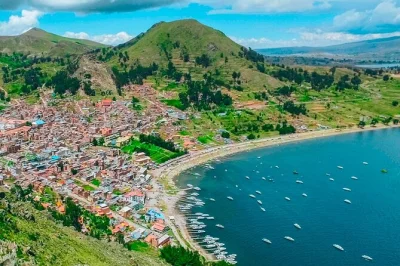 Copacabana & Isla del Sol day trip: Boat to Sun TempleFull-day tour from La Paz to Copacabana and Isla del Sol with bilingual guide, hotel pickup, boat transport and lunch stop★ 4.79 (811)16hEN · ESUS$ 59View ›
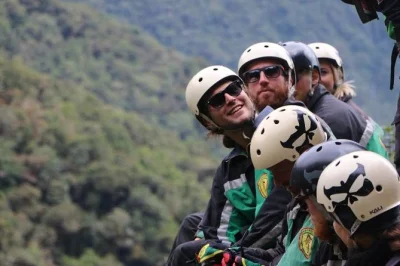 Death Road bike tour from La Paz: 64km descent with guidesRide the 64km Death Road descent from La Paz with a guide, full safety gear and lunch included—start on tarmac above the clouds, finish in the jungle at 1200m lower.★ 4.96 (990)1dEN · ESUS$ 90View ›
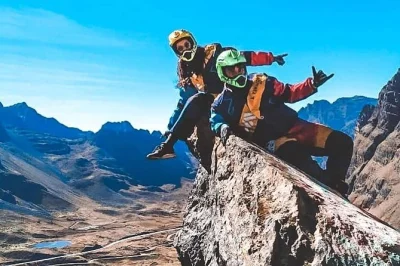 La Paz: Death Road Bike Tour & Coroico DescentDeath Road biking tour from La Paz with professional guides, equipment, lunch at Dos Rios hotel and shower access. 3,600m to 1,200m descent through Bolivian jungle.★ 4.94 (3,751)1dEN · DE +1US$ 156View ›
 La Paz half-day tour: Valle de las Ánimas & Moon ValleyHalf-day tour of La Paz visiting Valle de las Ánimas, Moon Valley and Killi Killi Viewpoint with private transport and live guide in English or Spanish★ 4.89 (82)4h–5hEN · ESUS$ 85View ›
Top questions
Do I need climbing experience to climb Huayna Potosí?
No. The mountain is popular because it's one of the most accessible in Bolivia — no technical climbing required. Your guide teaches rope work and glacier movement during the acclimatization practice on day one.
What is the altitude, and how much does altitude sickness matter?
The summit is 6,088 meters (19,974 feet). The itinerary includes two nights at altitude before the summit push, which is the standard acclimatization approach. Fitness matters more than experience; poor cardiovascular health is not recommended.
How long is the actual climbing on day three?
About six hours from high camp to the summit, starting at 1 a.m. The descent takes roughly three and a half hours total back to base camp, then you drive to La Paz, arriving around 1:30 p.m.
What's included, and what do I need to bring?
Included: transport from La Paz, all climbing equipment (ice axe, crampons, harness, helmet, rope), professional guide (one guide per two climbers), two nights in shelter, and food (if your group is three or more). Bring warm clothes, a sleeping bag, and personal items.
Can I see Huayna Potosí from La Paz before I climb it?
Yes. The mountain is visible from the city. On day one, there's a panoramic photo stop in El Alto where you can see it before driving to base camp.
Is this a group climb or private?
Groups are managed with one guide per two climbers. The reference doesn't specify maximum group size, so confirm the group composition when booking.
When do I return to La Paz?
Day three, around 1:30 p.m., after the descent and the drive from base camp.
Huayna Potosí 3-Day Climb: La Paz to 6,088m Summit
3d · EN · ES
from US$ 327 per person
★★★★★★★★★★4.85158 reviewsVerified traveler reviews via our booking provider
