
San Antonio Missions: Private UNESCO Tour & Local History
 Super deal


Summary
Walk centuries-old missions with real stories and quiet corners
You’ll walk through San Antonio’s historic missions with a local guide who knows every detail (and tells stories you won’t find on plaques). Step inside centuries-old churches, see original frescoes up close, touch ancient stone walls, and hear about life between friars and Coahuiltecan families. Includes transport so you can relax and just take it all in.
 2h
2h

Step-by-step itinerary
Day 1 — Explore San Antonio Spanish Missions
- Visit Mission Espada and interior
- Tour Mission San Juan and museum
- Explore Mission San José and church
- See Mission Concepción and fresco
- Drive past oldest Spanish Aqueduct

Top questions

How long does the private UNESCO missions tour take?
The tour covers several missions and takes most of a day including transportation between sites.
Which San Antonio missions are included on this tour?
You’ll visit Mission Espada, Mission San José (“Queen of the Missions”), and Mission Concepción.
Is transportation included on this San Antonio missions tour?
Yes, transportation between mission sites is included for your group.
Are children or infants allowed on this tour?
Yes, infants and small children can join; strollers or prams are welcome.
What will I learn during this private missions tour?
You’ll hear stories about mission life, architecture, construction techniques, cultural relationships between friars and indigenous peoples, plus WPA restoration history.
Is lunch included on this San Antonio missions tour?
No lunch is provided on this tour; bottled water is included.
Can people with limited mobility join?
The tour is suitable for most fitness levels but may not be recommended for travelers with poor cardiovascular health due to some walking involved.

What’s included
Your day includes pickup and comfortable transportation between San Antonio’s UNESCO-listed missions plus bottled water throughout—so you can focus on listening to stories from your local guide without worrying about logistics or parking hassles along the way.

The first thing I noticed was the way the morning light hit the stone walls at Mission Espada — kind of golden, but not showy. We’d barely stepped out of the van when Michael, our guide (he’s got this dry humor that sneaks up on you), started talking about why these missions were built here in San Antonio in the first place. I could smell mesquite in the air and, honestly, I kept touching the rough limestone — I don’t know, it just felt grounding. There were only a few other people around; it almost felt like we’d stumbled onto something secret, even though this is a UNESCO site.
We moved on to Mission San José after just a short drive — maybe five minutes? This one’s called the “Queen of the Missions,” and yeah, it’s bigger and more restored than Espada. Inside, Michael pointed out details in the church that I would’ve missed: carvings above doorways, old graffiti scratched into plaster by kids who lived here centuries ago. He told us about how indigenous Coahuiltecan families lived alongside Franciscan friars and Spanish soldiers — not always peacefully. The WPA restoration from the 1930s came up too (I didn’t expect to care about New Deal history in Texas, but here we are). At some point I caught myself staring at a patch of shade under an oak tree, thinking about what it must’ve been like to live here with all those rules and rituals.
Mission Concepción was my favorite — partly because Michael let us linger inside longer than usual. There’s this 250-year-old fresco that’s faded but still there if you squint just right. It smelled faintly of candle wax and old stone; someone was quietly praying in a pew nearby. Michael showed us an “ocular display” (I still don’t totally get what that means), but he seemed genuinely excited about it so we all leaned in anyway. He also mentioned a couple architectural quirks but made us promise not to spoil them for future visitors — which made me laugh because who would I even tell?
We finished by driving past the oldest Spanish aqueduct in the US — Michael explained how it worked with acequias to irrigate fields back then. Honestly, by this point my brain was full but in a good way. It wasn’t just facts; it was little moments: cool stone under my hand, Michael’s voice echoing off domed ceilings, imagining kids running through dusty courtyards three hundred years ago. I still think about that quiet inside Mission Concepción sometimes when things get loud back home.
Similar tours
 San Antonio Missions & City Tour: Private SUV, Pearl District
★★★★★★★★★★ 4.98 (263) From US$ 199
San Antonio Missions & City Tour: Private SUV, Pearl District
★★★★★★★★★★ 4.98 (263) From US$ 199
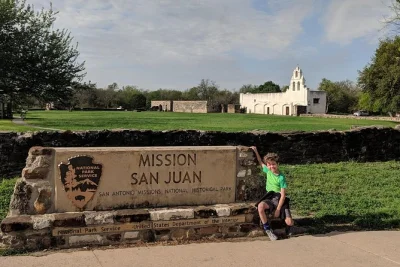 San Antonio Missions: Small Group Tour & Park Ranger Walk
★★★★★★★★★★ 4.91 (287) From US$ 75
San Antonio Missions: Small Group Tour & Park Ranger Walk
★★★★★★★★★★ 4.91 (287) From US$ 75
 San Antonio: Private Historic Tour by Electric Shuttle
★★★★★★★★★★ 4.85 (120) From US$ 99
San Antonio: Private Historic Tour by Electric Shuttle
★★★★★★★★★★ 4.85 (120) From US$ 99
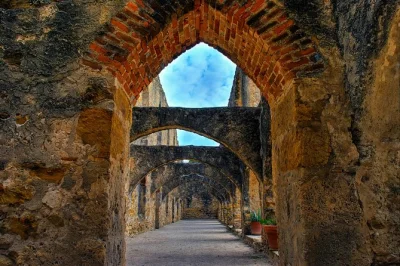 San Antonio Missions Tour: UNESCO Sites & Alamo Drop-Off
★★★★★★★★★★ 4.64 (1041) From US$ 75
San Antonio Missions Tour: UNESCO Sites & Alamo Drop-Off
★★★★★★★★★★ 4.64 (1041) From US$ 75
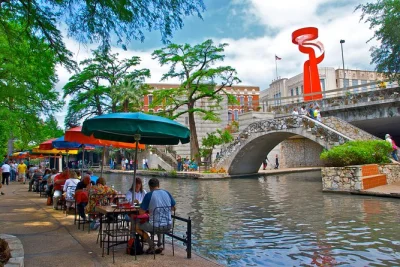 San Antonio: Full-Day City Tour with 60+ Sites & Pickup
★★★★★★★★★★ 4.83 (383) From US$ 119
San Antonio: Full-Day City Tour with 60+ Sites & Pickup
★★★★★★★★★★ 4.83 (383) From US$ 119
 San Antonio: Alamo Tour, Tower of the Americas & River Walk Cruise
★★★★★★★★★★ 4.74 (1142) From US$ 159
San Antonio: Alamo Tour, Tower of the Americas & River Walk Cruise
★★★★★★★★★★ 4.74 (1142) From US$ 159
 San Antonio Day Tour from Austin: Alamo, River Walk & Cruise
★★★★★★★★★★ 4.94 (109) From US$ 269
San Antonio Day Tour from Austin: Alamo, River Walk & Cruise
★★★★★★★★★★ 4.94 (109) From US$ 269
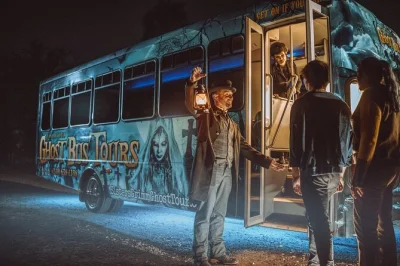 San Antonio: Haunted Ghost Bus Tour & Menger Hotel Entry
★★★★★★★★★★ 4.70 (1037) From US$ 55
San Antonio: Haunted Ghost Bus Tour & Menger Hotel Entry
★★★★★★★★★★ 4.70 (1037) From US$ 55
 San Antonio: Downtown & Riverwalk Walking Tour Stories
★★★★★★★★★★ 4.89 (194) From US$ 39
San Antonio: Downtown & Riverwalk Walking Tour Stories
★★★★★★★★★★ 4.89 (194) From US$ 39
 San Antonio: Night Driving Tour & Riverwalk Cruise with Tower Views
★★★★★★★★★★ 4.62 (312) From US$ 139
San Antonio: Night Driving Tour & Riverwalk Cruise with Tower Views
★★★★★★★★★★ 4.62 (312) From US$ 139
 San Antonio: Alamo, River Walk Cruise & Cathedral Tour
★★★★★★★★★★ 4.99 (104) From US$ 169
San Antonio: Alamo, River Walk Cruise & Cathedral Tour
★★★★★★★★★★ 4.99 (104) From US$ 169
 Fredericksburg Wine Tour from San Antonio: Small Group & Tastings
★★★★★★★★★★ 4.91 (294) From US$ 179
Fredericksburg Wine Tour from San Antonio: Small Group & Tastings
★★★★★★★★★★ 4.91 (294) From US$ 179


 Do you need help planning your next activity?


