
NYC: Stonewall Inn & LGBTQ History Walking Tour
 Super deal


Summary
Walk through stonewall inn pride sites stories lgbtq nyc
You’ll walk New York’s Greenwich Village with a local guide who brings LGBTQ history to life—from Christopher Park to The Stonewall Inn and beyond. Hear stories behind street names, legendary bars like Julius’, and monuments that shaped Pride. Expect laughter, honest moments, and real connection as you retrace these powerful steps.
 1h 15m

Step-by-step itinerary
Day 1 — LGBTQ history and Stonewall sites tour
- Meet guide at Christopher Park
- Hear LGBTQ history overview
- Visit The Stonewall Inn
- Learn about Stonewall Uprising
- Stop at Oscar Wilde Memorial Bookshop site
- Hear about Craig Rodwell and activism
- See Gay Street sign
- Learn history of Gay Street sign
- Visit first Pride March start site
- Hear story of first Pride March and Rainbow Flag
- Stop at Julius Bar
- Learn about the first Sip In
- Visit Marie's Crisis
- Hear about Marie's Crisis and LGBTQ mainstream changes
- See Gay Liberation Monument
- Learn about LGBTQ rights and monument history

Top questions

Where does the NYC LGBTQ historical walking tour start?
The tour begins at Christopher Park in Greenwich Village.
Is this tour wheelchair accessible?
Yes, all areas and surfaces on this walking tour are wheelchair accessible.
Does the tour include The Stonewall Inn?
Yes, The Stonewall Inn is one of the main stops on this LGBTQ history walking tour.
Are infants or small children allowed on the tour?
Yes, infants under 2 join free; strollers are welcome throughout the route.
What language is the tour guided in?
The guided narration is provided in English only.
How long is the walk between sites?
The sites are all within easy walking distance in Greenwich Village; no long walks required.
Are service animals permitted?
Yes, service animals are allowed on this walking tour.

What’s included
Your day includes a guided walk through key LGBTQ landmarks like The Stonewall Inn and Julius Bar, with narration from an expert local guide starting at Christopher Park. Wheelchair access is available throughout; infants under two join free and strollers are welcome along all routes.

“You know, this corner used to feel dangerous,” our guide said as we gathered in Christopher Park, just across from The Stonewall Inn. I could hear a siren somewhere uptown and the usual city hum, but here it felt oddly quiet—like the park itself was listening in. Our group was a mix: two older guys holding hands, a mother with her teenage kid, me clutching my coffee tighter than I meant to. I didn’t expect to feel nervous, but maybe that’s part of walking through history you’ve only read about.
We shuffled over to The Stonewall Inn, and our guide started describing what happened in those early hours of June 28th, 1969. It wasn’t some grand speech—just honest details about fear and anger and people finally pushing back. Someone in our group asked if the bar inside still looks the same; our guide grinned and said, “Mostly sticky floors and cheap beer—some things don’t change.” I caught a whiff of something sweet from a bakery nearby mixing with old cigarette smoke drifting out the door. It made me think about how much has changed here—and how much hasn’t.
Later we stopped at Gay Street (yes, it’s really called that), where our guide explained how even street signs can become symbols when enough people care. At the spot where the first Pride March kicked off, he told us about Craig Rodwell and the Oscar Wilde Bookshop—how these places became safe havens when there weren’t many. There was a moment at Julius Bar where everyone laughed at some story about “the first Sip-In”—I won’t spoil it for you, but let’s just say activism sometimes involves martinis.
I still think about the statues at the Gay Liberation Monument—how their white stone looked almost soft in that afternoon light. It’s weirdly comforting knowing these stories are still being told right here on these streets. I guess that’s what this LGBTQ historical walking tour gives you: not just facts or dates but a sense of being part of something ongoing. And yeah—I left feeling different than when I arrived.
Similar tours
 Greenwich Village: Walking Food Tour & Washington Square Park
★★★★★★★★★★ 4.97 (1646) From US$ 99
Greenwich Village: Walking Food Tour & Washington Square Park
★★★★★★★★★★ 4.97 (1646) From US$ 99
 Greenwich Village: Walking Tour, Stonewall & Washington Square
★★★★★★★★★★ 4.92 (98) From US$ 39
Greenwich Village: Walking Tour, Stonewall & Washington Square
★★★★★★★★★★ 4.92 (98) From US$ 39
 New York: 9/11 Memorial, Museum & One World Observatory Tour
★★★★★★★★★★ 4.87 (5051) From US$ 109
New York: 9/11 Memorial, Museum & One World Observatory Tour
★★★★★★★★★★ 4.87 (5051) From US$ 109
 NYC: 9/11 Memorial Tour, Museum & One World Access
★★★★★★★★★★ 4.97 (802) From US$ 32
NYC: 9/11 Memorial Tour, Museum & One World Access
★★★★★★★★★★ 4.97 (802) From US$ 32
 Manhattan: Wall Street & 9/11 Memorial Walking Tour
★★★★★★★★★★ 4.94 (464) From US$ 39
Manhattan: Wall Street & 9/11 Memorial Walking Tour
★★★★★★★★★★ 4.94 (464) From US$ 39
 NYC: Wall Street, 9/11 Memorial & Lower Manhattan Walk
★★★★★★★★★★ 4.99 (225) From US$ 39
NYC: Wall Street, 9/11 Memorial & Lower Manhattan Walk
★★★★★★★★★★ 4.99 (225) From US$ 39
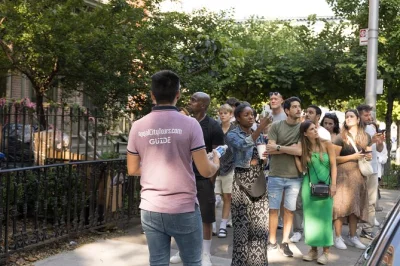 New York Boroughs: Manhattan, Bronx, Queens & Brooklyn Tour
★★★★★★★★★★ 4.61 (146) From US$ 69
New York Boroughs: Manhattan, Bronx, Queens & Brooklyn Tour
★★★★★★★★★★ 4.61 (146) From US$ 69
 Central Park: Pedicab Private Tour with Local Stories
★★★★★★★★★★ 4.97 (8184) From US$ 42
Central Park: Pedicab Private Tour with Local Stories
★★★★★★★★★★ 4.97 (8184) From US$ 42
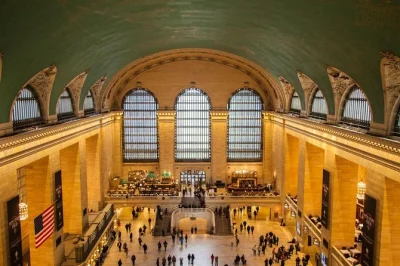 New York: Grand Central Secrets Walking Tour & Hidden Bars
★★★★★★★★★★ 4.86 (1968) From US$ 39
New York: Grand Central Secrets Walking Tour & Hidden Bars
★★★★★★★★★★ 4.86 (1968) From US$ 39
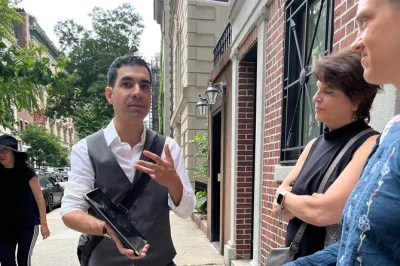 New York: Gilded Age Mansions Tour with Inside Access
★★★★★★★★★★ 4.84 (1295) From US$ 40
New York: Gilded Age Mansions Tour with Inside Access
★★★★★★★★★★ 4.84 (1295) From US$ 40
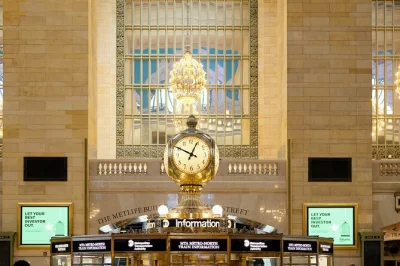 NYC: Grand Central Terminal Tour & Secret Spots Walk
★★★★★★★★★★ 4.84 (584) From US$ 39
NYC: Grand Central Terminal Tour & Secret Spots Walk
★★★★★★★★★★ 4.84 (584) From US$ 39
 NYC: Hamilton & Washington Walking Tour with Historian
★★★★★★★★★★ 5.00 (206) From US$ 52.95
NYC: Hamilton & Washington Walking Tour with Historian
★★★★★★★★★★ 5.00 (206) From US$ 52.95


 Do you need help planning your next activity?


