
Istanbul Sultanahmet: Private Walking Tour with Flexible Stops


Summary
Walk Sultanahmet’s old streets, stories and secrets with a local
You’ll wander Istanbul’s Sultanahmet district with a private guide who adjusts everything to your pace—whether you want extra time in Hagia Sophia or a detour for Turkish tea. Expect stories at Topkapi Palace, quiet moments inside Blue Mosque, and time for people-watching in bustling squares. You’ll leave with more than photos—a sense of what makes this city tick.
 4h–8h
4h–8h

Step-by-step itinerary
Day 1 — Explore Sultanahmet's historic landmarks
- Visit German Fountain
- Walk through Sultanahmet District
- Explore Sultanahmet Square
- See Hippodrome Square
- Tour Hagia Sophia Mosque
- Visit Blue Mosque
- Skip one mosque to visit Basilica Cistern
- Tour Topkapi Palace
- Shop at Grand Bazaar

Top questions

How long does the private Sultanahmet walking tour take?
The tour typically lasts a full day but timing is flexible based on your preferences and pace within Sultanahmet.
Are entry fees included for Hagia Sophia or Topkapi Palace?
No, entry fees are not included; your guide helps arrange tickets but you pay separately at each site.
Is hotel pickup included in this tour?
No hotel pickup is included; you meet your licensed guide directly in Sultanahmet District.
Can you skip lines at Hagia Sophia or Blue Mosque?
No skip-the-line service is available for active mosques or Hagia Sophia; guides do not have priority access there.
Is this tour suitable for travelers with limited mobility?
The walking tour covers uneven surfaces and long distances; it may not be suitable for those with spinal injuries or poor cardiovascular health.
What happens if Grand Bazaar is closed?
If Grand Bazaar is closed (Sundays), your guide can replace it with Spice Market or another local alternative.
Is public transportation nearby?
Yes, public transportation options are available close to Sultanahmet District where the tour begins.
Are service animals allowed on this tour?
Yes, service animals are allowed during this private walking tour.

What’s included
Your day includes an expert licensed guide just for your group throughout Sultanahmet, flexible timing at each landmark like Hagia Sophia and Topkapi Palace, insider recommendations for dining or hidden corners along the way, plus personalized route planning so you can focus on what interests you most before finishing right where you want in Istanbul’s old city.

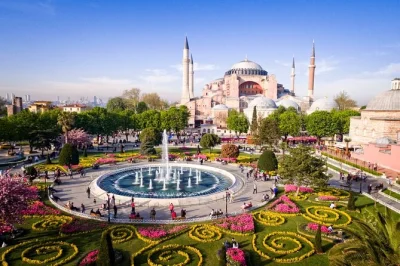
“You see that fountain?” our guide, Cem, asked as we stood in front of the German Fountain in Sultanahmet Square. I was still trying to take in the morning—spiced air from a simit vendor, a couple of stray cats weaving around my ankles, and the faint call to prayer echoing somewhere behind the tram line. Cem grinned and told us how the fountain was a gift from Kaiser Wilhelm II. I’d never thought much about why it looked so out of place here until he pointed out the mosaic ceiling—green and gold tiles catching the light. Istanbul really does layer its history like baklava.
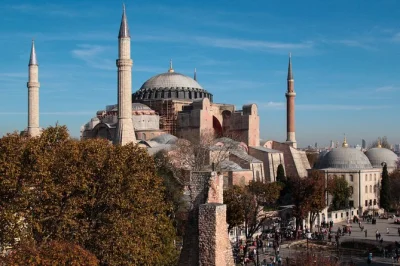
We wandered through the Sultanahmet District at our own pace (which meant stopping every five minutes because I kept getting distracted by little details—like a woman balancing trays of tea with one hand while texting with the other). Cem didn’t mind. He just adjusted our route as we went, letting us linger at the Hippodrome while he described chariot races and then steering us toward Hagia Sophia. The line for security was already curling around itself—he warned us about this—but honestly, it gave me time to watch people: families in matching outfits, old men arguing quietly about football, tourists like us craning their necks for photos. Inside Hagia Sophia, I tried to imagine what it must’ve sounded like centuries ago when it first opened as a church. The hush inside felt thick—like velvet almost.
Istanbul’s weather can be moody; that day it was warm but not hot, and there was this salty breeze coming off the Bosphorus when we stepped out toward the Blue Mosque. Cem explained why everyone calls it blue (it’s those tiles inside), and I tried to say “Sultanahmet Camii” properly—he laughed and said my accent made it sound Greek. We skipped one mosque so we could squeeze in the Basilica Cistern instead (totally worth it—the columns down there look like something out of a dream). By midday my feet were sore but I didn’t care; every corner seemed to have another story or smell or color waiting.
Topkapi Palace was our last big stop before heading into the Grand Bazaar (which is closed on Sundays—Cem had warned us). My head was spinning from all those rooms full of jewels and swords and handwritten letters from sultans. At some point I realized I’d stopped taking photos—I just wanted to look around without thinking about Instagram for once. We finished over tea near Sultanahmet Square, watching people drift by under plane trees. It’s funny how you come for the famous sights but end up remembering small things—the sound of slippers on marble floors or how Cem always seemed to know when we needed a break.
Similar tours
 Istanbul: Small-Group Walking Tour & Secret Streets
★★★★★★★★★★ 4.82 (208) From US$ 89.28
Istanbul: Small-Group Walking Tour & Secret Streets
★★★★★★★★★★ 4.82 (208) From US$ 89.28
 Istanbul: Private Sultanahmet Tour with Fast Track Tickets
★★★★★★★★★★ 4.82 (324) From US$ 60
Istanbul: Private Sultanahmet Tour with Fast Track Tickets
★★★★★★★★★★ 4.82 (324) From US$ 60
 Istanbul: Private Landmarks Tour with Hagia Sophia & Bazaar
★★★★★★★★★★ 4.95 (1374) From US$ 85
Istanbul: Private Landmarks Tour with Hagia Sophia & Bazaar
★★★★★★★★★★ 4.95 (1374) From US$ 85
 Istanbul: Private Shore Excursion with Skip-the-Line & Bazaar
★★★★★★★★★★ 4.99 (298) From US$ 100
Istanbul: Private Shore Excursion with Skip-the-Line & Bazaar
★★★★★★★★★★ 4.99 (298) From US$ 100
 Istanbul: Private Guided Tour Blue Mosque, Bosphorus & Balat
★★★★★★★★★★ 4.78 (486) From US$ 85.50
Istanbul: Private Guided Tour Blue Mosque, Bosphorus & Balat
★★★★★★★★★★ 4.78 (486) From US$ 85.50
 Istanbul: Private City Tour with Flexible Itinerary & Guide
★★★★★★★★★★ 4.96 (159) From US$ 169
Istanbul: Private City Tour with Flexible Itinerary & Guide
★★★★★★★★★★ 4.96 (159) From US$ 169
 Istanbul: Private Guided Tour Top Sights & Bosphorus Cruise
★★★★★★★★★★ 4.96 (9853) From US$ 90
Istanbul: Private Guided Tour Top Sights & Bosphorus Cruise
★★★★★★★★★★ 4.96 (9853) From US$ 90
 Istanbul Layover Tour: Hagia Sophia, Bazaar & Private Transfer
★★★★★★★★★★ 4.90 (334) From US$ 175
Istanbul Layover Tour: Hagia Sophia, Bazaar & Private Transfer
★★★★★★★★★★ 4.90 (334) From US$ 175
 Istanbul: Private City Tour with Hagia Sophia, Blue Mosque & Grand Bazaar
★★★★★★★★★★ 4.93 (117) From US$ 200
Istanbul: Private City Tour with Hagia Sophia, Blue Mosque & Grand Bazaar
★★★★★★★★★★ 4.93 (117) From US$ 200
 Istanbul: Private Skip-the-Line Tour with Grand Bazaar & Hagia Sophia
★★★★★★★★★★ 4.93 (103) From US$ 109
Istanbul: Private Skip-the-Line Tour with Grand Bazaar & Hagia Sophia
★★★★★★★★★★ 4.93 (103) From US$ 109
 Istanbul: Hagia Sophia, Blue Mosque & Topkapi Palace Private Tour
★★★★★★★★★★ 4.98 (98) From US$ 103.50
Istanbul: Hagia Sophia, Blue Mosque & Topkapi Palace Private Tour
★★★★★★★★★★ 4.98 (98) From US$ 103.50
 Istanbul: Historic City Tour with Hagia Sophia & Grand Bazaar
★★★★★★★★★★ 4.88 (168) From US$ 180
Istanbul: Historic City Tour with Hagia Sophia & Grand Bazaar
★★★★★★★★★★ 4.88 (168) From US$ 180
 US$ 100


 Do you need help planning your next activity?


