


Kilimanjaro 8-Day Lemosho Route: Summit Trek & Acclimatization
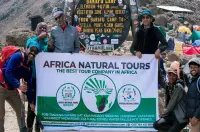
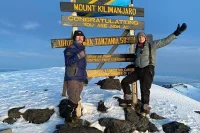
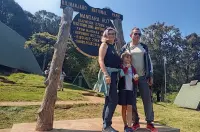
What happens on the Barranco Wall, and why climbers say it's easier than it looks
You start in Moshi with a hotel briefing, drive to Londorossi Gate, and spend eight days climbing Kilimanjaro's most scenic route with a professional guide. The pace prioritizes acclimatization over speed, with camp-to-summit support and all meals included. You summit on Day 7 and descend the same day, finishing with a certificate and a hotel drop-off by afternoon on Day 8.
Step-by-step itinerary
Day 1: Travel to Londorossi Gate and briefing
- Breakfast at hotel
- Briefing by chief guide
- Drive to Londorossi Park Gate
Day 2: Hike to Shira 1 Camp
- Hike from Mti Mkubwa Camp
- Cross Shira Ridge
- Overnight at Shira 1 Camp
Day 3: Trek to Shira 2 Camp
- Easy trek across plateau
- Arrive at Shira 2 Camp
Day 4: Hike to Lava Tower
- Breakfast at camp
- Hike east to Lava Tower
Day 5: Climb Barranco Wall to Karanga Camp
- Breakfast at Barranco Camp
- Climb Barranco Wall
- Reach Karanga Camp
Day 6: Ascend to Barafu Camp
- Hike from Karanga Camp
- Arrive at Barafu Camp
Day 7: Summit and descend to Mweka Camp
- Summit Kilimanjaro
- Descend to Barafu Camp
- Continue to Mweka Camp
Day 8: Descend to Mweka Gate and end
- Hike from Mweka Camp
- Reach Mweka Gate
- End of Kilimanjaro Lemosho tour
The experience
"How much higher do we go today?" someone always asks on Day 5, standing at the base of the Barranco Wall. It's the moment the climb stops feeling theoretical and becomes physical: a 900-meter scramble that looks steeper from below than it actually is. The Lemosho Route on Kilimanjaro builds to this point deliberately. You've spent four days crossing moorland, moving through vegetation zones, and letting your body adjust to altitude. By the time you reach Barranco Camp at 3,900 meters, the acclimatization has already happened. The wall is the proof.
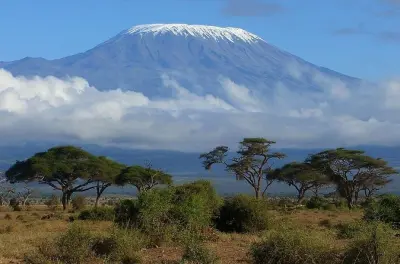
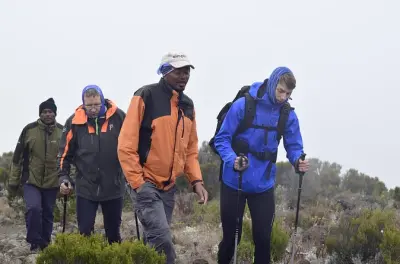
The eight-day Lemosho Route starts in Moshi with a hotel briefing and a 2.5-hour drive to Londorossi Gate at 2,250 meters. From there, the trail climbs gradually: steep enough to feel it, but not so fast that your lungs rebel. Day 2 takes you through moorland to Shira Camp, Day 3 crosses the plateau at 3,500 meters, and Day 4 pushes toward Lava Tower. This isn't rushing. The guide sets the pace, and the pace is built around staying alive at altitude. You eat breakfast, you hike, you eat lunch on the trail, you reach camp by afternoon, you eat dinner, you sleep. The rhythm matters more than the miles. On Day 6, you move from Karanga Camp to Barafu at 4,200 meters: the staging ground for the summit push. Everything before this is preparation.
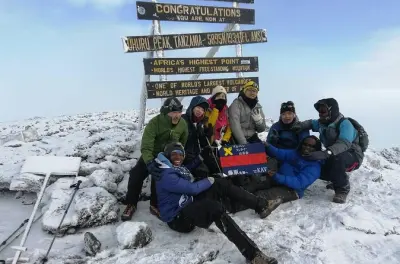
Summit Day arrives before dawn on Day 7. You leave Barafu around midnight, climb for six to eight hours in the dark with your guide and a headlamp, and reach Uhuru Peak at 5,895 meters as the sun rises. Then you descend the same day back to Barafu, sleep one more night, and on Day 8 walk down to Mweka Gate. The whole descent takes a few hours. Your guide hands you a trekking certificate, the park ranger stamps it, and you're driven back to your hotel in Moshi by afternoon. The climb is over, but the altitude sickness that hits you two days later. That's the part nobody warns you about.
The route works because it's not a sprint. Lemosho is longer than Marangu and less crowded than Machame, which means smaller groups, more space on the trail, and guides who aren't herding fifty people up a mountain. Hotel pickup from Moshi is included, as are all meals during the trek, camping equipment, water, and a professional guide who knows the mountain. You need moderate fitness, not elite, but honest. If you can hike for four hours with a backpack and your cardiovascular system isn't compromised, you have a real shot at the summit.
What’s included
Hotel pickup from Moshi (or your chosen starting point), a pre-trek briefing with your chief guide, all camping equipment including quality tents and sleeping mattresses, breakfast, lunch, and dinner throughout the eight days, water during daily hikes, a professional Kilimanjaro guide, and hotel drop-off from Mweka Gate after the descent. You also receive a trekking certificate upon completion.
Information
Lasts 8d, runs every day at 07:00, from US$ 1,799 per person, with a live guide in English and with free cancellation up to 24 h before.
Prices and times updated 7 days ago
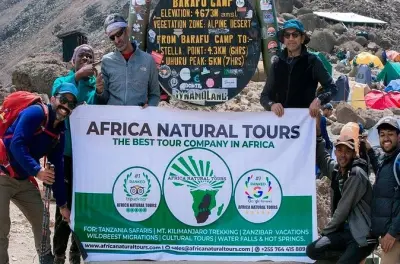
Operated by AFRICA NATURAL TOURS
Is this one for you?Right for solo travelers, couples, and small groups with moderate fitness who want the best acclimatization schedule and scenic views on Kilimanjaro. Plan for eight full days out of your schedule. That's what makes the slower pace and higher summit success possible.
Traveler reviews
Compare the 12 alternatives
- 34 reviews
- 5.00★
- Duration
- 7d
- Every day
- 07:30

- 45 reviews
- 5.00★
- Duration
- 6d
- Every day
- 09:00
- 25 reviews
- 4.84★
- Duration
- 8h
- 15 reviews
- 5.00★
- Duration
- 6d
- Every day
- 08:00
- 564 reviews
- 4.92★
- Duration
- 8d
- 23 reviews
- 5.00★
- Duration
- 6d
- Every day
- 08:00

- 637 reviews
- 4.94★
- Duration
- 6d

- 27 reviews
- 4.93★
- Duration
- 6d
- Every day
- 09:00
- 32 reviews
- 4.97★
- Duration
- 6d
- 3 reviews
- 5.00★
- Duration
- 5d
- Every day
- 08:30
- 20 reviews
- 5.00★
- Duration
- 7d
- Every day
- 08:00

- 15 reviews
- 5.00★
- Duration
- 6d
- Every day
- 09:00
Top questions
What's the difference between Lemosho and other Kilimanjaro routes?
Lemosho is longer (8 days), less crowded, and approaches from the west with better acclimatization. It's considered the most scenic route and has a higher success rate than faster alternatives like Marangu.
Do I need climbing experience to do this trek?
No. You need moderate physical fitness and good cardiovascular health, but no technical climbing skills. The route is a high-altitude hike, not a mountaineering expedition.
What's included in the price?
Hotel pickup in Moshi, all meals during the trek, camping equipment, water, a professional guide, and a trekking certificate. Park fees are separate.
When do departures run?
Flexible departures throughout 2026–2027. You can start from Moshi, Arusha, Zanzibar, or Kilimanjaro International Airport (JRO).
How much altitude gain happens each day?
Day 1 reaches 2,250m, Day 2 climbs to 3,600m, Day 3 stays around 3,500m, Day 4 goes to 3,900m, Day 5 reaches 3,900m, Day 6 climbs to 4,200m, and Day 7 summits at 5,895m before descending.
What if I don't summit?
Your guide will turn back if altitude sickness or fitness prevents a safe summit attempt. You still descend with the group and receive support throughout.
Is this trek suitable for solo travelers?
Yes. The tour runs as both group and private climbs, so solo travelers can join scheduled groups or arrange a private departure.
How much water do I carry each day?
The tour provides water during hiking, so you don't need to carry large quantities. Your guide manages hydration stops along the trail.
Kilimanjaro 8-Day Lemosho Route: Summit Trek & Acclimatization
8d · EN
from US$ 1,799 per person