

 +507 6792-0894


Santiago de Compostela: Finisterre, Muxía & Costa da Morte Day Trip


Summary
Atlantic cliffs, old stone bridges, fishing ports and Galician flavors
You’ll cross ancient bridges near Santiago de Compostela, feel sea spray at Ézaro waterfall, stand where pilgrims reach Finisterre’s lighthouse cliffs, and taste real Galician food in fishing towns. With local stories guiding each stop and time to wander or just listen to waves in Muxía, this day trip leaves you carrying something quieter home.

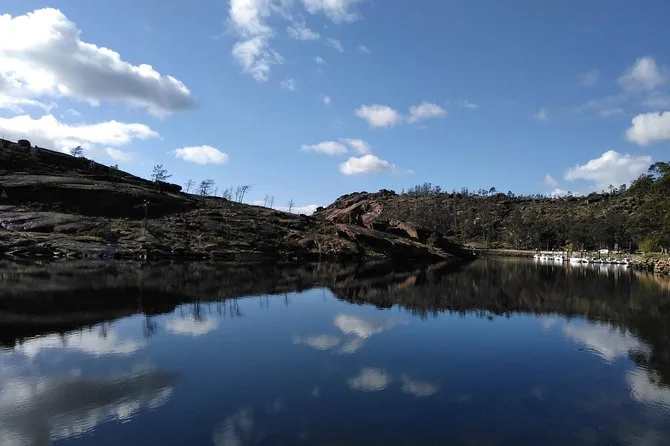
We rolled out of Santiago de Compostela just as the city was waking up, our little group still half asleep but curious. The bus hummed along winding roads through green hills until we stopped in a village I’d never heard of — Ponte Maceira. There’s this old stone bridge from the 1300s stretching over the Tambre river. Mist clung to the stones and you could hear water rushing underneath. Our guide, Miguel, pointed out some medieval mills tucked in by the riverbank. I tried to imagine what it must’ve been like hauling grain here centuries ago. The air smelled like wet leaves and bread from somewhere nearby.
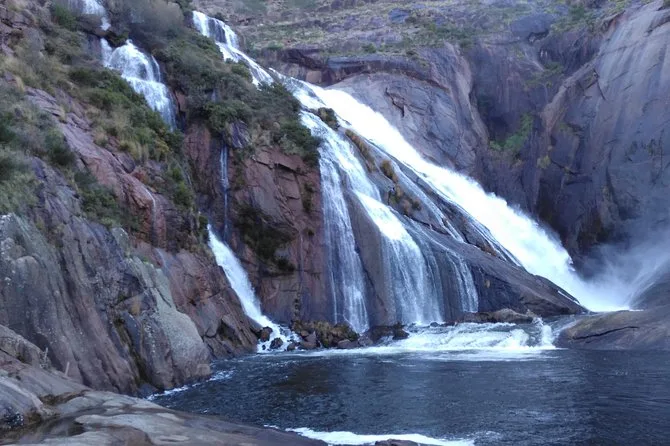
Next was Muros — a fishing village where the houses lean into each other and the port smells like salt and diesel. We wandered through narrow alleys; I got distracted by a cat perched on a windowsill above us (Miguel said cats are practically locals here). There’s something about these places that makes you want to slow down, but then we were off again, chasing the coast. At Ézaro waterfall, everyone went quiet for a second watching the Xallas river drop straight into the sea — it’s loud and wild, spray hitting your face if you get close enough. Didn’t expect that.
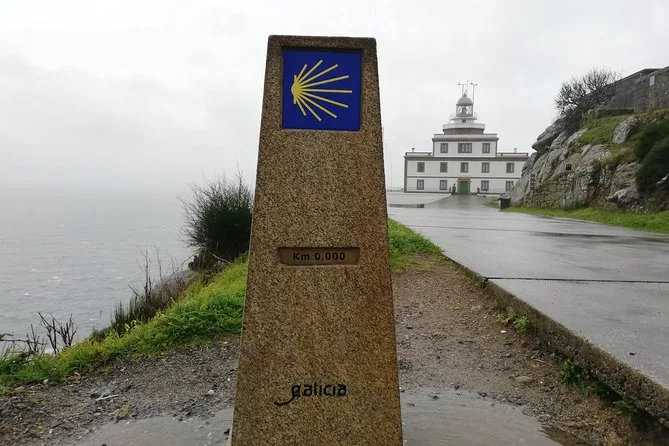
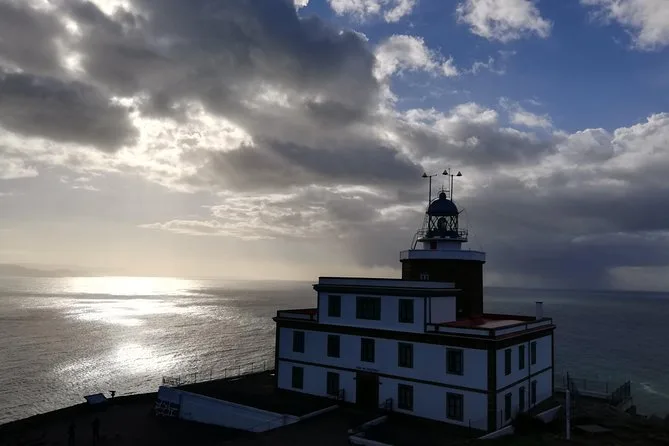
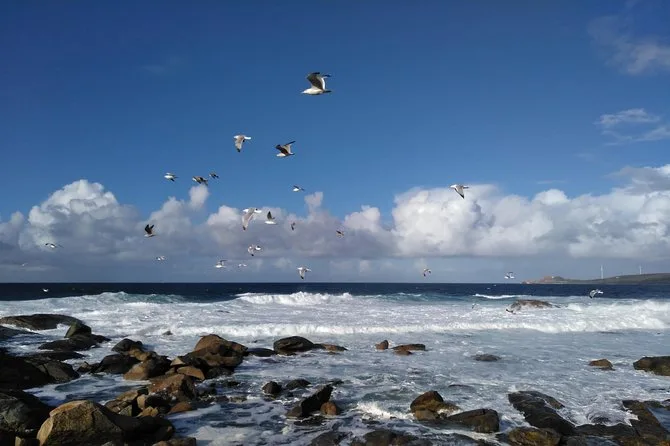
Finisterre felt almost unreal — they say it was once “the end of the world.” The lighthouse sits above cliffs where wind whips at your jacket and gulls scream overhead. Miguel told us pilgrims sometimes burn their boots here after walking all the way from Santiago (I kept my shoes on). We had time in town for lunch — grilled octopus with smoky paprika and cold white wine. I still think about that taste. The old fishermen watched us from their tables, nodding if you caught their eye.
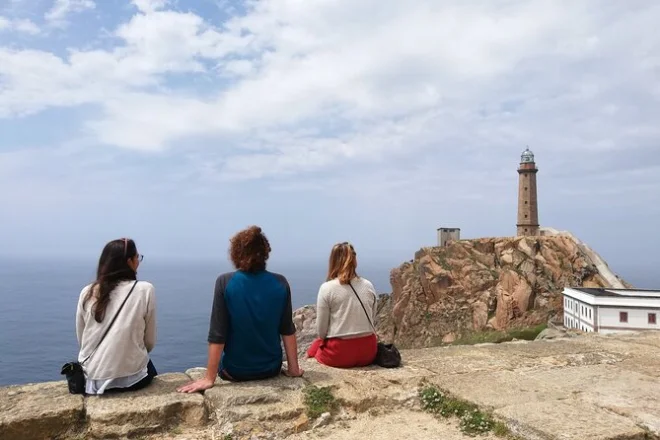
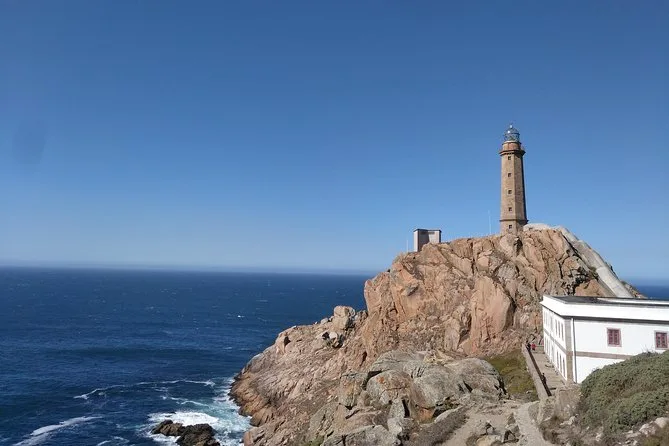
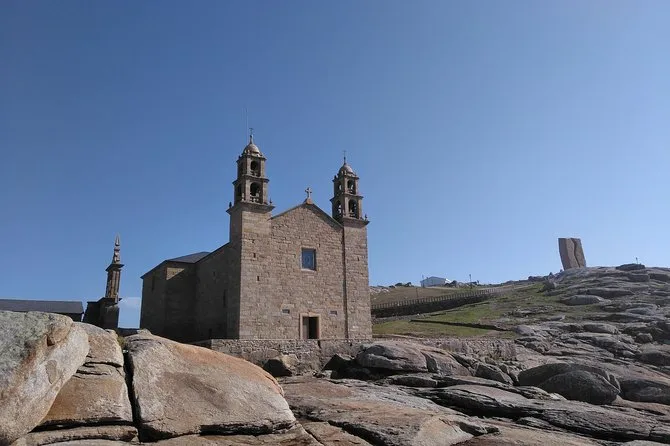
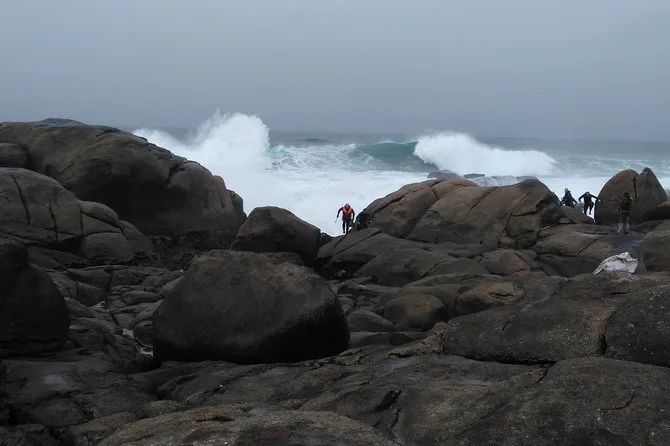
After lunch we drove north to Muxía. The Sanctuary of A Barca sits right above crashing waves, surrounded by these huge stones with names I couldn’t pronounce (Li laughed when I tried). Some people climbed up Monte Corpiño for views of Cabo Vilán and beaches below — I just sat on a rock for a while listening to wind and thinking how small everything feels out here. Hard to explain why that stuck with me more than any photo would.
 9h
9h

Step-by-step itinerary
Day 1 — Explore Costa da Morte highlights
- Visit medieval village near Santiago
- Walk through fishing village historic center
- See Cascada del Ézaro waterfall
- Observe views from Cape Finisterre lighthouse
- Enjoy free time in Finisterre town
- Visit Sanctuary and surroundings in Muxía

Top questions

How long is the day trip from Santiago de Compostela to Finisterre?
The tour covers approximately 98 kilometers from Santiago to Finisterre with multiple stops along Costa da Morte throughout the day.
Is lunch included during the Finisterre & Muxía day trip?
No set lunch is included but there is free time in Finisterre to enjoy local Galician gastronomy at your own pace.
Are there guided explanations at each stop?
Yes, professional guides share stories and context at every major stop along the route.
Can infants or small children join this Costa da Morte tour?
Yes, infants can ride in a pram or stroller during this tour.
Does this tour include pickup from Santiago de Compostela?
The day trip includes pickup in an air-conditioned vehicle departing from Santiago de Compostela.
What are some highlights of this Costa da Morte day trip?
You’ll visit Ponte Maceira’s medieval bridge, Muros fishing village, Ézaro waterfall, Finisterre lighthouse & town, plus Muxía’s sanctuary by the sea.
Is this tour suitable for people with limited mobility?
The tour is suitable for all physical fitness levels; service animals are also allowed.
Will there be time to explore on our own during stops?
Yes, there is free time especially in Finisterre and Muxía for personal exploration or meals.

What’s included
Your day includes pickup in Santiago de Compostela by air-conditioned vehicle with a professional local guide sharing stories along every stop — from medieval bridges near Ponte Maceira to dramatic cliffs at Finisterre lighthouse and quiet moments by the Sanctuary of A Barca in Muxía. You’ll have plenty of time for wandering cobbled streets or tasting fresh seafood before heading back in comfort.
 Super deal
  Free booking, free cancellation.
  Don't lose your place.


 Do you need help planning your next activity?
  +507 6792-0894


