
Seoul to Suwon: Folk Village & Hwaseong Fortress Day Tour
 Super deal


Summary
Korean traditions come alive in Suwon’s fortress and village
You’ll feel swept into Korea’s living past on this day trip from Seoul—taste street food at Nammun Market, watch traditional performances in the Korean Folk Village, and walk Suwon Hwaseong Fortress walls with stories from your local guide. It’s not just sightseeing; it’s time travel with real textures and laughter mixed in.
 10h–11h

Step-by-step itinerary
Day 1 — Explore Korean Folk Village and Suwon
- Visit Korean Folk Village
- Walk Suwon Hwaseong Fortress walls
- Explore Suwon Nammun Market

Top questions

How long does the day trip from Seoul to Suwon take?
The full tour lasts a full day including transport from central Seoul, usually returning by evening.
Is hotel pickup included for this Suwon & Folk Village tour?
Pickup is available from central locations in Seoul as part of your booking.
What attractions are included on this day trip?
You’ll visit Korean Folk Village, Suwon Hwaseong Fortress, and Suwon Nammun Market (market not included every Wednesday Jun–Aug).
Are there live performances at Korean Folk Village?
Yes, there are seasonal performances like Nongak (farmer’s music), martial arts on horseback, and traditional ceremonies.
Is lunch provided on this tour?
Lunch isn’t included but you’ll have time to buy food at Suwon Nammun Market or nearby spots.
Can infants join the tour?
Yes, infants can join free of charge but must sit on an adult's lap; strollers are allowed if you inform ahead.
Does the itinerary change in summer?
Yes, during June–August departure times and visiting order vary; check details when booking.
Is entry to all sites covered?
Entrance fees for all main sites are included in your tour price.

What’s included
Your day includes convenient pickup from central Seoul locations, transportation throughout Gyeonggi Province with an English- or Chinese-speaking guide by your side, entrance fees for both Korean Folk Village and Suwon Hwaseong Fortress—and if you’re traveling on Wednesdays between April 15th and November 11th, access to special cultural programs at Gyeonggi Gugak Center too before heading back in the evening.

You know that feeling when you step off the bus and everything smells a bit different? That’s how it started for me in Suwon, after our pickup in Seoul. There was this hint of woodsmoke and something sweet—maybe chestnuts roasting? Our guide, Minji, waved us over with a big grin and right away I felt like we’d lucked out. She joked about my pronunciation of “Hwaseong” (I still can’t get it right) and then pointed us toward the Korean Folk Village. The air was cool but not cold, just enough for a light jacket. Kids were chasing each other between old tiled houses while an older man hammered at copper in one of the workshops. It sounded almost musical—sharp, steady, kind of hypnotic.
I didn’t expect to be so pulled in by the performances at the folk village. There was this farmer’s music show—Nongak—with drums echoing across the open square. At one point, a woman handed me a piece of rice cake wrapped in paper; it was chewy and barely sweet, but somehow perfect for that moment. Minji told us stories about shaman rituals and how these houses were moved here from all over Korea—she even pointed out which ones belonged to noble families versus farmers. We wandered through narrow lanes past Confucian academies and little schoolrooms with low wooden desks. I kept thinking how much quieter life must have been back then…except maybe during those drum performances.
After lunch (I went for spicy tteokbokki at Suwon Nammun Market—my lips tingled for ages), we headed to Hwaseong Fortress itself. The stone walls curve around the city like arms, and walking along them felt almost meditative. Locals strolled by with umbrellas tucked under their arms even though it wasn’t raining; apparently that’s just habit here. Minji explained how King Jeongjo built this place for his father—it’s wild to think about all that history under your feet while you’re trying not to trip on uneven stones. The view from the top gate is something I still think about: tiled roofs stretching out below, little pockets of green where people tend gardens behind the walls.
Similar tours
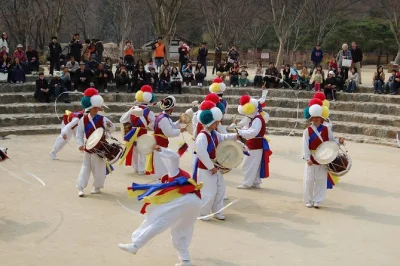 Suwon Hwaseong Fortress & Folk Village: Day tour from Seoul
★★★★★★★★★★ 4.48 (23) From US$ 140
Suwon Hwaseong Fortress & Folk Village: Day tour from Seoul
★★★★★★★★★★ 4.48 (23) From US$ 140
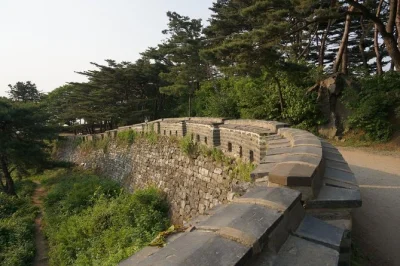 Private Namhansanseong Fortress & Korean Folk Village Tour
★★★★★★★★★★ 4.87 (31) From US$ 198
Private Namhansanseong Fortress & Korean Folk Village Tour
★★★★★★★★★★ 4.87 (31) From US$ 198
 Suwon: Hwaseong Fortress, Folk Village & Starfield Library Day Trip
★★★★★★★★★★ 4.95 (149) From US$ 60.98
Suwon: Hwaseong Fortress, Folk Village & Starfield Library Day Trip
★★★★★★★★★★ 4.95 (149) From US$ 60.98
 Seoul DMZ Tour: Third Tunnel, Dora Observatory & Red Bridge
★★★★★★★★★★ 4.94 (48452) From US$ 50
Seoul DMZ Tour: Third Tunnel, Dora Observatory & Red Bridge
★★★★★★★★★★ 4.94 (48452) From US$ 50
 DMZ Tour from Seoul: 3rd Tunnel, Suspension Bridge & Boat
★★★★★★★★★★ 4.97 (27146) From US$ 50
DMZ Tour from Seoul: 3rd Tunnel, Suspension Bridge & Boat
★★★★★★★★★★ 4.97 (27146) From US$ 50
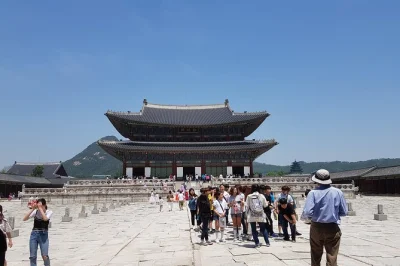 Seoul: Gyeongbokgung Palace, N Seoul Tower & Hanok Village Day Tour
★★★★★★★★★★ 4.90 (4128) From US$ 32
Seoul: Gyeongbokgung Palace, N Seoul Tower & Hanok Village Day Tour
★★★★★★★★★★ 4.90 (4128) From US$ 32
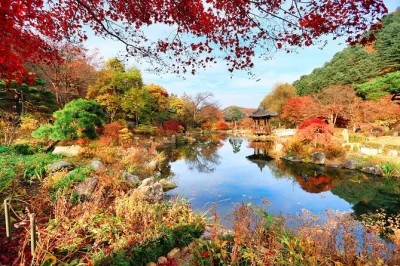 Nami Island & Garden of Morning Calm: Day Trip with Tickets
★★★★★★★★★★ 4.66 (250) From US$ 50.48
Nami Island & Garden of Morning Calm: Day Trip with Tickets
★★★★★★★★★★ 4.66 (250) From US$ 50.48
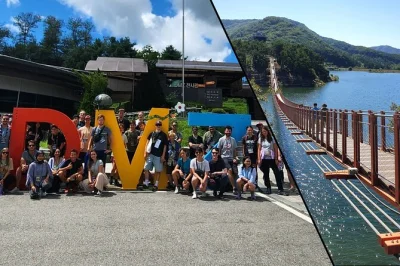 Seoul DMZ Tour: Third Tunnel, Dora Observatory & Pickup
★★★★★★★★★★ 4.95 (24834) From US$ 50
Seoul DMZ Tour: Third Tunnel, Dora Observatory & Pickup
★★★★★★★★★★ 4.95 (24834) From US$ 50
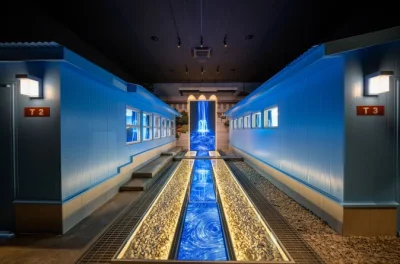 Seoul DMZ Tour: JSA Museum Access & Third Tunnel Walk
★★★★★★★★★★ 4.97 (2139) From US$ 49
Seoul DMZ Tour: JSA Museum Access & Third Tunnel Walk
★★★★★★★★★★ 4.97 (2139) From US$ 49
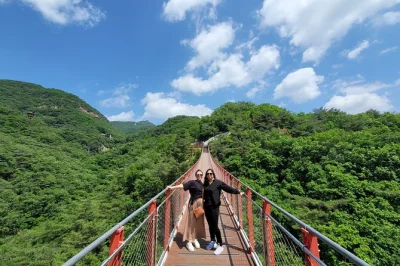 Seoul DMZ Tour: 3rd Tunnel, Dora Observatory & Suspension Bridge
★★★★★★★★★★ 4.96 (833) From US$ 94.46
Seoul DMZ Tour: 3rd Tunnel, Dora Observatory & Suspension Bridge
★★★★★★★★★★ 4.96 (833) From US$ 94.46
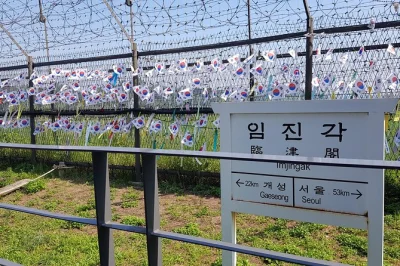 Seoul DMZ Tour: Imjingak Park, 3rd Tunnel & Dora Observatory
★★★★★★★★★★ 4.91 (329) From US$ 50
Seoul DMZ Tour: Imjingak Park, 3rd Tunnel & Dora Observatory
★★★★★★★★★★ 4.91 (329) From US$ 50
 Seoul DMZ Tour: Imjingak, 3rd Tunnel & NK Defector Meeting
★★★★★★★★★★ 4.97 (5291) From US$ 50
Seoul DMZ Tour: Imjingak, 3rd Tunnel & NK Defector Meeting
★★★★★★★★★★ 4.97 (5291) From US$ 50


 Do you need help planning your next activity?


