
Seoul DMZ Tour: Defector Interview & Suspension Bridge
 Super deal


Summary
Stories at the border, tunnels underfoot, and a bridge in the clouds near Seoul
You’ll step into Korea’s tense history at the DMZ from Seoul—walking war tunnels, peering through binoculars toward North Korea, and hearing firsthand stories from a defector who lived it. Taste mountain air on Gamaksan Suspension Bridge if you join that part too. Expect moments that linger long after you’re back in city crowds.
 7h–9h
7h–9h

Step-by-step itinerary
Day 1 — DMZ tour with defector insights
- Meet guide at meeting place
- Transfer to DMZ
- Visit Imjingak Park and Freedom Bridge
- Pass Mangbaedan Bridge
- Explore DMZ Exhibition Hall and Theater
- Tour Third Tunnel of Aggression
- Visit Dora Observatory
- See Unification Village
- Optional visit to Gamaksan Suspension Bridge

Top questions

Is passport required for DMZ tour from Seoul?
Yes, all participants must bring their passport for entry into DMZ sites.
How long is the walk to Gamaksan Suspension Bridge?
The walk takes about 20–30 minutes uphill; comfortable shoes are recommended.
What is included in this Seoul DMZ tour?
The tour includes an interview with a North Korean defector, all fees and taxes, air-conditioned transport, and an English-speaking guide.
Can children join the DMZ day trip?
Yes, but children must be accompanied by an adult during the tour.
Are there any health restrictions for this DMZ tour?
The tour isn’t recommended for travelers with spinal injuries or poor cardiovascular health; moderate fitness is needed.
What happens if DMZ access is suddenly closed?
If military closures occur without notice, an alternative tour will be provided but no refunds are given.
Where does this day trip start and end?
The tour starts at a designated meeting point in Seoul and ends at City Hall Station or nearby drop-off points.
Is lunch included on this DMZ day trip?
No lunch is included; bring snacks or buy food at stops like Imjingak Park.

What’s included
Your day includes pickup from central Seoul by air-conditioned vehicle, all entry fees for Imjingak Park, Dora Observatory, Third Tunnel of Aggression and other key DMZ sites plus an exclusive interview with a North Korean defector—all guided by a certified English speaker before returning to City Hall Station.

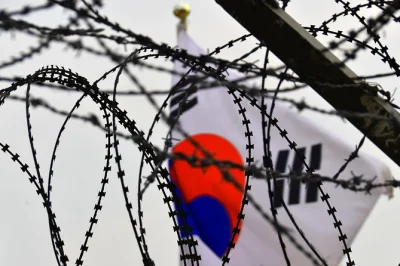
We almost missed the bus because I couldn’t find my passport (classic me), but our guide just grinned and waited as I fumbled through my bag. The drive out of Seoul was quieter than I expected — maybe everyone was nervous? Or just sleepy. Our guide, Minji, started pointing out little things along the way: old army checkpoints, rice paddies flashing by. The air felt heavier as we got closer to Imjingak Park. There’s something strange about seeing a theme park right next to barbed wire fences — kids laughing on rides while old war relics rust nearby. I kept thinking about that steam locomotive, blackened and silent after decades.
The DMZ itself felt surreal. We watched a short film in the theater — the sound of boots marching still echoes in my head sometimes. Then we shuffled into the Third Tunnel, helmets bumping against damp rock. It’s cold down there; you can smell earth and something metallic. Minji explained how North Korea dug these tunnels under the border — she made a joke about her own clumsy hiking once, which made us all laugh (nervous laughter maybe). At Dora Observatory, I tried to spot movement across the border through those big yellow binoculars. Someone beside me muttered “it looks so normal over there.” It really does.
The highlight for me wasn’t even on the official itinerary: sitting in a circle listening to Mr. Kim, a North Korean defector. He spoke softly but with this steady energy — describing his childhood, how he crossed the river at night, what he misses most (his mother’s soybean stew). I tried to say thank you in Korean and totally butchered it; Li from our group burst out laughing and Mr. Kim just smiled kindly. That moment stuck with me more than any monument or map.
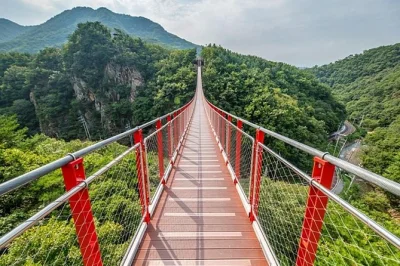
If you’re up for it, there’s an optional hike to Gamaksan Chulleong Suspension Bridge — took us about 25 minutes uphill (my legs complained). The view from up there is wild: green valleys stretching forever if you’re lucky with clear weather, or mist curling around the cables if not. On the way back into Seoul, I kept replaying bits of conversation in my head — especially that feeling of standing so close to a place most people only read about in headlines.
Similar tours
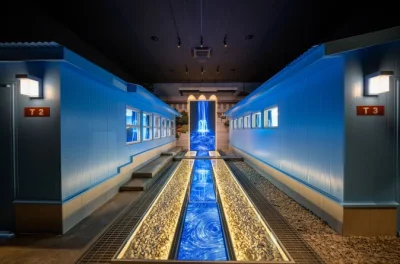 Seoul DMZ Tour: JSA Museum Access & Third Tunnel Walk
★★★★★★★★★★ 4.96 (2110) From US$ 49
Seoul DMZ Tour: JSA Museum Access & Third Tunnel Walk
★★★★★★★★★★ 4.96 (2110) From US$ 49
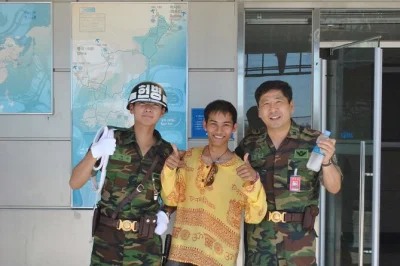 Seoul DMZ Day Trip: 3rd Tunnel, Dora Observatory & Red Bridge
★★★★★★★★★★ 4.95 (3473) From US$ 49
Seoul DMZ Day Trip: 3rd Tunnel, Dora Observatory & Red Bridge
★★★★★★★★★★ 4.95 (3473) From US$ 49
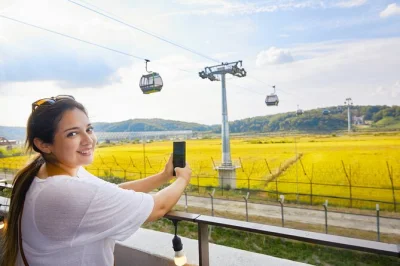 Seoul DMZ Tour: Gondola, Red Bridge & Third Tunnel Day Trip
★★★★★★★★★★ 4.94 (2764) From US$ 49
Seoul DMZ Tour: Gondola, Red Bridge & Third Tunnel Day Trip
★★★★★★★★★★ 4.94 (2764) From US$ 49
 Seoul DMZ Tour: Defector Talk, 3rd Tunnel & Suspension Bridge
★★★★★★★★★★ 4.87 (5284) From US$ 37.84
Seoul DMZ Tour: Defector Talk, 3rd Tunnel & Suspension Bridge
★★★★★★★★★★ 4.87 (5284) From US$ 37.84
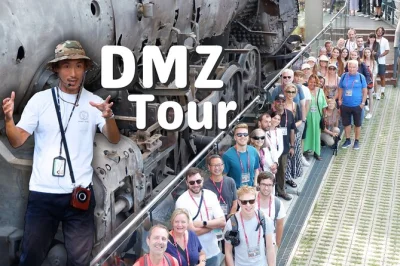 Seoul DMZ Tour: 3rd Tunnel, Dora Observatory & No Shopping Stops
★★★★★★★★★★ 4.98 (3053) From US$ 45
Seoul DMZ Tour: 3rd Tunnel, Dora Observatory & No Shopping Stops
★★★★★★★★★★ 4.98 (3053) From US$ 45
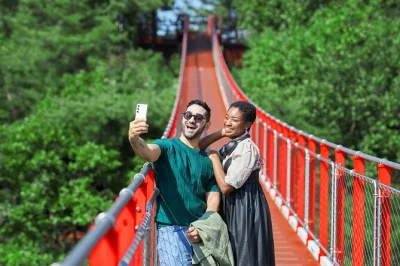 Seoul DMZ Tour: Third Tunnel, Dora Observatory & Red Bridge
★★★★★★★★★★ 4.94 (48337) From US$ 50
Seoul DMZ Tour: Third Tunnel, Dora Observatory & Red Bridge
★★★★★★★★★★ 4.94 (48337) From US$ 50
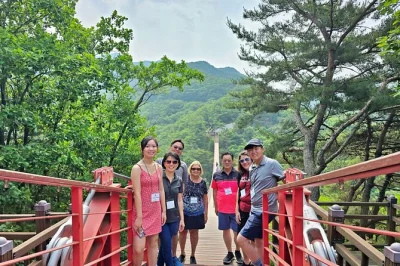 Seoul DMZ Tour: 3rd Tunnel, North Korea Hall & Suspension Bridge
★★★★★★★★★★ 4.90 (1374) From US$ 65
Seoul DMZ Tour: 3rd Tunnel, North Korea Hall & Suspension Bridge
★★★★★★★★★★ 4.90 (1374) From US$ 65
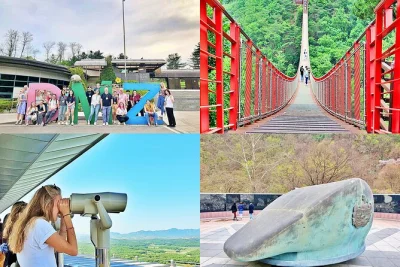 DMZ & North Korea Hall: Guided Day Trip from Seoul with Bridge
★★★★★★★★★★ 4.80 (1733) From US$ 55
DMZ & North Korea Hall: Guided Day Trip from Seoul with Bridge
★★★★★★★★★★ 4.80 (1733) From US$ 55
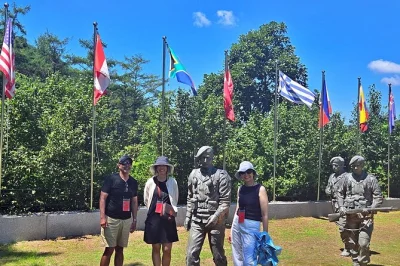 Seoul DMZ Day Trip: 3rd Tunnel, Dora Observatory & Heroes Bridge
★★★★★★★★★★ 4.97 (235) From US$ 59
Seoul DMZ Day Trip: 3rd Tunnel, Dora Observatory & Heroes Bridge
★★★★★★★★★★ 4.97 (235) From US$ 59
 DMZ Tour from Seoul: 3rd Tunnel, Suspension Bridge & Boat
★★★★★★★★★★ 4.97 (27090) From US$ 50
DMZ Tour from Seoul: 3rd Tunnel, Suspension Bridge & Boat
★★★★★★★★★★ 4.97 (27090) From US$ 50
 Seoul DMZ Tour: Imjingak, 3rd Tunnel & Dora Observatory
★★★★★★★★★★ 4.92 (6007) From US$ 50
Seoul DMZ Tour: Imjingak, 3rd Tunnel & Dora Observatory
★★★★★★★★★★ 4.92 (6007) From US$ 50
 Seoul DMZ Tour: 3rd Tunnel, Dora Observatory & Majang Lake
★★★★★★★★★★ 4.95 (1302) From US$ 49
Seoul DMZ Tour: 3rd Tunnel, Dora Observatory & Majang Lake
★★★★★★★★★★ 4.95 (1302) From US$ 49


 Do you need help planning your next activity?


